

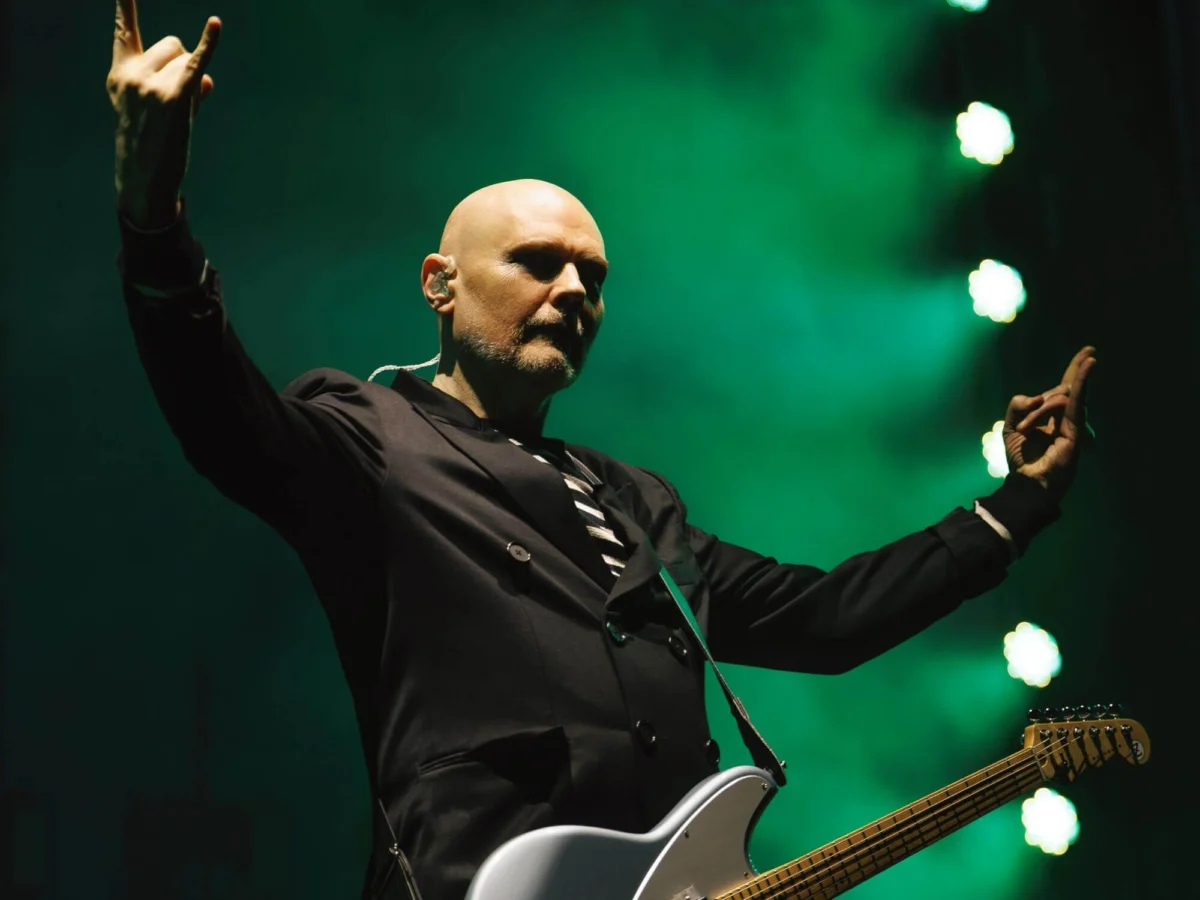
Smashing Pumpkins frontman Billy Corgan has issued a stark and unequivocal condemnation of artificial intelligence in music, labeling its rise as "the most cataclysmic technological innovation" since the advent of moving pictures. In a recent appearance on the "And The Writer Is…" podcast, Corgan firmly declared his personal refusal to integrate AI into his creative process, framing its adoption as an "existential threat" to songwriters, the music industry, and the very essence of human artistry. His powerful statements underscore a growing chasm in the creative world between those who see AI as a revolutionary tool and those who view it as a corrosive force.
Corgan’s Uncompromising Stance: A ‘Deal with the Devil’
Corgan minced no words in expressing his deep-seated skepticism and outright rejection of AI. "I refuse, refuse, patently refuse to use AI in my music creation," he stated emphatically, as reported by Blabbermouth. For the iconic alternative rock artist, the issue transcends mere technological preference; it delves into a profound ethical and philosophical realm. "Because, to me, it’s a deal with the devil. Simple. Whether it’s the Promethean fire myth or whatever, to me you’re literally leaning into the thing that will destroy you. Period." This dramatic phrasing highlights a perceived Faustian bargain, where the apparent gains of efficiency and novelty are outweighed by an inherent, destructive cost to the soul of creativity.
His reference to the Promethean fire myth, where humanity gains divine knowledge but at a great cost, frames AI not just as a tool, but as a dangerous force that, once unleashed, cannot be controlled and will ultimately turn against its creators. This perspective positions AI as an almost sentient threat, capable of undermining the foundations of human artistic endeavor rather than merely augmenting it.
The Sanctity of Struggle: Corgan’s Creative Philosophy
At the heart of Corgan’s objection lies his fundamental belief in the value of the creative struggle. He argues that the very challenges inherent in making music—the doubt, the creative blocks, the arduous process of discovering something new—are not obstacles to be overcome by technology, but rather indispensable components of authentic artistic creation.
"The pressure, the inspiration, the soul searching, the ‘I’m not sure I got anything else to say’, that’s all part of the journey that a songwriter needs to go through," Corgan explained. He champions the discomfort and uncertainty that often accompany artistic pursuits. "I’m saying it’s good that a songwriter has doubt, it’s good that a songwriter’s not sure they have anything left to say, it’s good that a songwriter has to think of a new chord that they haven’t thought of. That’s where the magic comes from."
This philosophy posits that true artistic value is forged in the crucible of human effort, introspection, and perseverance. By circumventing this struggle, Corgan suggests, AI threatens to strip music of its very "magic," reducing it to a mere commodity produced without the deep human investment that gives it meaning and resonance. He contends that an artist’s personal journey, replete with its highs and lows, directly imbues their work with authenticity—a quality he believes could become a rare and valuable selling point in an AI-saturated future. "Maybe people will listen to me and continue to listen to me into my old age because they know it’s coming from me. That actually might be part of the sale."
A Cataclysmic Shift: Echoes of Cinematic Revolution
Corgan’s comparison of AI’s impact to the transition from silent films to "talking pictures" is particularly potent. This historical parallel refers to a period in the early 20th century that dramatically reshaped the film industry, rendering many silent film stars and professionals obsolete overnight, while simultaneously opening new avenues for expression and talent.
"Let’s face it, this shit’s gonna wipe out a lot of people," Corgan predicted. "This might be the most cataclysmic technological innovation in this town since the change from silence to talking pictures. A lot of people are gonna lose their gig and there’s gonna be a lot of new faces who are suddenly boy or girl wonder because they know how to press some fricking buttons."
This historical context provides a chilling precedent for Corgan’s warnings. While technological advancements have always disrupted industries, the speed and pervasiveness of AI suggest a shift that could be far more sweeping and less forgiving than previous transitions. The immediate and profound impact of sound on cinema serves as a stark reminder of how quickly established creative landscapes can be upended, and how entire skill sets can become obsolete.
Broader Economic and Industry Implications: A ‘Fallow Winter’ for Songwriters
Corgan’s concerns extend far beyond individual artistic integrity; he envisions a wholesale reshaping, and potential destruction, of the music industry’s economic and creative ecosystem. He views the industry’s flirtation with AI as a suicidal act. "We’re flirting with the thing that will destroy us as an economy, as a business, as a movement. We’re asking to be eradicated. We’re giving them our information. They already have all our other information… You’re asking to be wiped out."
He articulated a grim forecast: "I think the real fallow winter that’s coming is you’re gonna lose generations of songwriters." This prediction suggests a future where the economic viability of a career in songwriting diminishes significantly, leading to a talent drain and a homogenization of musical output. The "fallow winter" metaphor evokes a period of barrenness and decline, where the rich diversity and depth of human-authored music could wither.
Corgan drew a direct line to the existing landscape dominated by "superproducers" like Max Martin, where the "producer-writer is more important than the artist." He argues that AI could accelerate this trend to its extreme, making human musicianship entirely peripheral to the creation process. In this scenario, the new power brokers would be those adept at manipulating AI programs, rather than those with innate musical talent or years of practice.
"You’re gonna see the rise of the guy who knows how to run the programs better than the other guy or girl," Corgan stated. "And he’ll be branded and he’ll have a sponsorship and he’ll be doing commercials [saying] ‘you can be just like me… I’m just really good at knowing how to put this information together. I don’t even know fucking music. I just know what I like.’" This paints a dystopian picture where musical knowledge and craft are replaced by technical proficiency in operating AI interfaces, fundamentally altering the definition of a "musician."
The Rise of AI in Music: A Contested Landscape
Corgan’s impassioned warnings come amidst a rapidly evolving landscape where artificial intelligence is making significant inroads into various facets of the music industry. From algorithmic composition tools that generate melodies and harmonies to sophisticated programs capable of mastering entire tracks or even cloning artists’ voices, AI’s presence is undeniable.
The past few years have seen a surge in AI-powered music platforms, such as Suno and Udio, which allow users to generate full songs from simple text prompts. Major labels and tech giants are actively investing in or partnering with AI music companies, seeking to leverage the technology for efficiency, personalized content creation, and potentially new revenue streams. Warner Music Group, for instance, has announced partnerships exploring licensed AI music, suggesting a willingness to integrate the technology, albeit with a focus on ethical frameworks and artist compensation.
However, this adoption has not been without controversy. The use of existing copyrighted music to train AI models without explicit permission or compensation has sparked widespread debate and legal challenges. Artists, songwriters, and industry organizations globally are grappling with issues of intellectual property, fair use, and the potential for AI to devalue human creative output. Organizations like the Recording Academy, the National Music Publishers’ Association (NMPA), and various artist unions have begun formulating guidelines and advocating for legislation to protect creators’ rights in the age of AI. Many artists, like Corgan, are deeply concerned about the lack of transparency in AI training data and the potential for their unique styles and voices to be appropriated without their consent or remuneration.
Industry Reactions and Divergent Perspectives
While Billy Corgan’s stance is notably strong, the music industry’s response to AI remains multifaceted and often contradictory. Many artists, particularly those in experimental genres or with a tech-forward mindset, are embracing AI as a novel tool for inspiration, collaboration, and pushing creative boundaries. They argue that AI can democratize music creation, offering new avenues for expression to those without traditional musical training. Producers and engineers might utilize AI for tasks like audio restoration, mixing assistance, or generating variations, viewing it as an enhancement to their workflow rather than a replacement for their expertise.
Conversely, a significant portion of the creative community shares Corgan’s apprehensions, voicing concerns about job displacement, the erosion of artistic value, and the potential for a flood of generic, AI-generated content to overwhelm the market. Songwriter organizations, in particular, are at the forefront of advocating for robust copyright protections and fair compensation models, fearing that AI could exacerbate existing economic inequalities for creators. The debate often centers on the definition of "authorship" and whether AI-generated works can truly possess the "human spark" that resonates with audiences.
Legal and Ethical Quandaries: Defining the Future of Music
The legal and ethical implications of AI in music are vast and largely uncharted. Key questions include:
- Copyright Ownership: Who owns the copyright to music generated by AI? If AI is trained on copyrighted material, does its output infringe on those original works?
- Data Scraping: The practice of using vast datasets of existing music to train AI models has drawn ire from creators who argue their work is being used without permission or compensation.
- Deepfakes and Impersonation: The ability of AI to mimic an artist’s voice or style raises serious concerns about identity theft, misrepresentation, and potential reputational damage.
- Transparency and Attribution: Should consumers be informed if music is AI-generated? How should human collaborators be credited alongside AI tools?
These complex issues necessitate ongoing dialogue between policymakers, legal experts, tech developers, and the music industry to establish frameworks that protect creators while fostering responsible innovation.
Navigating the Future: A Crossroads for Creativity
Billy Corgan’s powerful pronouncements serve as a potent reminder of the profound questions AI poses to the future of human creativity. His vision of a "fallow winter" for songwriters and a landscape dominated by "program runners" highlights the potential for a seismic shift in how music is made, valued, and consumed.
While AI undeniably offers tantalizing possibilities for efficiency and novel forms of expression, Corgan’s argument compels the industry to confront the deeper implications: What is the true value of human struggle in art? Can authenticity survive automation? And what price are we willing to pay for technological advancement if it means sacrificing the very soul of creative endeavor? The answers to these questions will ultimately determine whether AI becomes a benevolent partner to human artists or, as Corgan fears, the harbinger of a cataclysmic transformation that reshapes music in its own image. The debate is far from settled, and the trajectory of music in the AI era remains a critical point of contention for artists, industry stakeholders, and audiences worldwide.
