

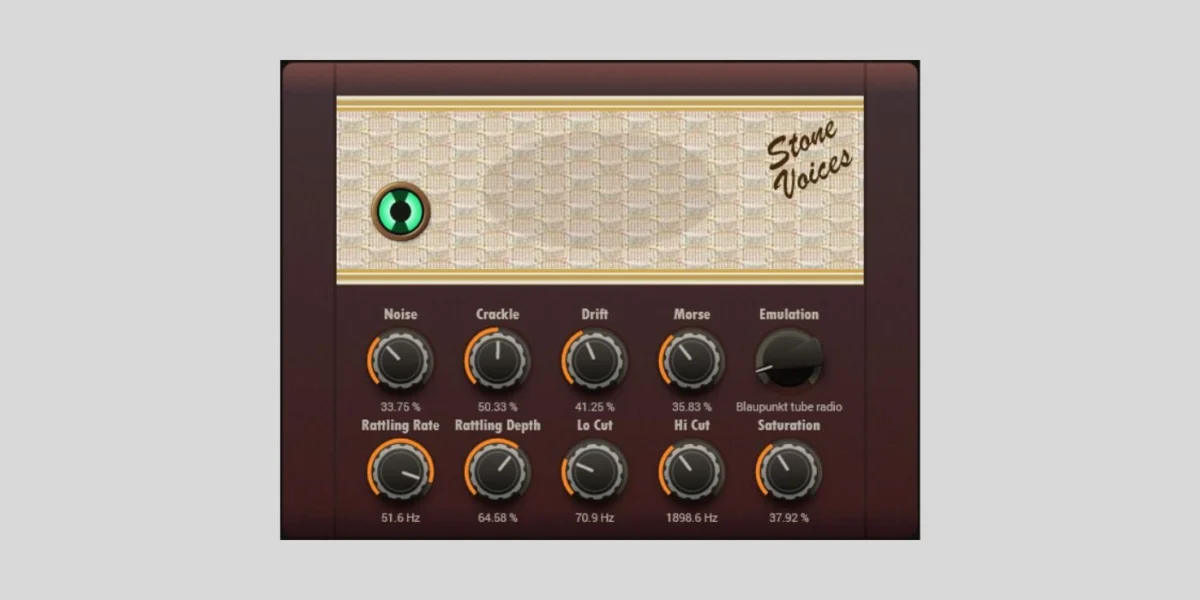
Stone Voices, a notable developer in the audio software domain, has released "Retro Radio," a new free plugin designed for macOS and Windows operating systems. This plugin meticulously emulates the distinctive sonic characteristics of vintage AM radio, offering music producers and sound designers a tool to infuse their projects with an authentic, lo-fidelity aesthetic. Available in AU, VST, and VST3 formats, Retro Radio aims to replicate the often-flawed yet culturally significant sound profile associated with amplitude modulation broadcasting, providing controls for various emulation types, including stationary and pocket radio models.
The Enduring Allure of Imperfection: A Deep Dive into Lo-Fi Aesthetics
The sonic signature of AM radio is widely recognized for its inherent low fidelity, characterized by a restricted frequency response, limited dynamic range, and the presence of various imperfections such as noise, crackle, and distortion. While modern audio production predominantly strives for pristine clarity and high fidelity, there exists a profound and growing appreciation within the music community for these very imperfections. This pursuit of "lo-fi" aesthetics is not merely a stylistic choice but a deliberate artistic statement, often employed to evoke specific moods, textures, and historical contexts.
The appeal of past technologies, particularly in audio, stems from several psychological and cultural factors. Foremost among these is the concept of "authentic warmth." Analog imperfections, such as the subtle saturation of tape or the inherent limitations of early broadcasting, are perceived by many as possessing a more organic, less sterile quality compared to the clinical precision of purely digital audio. This warmth is often attributed to the non-linear characteristics of analog circuits, which introduce harmonics and subtle compressions that can be musically pleasing.
Furthermore, nostalgia plays a critical role. For many, the sound of AM radio is deeply intertwined with personal or collective memories, even for those who did not directly experience its "golden age." It can evoke images of simpler times, childhood experiences, or historical events, imbuing music with a sense of timelessness or a specific historical period. This retro inclination in music production is part of a broader cultural trend where artists and audiences alike look to the past for inspiration, reinterpreting historical aesthetics through a contemporary lens. Plugins like Retro Radio facilitate this creative exploration, allowing artists to bridge temporal gaps in their sonic narratives. The deliberate inclusion of flaws serves as a counterpoint to the relentless pursuit of sonic perfection, suggesting that character and emotional resonance can often outweigh technical purity. This aesthetic choice is particularly prevalent in genres such as hip-hop, chillwave, indie pop, and various forms of electronic music, where textures and atmosphere are paramount.
Technical Emulation: Capturing the Essence of AM Radio
Stone Voices’ Retro Radio plugin is engineered to faithfully reproduce the sonic artifacts commonly associated with vintage AM broadcasting. The core characteristics of AM radio audio that the plugin targets include:
- Limited Frequency Response: AM signals typically have a narrow bandwidth, often limited to frequencies between 100 Hz and 5 kHz, sometimes even less. This results in a distinctive "telephonic" or "muffled" sound, lacking the crisp highs and deep lows found in modern recordings.
- Noise Floor: AM transmissions are inherently susceptible to various forms of noise, including static, hum, and atmospheric interference. Retro Radio introduces these elements to simulate the ambient background noise of a live AM broadcast.
- Distortion and Compression: Due to technical limitations and signal processing at the transmission stage, AM radio often exhibits a degree of harmonic distortion and dynamic range compression. These elements contribute to the perceived "warmth" and "grit" of the sound.
- Crackle and Rattle: Intermittent signal disruptions, interference from electrical sources, and the physical characteristics of older radio receivers often produced crackling and rattling sounds. The plugin incorporates these transient imperfections for added realism.
- Morse Code: A unique and intriguing feature of Retro Radio is the inclusion of Morse code signals. While not a constant presence on all AM broadcasts, particularly commercial ones, Morse code was historically a significant element in amateur radio, shortwave listening, and some navigational beacons operating within or near AM frequencies. Its presence in the plugin can evoke a sense of long-distance communication, historical espionage, or simply add an unexpected, atmospheric layer to the soundscape. This element particularly appeals to those with an interest in the broader history of radio communication.
The plugin’s interface is designed with a vintage aesthetic, featuring controls that allow users to manipulate these characteristics. A selector dial is a central feature, enabling users to choose between different emulation models, specifically "stationary" and "pocket radio" types. This distinction suggests variations in the simulated frequency response, speaker characteristics, and inherent noise profiles that would differentiate a larger home radio from a smaller, portable device. Such granular control allows for a wider range of lo-fi textures.
Retro Radio is compatible with a broad range of digital audio workstations (DAWs) through its support for AU (Audio Units) on macOS, and VST and VST3 formats on both macOS (10.12 or later) and Windows (7 or later). This wide compatibility ensures that a large segment of the producer community can integrate the plugin into their workflows.
A Brief History of Amplitude Modulation (AM) Radio
To fully appreciate the cultural and sonic significance of a plugin like Retro Radio, it is essential to understand the historical context of AM broadcasting. Amplitude Modulation was the earliest practical method for transmitting audio over radio waves and played a pivotal role in the development of mass communication.
The foundational work for radio transmission began in the late 19th century with pioneers like Guglielmo Marconi, who demonstrated wireless telegraphy. However, it was Reginald Fessenden who achieved the first voice transmission via AM in 1900 and later the first radio broadcast of music and voice on Christmas Eve, 1906. This marked the dawn of radio as a medium for public entertainment and information.
The "Golden Age of Radio" truly flourished from the 1920s through the 1950s. During this era, AM radio was the primary source of news, entertainment, and music for households across the globe. Families gathered around their radio sets to listen to serialized dramas, comedy shows, live musical performances, and breaking news. AM radio stations became central pillars of community life, shaping cultural narratives and providing a collective experience. The limited fidelity was simply the accepted standard; listeners prioritized content over pristine audio quality.
However, with the advent of Frequency Modulation (FM) radio in the 1930s, pioneered by Edwin Howard Armstrong, AM’s dominance began to wane. FM offered superior sound quality, greater immunity to static and interference, and a wider dynamic range. By the latter half of the 20th century, FM had largely surpassed AM as the preferred medium for music broadcasting, relegating AM to niches such as talk radio, sports commentary, news, and long-distance "clear channel" broadcasts due to its ability to travel further at night. The transition highlighted the public’s growing demand for higher fidelity audio. Despite this, AM radio continues to operate globally, serving specific demographics and functions, including emergency broadcasts and niche programming.
The Plugin Landscape: Free Tools and Creative Freedom
The audio plugin market is a dynamic ecosystem, characterized by continuous innovation and a diverse range of products, from high-end professional tools to accessible freeware. Free plugins, like Retro Radio, play a crucial role in democratizing music production, making sophisticated sound design capabilities available to a broader audience, including aspiring artists, hobbyists, and those with limited budgets.
Developers who offer high-quality free plugins often foster strong community engagement and build brand recognition. These tools can serve as entry points for users to explore a developer’s full product line or simply act as valuable standalone utilities. The availability of free character-based plugins, such as those emulating vintage gear, has significantly expanded the sonic palette available to producers, allowing them to experiment with unique textures and atmospheres without financial barriers.
Retro Radio joins a growing cadre of plugins that focus on emulating the sonic characteristics of older recording and playback technologies. This category includes emulations of tape saturation, vinyl crackle, old telephone lines, and vintage microphones, all designed to add character and historical resonance to modern productions. These tools are indispensable for artists aiming to achieve specific nostalgic or retro sounds, enabling them to bypass the challenges and costs associated with acquiring and maintaining actual vintage hardware. The ease of integration into modern DAWs further enhances their appeal, offering immediate access to a vast array of sonic possibilities.
Installation and Compatibility Challenges
While the release of Retro Radio has been met with general enthusiasm, early user reports indicate some compatibility issues, specifically with Logic Pro on macOS. The original article notes a personal difficulty in running the plugin within Logic Pro, suggesting that other users might encounter similar challenges. Such issues, though not uncommon with new software releases or specific host-DAW interactions, underscore the importance of thorough testing across various environments.
Developers often rely on user feedback to identify and resolve these compatibility glitches. For users experiencing difficulties, standard troubleshooting steps include ensuring the DAW and operating system are up to date, verifying that the plugin is installed correctly in the appropriate directory, and checking for any specific system requirements or known conflicts. Engaging with the developer’s support channels or community forums is also a proactive way to seek solutions and contribute to the plugin’s improvement. The mention of these initial hurdles serves as a reminder that software deployment, especially across diverse operating systems and DAWs, can present complex technical challenges.
Broader Implications for Sound Design and Artistic Expression
The introduction of plugins like Retro Radio has significant implications for contemporary sound design and artistic expression. By offering authentic emulations of historical audio formats, these tools empower producers to transcend conventional sonic boundaries.
- Expanded Sonic Palette: Retro Radio adds a distinct color to the producer’s sonic palette. It allows for the creation of unique textures that can make a track stand out, whether used subtly for atmospheric depth or aggressively as a primary effect.
- Storytelling and Mood: The characteristic sound of AM radio can instantly transport listeners to a different era or evoke specific emotional states. This makes the plugin a powerful tool for narrative storytelling in music, film scores, podcasts, and sound art, creating moods ranging from melancholic nostalgia to unsettling urgency.
- Creative Constraints as Inspiration: Paradoxically, the deliberate embrace of "flawed" audio can spark new creative ideas. By working within the sonic limitations of AM radio, producers might explore different melodic, harmonic, or rhythmic approaches they wouldn’t consider with pristine audio.
- Accessibility and Experimentation: As a free plugin, Retro Radio lowers the barrier to entry for experimental sound design. It encourages producers of all experience levels to explore vintage audio aesthetics and integrate them into their work, fostering innovation across various musical genres.
- Recontextualization of History: These plugins allow contemporary artists to recontextualize historical sounds, bringing them into modern contexts and forging new connections between past and present. This can lead to fresh interpretations and hybrid genres that blend old and new technologies.
The Developer: Stone Voices and Their Contribution
Stone Voices, while perhaps not as widely known as some industry giants, contributes significantly to the audio plugin ecosystem by providing specialized and often free tools that cater to niche creative demands. Their commitment to developing unique plugins, such as Retro Radio, demonstrates an understanding of the diverse needs and artistic inclinations within the music production community. By focusing on detailed emulations of specific audio artifacts, Stone Voices enriches the toolkit available to producers, fostering creativity and enabling distinct sonic signatures that might otherwise be difficult or costly to achieve. Their approach aligns with a broader trend among independent developers who prioritize innovation and accessibility, contributing to a vibrant and evolving landscape of audio software.
In conclusion, Stone Voices’ Retro Radio plugin represents more than just a digital effect; it is a gateway to a rich historical soundscape, offering contemporary producers a means to inject authentic vintage character and emotional depth into their compositions. Its release underscores the enduring appeal of lo-fi aesthetics and the powerful role of nostalgia in modern artistic expression, solidifying its place as a valuable and inspiring tool for sound designers and music makers alike.
