

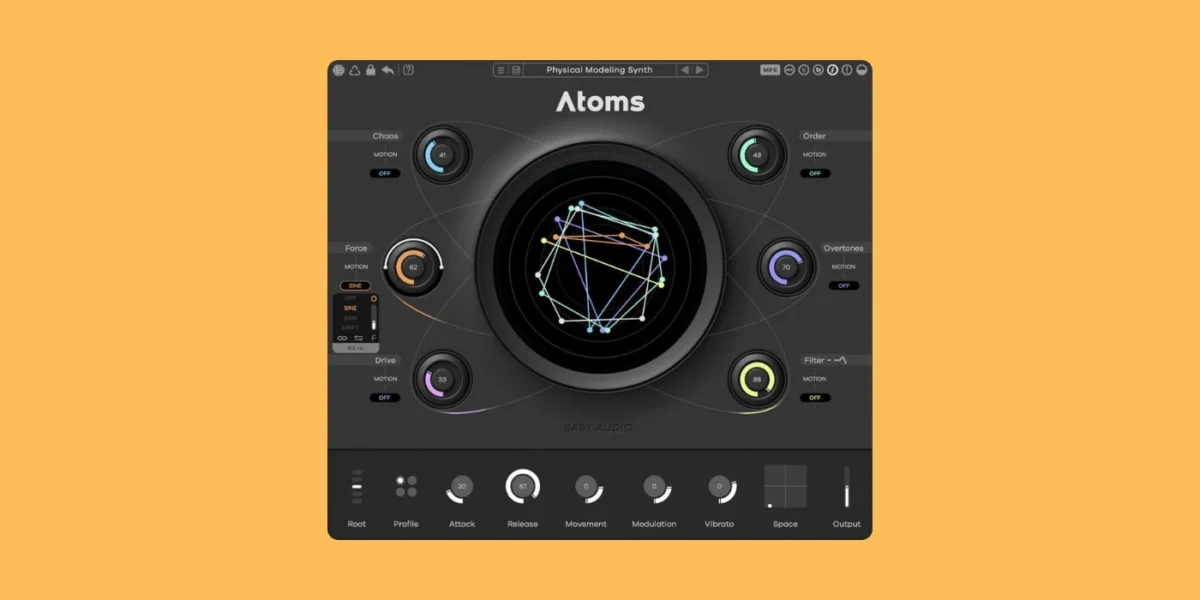
Plugin Boutique, a prominent digital marketplace for music production software, has announced a substantial 60% discount on Baby Audio Atoms, a unique physical modeling synthesizer. This limited-time offer reduces the price of the acclaimed virtual instrument from its standard $99 to an accessible $39. The promotional period is set to conclude on May 13, providing a critical window for producers, sound designers, and musicians to acquire this innovative tool at a significantly reduced cost. Baby Audio Atoms, known for its distinctive sound generation capabilities that move beyond traditional synthesis methods, represents a significant evolution in the virtual instrument landscape, offering a fresh approach to sonic creation.
The Trajectory of Baby Audio: From Acclaimed Effects to Innovative Instruments
Baby Audio has rapidly ascended in the music technology sector, initially garnering widespread recognition for its suite of innovative and user-friendly effects plugins. Products such as Super VHS, a tape-emulation plugin celebrated for its nostalgic lo-fi aesthetic, and Crystalline, a modern algorithmic reverb, quickly established the company’s reputation for developing high-quality tools that blend intuitive design with powerful sonic capabilities. Their plugins often feature a clean interface, robust performance, and a distinct sonic signature that resonates with contemporary producers. This foundation of success in effects processing laid the groundwork for Baby Audio’s ambitious venture into virtual instruments.
The company’s foray into instrument development began with the release of BA-1, an analog-flavored synthesizer inspired by a cult-classic 1980s portable synth. BA-1 quickly earned praise for its warm, vintage character and straightforward interface, demonstrating Baby Audio’s ability to translate complex hardware concepts into accessible software. Atoms, their second virtual instrument, represents a dramatic departure from BA-1’s analog roots, showcasing Baby Audio’s commitment to pushing creative boundaries and exploring diverse synthesis paradigms. While BA-1 offered familiar analog warmth, Atoms dives headfirst into the less conventional, yet profoundly powerful, realm of physical modeling. This strategic expansion signals Baby Audio’s intent to become a comprehensive developer of essential music production tools, catering to a wide spectrum of sonic needs from classic to experimental.
Unpacking Physical Modeling: The Core of Atoms’ Sonic Identity
At the heart of Baby Audio Atoms lies a sophisticated physical modeling engine, a synthesis method that fundamentally differs from more common approaches like subtractive, additive, or sampling synthesis. Instead of generating sound from basic waveforms (subtractive) or complex mathematical combinations of sine waves (additive), or simply playing back recorded audio (sampling), physical modeling synthesizes sound by simulating the physical properties and interactions of real-world acoustic objects. In the case of Atoms, this involves a virtual system of interconnected masses and springs. These elements are then "excited" by a virtual bow, mimicking the way a string instrument is played. The sound that emerges is not a pre-recorded sample or a static waveform, but rather the real-time, dynamic response of this simulated physical system to the user’s input.
This methodology offers unparalleled realism in simulating acoustic instruments, as famously demonstrated by early pioneers like Yamaha with their VL1 and VP1 synthesizers in the 1990s. However, modern physical modeling, as exemplified by Atoms, often extends beyond mere emulation. It leverages the underlying physics to create sounds that are entirely new and impossible to achieve with traditional instruments or synthesis methods. The intricate interplay between the masses, springs, and the excitation source allows for a vast spectrum of timbres, from delicate plucks and bowing to resonant impacts and complex, evolving textures. The subtle nuances of these physical interactions, such as resonance, sympathetic vibrations, and material properties, are algorithmically rendered, resulting in sounds that possess an organic quality and responsiveness that is difficult to replicate through other means. This approach makes Atoms exceptionally powerful for sound designers seeking unique sonic palettes that possess both a tangible presence and an otherworldly quality.
Sonic Versatility and Distinctive Character
Baby Audio Atoms is not merely a technical marvel; its true strength lies in its profound sonic versatility and unique character. While it can convincingly emulate certain aspects of real-world sounds like strings, plucks, and basses, its true forte, as many users attest, lies in crafting sounds that transcend known acoustic boundaries. These "non-existent" sounds often possess an ethereal quality, a rich internal movement, and a depth that makes them instantly engaging.
One of the standout features consistently highlighted by users is Atoms’ "super-rich low end." This characteristic is particularly unexpected from a physical modeling synth, which might traditionally be associated with more delicate or bright timbres. However, Atoms delivers bass presets that are described as modern, possessing significant weight and a subtly detuned character. This combination allows them to cut through a mix with remarkable clarity and presence, often outperforming traditional subtractive synthesizers in certain contexts. The deep, resonant frequencies produced by Atoms add a foundational layer of warmth and power that can elevate any production, from electronic music to cinematic scores.
Beyond its impressive bass capabilities, Atoms excels in generating lush pads and evolving atmospheres. These sounds are characterized by their dynamic movement and inherent sense of progression, evolving naturally as chords are sustained. Users can craft textures ranging from subtly shifting soundscapes to dramatic, seasick pitch wobbles and cinematic drones. This makes Atoms an invaluable asset for film scoring, game audio, and ambient music production, where dynamic and immersive soundscapes are paramount. The ability to create sounds that inherently "breathe" and transform over time offers composers and producers a powerful tool for injecting organic motion and emotional depth into their projects. While it can produce string-like timbres, it is crucial to understand that Atoms is not designed to be a hyper-realistic orchestral library. Its strength lies in evocative, stylized interpretations rather than faithful replication, offering an artistic interpretation of physical phenomena rather than a pristine sonic photograph.
The Architecture of Sound: Controls and Modulation
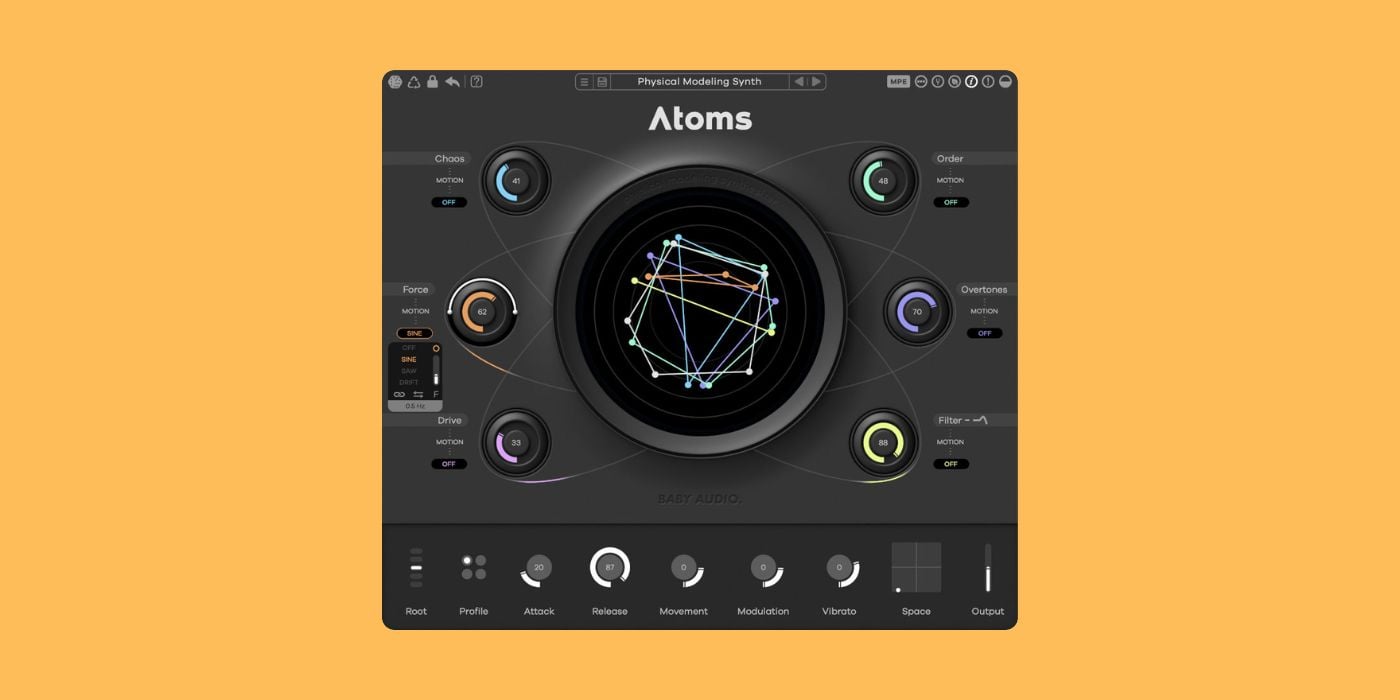
The design philosophy behind Baby Audio Atoms emphasizes both depth and accessibility. The instrument features a streamlined front panel with six primary controls: Chaos, Order, Force, Overtones, Drive, and Filter. Each of these parameters plays a crucial role in shaping the physical model and the resulting sound.
- Chaos and Order: These controls likely influence the randomness and predictability of the physical model’s behavior, allowing users to dial in anything from pristine, stable tones to wildly unpredictable and evolving textures.
- Force: This parameter would typically dictate the intensity or impact of the virtual bow, affecting the initial transient and overall energy of the sound.
- Overtones: This control allows for manipulation of the harmonic content, enabling users to shift the spectral balance and richness of the timbre.
- Drive: Introducing saturation or distortion, Drive can add grit, warmth, or aggression to the sound, expanding its dynamic range.
- Filter: A classic sound-shaping tool, the filter allows for tonal sculpting, emphasizing or attenuating specific frequency ranges to refine the timbre.
Crucially, each of these six main controls is equipped with its own dedicated modulation source, which is where Atoms truly comes alive. These modulation options include a sine LFO (Low-Frequency Oscillator), a ramping sawtooth waveform, a "drift" function (which introduces semi-random, organic fluctuations), and MPE (MIDI Polyphonic Expression) aftertouch. The ability to tempo-sync these modulators is a key feature, allowing for rhythmic integration within a musical context. This comprehensive modulation system is what imbues Atoms with its distinctively organic and dynamic character. Unlike many traditional synthesizers where a patch might remain static once set, Atoms encourages constant movement and evolution. The real creative potential is unlocked when these modulators begin to interact, creating intricate sonic tapestries that are constantly shifting and breathing. This deep level of integrated modulation ensures that Atoms is not just a sound generator but a living, evolving sonic entity.
Creative Workflow and Innovation: The Randomizer
Beyond its core synthesis engine and modulation capabilities, Baby Audio Atoms integrates intelligent workflow enhancements designed to inspire creativity. A prime example is its innovative randomizer function. Unlike many randomizers that simply assign arbitrary values to parameters, often resulting in unusable noise, Atoms’ randomizer is specifically "biased toward musically useful results." This intelligent design means that producers can hit the randomize button with confidence, knowing that the generated patches will likely offer a solid starting point for exploration, rather than requiring extensive cleanup.
Further enhancing the creative process is the "Recycle" button. This ingenious feature generates small variations on the current patch, allowing users to subtly explore nearby sonic territories without completely abandoning their initial sound. This iterative approach to sound design is incredibly valuable for fine-tuning and discovering nuanced variations that might otherwise be overlooked. Moreover, users have the flexibility to "lock" any parameter, preventing it from being randomized. This allows for focused experimentation, preserving desired elements of a sound while randomizing others, offering a powerful balance between control and serendipity. This combination of a musically intelligent randomizer and iterative variation tools makes Atoms a highly intuitive and inspiring instrument for both seasoned sound designers and those new to synthesis.
Considerations and Technical Specifications
While Baby Audio Atoms excels in many areas, it also presents a few considerations for users. The built-in reverb, for instance, is described as relatively basic, offering only size and mix controls on an X/Y pad. Many presets lean heavily on this integrated reverb, and users might find themselves opting for external, more sophisticated reverb plugins to achieve a desired level of spatial depth and complexity. This is a common trade-off in virtual instruments, where developers prioritize the core synthesis engine. Additionally, as previously noted, while Atoms can produce string-like timbres, it is not intended to be a realistic orchestral library. Users seeking authentic emulations of violins, cellos, or other orchestral instruments would be better served by dedicated sample libraries. Atoms’ strength lies in its unique, often ethereal, interpretations of physically modeled sounds rather than direct acoustic replication.
From a technical standpoint, Baby Audio Atoms offers broad compatibility across major platforms and plugin formats. It is available as VST, VST3, AU, and AAX, ensuring seamless integration into virtually any modern DAW environment. It supports macOS 10.11 and newer operating systems, with native compatibility for Apple Silicon processors, ensuring optimal performance on the latest Mac hardware. For Windows users, it supports Windows 10 and newer versions. These specifications ensure that a vast majority of contemporary music producers can readily incorporate Atoms into their existing workflows without compatibility concerns.
Strategic Pricing and Market Impact
The current 60% discount, reducing Baby Audio Atoms from $99 to $39, represents a significant strategic move within the competitive virtual instrument market. Such aggressive pricing is often employed by developers to achieve several objectives:
- Market Penetration: A lower price point makes a premium product accessible to a wider audience, including hobbyist producers, students, and those with tighter budgets. This increases the user base, leading to greater brand awareness and community engagement.
- Driving Adoption: For an innovative product like Atoms, which introduces a less common synthesis method, a discount can encourage experimentation and accelerate its adoption by users who might otherwise be hesitant to invest at full price.
- Cross-Promotion: Increased exposure for Atoms can indirectly boost sales of Baby Audio’s other successful products, including their acclaimed effects plugins and the BA-1 synthesizer, as new users become familiar with the brand’s quality.
- Responding to Market Dynamics: In a crowded market, periodic sales are crucial for maintaining visibility and competitiveness, especially against larger developers or those offering subscription models.
Plugin Boutique’s role in this promotion is pivotal. As one of the largest and most trusted online retailers for music software, their platform provides immense reach and credibility. Their frequent sales and curated deals are a significant draw for producers worldwide, making them an ideal partner for developers looking to maximize the impact of promotional campaigns. This collaboration allows Baby Audio to leverage Plugin Boutique’s extensive customer base and marketing infrastructure.
From Baby Audio’s inferred perspective, a spokesperson might suggest, "We are immensely proud of Atoms and the innovative sound design possibilities it offers. This special promotion with Plugin Boutique is a testament to our commitment to making cutting-edge tools accessible to every producer, fostering creativity across the global music community." Similarly, a representative from Plugin Boutique could state, "We are delighted to bring such a significant offer on Baby Audio Atoms to our customers. It’s a truly unique instrument that exemplifies the innovation happening in virtual synthesis, and we believe this discount will allow many more producers to experience its extraordinary capabilities."
The implications for the broader virtual instrument market are also noteworthy. The success of physical modeling synthesizers like Atoms highlights a growing demand for instruments that offer organic, evolving, and distinct sonic textures, especially in genres like cinematic scoring, ambient, and experimental electronic music. This trend encourages other developers to explore diverse synthesis methods beyond traditional subtractive or sample-based approaches, fostering a more innovative and varied ecosystem of music production tools. For individual producers, this discount presents an unparalleled opportunity to acquire a powerful and inspiring instrument that can profoundly expand their creative toolkit, offering sounds that are both deeply resonant and uniquely their own.
Availability and Further Opportunities
The Baby Audio Atoms synthesizer, at its discounted price of $39, is exclusively available through Plugin Boutique until the promotional period concludes on May 13. Interested parties are encouraged to act promptly to take advantage of this limited-time offer. This article contains affiliate links, meaning that Bedroom Producers Blog (BPB) may earn a commission if purchases are made through these links, at no additional cost to the buyer. This standard practice helps support independent music technology journalism.
In addition to the Baby Audio Atoms deal, Plugin Boutique is also featuring other compelling promotions. Notably, the Softube Transient Shaper is currently available for only $19, an impressive 80% off its regular price. Such concurrent deals underscore Plugin Boutique’s commitment to providing exceptional value to the music production community.
Last Updated on April 30, 2026, by Tomislav Zlatic.
