

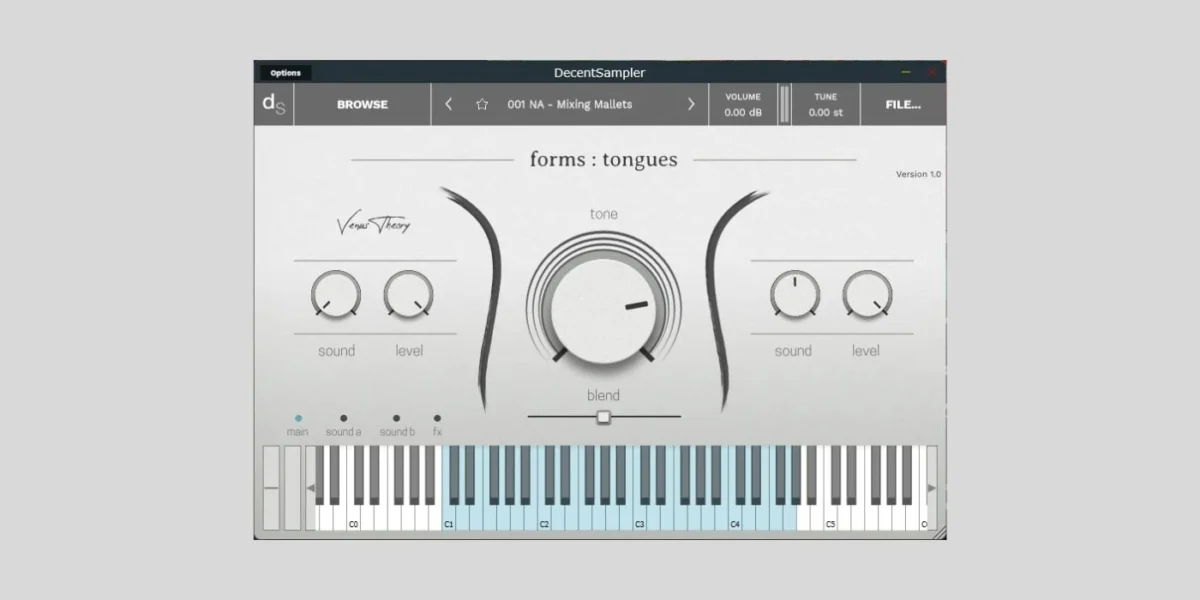
Venus Theory, a prominent developer in the realm of virtual instruments and sound design, has officially launched forms:tongues, a free tongue drum library specifically engineered for the Decent Sampler platform. This release marks another significant contribution to the growing repository of high-quality, accessible tools for music producers and sound designers, further solidifying Venus Theory’s reputation for innovative and generously provided resources. The library, available without cost, integrates the distinctive, resonant qualities of the tongue drum with advanced sound design capabilities, offering a unique sonic palette for a wide array of musical applications.
The Genesis of forms:tongues and Venus Theory’s Free Instrument Legacy
The introduction of forms:tongues follows a consistent pattern of Venus Theory’s commitment to empowering the music production community through high-caliber free releases. This latest offering is part of the developer’s acclaimed "forms" series, which previously saw the release of forms:piano, a free piano library that garnered significant attention for its expressive qualities and nuanced sampling. Another notable predecessor, auras:lichen, belonging to the "auras" series, explored ambient and evolving textures, demonstrating the developer’s versatility and dedication to diverse soundscapes. These earlier releases established a benchmark for the quality and creative potential users have come to expect from Venus Theory, making forms:tongues a highly anticipated addition. The consistent provision of such sophisticated instruments underscores a broader industry trend where developers engage with their audience by offering substantial free content, often acting as a gateway to their commercial offerings or simply as a contribution to the creative commons.
Decent Sampler, the host platform for forms:tongues, plays a crucial role in this ecosystem. Developed by Simon Wilkinson, Decent Sampler is an open-source, cross-platform sample player plugin that has rapidly gained popularity due to its flexibility, ease of use, and compatibility across various digital audio workstations (DAWs). Its open architecture encourages developers like Venus Theory to create and share custom instruments, fostering a vibrant community of sound designers and users. The availability of Decent Sampler across Windows, macOS, and Linux, alongside its VST3, AU, and AAX plugin formats, ensures maximum accessibility for a global audience of music creators.
Unpacking the Tongue Drum: From Propane Tank to Poetic Percussion
At the core of forms:tongues is the tongue drum, an instrument celebrated for its tranquil and hypnotic sonic character. The instrument’s origin story is remarkably unconventional and relatively recent, tracing back to the early 2000s. Its genesis is often attributed to Dennis Havlena, an American musician and inventor, who, inspired by the African slit drum and the Swiss Hang drum, began experimenting by cutting various patterns into empty propane tanks. This pioneering work led to the creation of what he initially termed the "Hank Drum" (a portmanteau of "Hang" and "tank"). This DIY approach quickly resonated with a community of enthusiasts, leading to the rapid evolution and popularization of the instrument under the more descriptive name "tongue drum," referring to the carved "tongues" on its surface that vibrate to produce sound.
While the modern tongue drum is a distinct entity, it shares conceptual lineage with ancient percussion instruments such as the wooden slit drum, found in various cultures across Africa, Asia, and the Americas. These historical instruments, carved from hollowed logs, produced different pitches based on the length and thickness of their "tongues." The tongue drum, however, introduces a metallic resonance and sustain largely absent in its wooden predecessors, offering a unique blend of percussive attack and ethereal decay. Its visually striking, often otherworldly appearance, coupled with its calming sound, has made it a favorite in contexts ranging from meditation and sound therapy to contemporary music compositions seeking unique textural elements. The simplicity of its playing mechanism—typically struck with mallets or fingers—makes it accessible, yet its sonic depth allows for sophisticated musical expression.
Design Philosophy and Technical Innovations in forms:tongues
Venus Theory’s approach to sampling the tongue drum for forms:tongues placed particular emphasis on capturing its authentic acoustic properties, especially its natural decay. The developer meticulously recorded the instrument, ensuring that the true "tail" of each note was preserved. This painstaking attention to detail is critical for recreating the organic sustain and resonant qualities that define the tongue drum’s sound, differentiating it from samples that might employ artificial fading or truncated releases. The result is an instrument that breathes with a natural authenticity, providing a foundation for expressive and realistic performances.
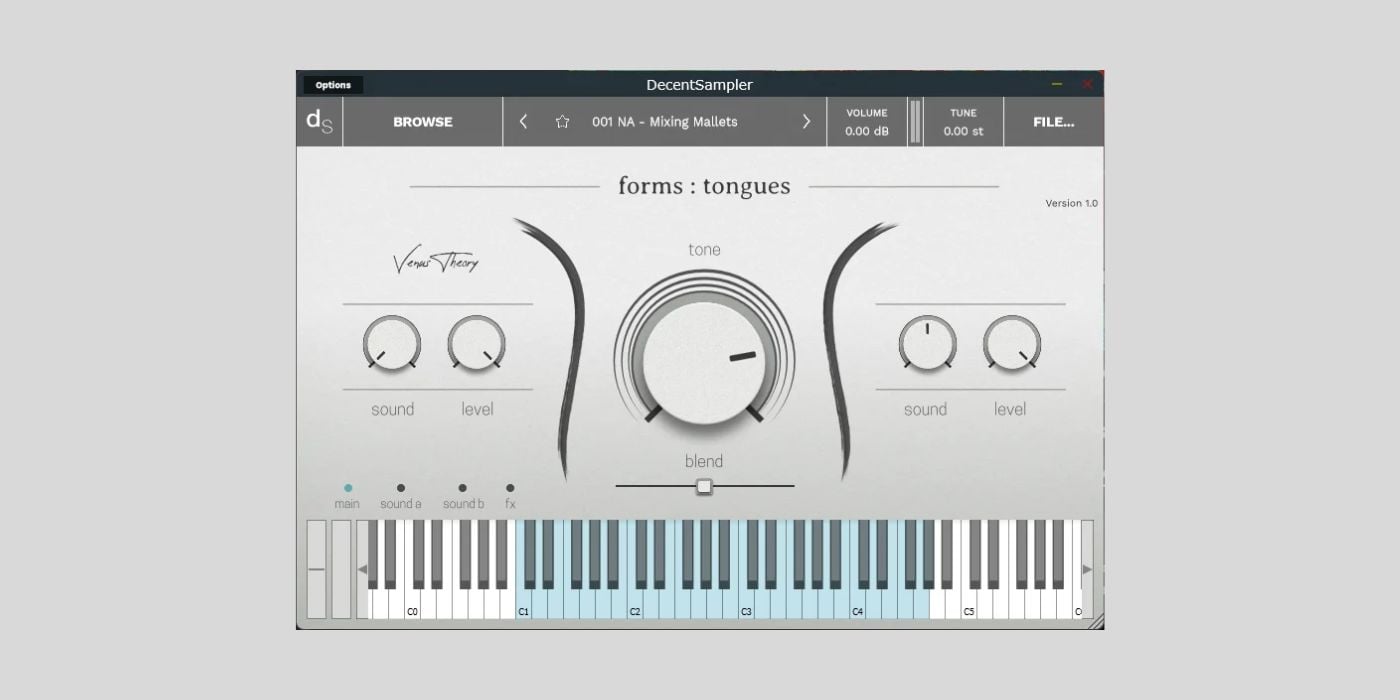
Beyond faithful reproduction, forms:tongues distinguishes itself through an advanced dual-source architecture, a feature inherited from Venus Theory’s highly regarded "auras" series. This design allows users to layer two distinct sound sources, each with its dedicated edit page. This capability facilitates the creation of complex sonic textures by enabling contrasts in pitch, movement, and timbre between the layers. For instance, one layer might focus on the raw percussive attack of the tongue drum, while the other could be sculpted into an extended, pad-like texture, allowing for dynamic morphing between the two. This morphing functionality is a powerful sound design tool, transforming the instrument from a simple percussion source into an evolving soundscape engine.
The instrument’s design also incorporates a built-in resonant filter equipped with an ADSR (Attack, Decay, Sustain, Release) envelope. This allows users to precisely shape the movement and texture of the sound, adding dynamic filtering that can range from subtle timbral shifts to dramatic sweeps. The ADSR envelope provides granular control over how the filter responds over time, enabling expressive articulations that enhance the cinematic potential of the tongue drum’s inherently tranquil sound.
To further deepen the creative possibilities, forms:tongues includes a comprehensive FX tab featuring onboard Drive, Chorus, Delay, and Reverb controls. These effects are not merely add-ons but integral components of the instrument’s sound design capabilities.
- Drive can introduce subtle warmth or aggressive saturation, pushing the gentle tongue drum into more intense sonic territories.
- Chorus adds width and modulation, thickening the sound and creating a sense of movement.
- Delay allows for rhythmic echoes and spacious repetitions, expanding the perceived size of the instrument.
- Reverb places the tongue drum within various acoustic environments, from intimate chambers to vast, ethereal spaces, crucial for crafting cinematic textures.
These integrated effects, combined with the dual-source architecture and dynamic filtering, enable users to transcend the traditional perceptions of the tongue drum, transforming it from a meditation aid into a versatile tool for intricate sound design, particularly within cinematic scoring and ambient music.
Implications for Music Production and the Broader Industry Landscape
The release of forms:tongues carries several significant implications for independent music producers and the virtual instrument industry at large.
- Democratization of Sound: By offering such a high-quality instrument for free, Venus Theory lowers the barrier to entry for aspiring and independent producers. Access to unique and professionally sampled instruments like the tongue drum allows creators with limited budgets to produce music with a rich and diverse sonic palette, previously only accessible through expensive commercial libraries. This fosters greater creative equity within the music production landscape.
- Catalyst for Innovation: Free, high-quality instruments often inspire new creative approaches. Producers might experiment with the tongue drum in genres where it’s not traditionally found, pushing boundaries and leading to fresh sonic discoveries. The advanced sound design capabilities embedded in forms:tongues specifically encourage experimentation beyond the instrument’s inherent qualities.
- Community Engagement and Brand Loyalty: For developers like Venus Theory, providing free assets is a strategic move that builds goodwill, fosters a loyal user base, and establishes a reputation for quality and generosity. This community engagement can translate into increased visibility for their commercial products and a stronger brand identity. The consistent release of free tools positions Venus Theory as a valuable resource within the producer community, encouraging users to explore their entire product ecosystem.
- Challenges to Traditional Business Models: The proliferation of high-quality free plugins, often rivaling commercial counterparts in features and sound quality, forces developers to innovate and rethink their pricing strategies and value propositions. While some may view it as a challenge, it also pushes the industry towards greater efficiency and more competitive offerings, ultimately benefiting the end-user. The "freemium" model, where basic versions are free and advanced features or expansions are paid, is becoming increasingly prevalent.
- Evolution of Sound Design: The ability to morph between percussive and pad-like layers, combined with robust effects, highlights an evolving trend in virtual instrument design. Modern instruments are increasingly designed not just to emulate acoustic counterparts but to be versatile sound design tools capable of generating entirely new sounds and textures. This shift is particularly relevant in contemporary music, film scoring, and game audio, where unique and evolving soundscapes are highly sought after.
Conclusion
forms:tongues represents more than just another free instrument; it is a testament to the ongoing innovation within the virtual instrument sector and Venus Theory’s dedication to the creative community. By taking an instrument with a whimsical origin and a calming sonic character, and imbuing it with sophisticated sound design capabilities for the accessible Decent Sampler platform, Venus Theory has created a powerful tool. It challenges preconceived notions of the tongue drum’s utility, expanding its potential far beyond meditation retreats into the realm of cinematic scoring, ambient soundscapes, and experimental music. This release not only enriches the toolkit of countless producers but also reaffirms the value of generosity and innovation in fostering a vibrant and dynamic music production landscape. The impact of such contributions will continue to resonate, empowering creators and shaping the sounds of tomorrow.
Download: forms:tongues (FREE – Decent Sampler required)
Last Updated on April 24, 2026 by Tomislav Zlatic.
