

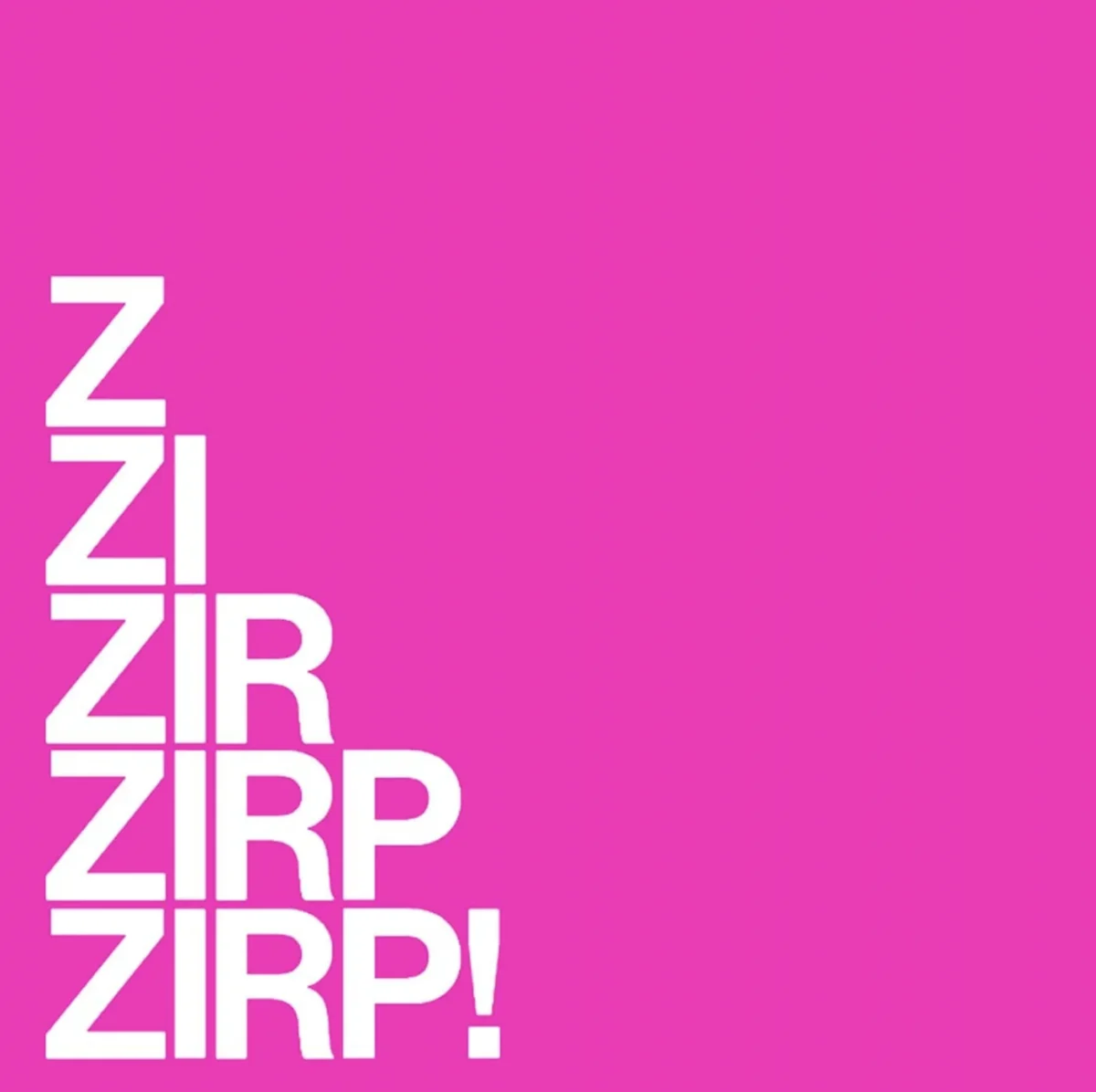
The year 2026 has witnessed A. G. Cook solidify his position as one of contemporary music’s most influential and multifaceted producers, orchestrating a series of high-profile projects that have subtly reshaped the sonic landscape. His pervasive presence, often operating behind the scenes, has underscored his unique ability to traverse genres, from avant-garde pop to experimental rock, consistently pushing artistic boundaries. This trajectory has now led to a highly anticipated collaboration with the acclaimed shoegaze band Diiv, producing their forthcoming album, ZIRP!, slated for release on October 30 via Fantasy. This announcement, coupled with an idiosyncratic and meta-referential marketing campaign, positions Cook not only as a sonic architect but also as a provocateur adept at challenging conventional industry paradigms.
A. G. Cook’s Ascendant Influence: A Year of Prolific Output
Cook’s prolific output in 2026 has been a testament to his versatility and unwavering commitment to artistic innovation. His work this year has spanned various facets of the music industry, impacting both established artists and the broader cultural conversation around pop and experimental sound. His career, initially propelled by the groundbreaking PC Music label he founded, has evolved from a niche, internet-native phenomenon into a significant force influencing mainstream production techniques and artistic sensibilities. PC Music, established in 2013, quickly became synonymous with a hyperreal, deconstructed pop aesthetic, utilizing extreme pitch-shifting, synthetic textures, and a deliberate blurring of sincerity and irony. This foundational philosophy continues to inform Cook’s approach, even as his sound matures and expands.
The Enduring Partnership with Charli XCX
A cornerstone of Cook’s 2026 activities has been his continued, deeply collaborative partnership with pop innovator Charli XCX, a creative alliance that has consistently yielded some of the most forward-thinking pop music of the last decade. This year, their synergy was prominently displayed across two significant projects. Firstly, Cook contributed extensively to the soundtrack of the A24 film and pop mockumentary The Moment. A24, known for its distinctive and often genre-bending cinematic output, provided a fitting canvas for Cook and Charli XCX to explore themes of fame, authenticity, and the constructed nature of pop stardom within a narrative framework. The soundtrack, characterized by its intricate sound design and emotionally resonant yet experimental compositions, served to underscore the film’s satirical edge while also functioning as a standalone artistic statement.
Following this, Cook played a pivotal role in the production of Charli XCX’s seventh studio album, Music, Fashion, Film. This album, lauded for its thought-provoking conceptual depth and sonic ambition, further cemented Charli XCX’s reputation as an artist unafraid to challenge commercial expectations. The album notably features "Magic Metal Montana," a track widely interpreted as a tribute to Cook himself, highlighting the profound personal and professional bond between the two artists. Their collaboration extends beyond mere production; it represents a mutual artistic dialogue, where Cook’s experimental leanings provide a fertile ground for Charli XCX’s pop instincts, resulting in a sound that is both accessible and intellectually stimulating. This ongoing partnership exemplifies how a producer can become an integral creative partner, shaping an artist’s identity and trajectory over multiple releases.
Resurfacing Experimental Roots: The Dux Content Reissue
Beyond his work with Charli XCX, Cook also revisited his earlier experimental roots in 2026 through the reissue of music from Dux Content, his collaborative project with fellow PC Music co-founder Danny L Harle. Dux Content, a precursor to much of the PC Music sound, was a vehicle for exploring highly abstract and often deconstructed electronic music. The reissue, featuring previously unreleased material, offered a valuable glimpse into the formative stages of the hyperpop movement and the intricate sonic palette that Cook and Harle were developing. This move not only served to satisfy a dedicated fanbase eager for more archival material but also provided crucial historical context for understanding the evolution of Cook’s production philosophy and the broader influence of PC Music on contemporary electronic music. The re-release underscored the enduring relevance of their early experiments and their continued impact on a generation of artists and producers.
Diiv’s Sonic Evolution and the Anticipation for ZIRP!
The announcement of A. G. Cook’s production credit on Diiv’s new album, ZIRP!, represents a significant and intriguing cross-pollination of musical worlds. Diiv, the Brooklyn-based shoegaze and indie rock outfit, has cultivated a distinct sound characterized by hazy guitar textures, ethereal vocals, and a melancholic introspection since their formation in 2011. Their discography, comprising albums like Oshin (2012), Is the Is Are (2016), and Frog In Boiling Water (2024), has earned them critical acclaim for their ability to blend dream-pop sensibilities with a raw, often vulnerable lyrical honesty.
Diiv’s Trajectory: From Shoegaze Roots to Indie Mainstays
Diiv’s debut album, Oshin, immediately established them as a prominent voice in the resurgence of shoegaze, drawing comparisons to foundational bands like My Bloody Valentine and Slowdive, while infusing their sound with a unique, sun-drenched quality. Their subsequent releases saw the band grapple with internal challenges and external pressures, which often found their way into their music, adding layers of emotional complexity to their atmospheric sound. Frog In Boiling Water, released earlier in 2024, continued their exploration of intricate guitar work and introspective themes, further cementing their status as a band committed to artistic growth and sonic refinement. Given Diiv’s established aesthetic, the collaboration with A. G. Cook, renowned for his avant-garde electronic pop, presents a fascinating artistic juxtaposition that promises to push both artists into uncharted sonic territories. The anticipation among fans and critics alike stems from the potential for Cook to either radically deconstruct Diiv’s signature sound or to integrate his experimental sensibilities in a way that subtly recontextualizes their established style.
The Unconventional Rollout: A Deconstruction of the ZIRP! Marketing Campaign
Perhaps as compelling as the music itself is the highly unconventional and deliberately enigmatic marketing campaign surrounding ZIRP!. In a music industry increasingly reliant on standardized promotional cycles, Diiv and Cook have opted for a strategy that actively subverts traditional expectations, leaning into a meta-commentary on corporate branding and artistic messaging. This approach bears the unmistakable hallmarks of Cook’s early PC Music ethos, where the presentation and packaging of music were as integral to the artistic statement as the audio itself.
Chronology of the Tease
The campaign began subtly, with Diiv announcing the album and linking a presave page on Instagram on a Saturday. This was quickly amplified when A. G. Cook reshared a tease on his own Instagram Stories, leveraging his considerable online presence to broaden the reach of the nascent campaign. The strategy escalated with the physical dissemination of business cards to select fans via mail. These cards, tangible artifacts in a digital age, featured a QR code that directed recipients to the band’s official website, alongside a phone number: +1 229-798-9477. This multi-platform, interactive approach immediately signaled that ZIRP! was more than just an album; it was an experience, a puzzle to be solved.
The Telemarketer Message: Decoding the Future of "Alternative Multimedia Entertainment"
The most striking element of the campaign emerged when fans dialed the provided phone number. Instead of a conventional voicemail or a musical snippet, callers were greeted with a telemarketer-like message, dispassionately announcing ZIRP! as "the future of alternative multimedia entertainment." This phrase alone is pregnant with meaning, suggesting an album that transcends mere audio to encompass a broader, perhaps interactive or conceptual, artistic domain. The message continued with declarations of intent: to "challenge assumptions," to "create entire new categories," and to "think on a global scale." These statements are not merely promotional taglines; they are artistic manifestos, aligning perfectly with A. G. Cook’s long-standing commitment to disrupting established norms and redefining genres. The use of a telemarketing voice, a symbol of impersonal corporate communication, creates a deliberate irony, suggesting a critique of the very systems it imitates. It forces listeners to question the nature of advertising, authenticity, and the consumption of art in an increasingly commercialized world.
Echoes of PC Music: Corporate Aesthetics and Artistic Subversion
This faux company marketing scheme is deeply reminiscent of the early days of PC Music, where Cook and his collaborators frequently played with corporate aesthetics, branding, and product placement in bizarre and often satirical ways. The label’s initial releases often came with hyper-stylized artwork resembling product packaging, and their artists adopted personas that blurred the lines between human and algorithm. This approach was not simply a gimmick; it was a sophisticated form of artistic critique, exploring the commodification of culture, the pervasive influence of advertising, and the constructed nature of identity in the digital age. By adopting a similar strategy for ZIRP!, Cook and Diiv are not only generating buzz but also inviting their audience to engage with the album on a deeper, conceptual level. The campaign itself becomes a part of the art, challenging listeners to consider the relationship between music, product, and marketing in a post-modern landscape. It suggests that ZIRP! will not merely be an album to be heard, but a statement to be deciphered, a commentary to be absorbed.
The Sonic Convergence: A. G. Cook’s Production Vision Meets Diiv’s Ethereal Sound
The most significant implication of this collaboration lies in the potential sonic synthesis between A. G. Cook’s production sensibilities and Diiv’s established sound. Cook’s recent work, particularly with his side project Thy Slaughter and his solo endeavors like Disc two: Present from last year’s three-part project Britpop, has shown a marked inclination towards anthemic, grungy guitar territories. This evolution from his earlier, more purely electronic work suggests a deliberate move towards integrating organic instrumentation and raw, rock-influenced aesthetics into his production repertoire.
Cook’s Evolving Sound: From Hyperpop to Grungy Anthems
Cook’s Britpop project, in particular, demonstrated his capacity to deconstruct and recontextualize familiar genres, imbuing them with his characteristic blend of maximalist production and emotional depth. The "grungy guitar territory" observed in these works indicates a producer who is not confined to a single sound but is continually experimenting with textures and dynamics. This recent stylistic shift makes him a surprisingly fitting, albeit unexpected, choice for Diiv. Shoegaze, by its very nature, relies heavily on guitar effects, layers of distortion, and atmospheric soundscapes. Cook’s expertise in manipulating sound, creating vast sonic spaces, and injecting unexpected elements could theoretically elevate Diiv’s shoegaze foundation, introducing new dimensions of clarity, intensity, or even a deconstructed hyperrealism to their traditionally melancholic sound.
Anticipating the Blend: Implications for Genre Boundaries
The "cacophony" that could emerge from this collaboration is a source of considerable excitement. Diiv’s signature wall of sound, characterized by intricate guitar interplay and reverb-drenched vocals, could be amplified, distorted, or entirely re-imagined through Cook’s lens. One could anticipate a ZIRP! that retains Diiv’s emotional core but is imbued with Cook’s signature sheen, unexpected sonic twists, and perhaps even a subtle undercurrent of hyperpop’s synthetic brilliance. Conversely, Diiv’s raw, band-oriented approach could ground Cook’s often abstract productions, lending them a new sense of organic weight and emotional immediacy. This convergence could result in an album that transcends conventional genre classifications, offering a fresh perspective on both shoegaze and experimental pop. It could be a testament to Cook’s ability to adapt his vision to diverse artistic contexts, proving that his influence extends far beyond the confines of electronic music.
Broader Implications and Industry Trends
The collaboration between A. G. Cook and Diiv, alongside its unique marketing, carries broader implications for the music industry. It further blurs the lines between traditionally disparate genres, reflecting a growing trend of artists and producers moving freely across stylistic boundaries. This cross-pollination fosters innovation and challenges audience expectations, demonstrating that artistic merit can emerge from unexpected syntheses. Cook’s continued high-profile engagements reinforce his status as a tastemaker and a producer capable of not only creating commercially viable music but also pushing the avant-garde into the mainstream. His trajectory from underground pioneer to a go-to collaborator for diverse acts underscores a shift in industry appreciation for experimentalism.
Moreover, the ZIRP! marketing campaign serves as a timely reminder of the power of conceptual art within music promotion. In an era saturated with content, the deliberate creation of a narrative, a puzzle, or a meta-commentary can cut through the noise more effectively than conventional advertising. It encourages active participation from the audience, transforming passive consumption into an engaging experience. This approach could inspire other artists to think more creatively about how they introduce their work to the world, potentially leading to a more dynamic and interactive promotional landscape.
As the October 30 release date approaches, the absence of any singles or sound clips only heightens the intrigue surrounding ZIRP!. The project is poised to be more than just an album; it is anticipated to be a significant cultural statement, a testament to the evolving nature of music production, genre, and artistic presentation in the 21st century. The confluence of Diiv’s atmospheric introspection and A. G. Cook’s hyperreal innovation promises a release that will undoubtedly challenge assumptions and potentially create entirely new categories within the contemporary music lexicon.
