

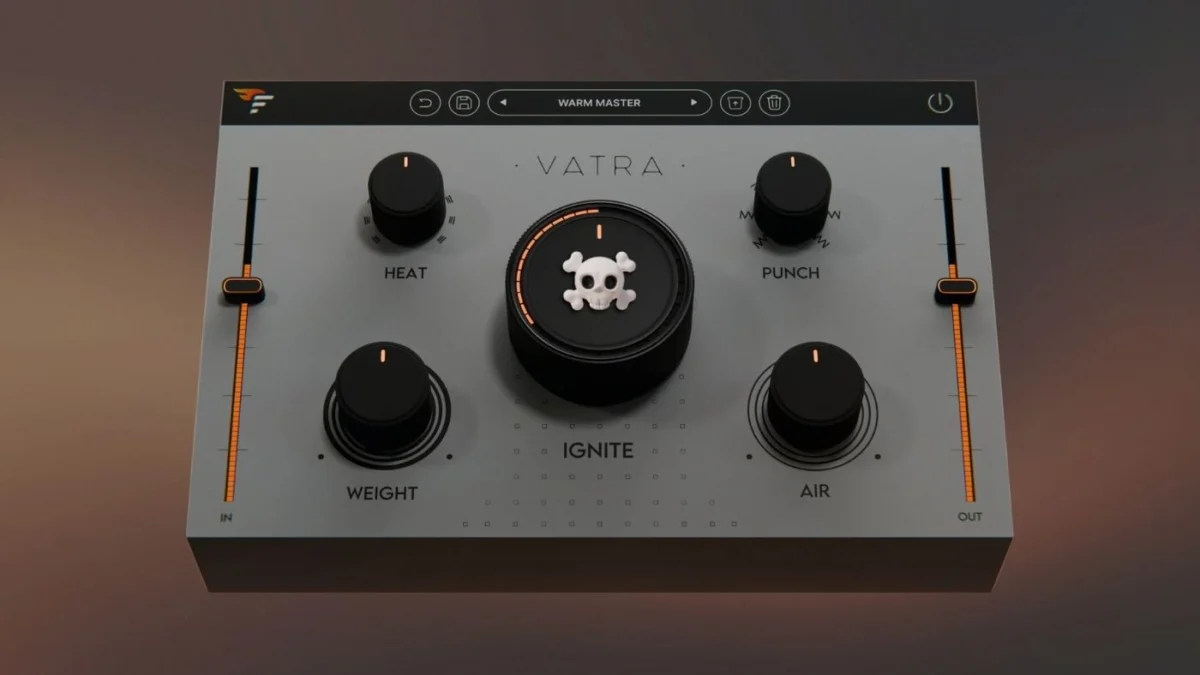
Barely two days after its public debut on July 29, the premium audio plugin VATRA, the culmination of nearly two years of dedicated development by Tomislav Zlatic of Flame Sound, was found to be circulating in pirated form online. This swift breach of intellectual property, while a frustrating milestone for any software developer, has prompted Zlatic to reaffirm an unconventional stance: a commitment to a DRM-free (Digital Rights Management) business model, prioritizing user experience and trust over restrictive copy protection.
The Genesis of VATRA and Its Swift Piracy
Tomislav Zlatic, widely recognized for his extensive work with Bedroom Producers Blog, embarked on the ambitious project to create VATRA, his inaugural premium plugin for Flame Sound, over a period spanning almost two years. This intensive development cycle culminated in its official launch, a moment typically celebrated by developers as the realization of a significant creative and technical endeavor. However, the anticipated joy was quickly tempered by the discovery that pirated copies of VATRA v1.0 were readily available on the internet by July 31, a mere 48 hours post-release.
Zlatic expressed a degree of surprise at the rapidity of the piracy, acknowledging that while he knew it was an eventual inevitability, its occurrence so soon after launch was unexpected. This immediate challenge, however, did not lead to a reactive shift towards implementing more stringent security measures. Instead, it solidified his pre-existing decision to release VATRA without any form of copy protection, a choice that stands in stark contrast to the prevailing industry norms.
A Principled Stand Against Copy Protection
The decision to forgo copy protection was not an afterthought but a deliberate, foundational principle for VATRA and, by extension, for Flame Sound. Zlatic’s philosophy is deeply rooted in his 15 years of observing and reporting on the plugin industry through Bedroom Producers Blog. During this time, he has witnessed firsthand the widespread frustration among music producers regarding intrusive and often problematic DRM systems.
"I have no love for license managers, broken activations, dongles, or installers that seem to have a personal grudge against your free time," Zlatic stated, encapsulating the sentiment of countless users. Producers frequently encounter issues when changing computers, reinstalling operating systems, attempting to work offline, or simply trying to use a purchased plugin on a different device. These scenarios often transform a creative tool into a technical problem, eroding user satisfaction and productivity.
For Zlatic, the trade-off between attempting to deter piracy and burdening legitimate customers with cumbersome activation systems "never made much sense." He argues that any copy protection, no matter how sophisticated, can eventually be cracked. Once circumvented, the protection system leaves behind only "more friction for the customers who paid." This perspective underscores a core belief: that the negative impact on honest, paying customers outweighs the perceived benefits of slowing down or preventing piracy altogether.
The Broader Landscape of Software Piracy and Its Impact
Software piracy remains a significant global challenge, with various industry reports consistently highlighting its economic toll. According to data from organizations like the Business Software Alliance (BSA), the commercial value of unlicensed software installed on personal computers globally often runs into tens of billions of dollars annually. While these figures encompass a broad spectrum of software, the music production industry, with its specialized tools and creative software, is particularly susceptible.
The ease of digital distribution, coupled with the global reach of the internet, means that software, once released, can be copied and shared illicitly with remarkable speed. For independent developers and smaller companies like Flame Sound, this poses a unique threat. Unlike large corporations with extensive legal and security resources, indie developers often operate on tighter margins, where every legitimate sale directly contributes to ongoing development, support, and the sustenance of the business. The financial impact of piracy on these smaller entities can be disproportionately severe, potentially stifling innovation and future product releases.
However, the debate surrounding piracy is complex. Some argue that a certain percentage of pirated software acts as an extended trial, eventually converting some users into paying customers who appreciate the product enough to support its creators. This "try before you buy" argument, while not universally accepted, suggests that not every pirated copy represents a lost sale. Zlatic’s approach implicitly acknowledges this, inviting users of pirated copies to consider a legitimate purchase if VATRA proves its worth in their creative workflow.
The Value Proposition of a Legitimate License: Beyond the File
While VATRA’s DRM-free status might make it "easier to pirate," Zlatic emphasizes that it also makes it "easier to use," and that the latter holds greater importance for him. He articulates a clear value proposition for purchasing a legitimate license, one that extends far beyond merely acquiring the software file.
Crucially, a paid VATRA license includes lifetime free updates. Zlatic has publicly committed to continuously improving the plugin, stating that v1.0 is merely the starting point. This means that pirated copies, by their nature, are "frozen in time." They will not receive essential bug fixes, workflow enhancements, gain compensation features, or any of the myriad improvements that arise from post-launch user feedback and ongoing development. The gap between the static, pirated version and the evolving, official version is designed to widen significantly with each subsequent update, diminishing the utility and longevity of unauthorized copies.
Furthermore, a legitimate purchase grants users a comprehensive license that covers installation on up to three personal computers. It also provides the flexibility to transfer the license if a user decides to move on from the plugin. Everything created using a licensed version of VATRA is legally and unequivocally owned by the user. Beyond these technical and legal assurances, paying customers receive the official, clean installer and access to real, direct support from the developer. This support network is invaluable for troubleshooting, guidance, and contributing to the plugin’s future direction.
Perhaps most importantly, every license purchased directly supports the ongoing development efforts of Flame Sound. This financial contribution ensures that Zlatic can continue to invest time, resources, and expertise into refining VATRA and potentially developing new tools, fostering a symbiotic relationship between creators and their community.
Flame Sound’s Business Model: Building on Trust and Community
Flame Sound’s approach, spearheaded by Zlatic, represents a conscious decision to build a business model centered on trust, community engagement, and the inherent value of a continuously evolving product, rather than relying on an infrastructure of suspicion and technical obstacles. By eschewing restrictive DRM, Flame Sound aims to cultivate a positive relationship with its user base, where genuine support is rewarded with seamless access and ongoing innovation.
This strategy seeks to attract users who value ease of use, stability, and direct engagement with developers. Zlatic envisions Flame Sound as a company shaped by the feedback, questions, and loyalty of its users – those who "try the plugin, like it, buy it, write with questions, send feedback, and help shape what comes next." This collaborative ethos contrasts sharply with models where developers are perceived as battling against their own user base.
The success of such a model hinges on several factors: the quality and unique value of the product itself, the developer’s commitment to continuous improvement, and the ethical integrity of the user community. While piracy is acknowledged as an annoyance, Zlatic’s focus remains squarely on fostering a positive environment for those who choose to support his work.
Industry Implications and Accessing VATRA
The bold stance taken by Flame Sound could serve as a case study within the broader software development community. While many developers remain committed to various forms of copy protection, citing significant revenue losses from piracy, Zlatic’s experiment offers an alternative perspective. It challenges the conventional wisdom by suggesting that a superior user experience and a strong value proposition for legitimate licenses might be more effective long-term strategies than an endless, costly "cat and mouse" game with crackers. The music software industry, in particular, has seen a growing number of independent developers, and the outcomes of such DRM-free initiatives will be closely watched.
For those interested in experiencing VATRA legitimately, Flame Sound offers a comprehensive 7-day trial. This trial is notably free of common deterrents: no signup is required, the feature set is complete and uncut, and there are no "weird hoops to jump through." Users can download the full trial version directly from flamesound.com/vatra-trial, allowing them to thoroughly evaluate the plugin’s capabilities before making a purchase decision.
VATRA is currently available for $39, a promotional price valid until August 16. This pricing structure aims to make the plugin accessible while reflecting its premium quality and the ongoing commitment to its development. The availability of an unrestricted trial and a straightforward purchase process further reinforces Flame Sound’s dedication to user-centric accessibility.
In conclusion, the rapid piracy of VATRA has not deterred Tomislav Zlatic’s vision for Flame Sound. Instead, it has strengthened his resolve to build a company around trust, user satisfaction, and the continuous evolution of his products, proving that for some, the value of an unencumbered user experience outweighs the constant battle against illicit distribution. This approach posits that an engaged, supported, and respected user community is the most robust form of protection and the most vital asset for any software developer.
Last Updated on August 5, 2026 by Tomislav Zlatic.
