

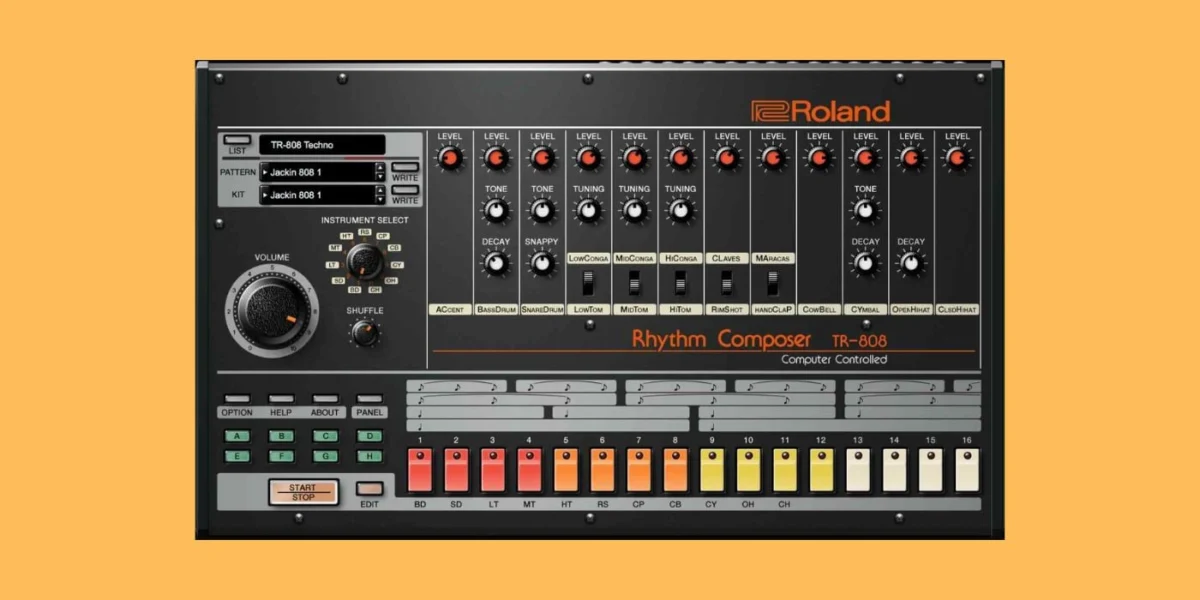
This compelling offer, which commenced in recognition of the iconic drum machine’s cultural impact, is slated to run until August 31st, 2026, providing a substantial window for producers and enthusiasts to acquire the seminal sound. Furthermore, the purchase of the TR-808 plugin during this period qualifies buyers for Plugin Boutique’s current free gift promotion, adding further value to the discounted price point.
The Roland TR-808 Rhythm Composer holds an unparalleled status in music history. Introduced in 1980, this programmable drum machine, despite an initially lukewarm reception and commercial struggles, would ultimately become one of the most influential electronic musical instruments ever created. Its distinctive sonic palette—characterized by the booming, resonant kick drum, the crisp snare, the sharp rimshot, and its peculiar cowbell—has permeated countless genres and shaped the very fabric of modern music. The "thumping 808 low-end," a direct consequence of its unique analog synthesis, has served as a foundational element in early electro, hip-hop, and techno, evolving to become a ubiquitous presence in contemporary trap, pop, and various electronic dance music styles. Whether as a prominent rhythmic anchor or a subtle sub-layer beneath other percussive elements, the 808’s influence is undeniable and enduring.
This particular offering is the official plugin version developed by Roland, the very company responsible for the original hardware unit over four decades ago. In an era saturated with 808 sample packs, emulations, and inspired-by instruments—such as the freely available BPB Cassette 808 sample pack—Roland’s software recreation stands apart as the authoritative digital embodiment. The plugin leverages Roland’s proprietary Analog Circuit Behavior (ACB) modeling technology, a sophisticated process designed to meticulously replicate not only the sound but also the intricate nuances and behavioral characteristics of the original analog circuitry at a component level. This ensures an authentic sonic experience that goes beyond mere sampling, capturing the dynamic and expressive qualities that defined the hardware.
Beyond faithful sonic reproduction, the TR-808 plugin introduces a suite of modern workflow enhancements tailored for integration within a contemporary Digital Audio Workstation (DAW) environment. Producers gain access to essential controls like tuning and decay for each individual instrument, allowing for unprecedented sound sculpting possibilities that were either limited or non-existent on the original hardware. An internal overdrive circuit provides the capability to push the sounds harder, introducing saturation and grit for a more aggressive or characterful tone. The integrated step sequencer has been significantly expanded, featuring dedicated lanes for each drum voice, offering a more intuitive and comprehensive sequencing experience than its hardware predecessor.
The sequencer’s advanced capabilities further distinguish the plugin from simple sample players. Each pattern can accommodate up to eight variations, facilitating dynamic and evolving arrangements. A highly practical drag-and-drop functionality allows users to effortlessly transfer audio or MIDI patterns directly into their project timelines, streamlining the composition process. Moreover, the sequencer offers adjustable flams for realistic fills, sub-steps for intricate rhythmic variations, soft hits for nuanced dynamics, per-instrument last step settings for polymetric explorations, and shuffle controls to inject groove and human feel. These features collectively empower producers with a versatile rhythmic workstation, extending far beyond the capabilities of the original hardware or basic 808 sample libraries.
Roland has also demonstrated a commitment to bridging the gap between its digital and physical products through hardware integration. Users of the modern TR-8S Rhythm Performer and the TR-08 Boutique Series drum machine can benefit from seamless connectivity. Patterns created on the TR-8S can be transferred directly into the plugin, allowing for further editing and refinement in a software environment. Conversely, beats developed within the plugin can be sent back to the hardware units for performance or additional processing. Furthermore, both the TR-8S and TR-08 can be utilized for hands-on control of the plugin, providing a tactile, performance-oriented experience that mirrors the classic hardware interaction.
The free gift options available with the deal represent a significant additional incentive. As of the promotion’s announcement, these options included highly regarded tools such as Melodyne 5 Essential, Baby Audio TAIP, Serato Hex FX, and Excite Audio Evolve Alloy Lite. It is important for prospective buyers to note that the availability of these specific free gifts can fluctuate, and checking Plugin Boutique’s cart page prior to finalizing a purchase is advised to confirm the current selection.
The Roland TR-808 plugin is designed for broad compatibility within professional audio production setups. It supports Windows 10 or 11 and macOS 11 Big Sur or later operating systems. It functions seamlessly within compatible DAWs and plugin hosts that support the VST, AU, or AAX plugin formats, covering the vast majority of modern production environments. An internet connection is requisite for the initial installation and subsequent activation of the software, which is managed through Roland Cloud.
From Analog Anomaly to Digital Dominance: The Legacy of the Original TR-808
The story of the Roland TR-808 Rhythm Composer is one of initial misjudgment followed by an unforeseen ascent to iconic status. When it was launched in 1980, Roland’s intention was to create an affordable, programmable drum machine for studio musicians to use as a songwriting aid or for demo production. It was not designed to replicate acoustic drums accurately, but rather to offer a unique palette of synthesized percussive sounds. The initial reception was lukewarm; many professional drummers and producers at the time sought more realistic drum sounds, which the 808, with its distinctly artificial tones, could not provide. Compounding its commercial struggles, the TR-808 was discontinued in 1983 after producing approximately 12,000 units, replaced by the more realistic-sounding TR-909.
However, its relatively low price on the second-hand market after discontinuation made it accessible to a new generation of burgeoning producers, particularly those experimenting with nascent genres like electro, hip-hop, and techno. Artists such as Afrika Bambaataa with "Planet Rock" (1982), Marvin Gaye with "Sexual Healing" (1982), and later countless producers in Chicago house and Detroit techno, embraced its unique sonic footprint. The 808’s sounds became synonymous with these emerging styles, defining their rhythmic backbone and providing a distinct sonic identity. Its "booming kick," in particular, found favor in genres that prioritized powerful low-end frequencies, laying the groundwork for bass-heavy music styles that persist to this day. The quirky, almost toy-like sounds that were once criticized—like the cowbell or the claps—became beloved signatures, adding character and groove that could not be replicated by conventional acoustic drums. The instrument’s journey from commercial failure to cultural touchstone illustrates a profound shift in musical aesthetics, where synthesized sounds were not merely substitutes for acoustic instruments but powerful artistic tools in their own right.
Engineering Authenticity: Roland’s Analog Circuit Behavior (ACB)
Roland’s commitment to faithfully recreating its legendary hardware in the digital realm is epitomized by its Analog Circuit Behavior (ACB) technology. Unlike basic sampling, which captures a static snapshot of a sound, ACB modeling involves a painstaking process of analyzing the original analog circuits at a component level. Engineers meticulously study schematics, measure the electrical characteristics of individual resistors, capacitors, and transistors, and then build complex mathematical models that simulate their interactions in real-time. This approach allows the digital recreation to emulate the dynamic responses, subtle nonlinearities, and sonic characteristics that give analog hardware its unique "feel" and expressiveness. For the TR-808, this means that the plugin doesn’t just sound like an 808; it behaves like one, responding to parameter changes and sequencing inputs in a manner consistent with the original analog machine. This level of detail is crucial for capturing the elusive "mojo" that makes classic instruments so revered.
The Broader Impact: Accessibility, Preservation, and the Future of Sound
The availability of official, high-quality software emulations like the Roland TR-808 plugin carries significant implications for music production and the preservation of musical heritage. Firstly, it dramatically enhances accessibility. Original TR-808 units are now exceedingly rare, expensive, and often require specialized maintenance. By offering an official software version at an accessible price point, Roland democratizes access to this seminal sound, allowing a new generation of producers, regardless of their budget or geographical location, to integrate its iconic rhythms into their music. This fosters continued innovation and ensures that the legacy of the 808 remains vibrant and relevant.
Secondly, these plugins play a crucial role in preservation. As original hardware ages and components become scarce, maintaining these machines becomes increasingly challenging. Digital emulations provide a timeless, stable, and easily distributable form of these instruments, ensuring their sounds and functionalities are preserved for future generations. This digital archiving is vital for music education, historical research, and creative continuity.
Finally, the added functionalities of the plugin, such as the expanded sequencer, per-instrument controls, and internal effects, push the creative potential beyond the limitations of the original hardware. While respecting the core identity of the 808, these enhancements allow producers to explore new sonic territories and integrate the classic sounds into modern production workflows more seamlessly. This balance between historical accuracy and contemporary utility ensures that instruments like the TR-808 continue to inspire and shape the sound of music for decades to come, solidifying its place not just in history, but in the ongoing evolution of electronic music. The current Plugin Boutique deal is not merely a discount; it is an invitation to engage with a piece of musical history, reimagined for the modern age, offering unparalleled creative possibilities at an exceptional value.
This article contains affiliate links, which means BPB may earn a commission if you purchase through those links at no extra cost to you.
Download: Roland TR-808 ($49)
Deal of the day 🔥: Get the VATRA mix finisher plugin by Flame Sound!
Last Updated on August 7, 2026 by Tomislav Zlatic.
Make BPB your preferred source on Google
