

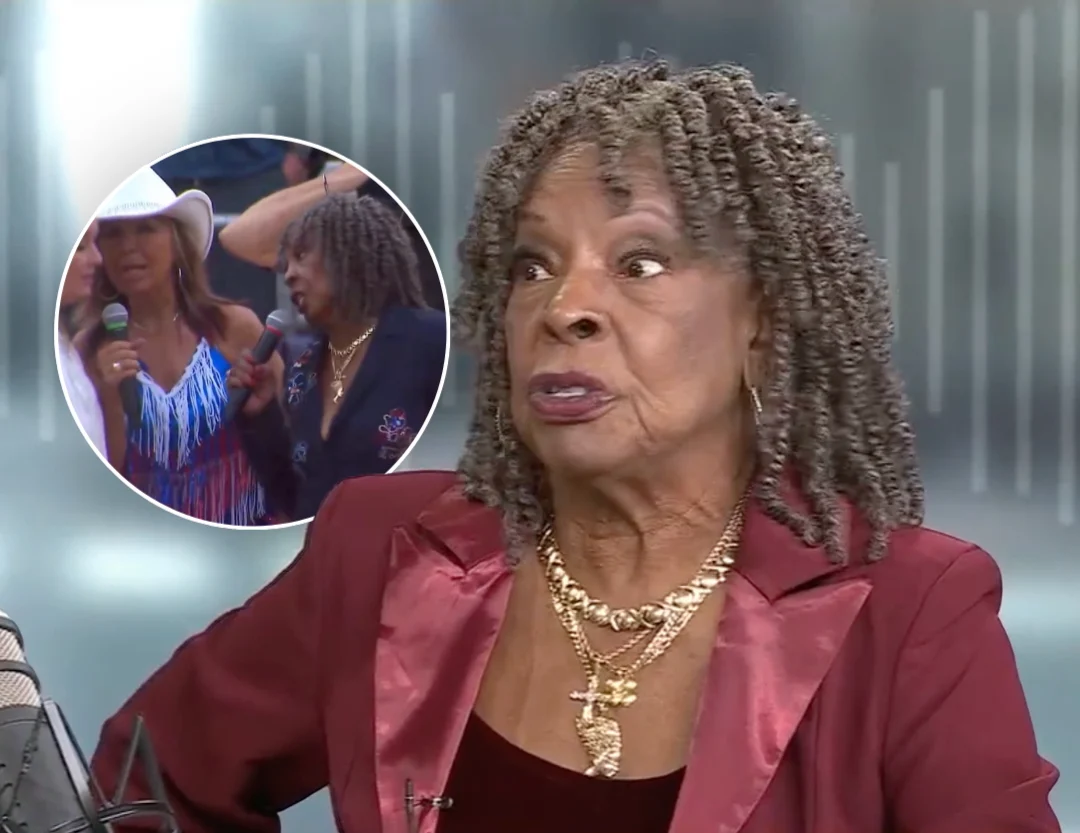
Motown legend Martha Reeves has found herself at the center of a national conversation following her highly scrutinized performance of "The Star-Spangled Banner" at the inaugural Women’s Professional Baseball League. The revered vocalist, known for timeless hits like "Dancing in the Street" with Martha Reeves and the Vandellas, delivered a rendition of the national anthem that quickly went viral, drawing widespread criticism and prompting Reeves to publicly defend her performance. In an interview with Fox 2 Detroit, Reeves attributed perceived vocal discrepancies to her backup singers, asserting her own delivery was not at fault and that she had not rehearsed with the accompanying vocalists. This claim, however, was swiftly countered by the emergence of rehearsal footage, adding another layer to the unfolding narrative.
The Genesis of a Viral Moment: The Women’s Professional Baseball League Inauguration
The controversy began during the opening ceremonies of the Women’s Professional Baseball League, an event designed to mark a significant milestone in women’s sports. The league’s inaugural weekend aimed to celebrate athleticism, empowerment, and a new chapter for female athletes, drawing attention from sports enthusiasts and media outlets. As part of the ceremonial proceedings, the national anthem is a traditional and often anticipated segment, setting the tone for the event. The choice of Martha Reeves, an iconic figure with deep roots in American music history and a connection to Detroit, where the interview later took place, was intended to lend gravitas and star power to the occasion. Her presence was expected to be a moment of cultural resonance, connecting generations through music and sport.
However, the performance itself deviated significantly from audience expectations. Videos circulated rapidly across social media platforms, showcasing a rendition of "The Star-Spangled Banner" that many viewers described as off-key and disjointed. The immediate online reaction was a mix of shock, concern, and critical commentary, with clips garnering millions of views within hours. The incident quickly overshadowed other aspects of the league’s debut, becoming the dominant topic of discussion surrounding the event.
Martha Reeves’ Defense: Blaming the Backup Singers
In the wake of the online maelstrom, Martha Reeves appeared on Fox 2 Detroit to address the burgeoning controversy. During an interview with Charlie Langton, the veteran singer was directly asked about the performance and whether she would consider a "redo." Reeves’ response was unequivocal and placed responsibility squarely on others. "I don’t have to redo anything," she stated firmly. "I didn’t do that. Those girls were singing, didn’t you know that?"
Langton then pressed her on the specifics, inquiring if the backup singers were off-key. Reeves responded, "They were trying to make some money," a comment that offered little clarity but hinted at a lack of professional cohesion. She further elaborated on the perceived issues, stating, "I didn’t have a chance to rehearse with them." This assertion became a pivotal point in her defense, suggesting that any perceived shortcomings were due to a lack of preparation and coordination with the accompanying vocalists, rather than her own performance.
Despite the widespread public reaction, Reeves maintained a stance of pride regarding her involvement. "I’m proud," she declared of the performance. "I’m happy. I didn’t take the mic and hit that girl." This seemingly unrelated comment about not assaulting a fellow performer further highlighted the emotional intensity surrounding the incident, perhaps referencing the perceived chaos of the moment or preempting more aggressive criticisms. Towards the end of the interview, Reeves attempted an impromptu "redo" of the anthem. However, this spontaneous live attempt, while demonstrating her willingness to sing, did not significantly alter the public’s perception, with many observers noting that it bore similarities to the original performance that had drawn such scrutiny.
The Counter-Narrative: TMZ’s Rehearsal Footage
Reeves’ defense, particularly her claim of no rehearsal with the backup singers, faced an immediate challenge. Shortly after her Fox 2 Detroit interview, entertainment news outlet TMZ released video footage that appeared to contradict her statements. The TMZ videos showed Martha Reeves participating in a rehearsal session, seemingly alongside backup singers, prior to the main event. While the specifics of the rehearsal (e.g., its duration, the exact personnel involved, the quality of sound monitoring during practice) were not fully detailed, the existence of such footage cast doubt on her assertion of a complete lack of rehearsal opportunity.
The release of this footage intensified the public debate. Commentators questioned the discrepancy between Reeves’ claims and the visual evidence, leading to further discussions about accountability, preparation in live performances, and the challenges faced by artists, particularly those of a certain age, in high-pressure public settings. The juxtaposition of Reeves’ defensive interview and the TMZ video created a complex narrative, where the facts surrounding the performance became increasingly contested.
Chronology of Events and Public Reaction
The sequence of events unfolded rapidly, typical of modern viral phenomena:
- Pre-Event: The Women’s Professional Baseball League announces Martha Reeves as a performer for their inaugural national anthem. Expectations are high, given her legendary status.
- The Inaugural Weekend: Reeves performs "The Star-Spangled Banner." Videos of the performance quickly surface on social media platforms.
- Immediate Aftermath (Hours to Days Later): The performance goes viral. Millions of views accumulate across various platforms. Initial reactions range from bewilderment to harsh criticism, with many focusing on perceived pitch issues and vocal synchronization problems. Memes and commentary flood social media, making the performance a trending topic.
- Fox 2 Detroit Interview: Martha Reeves sits down with Charlie Langton to address the controversy. She attributes the issues to backup singers and a lack of rehearsal, defending her own vocal contribution. Her spontaneous "redo" attempt also garners attention.
- TMZ’s Intervention: Within a short timeframe of the Fox 2 interview, TMZ publishes rehearsal footage, seemingly showing Reeves practicing with backup singers, directly challenging her earlier statements.
- Ongoing Discussion: The conflicting accounts fuel further debate about the performance, the responsibilities of artists and event organizers, and the role of social media in shaping public narratives.
The swiftness of this timeline highlights the power of digital media in both disseminating information and rapidly creating counter-narratives, making it difficult for any single perspective to dominate for long.
Analysis of the Performance and Production Challenges
From a musical perspective, "The Star-Spangled Banner" is notoriously challenging to perform. Its wide vocal range, complex melodic contours, and the inherent pressure of its cultural significance often trip up even seasoned vocalists. In Reeves’ case, public commentary frequently cited issues with pitch accuracy, harmonic alignment with the presumed backup vocalists, and overall synchronization.
The role of backup singers in a live setting is crucial for creating a full, harmonious sound. Their effectiveness depends heavily on adequate rehearsal, clear communication with the lead vocalist, and a well-engineered sound mix that allows all performers to hear themselves and each other accurately (monitor mixes). Reeves’ claim of not rehearsing suggests a potential breakdown in the production pipeline, where these elements might have been compromised. Without proper rehearsal, backup singers, even if individually talented, might struggle to blend seamlessly, especially with a lead vocalist they are unfamiliar with or whose vocal approach might differ from their expectations. The comment "They were trying to make some money" could be interpreted as a jab at their professionalism or a suggestion that they were less invested in the artistic outcome than in their fee, or simply that they were session musicians brought in at short notice.
However, the existence of rehearsal footage, regardless of its completeness, indicates some level of preparation. This raises questions about what transpired during that rehearsal: Was it insufficient? Were technical issues present even then? Did Reeves’ perception of "rehearsal" differ from what actually occurred? For instance, a brief run-through might not constitute a full, comprehensive rehearsal in an artist’s mind, especially if technical issues or personnel changes occurred later.
Furthermore, live performances, particularly outdoor ones, are subject to myriad technical challenges: wind interference, microphone feedback, monitor malfunctions, and the acoustic properties of the venue itself can all impact sound quality. While Reeves specifically pointed to the backup singers, it is plausible that a combination of factors contributed to the perceived difficulties.
Statements and Inferred Reactions from Related Parties
- The Women’s Professional Baseball League: While the league did not issue a direct public statement solely addressing the anthem controversy, their official communications would likely have focused on the successful launch of the league, the athleticism of the players, and the overall positive spirit of the inaugural event. They would aim to frame the event as a triumph for women’s sports, downplaying any peripheral controversies. The choice of Martha Reeves initially would have been seen as a coup, leveraging her iconic status to attract attention.
- Fox 2 Detroit: As the platform for Reeves’ interview, Fox 2 Detroit fulfilled its journalistic role by providing her an opportunity to respond to public criticism. They presented her perspective directly to their audience. Their role in the broader controversy was primarily as a media outlet covering the story, rather than as an involved party in the performance itself, although Reeves’ initial phrasing seemed to imply the backup singers were "on Fox 2 Detroit," which was likely a misunderstanding of the production team’s sourcing.
- TMZ: Their contribution was purely journalistic, providing additional visual evidence that complicated the narrative. Their focus would be on breaking news and presenting potentially contradictory information, which they did by publishing the rehearsal footage.
- Music Industry Observers/Vocal Coaches: Experts in vocal performance and music production might offer general comments on the challenges of live performance, the difficulty of "The Star-Spangled Banner," and the importance of thorough rehearsal and sound checks for all performers. They might highlight that even legendary artists can face challenges, and that a seamless performance is a collaborative effort between the artist, musicians, and technical crew.
Broader Impact and Implications
The Martha Reeves national anthem controversy, while seemingly a minor incident in the grand scheme of things, touches upon several broader implications for artists, events, and public perception in the digital age.
Legacy of an Icon: For an artist of Martha Reeves’ stature, whose career spans decades and whose contributions to music are undeniable, such an incident can be a challenging moment. It forces a conversation about the expectations placed on legendary performers, particularly as they age, and the often unforgiving scrutiny of modern media. While some fans expressed disappointment, many others rallied to her defense, emphasizing her enduring legacy and arguing that one performance should not define a career. The incident also highlights the pressure on artists to consistently meet high expectations, even when production elements might be beyond their control.
The Power of Social Media and Viral Content: This event perfectly illustrates how quickly a moment can become a global phenomenon. Within hours, a local sports event’s national anthem became a viral sensation, debated and dissected across continents. Social media platforms amplify both praise and criticism instantaneously, making it difficult for public figures to control their narratives. The rapid spread of the performance video, followed by the interview and then the counter-footage, demonstrates the fragmented and often contradictory nature of information dissemination in the digital era.
Event Public Relations: For the Women’s Professional Baseball League, the viral moment created unexpected, albeit mixed, publicity. While the focus shifted from the sport itself to the anthem performance, it undeniably brought the league into a national conversation it might not have otherwise achieved so quickly. Event organizers often walk a fine line between generating buzz and controlling the narrative, and this incident served as a stark reminder of how unpredictable live events can be.
Artist Responsibility vs. Production Responsibility: The debate over who was "to blame" for the performance also sparks a broader discussion about the division of responsibility in complex live productions. While the artist is ultimately the face of the performance, a myriad of factors—sound engineers, musical directors, backup musicians, stage managers, and even the quality of the venue’s equipment—all contribute to the final product. Reeves’ defense attempts to shift responsibility to the production elements, specifically the backup singers and lack of rehearsal, prompting a deeper look into the collaborative nature of such events.
The National Anthem as a Cultural Touchstone: "The Star-Spangled Banner" holds a unique and often sacrosanct place in American culture. Performances are frequently scrutinized, and any deviation from perceived perfection can elicit strong reactions, ranging from patriotic fervor to intense criticism. This incident underscores the high stakes involved in performing the anthem, making it a powerful symbol that can either unite or divide, depending on its delivery.
In conclusion, Martha Reeves’ viral national anthem performance at the Women’s Professional Baseball League inauguration became more than just a musical moment; it evolved into a complex narrative involving artistic integrity, production challenges, and the relentless scrutiny of the digital age. While Reeves steadfastly defended her performance and pointed to external factors, the conflicting accounts and rapid public discourse underscore the multifaceted nature of live entertainment and the enduring power of both legendary artists and social media in shaping public perception. The incident will likely serve as another chapter in the storied career of a Motown icon, while also offering a contemporary case study in the dynamics of viral content and public accountability.
