

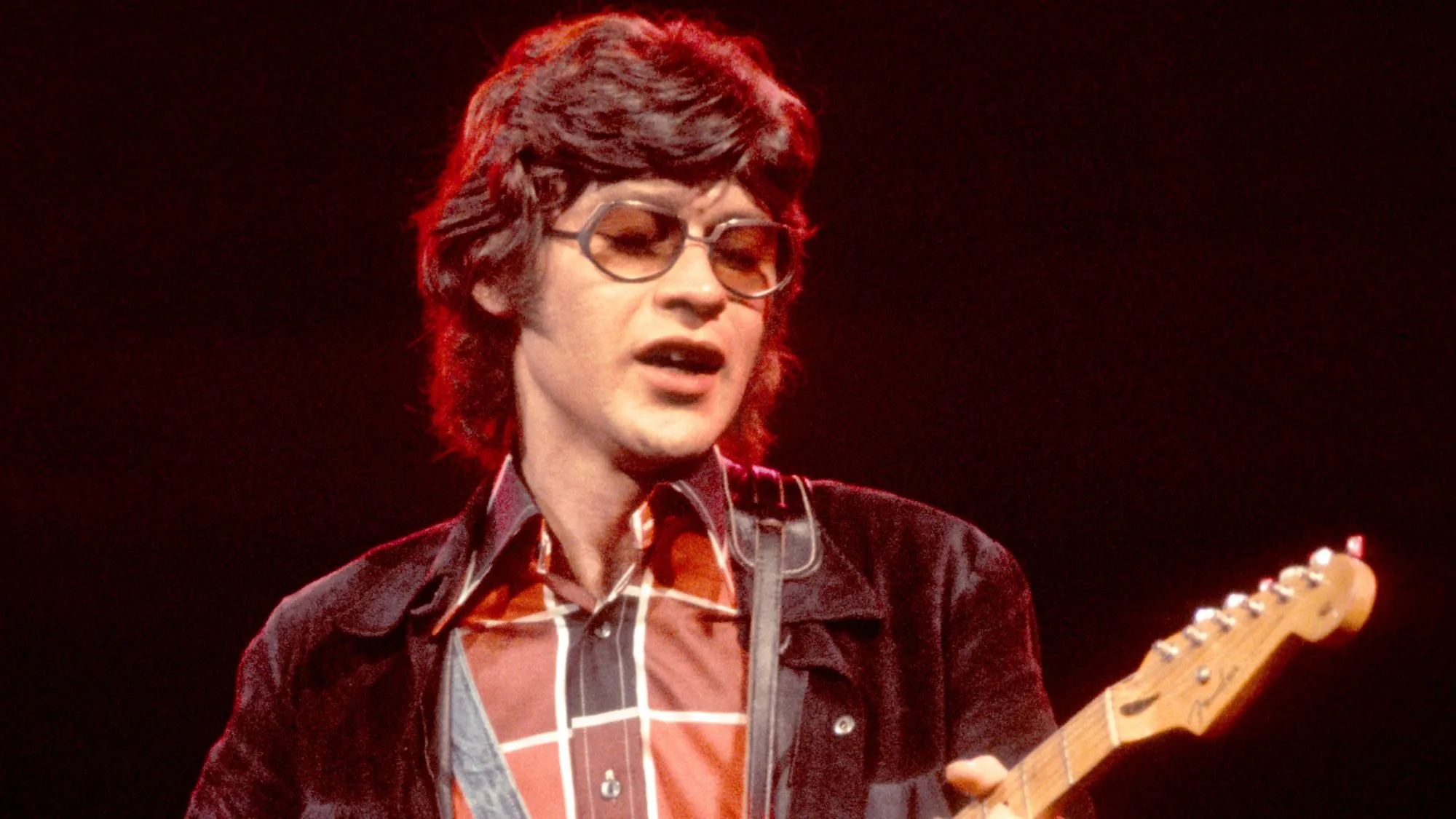
The global music and film communities continue to reflect on the profound contributions of Robbie Robertson, the visionary guitarist and songwriter who passed away in Los Angeles on August 9, 2023. Robertson, who was 80 years old, died following a year-long battle with prostate cancer, surrounded by his family. As the primary creative force behind The Band and a long-term collaborator with director Martin Scorsese, Robertson’s influence spanned more than six decades, bridging the gap between traditional roots music and modern cinematic storytelling. His death marked the conclusion of a career that redefined the boundaries of rock and roll, helping to cultivate the genre now universally recognized as Americana.
Born Jaime Royal Robertson on July 5, 1943, in Toronto, Ontario, Robertson’s upbringing was a tapestry of diverse cultural influences that would later inform his eclectic musical style. His mother, Rosemarie Dolly Chrysler, was Mohawk and raised on the Six Nations of the Grand River reserve. His biological father, Alexander David Klegerman, was Jewish and died before Robertson was born. Robertson was raised by his mother and her husband, James Robertson, only learning of his true parentage later in his youth. It was during summer visits to the Six Nations reserve that Robertson first encountered the power of communal music-making. He often recounted how "everyone" on the reserve seemed to play an instrument, an observation that demystified the art of performance and grounded it in a sense of heritage and storytelling.
By his teenage years, Robertson was consumed by the burgeoning sounds of rhythm and blues and early rock and roll. He frequently stayed awake through the night to catch the signal of WLAC, a radio station in Nashville, Tennessee, that broadcast blues and R&B across the North American continent. This early exposure to the "Southern sound" became a cornerstone of his musical identity. At age 15, Robertson’s professional journey began when he joined the traveling carnival circuit, followed by stints in local Toronto bands like Little Caesar and the Consuls and his own group, Robbie and the Robots.
The trajectory of Robertson’s career shifted permanently in 1959 when he encountered the Arkansas-born rockabilly singer Ronnie Hawkins. Impressed by the young guitarist’s technical proficiency and intensity, Hawkins invited Robertson to join his backing band, the Hawks. It was within this ensemble that Robertson met the musicians who would become his lifelong creative partners: drummer Levon Helm, bassist Rick Danko, pianist Richard Manuel, and organist Garth Hudson. Under Hawkins’ rigorous tutelage, the group honed their craft through relentless touring across the "chitlin’ circuit" and the bars of the American South and Canada.
In 1964, the Hawks struck out on their own, seeking to evolve beyond the rockabilly constraints of Hawkins’ repertoire. Their reputation as one of the most formidable live acts in North America caught the attention of Bob Dylan, who was then looking to transition from acoustic folk to a more aggressive "electric" sound. The Hawks backed Dylan during his historic and often controversial 1966 world tour, where they were met with nightly boos from folk purists who viewed Dylan’s shift as a betrayal. Robertson later described this period as a "baptism by fire," noting that the hostility they faced only served to tighten the band’s musical cohesion.
Following Dylan’s 1966 motorcycle accident, the musicians retreated to a house known as "Big Pink" in West Saugerties, New York. It was here that they transformed from the Hawks into simply "The Band." Their debut album, Music from Big Pink (1968), and its self-titled follow-up (1969), often called the "Brown Album," stood in stark contrast to the psychedelic excesses of the late 1960s. Robertson’s songwriting became the engine of the group’s success. He possessed a unique ability to write from the perspective of an outsider looking into the heart of the American mythos. Songs like "The Weight," "The Night They Drove Old Dixie Down," and "Up on Cripple Creek" were infused with a sense of historical gravitas and Southern Gothic imagery that felt both ancient and immediate.
The Band’s impact on their peers was seismic. Eric Clapton famously remarked that upon hearing Music from Big Pink, he wanted to quit his own band, Cream, and join them. George Harrison and Pink Floyd’s Roger Waters similarly cited The Band as a primary influence on their shift toward more grounded, organic song structures. Robertson’s role as the "chief engineer" of this sound involved balancing the distinct vocal styles of Helm, Danko, and Manuel with Hudson’s orchestral arrangements and his own economical, stinging guitar work.
By 1976, the physical and emotional toll of years on the road led Robertson to advocate for the group’s retirement from touring. This decision culminated in "The Last Waltz," a star-studded farewell concert held on Thanksgiving Day at San Francisco’s Winterland Ballroom. The event featured performances by Bob Dylan, Neil Young, Joni Mitchell, Muddy Waters, and Van Morrison. Robertson invited a young Martin Scorsese to film the event, beginning a partnership that would last until Robertson’s death. The resulting film, The Last Waltz (1978), is widely regarded as the greatest concert documentary in cinematic history.
Following the dissolution of The Band’s original lineup, Robertson transitioned into a prolific solo career and a pioneering role in film music. His partnership with Scorsese was unprecedented in its depth. Starting with Raging Bull (1980), Robertson served as a music producer, supervisor, and composer for many of Scorsese’s most iconic works. His ability to curate soundtracks that defined the atmosphere of a film—from the operatic violence of Casino to the gritty period-accurate sounds of Gangs of New York—made him an indispensable part of Scorsese’s creative process.
In his solo musical endeavors, Robertson released six studio albums, beginning with his self-titled debut in 1987, which featured the hit "Somewhere Down the Crazy River." His later work, such as Contact from the Underworld of Redboy (1998), saw him returning to his indigenous roots, incorporating traditional Mohawk chants and themes into modern electronic and rock textures. This exploration of his heritage was a source of great pride for Robertson, who often spoke of the need to preserve and honor the narratives of First Nations people.
The news of Robertson’s passing prompted a wave of tributes from the highest echelons of the arts. Martin Scorsese released a poignant statement reflecting on their forty-year bond. "Robbie Robertson was one of my closest friends, a constant in my life and my work," Scorsese said. "Long before we ever met, his music played a central role in my life—me and millions and millions of other people all over this world. The Band’s music, and Robbie’s own later solo music, seemed to come from the deepest place at the heart of this continent, its traditions and tragedies and joys."
Robertson’s final project with Scorsese was the score for the 2023 epic Killers of the Flower Moon. The score, which drew heavily on Robertson’s indigenous background, was completed shortly before his death and went on to receive a posthumous Academy Award nomination. This final contribution served as a fitting bookend to a career dedicated to exploring the intersection of history, culture, and sound.
The statistical legacy of Robbie Robertson is equally impressive. As a member of The Band, he was inducted into the Rock and Roll Hall of Fame in 1994 and received a Grammy Lifetime Achievement Award in 2008. He was a member of Canada’s Walk of Fame and was appointed an Officer of the Order of Canada in 2011. Beyond the awards, the "Americana" genre he helped invent now supports a multi-million dollar industry of festivals, radio stations, and artists who follow the blueprint he laid out in the late 1960s.
Robbie Robertson’s death signifies the end of a pivotal chapter in the history of North American music. He was a storyteller who used a Fender Stratocaster as his pen, a Canadian who understood the American South better than most who were born there, and a musician who saw no boundaries between the stage and the silver screen. His work remains a permanent fixture of the cultural landscape, characterized by what Bruce Springsteen described as a quality that felt "like you’d never heard them before and like they’d always been there." Robertson is survived by his wife, Janet, his three children, Alexandra, Sebastian, and Delphine, and several grandchildren, leaving behind a body of work that continues to resonate with new generations of listeners and filmmakers alike.
