

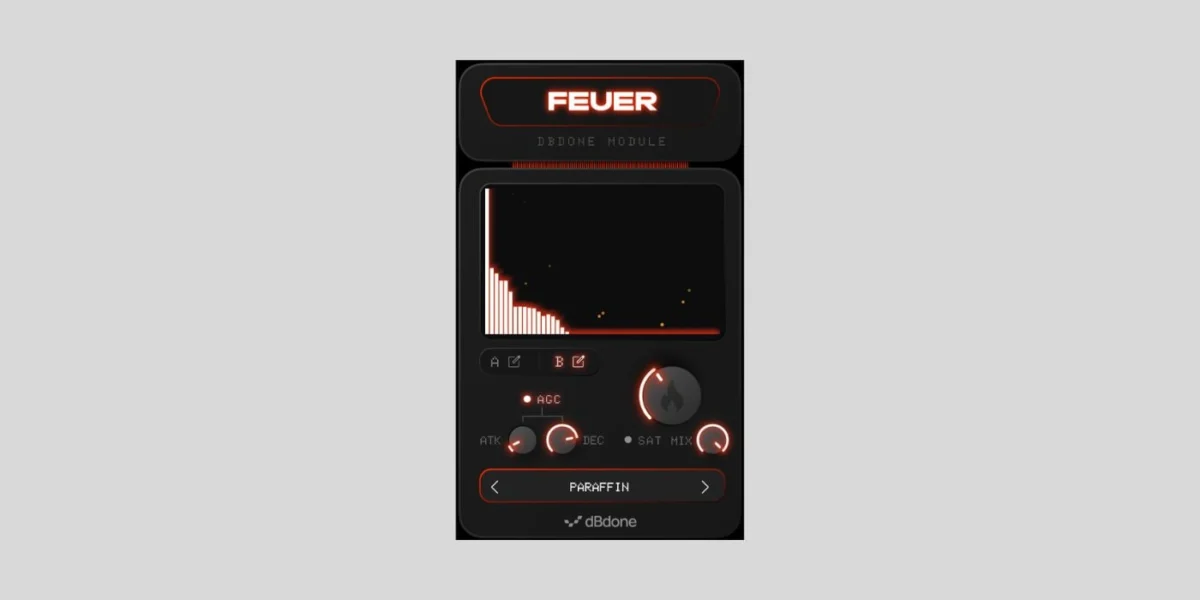
dBdone has officially released Feuer, a sophisticated yet accessible free creative drum-processing plugin available for both macOS and Windows platforms. This new offering signals a deliberate departure from conventional audio effects, positioning itself as a potent sound design instrument specifically engineered for drums, percussion, rhythmic loops, and breaks. Far from being a mere saturation or clipper-type plugin, Feuer introduces a novel approach to sonic manipulation, promising an unexpected depth of creative possibilities for music producers and sound designers across various genres.
Contextualizing dBdone’s Innovation in the Plugin Landscape
The introduction of Feuer follows closely on the heels of dBdone’s previous free release, Glas, a spectral chaos plugin designed to transform pads, synths, and vocals into intricate, glassy textures. This sequential release pattern underscores dBdone’s apparent strategic focus on delivering high-quality, unconventional, and freely accessible sound manipulation tools to the production community. In an increasingly saturated market of digital audio workstations (DAWs) and third-party plugins, developers like dBdone are carving out a niche by offering unique effects that challenge traditional signal processing paradigms. The trend towards experimental sound design tools has gained significant momentum in recent years, driven by producers’ continuous quest for distinctive sonic signatures and the democratizing effect of freeware that enables widespread adoption and creative experimentation without financial barriers.
Feuer, much like Glas, exemplifies this philosophy by providing a highly specialized tool that is both innovative in its core mechanics and intuitive in its application. While Glas focused on ambient and textural transformations, Feuer directs its innovative spectral processing capabilities specifically towards rhythmic elements, a crucial component in nearly every musical genre, from electronic dance music and hip-hop to film scoring and experimental sound art. This strategic focus suggests dBdone is intent on addressing specific creative bottlenecks within different facets of music production, offering targeted solutions that push the boundaries of what is conventionally achievable with standard effects. The consistent provision of free, high-caliber plugins also serves to rapidly build brand recognition and foster a loyal user base, a common and effective strategy in the competitive audio software industry.
Deconstructing Feuer’s Unique Architecture and Functionality
At its core, Feuer operates by intelligently splitting an incoming drum signal into multiple frequency bands. This initial spectral decomposition is crucial, as it allows the plugin to analyze and process different sonic components of a drum hit independently. Following this, Feuer employs advanced algorithms to meticulously detect the attack and decay transients within each of these frequency bands. This sophisticated transient detection is the linchpin of its unique processing capabilities.
The plugin’s most distinctive feature is its ability to "hold the decay open" instead of allowing it to naturally dissipate. This means that upon detecting a drum hit, Feuer can sustain the resonant energy within specific frequency ranges, rather than letting it decay as per the original signal. The subsequent re-injection of this sustained energy into the signal path manifests in a myriad of sonic outcomes, depending on user configuration. Producers can sculpt this re-introduced energy to emerge as added "body" or weight, imbuing drums with a newfound presence and impact. Alternatively, it can manifest as a subtle, reverb-like tail, extending the natural resonance of percussion in an organic yet controlled manner. In more extreme settings, this energy can be transformed into aggressive distortion, providing grit and character, or even reveal previously "buried" frequencies within the original loop, bringing forward latent harmonic content or subtle textures that were obscured in the unprocessed sound.
The sonic versatility of Feuer is remarkable. Depending on how its parameters are manipulated, it can emulate the deep, resonant throb of a sub synth, creating powerful low-end movement from even sparse drum patterns. It can generate glitchy, fractured textures reminiscent of a bitcrusher or granular effect, introducing rhythmic complexity and sonic degradation. The outcome is highly variable, making Feuer less of a one-trick pony and more of a multi-faceted sound design toolkit. This adaptability is key to its appeal, allowing producers to achieve a wide spectrum of effects from subtle enhancements to radical sonic transformations.
The Drawable Spectrum: An Intuitive Creative Hub
Central to Feuer’s user interface and its creative potential is the drawable spectrum. This innovative feature empowers users to visually define which parts of the frequency range should "ring out" or sustain, and which parts should remain tight and unprocessed. This direct, visual interaction with the frequency domain provides an intuitive way to sculpt the effect. For instance, by boosting the area around the kick drum’s fundamental frequency, users can generate unusual and dynamic low-end movement, creating pulsating rhythms or sustained bass tones directly from the kick. Conversely, pushing the higher frequency bands can cause hi-hats, cymbals, and other percussive elements to "ring out" with extended, shimmering tails or sustained metallic textures, adding ethereal qualities to rhythmic patterns.
Feuer provides two distinct drawable panels, labeled A and B. This dual-panel system, combined with an XY pad, allows for seamless morphing between these two user-defined spectral configurations. The XY pad’s vertical axis controls the overall intensity or "depth" of the effect. This enables producers to smoothly transition from a subtle application, adding just a touch of extra weight and space to a drum loop, to a much more extreme and "destroyed" sound, where the original drum break is barely recognizable, transformed into a completely new rhythmic texture. This morphing capability is a significant creative asset, allowing for dynamic changes in real-time performance or automated transitions within a production.
Further enhancing control, the "Ignite" knob allows for fine-tuning the overall intensity of the effect. Complementing this, a crucial "Mix" control is included, proving invaluable given Feuer’s capacity for extreme sonic alteration. The Mix knob enables users to blend the processed signal with the dry, original input, facilitating parallel processing techniques that maintain some of the original drum’s punch while layering the effected sound over it. To ensure objective comparison during this crucial blending stage, Feuer also incorporates automatic gain compensation, ensuring that perceived loudness differences do not bias creative decisions when A/B testing the processed and dry signals. While saturation is indeed built into Feuer, it functions as a complementary component rather than the primary focus, distinguishing it from conventional distortion plugins.
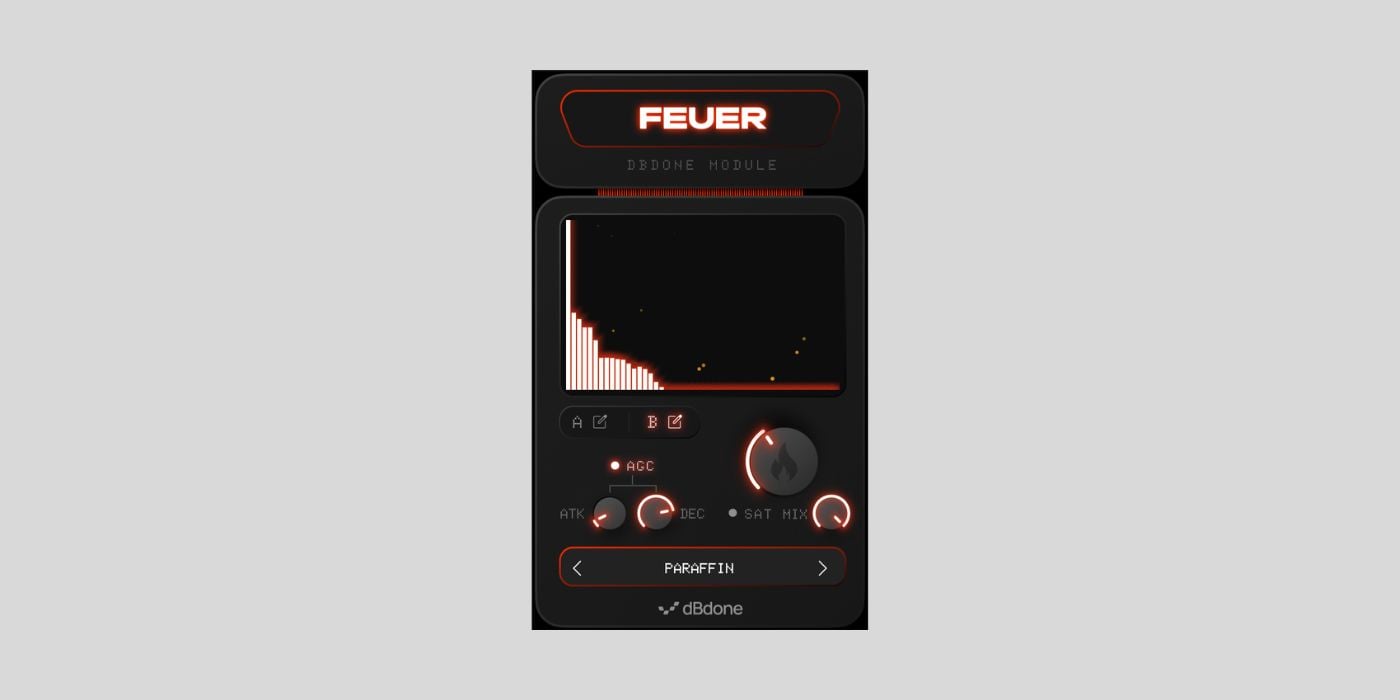
The plugin ships with 20 meticulously crafted factory presets, offering excellent starting points and demonstrations of Feuer’s capabilities. However, the true power and unique appeal of Feuer lie in its unlimited user preset saving combined with the freedom of the drawable spectrum. The ability for users to quickly grasp the interaction between the spectral drawing and the resulting sonic transformation makes it an exceptionally fast and rewarding tool for creative sound design.
Implications for Sound Design and Music Production
Feuer’s release carries significant implications for modern music production and sound design. It represents a paradigm shift from traditional drum processing, which often focuses on corrective equalization, compression, and basic saturation, towards a more generative and transformative approach. Rather than merely enhancing existing drum sounds, Feuer acts as a sound design instrument capable of inventing entirely new rhythmic textures. This capability is particularly valuable in genres such as electronic music, IDM (Intelligent Dance Music), techno, experimental hip-hop, and ambient music, where unique and evolving rhythmic elements are paramount.
The plugin empowers producers to break free from relying solely on pre-existing sample libraries or complex multi-plugin chains to achieve experimental drum sounds. With Feuer, a simple drum loop can be endlessly reinterpreted and reshaped, fostering a sense of originality and sonic identity in productions. Its ability to create sub-synth effects from kicks, granular textures from snares, or extended, shimmering tails from hats offers a streamlined workflow for crafting intricate rhythmic layers that might otherwise require multiple, more complex effects.
Furthermore, the accessibility of a free, powerful tool like Feuer democratizes advanced sound design techniques. Aspiring producers and those with limited budgets can now access sophisticated spectral manipulation capabilities that were once exclusive to expensive commercial plugins. This broadens the creative landscape for a wider demographic, potentially fostering new waves of sonic experimentation and innovation within the music community. The distinction between Feuer and a general mix bus effect is critical; its transformative nature means it is best applied to individual drum tracks or groups, allowing for precise sculpting without impacting the overall balance of a full mix. This specialized application highlights its role as a dedicated creative tool rather than a utility processor.
Market Position, Developer Strategy, and Accessibility
dBdone’s consistent strategy of releasing innovative, free plugins like Glas and now Feuer positions them as a developer committed to fostering creativity within the audio community. This approach not only builds a strong and loyal user base but also generates significant buzz and positive word-of-mouth, which can be invaluable in the competitive software market. By offering high-quality tools without a price tag, dBdone encourages widespread adoption, allowing producers to experiment and integrate their unique effects into their workflows without financial commitment. This "freemium" model, even without a clear paid upgrade path immediately evident, can lead to future commercial success through brand recognition and an established reputation for innovation.
The producer community is likely to greet Feuer with enthusiasm. The demand for unique sound design tools that inspire creativity is always high, and the fact that Feuer delivers such capabilities for free makes it an immediate must-have for many. The ease of access, requiring only an email address subscription on the dBdone website, ensures a low barrier to entry. This simple process allows users to quickly download and integrate Feuer into their preferred digital audio workstations.
Technical Specifications Summary
- Developer: dBdone
- Plugin Name: Feuer
- Type: Creative Drum Processing / Sound Design Plugin
- Operating Systems: macOS, Windows
- Plugin Formats: VST3, AU, AAX
- Key Features:
- Frequency band splitting and attack/decay detection
- Ability to "hold decay open" for sustained energy
- Generates sub synth, glitch, granular, reverb-like, and distortion effects
- Dual drawable spectrum panels (A/B) for frequency shaping
- XY pad for morphing between A/B panels and controlling effect intensity
- "Ignite" control for overall intensity
- "Mix" control for wet/dry blending
- Automatic gain compensation
- Built-in saturation
- 20 factory presets, unlimited user preset saving
Download Information
To download dBdone Feuer, users are required to visit the official dBdone website, enter their email address, and subscribe. Following this, access to the download link will be provided. Feuer is compatible with major DAWs supporting VST3, AU, and AAX plugin formats, ensuring broad usability across various professional and home studio setups.
In conclusion, dBdone’s Feuer is more than just another free plugin; it is a meticulously engineered creative instrument that challenges conventional approaches to drum processing. Its distinctive spectral manipulation capabilities, intuitive drawable interface, and versatile sonic output position it as an indispensable tool for producers seeking to infuse their rhythmic elements with originality, depth, and experimental flair. As the digital audio landscape continues to evolve, developers like dBdone, with their commitment to innovation and accessibility, are instrumental in shaping the future of sound design.
