

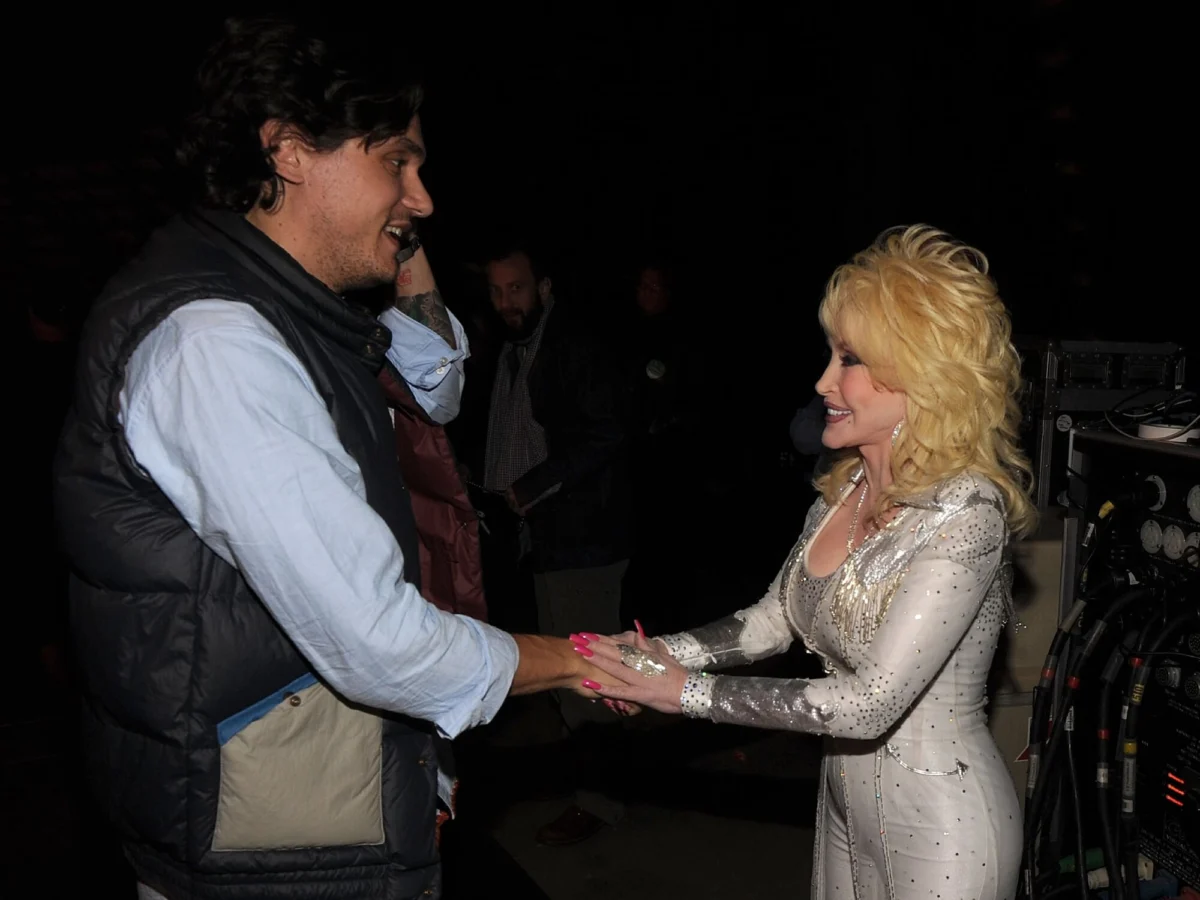
In a deeply moving homage to one of music’s most revered icons, John Mayer performed an emotional instrumental rendition of Dolly Parton’s timeless classic, "I Will Always Love You," during his SiriusXM concert at the Stephen Talkhouse in Amagansett, New York, on August 26. The performance came just a day after the profound news of Parton’s passing at the age of 80, sending ripples of grief and celebration across the globe. Mayer’s tribute was not merely a cover but a heartfelt dialogue with a song that has resonated across generations, delivered with his signature blues-infused guitar mastery.
A Resonant Homage at Stephen Talkhouse
The intimate setting of the Stephen Talkhouse, a legendary venue known for its rustic charm and storied performances, provided a fitting backdrop for Mayer’s tribute. As audiences gathered, still reeling from the news of Parton’s death, Mayer seamlessly wove the familiar, poignant melody of "I Will Always Love You" into the intro of his own hit song, "Gravity." Utilizing his distinctive PRS Dead Spec Silver Sky guitar, Mayer infused Parton’s original composition with a bluesy inflection, a stylistic choice that added a layer of soulful introspection to the already emotionally charged melody. This delicate integration demonstrated Mayer’s profound respect for the source material while imbuing it with his unique artistic fingerprint, creating a moment of shared reflection and musical reverence for those in attendance and listening via SiriusXM.
The performance itself was a masterclass in instrumental storytelling. Mayer’s fingers danced across the fretboard, translating the lyrical longing and enduring affection of Parton’s words into a purely sonic narrative. The bluesy bends and sustained notes allowed the melody to breathe, inviting listeners to immerse themselves in the bittersweet beauty of the song. It was a testament to the power of instrumental music to convey complex emotions, bridging the gap between two distinct musical worlds – country and contemporary blues-rock – through the universal language of melody. The crowd’s palpable reaction, a mixture of hushed reverence and appreciative applause, underscored the collective emotional weight of the moment, marking it as a highlight in a period of global mourning.
Mayer’s Reflective Overture
Before taking the stage, John Mayer offered profound reflections on Dolly Parton’s monumental life and the extraordinary public reaction to her passing. His words, delivered with characteristic thoughtfulness, underscored the unique unifying power Parton possessed. "I think Dolly would be really happy to see that on the day of her passing, the world came together in a way that it hadn’t in a very long time to celebrate someone," Mayer remarked, capturing the essence of the global outpouring of affection.
He continued, articulating the rarity of such a figure in today’s often-divided world: "I don’t know that there are many people in this world [that are] left that can galvanize a very fractured world to come together and share love for one person. When everyone’s loving one person at the same time, it is everybody loving at the same time, which has this sort of side effect of feeling each other’s love when that happens." Mayer’s observation highlighted Parton’s exceptional ability to transcend cultural, political, and social divides, a testament to her universally cherished persona and artistry. His words served as an eloquent preface to his musical tribute, establishing a context of collective appreciation for a life truly well-lived.
Mayer concluded his pre-show reflections by describing Parton’s career as a "brilliant, classy, talented, full artistic rendering," encapsulating her multifaceted contributions to music and culture. "This is what a life well-lived looks like, feels like, and sounds like," he stated, adding, "This is how you give your life to the thing you love." These sentiments resonated deeply, framing Parton not just as an entertainer, but as an exemplar of dedication, passion, and artistic integrity, an inspiration for all who strive to leave a meaningful mark on the world.
The Unifying Power of a Legend
Dolly Parton, born January 19, 1946, and passing on August 25, 2026, at the age of 80, left behind an unparalleled legacy. Her death prompted an immediate and widespread outpouring of grief, respect, and gratitude from fans, fellow artists, world leaders, and institutions across every imaginable sector. Social media platforms were inundated with tributes, her songs saw a surge in streaming, and news outlets dedicated extensive coverage to her life and impact. Mayer’s observation about the world coming together was not an exaggeration but an accurate reflection of a rare moment of global unity in shared admiration.
Parton’s appeal was truly universal. From her humble beginnings in the Smoky Mountains of Tennessee, she built an empire founded on authentic storytelling, boundless creativity, and an unwavering commitment to her art and her fans. Her distinct blend of wit, wisdom, glamour, and down-to-earth charm endeared her to millions. She was a prolific songwriter, penning over 3,000 songs, many of which became country and pop standards. Beyond her musical achievements, her philanthropic efforts, particularly through the Imagination Library, which has gifted over 200 million books to children worldwide, solidified her status as a humanitarian icon. Her ability to navigate complex cultural landscapes with grace, humor, and an unyielding sense of self made her a beloved figure whose influence stretched far beyond the confines of country music.
"I Will Always Love You": A Song’s Immortal Journey
At the heart of Mayer’s tribute was "I Will Always Love You," a song whose journey from a personal farewell to a global anthem is as remarkable as Parton’s career itself. Parton wrote and recorded the song in 1973, releasing it in 1974 as the second single from her album Jolene. It was famously written for her long-time mentor and duet partner, Porter Wagoner, marking her professional departure from his television show and musical partnership. The song, a poignant expression of enduring affection despite the necessity of separation, immediately resonated, reaching number one on the Billboard Hot Country Songs chart in June 1974. It would achieve this feat twice more: in 1982, with a re-recording for the film The Best Little Whorehouse in Texas, and again in 1995, as a duet with Vince Gill.

However, the song’s global phenomenon status was cemented in 1992 when Whitney Houston released her iconic cover for the soundtrack of The Bodyguard. Houston’s powerful, soaring vocal performance transformed the country ballad into a monumental pop and R&B powerhouse. Her version spent 14 weeks at number one on the Billboard Hot 100, a record at the time, and became one of the best-selling singles of all time, shifting over 20 million copies worldwide. It won a Grammy Award for Record of the Year and Best Pop Vocal Performance, Female, further solidifying its place in music history. The success of Houston’s rendition introduced "I Will Always Love You" to an entirely new generation and a global audience, showcasing the timeless brilliance of Parton’s original composition. The song became synonymous with both artists, a testament to its universal message of unconditional love and farewell.
Dolly Parton: An Unparalleled Legacy
To understand the depth of Mayer’s tribute, one must grasp the sheer magnitude of Dolly Parton’s career. Her journey began in earnest in the late 1960s, gaining national attention through her partnership with Porter Wagoner. By the 1970s, she had established herself as a solo artist, consistently topping country charts with hits like "Jolene," "Coat of Many Colors," and "I Will Always Love You." The 1980s saw her crossover into mainstream pop and acting, starring in successful films such as 9 to 5 and Steel Magnolias, and achieving pop chart success with "9 to 5."
Throughout her career, Parton garnered 11 Grammy Awards (including a Lifetime Achievement Award), 10 CMA Awards, and countless other accolades. She is one of only 18 artists to have received nominations for an Oscar, Grammy, Tony, and Emmy Award. She sold over 100 million records worldwide, making her one of the best-selling music artists of all time. Her songwriting prowess was legendary; she penned her own hits and also wrote songs that became massive successes for other artists, like "Jolene" and "I Will Always Love You."
Beyond the numbers and awards, Parton built a sprawling business empire including Dollywood, a theme park that is one of Tennessee’s most popular tourist attractions and a significant employer in the region. Her Imagination Library, founded in 1995, has become a global literacy program, providing free books to children from birth until they begin school. This philanthropic endeavor reflects her deep commitment to education and children, embodying the generous spirit that defined her public persona. Dolly Parton was not just a musician; she was a cultural phenomenon, a savvy businesswoman, and a compassionate humanitarian, whose influence will undoubtedly continue for generations.
The Intersection of Genius: Parton, Houston, and Mayer
The choice of "I Will Always Love You" for Mayer’s tribute was particularly poignant due to its dual iconic status. Parton’s original is revered for its raw, country authenticity and lyrical sincerity. Houston’s rendition is celebrated for its vocal pyrotechnics and dramatic power, cementing its place in the pantheon of pop ballads. Mayer’s instrumental interpretation created a third dimension, stripping away the lyrics and relying solely on the melodic and harmonic structure to convey the song’s emotional weight. This act underscored the song’s inherent strength and its capacity to evoke profound feelings regardless of vocal interpretation or genre.
Mayer, a Grammy-winning artist known for his genre-bending fusion of blues, rock, pop, and folk, brought his own established reputation as a guitar virtuoso to the tribute. His ability to convey deep emotion through his instrument, often drawing comparisons to blues legends, made him uniquely suited to reinterpret Parton’s masterpiece. His decision to blend it into the intro of "Gravity," one of his most beloved and reflective songs, created a seamless transition that honored Parton’s legacy while maintaining the artistic integrity of his own performance. It was a sophisticated musical statement, acknowledging the continuum of musical influence and the interconnectedness of artists across different eras and styles.
The Role of Artists in Collective Remembrance
Musical tributes following the death of a beloved artist serve a crucial cultural function. They provide a space for collective mourning, celebration, and remembrance. When an artist of John Mayer’s caliber chooses to honor a legend like Dolly Parton, it not only pays respect to the departed but also introduces their work to potentially new audiences and reaffirms its enduring relevance. Such performances become part of the historical record, documenting the impact of the deceased artist on their peers and the wider musical landscape.
Mayer’s tribute highlighted how music transcends the individual, becoming a shared experience that fosters connection and empathy. In a world often characterized by division, the collective appreciation for an artist like Dolly Parton, expressed through the music of another, underscores the unifying power of art. It reminds us that while individuals may pass, their creations and the emotions they evoke can live on indefinitely, continually inspiring and bringing people together. This act of musical remembrance reinforces the idea that true artistry creates an immortal legacy, continually reinterpreted and celebrated by successive generations.
An Enduring Cultural Tapestry
John Mayer’s instrumental tribute to Dolly Parton with "I Will Always Love You" stands as a significant moment in the unfolding narrative of Parton’s post-mortem legacy. It was a profound gesture from one respected musician to another, acknowledging the indelible mark Parton left on the world. The performance, infused with Mayer’s unique bluesy touch and delivered with deep respect, encapsulated the universal emotional resonance of Parton’s songwriting and the unifying power she embodied. As the music world continues to process the loss of an irreplaceable icon, such tributes serve as powerful affirmations of the enduring impact of artists like Dolly Parton, whose songs and spirit will undoubtedly continue to inspire, comfort, and bring joy for many years to come, weaving an ever-richer tapestry of cultural heritage.
