

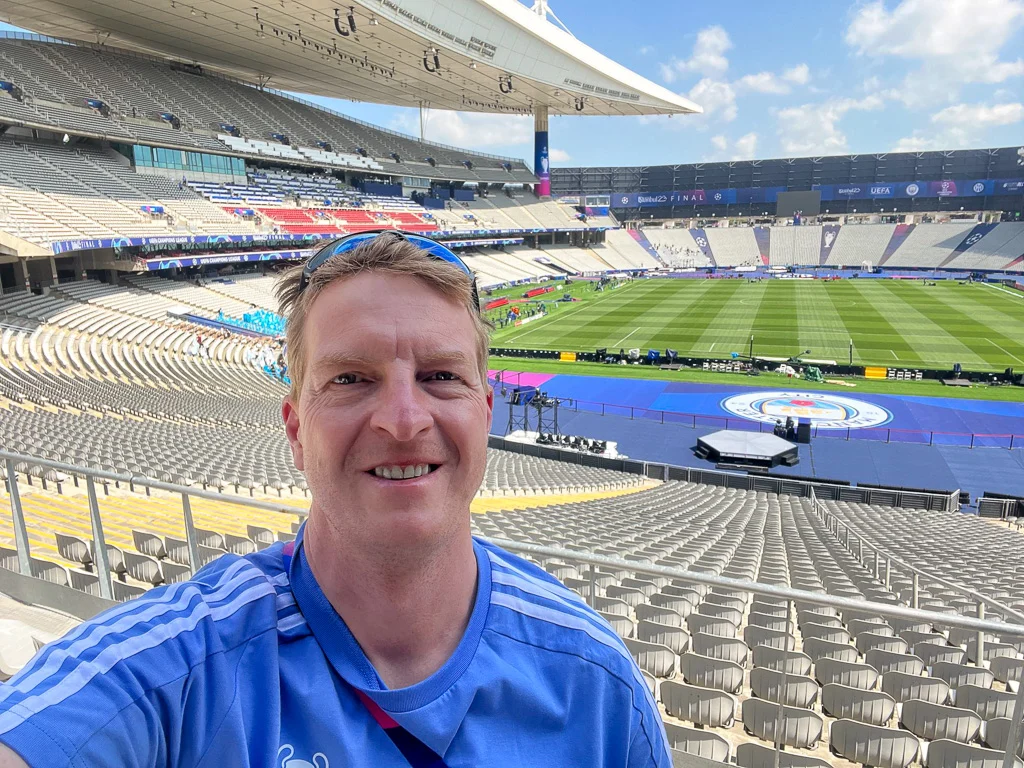
To broadcast major international sporting events to a global audience of billions, a stable and redundant energy supply is not merely a preference but an absolute operational necessity. The UEFA Technical Services & Overlay (TECH) team, a specialized unit within UEFA Events S.A., is responsible for the intricate conceptualization and execution of these power structures. For high-stakes events such as the UEFA European Championship in Germany or the annual finals of the UEFA Champions League, the TECH team must ensure that the energy infrastructure is both reliable and resilient enough to withstand unforeseen failures. Led by Kai Zimmermann, Head of Technical Services, and supported by senior energy consultant Karl Knappe, the team manages a complex web of temporary installations that transform standard sports venues into high-performance broadcast hubs.
The Operational Framework of UEFA Events S.A.
UEFA Events S.A. is a wholly-owned subsidiary of UEFA, based in Nyon, Switzerland, established specifically to manage the organization and commercialization of all UEFA competitions. Unlike many other sports governing bodies, UEFA utilizes an "in-house" full-service agency model. This entity handles everything from venue and guest management to hospitality and, most critically, the entire television production process. Within this ecosystem, the "Technical Services & Overlay" team operates as the backbone of the event’s physical infrastructure.
In the industry, "Overlay" refers to all temporary technical equipment and facilities that must be integrated into a stadium to meet the specific requirements of a major event. These requirements often far exceed the capacity of a stadium’s daily operations. While "Technical Services" involves the provision of services required during the match—such as energy supply—"Overlay" encompasses the physical hardware, including camera platforms, cable bridges, pitch-view studios, and temporary hospitality tents. The complexity of these projects requires a planning horizon of at least twelve months, often involving significant modifications to the local power grid surrounding the venue.
A History of Crisis: The Catalyst for Modern Energy Standards
The rigorous standards currently maintained by UEFA were born out of necessity following technical failures in the late 2000s. The UEFA EURO 2008, hosted by Switzerland and Austria, served as a pivotal turning point for the organization. During this period, television production was transitioning from analog to digital signal processing. This technological shift made the broadcast signals significantly more sensitive to electromagnetic interference (EMI) and transient power fluctuations.
The most notorious incident occurred during a semi-final match when a lightning strike at the International Broadcast Center (IBC) in Vienna caused a power failure that interrupted the global broadcast signal. This event underscored a fundamental reality: without a guaranteed power supply, the event effectively does not exist for the global audience. Consequently, energy infrastructure was elevated to the top of the UEFA planning agenda, leading to the development of the current "Triple-Play" redundancy systems and advanced monitoring protocols.
The Audit Process: From the Grid to the Socket
The preparation for a UEFA final or tournament begins with a structured, analytical audit of the host venue. Karl Knappe, whose background includes both event technology and a specialized degree in electrical engineering focused on grid operations, approaches stadium audits with the same rigor used for commissioning large-scale power plants.
The audit process involves several key stages:
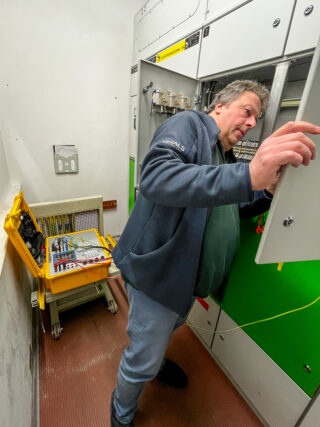
- Grid Analysis: The team contacts the local Distribution System Operator (DSO) to evaluate the regional supply structures. This includes physical inspections of substations and transformers to assess maintenance levels and age.
- Fault Statistics: UEFA reviews the regional operator’s history of outages and the speed of their emergency response teams.
- Capacity Evaluation: The team identifies potential bottlenecks in the high-voltage feed-in points that could jeopardize the stadium’s increased load during an event.
- Gap Analysis: A detailed comparison between the stadium’s existing electrical capacity and the "Overlay" requirements is conducted to determine how much temporary power must be brought in.
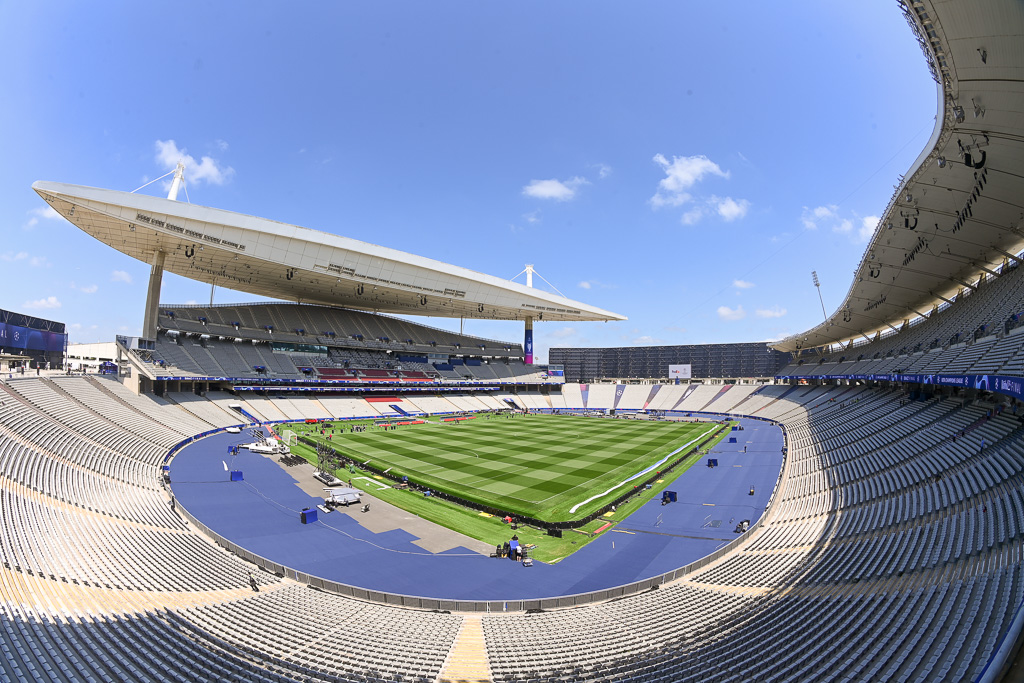
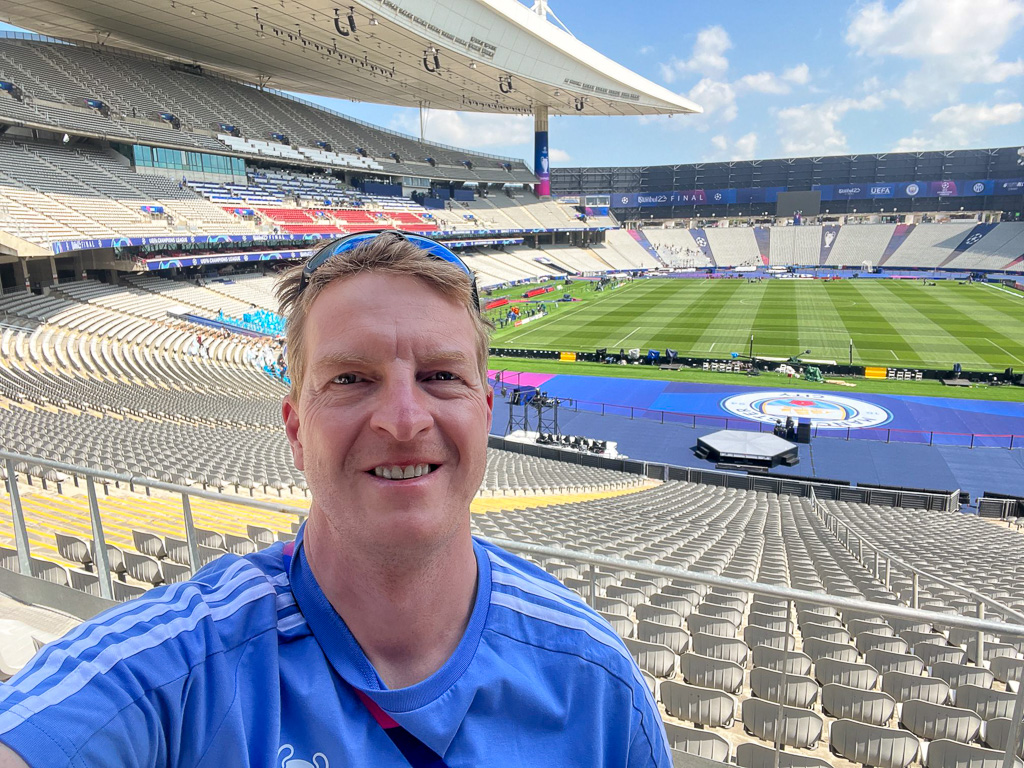
This forensic approach often uncovers hidden risks. For instance, during preparations for the 2023 Champions League Final at the Atatürk Olympic Stadium in Istanbul, UEFA’s audit led to the replacement of defective switchgear in the city’s 34.5-kV grid. This intervention not only secured the event but also provided a long-term upgrade to the local municipal infrastructure.
The Black Building Test: Simulating Total Failure
One of the most critical components of UEFA’s technical preparation is the "Black Building Test." This involves a deliberate, full-scale disconnection of the stadium from the municipal power grid to test the facility’s internal emergency systems. Unlike standard tests that might use internal switches, UEFA coordinates with the local utility to cut power at the substation, simulating a genuine regional blackout.
During these tests, the stadium is placed in full "match mode," with floodlights, sound systems, and hospitality lighting all operational. The results are often eye-opening for stadium operators. In many cases, systems that have passed theoretical building code inspections fail under the "sharp" conditions of a total blackout. Common issues include neglected maintenance of emergency generators, failure of automatic transfer switches, or batteries in Uninterruptible Power Supplies (UPS) that have reached the end of their service life. For UEFA, these tests are non-negotiable to ensure that play can continue and that the risk of crowd panic due to sudden darkness is eliminated.
The Island Concept: Redundancy and Power Quality
To protect the most sensitive broadcast equipment, UEFA employs an "Island Grid" strategy on match days. While the general stadium infrastructure and hospitality areas may remain on the local grid to reduce the carbon footprint, the Broadcast Compound—where the mobile production units (OB Vans) are located—is shifted to a completely autonomous power system.
The Triple-Play Generator Setup
The standard configuration for a high-profile match involves three identical diesel generators operating in a synchronized parallel mode. This "Triple-Play" system follows the engineering principle that "one is none."
- Capacity and Short-Circuit Power: Generators are "softer" power sources than grid transformers. To ensure that circuit breakers trip correctly during a fault, the system needs a high short-circuit current, which is achieved by paralleling three machines.
- Load Balancing: This setup allows for dynamic active and reactive power compensation, ensuring that the voltage remains stable even when high-power equipment is switched on or off.
- Seamless Transitions: The switch from grid power to generator power (and back again) is performed as a "no-break" synchronization, meaning the end-users never experience a flicker in service.
Active Harmonic Filtering
A unique feature of UEFA’s energy concept is the use of "Active Harmonic Filtering," essentially a "noise-canceling" system for electricity. Modern broadcast equipment uses high-frequency switching power supplies that can distort the sinusoidal wave of the electrical current. These distortions, or harmonics, can cause sensitive electronics to overheat or malfunction. By injecting compensating currents, UEFA ensures that the power quality remains pristine, protecting millions of euros worth of media technology.
Remote Monitoring and the Leipzig IBC
For the UEFA EURO 2024, the scale of energy management reached a new technological peak. UEFA established a central "Power Grid Control Room" at the International Broadcast Center (IBC) in Leipzig. Using complex network technology and dedicated VLANs, electrical parameters from all ten host stadiums were transmitted in real-time to this central hub.
This remote monitoring system allows senior experts to oversee the voltage quality, load distribution, and temperature of critical components across the entire tournament. If a fluctuation occurs in a stadium hundreds of kilometers away, the central team can provide immediate diagnostic support to the local technicians. This system, which was first piloted during EURO 2012 and refined during the pan-European EURO 2020 (held in 2021), represents the pinnacle of modern event engineering, treating the tournament’s energy infrastructure as a single, integrated "smart grid."
Sustainability and Future Implications
While the use of diesel generators is currently necessary for the "Highest Availability" status required by broadcasters, UEFA is actively working to minimize the environmental impact. The generators are only utilized during the critical broadcast window—typically from the day before the match until four hours after the final whistle. During the build-up and strike phases, the event relies entirely on the local permanent grid.
The broader impact of the TECH team’s work extends beyond football. By demanding higher standards from stadiums and regional grid operators, UEFA facilitates a "knowledge transfer" that improves the safety and reliability of public infrastructure across Europe. The rigorous auditing and the subsequent upgrades to local substations leave a lasting legacy of improved energy resilience in host cities.
As broadcast technology continues to evolve toward 8K resolution and cloud-based production, the demand for stable, high-quality power will only increase. The work of the UEFA Technical Services & Overlay team ensures that while the players on the pitch are the center of attention, the invisible energy that brings their performance to the world remains infallible. Through a combination of forensic auditing, "Triple-Play" redundancy, and cutting-edge remote monitoring, UEFA has set a global benchmark for the engineering of temporary mega-events.
