

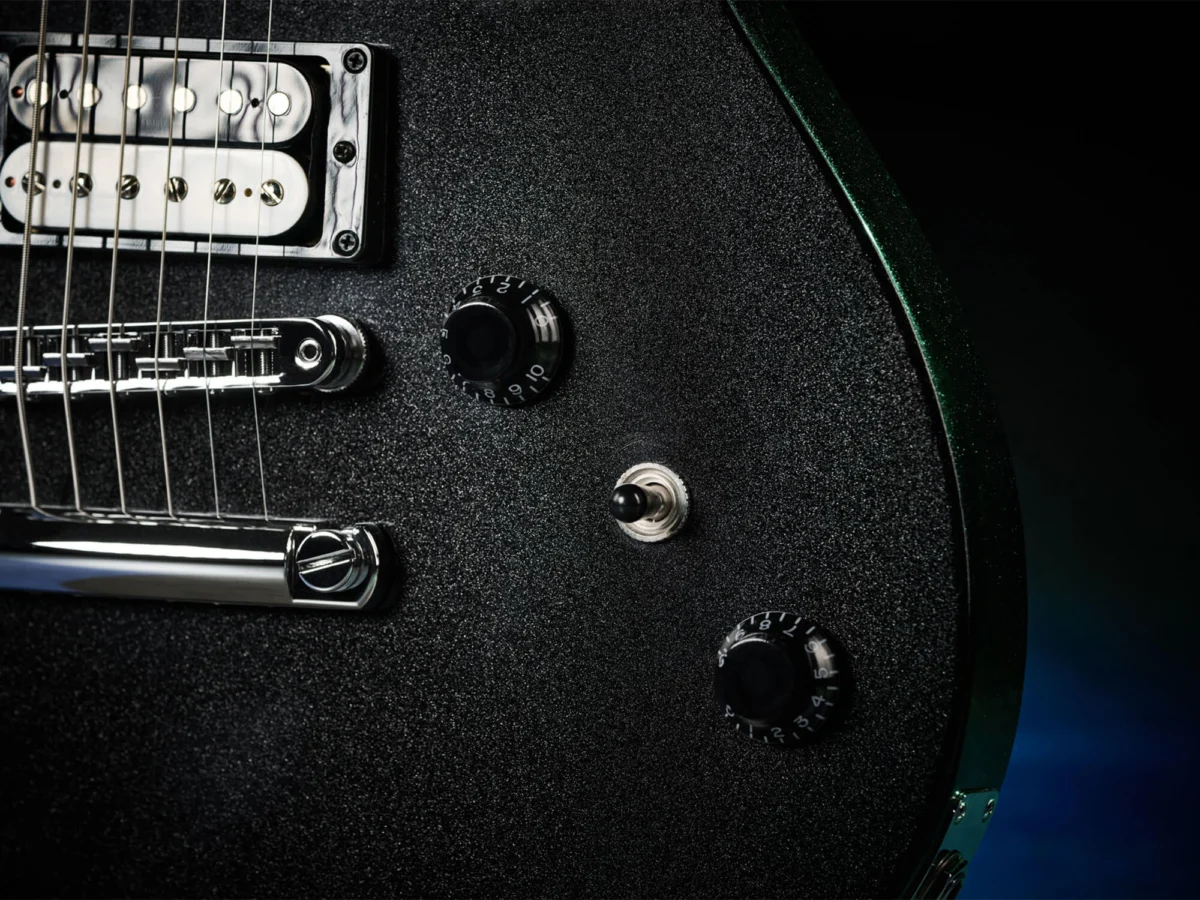
Nashville, TN – Gibson, the iconic American guitar manufacturer, has officially re-entered the baritone guitar market with the introduction of the all-new Victory Baritone. This release marks a significant move for the brand, which last offered extended-scale models over a decade ago, and arrives at a time when baritone guitars are experiencing a notable resurgence in popularity across various musical genres. The new model, a distinctive double-cutaway instrument, is priced at $2,499 / £2,149 and is available in British Racing Green and Graphite Metallic finishes.
The launch of the Victory Baritone comes in the wake of a broader trend within the guitar industry, where extended-range instruments are increasingly gaining traction, particularly among modern players seeking deeper tunings and expanded sonic palettes. The year 2026, in particular, has seen a heightened interest in baritone offerings, exemplified by recent high-profile collaborations such as Jackson’s partnership with Sleep Token for a signature baritone model, which notably ships tuned an entire octave down. While Gibson’s new offering retains a more traditional baritone tuning of B-to-B, its strategic introduction underscores the company’s commitment to adapting to contemporary musical demands while leveraging its rich heritage.
A Return to Extended Scales: Gibson’s Baritone History
Gibson’s engagement with extended-scale guitars, while not as continuous as some of its competitors, dates back to earlier periods. The company previously dipped its toes into the baritone pool in the early 2010s, with models like the SG Baritone, Explorer Baritone, and Les Paul Studio Baritone. These instruments, characterized by their longer scale lengths designed to accommodate lower tunings without excessive string slack or intonation issues, catered to a niche but dedicated segment of guitarists. However, these offerings were eventually discontinued, leading to a hiatus in Gibson’s extended-scale production.
The decision to revive a baritone model now suggests a careful assessment of market dynamics and player interest. The intervening years have witnessed a dramatic evolution in music production and performance, with heavier genres like metal, progressive rock, and even alternative and indie scenes incorporating lower tunings and extended ranges more frequently. This shift has created a fertile ground for instruments like the baritone guitar, which bridges the gap between a standard guitar and a bass, offering unique textural possibilities and a formidable low-end presence.
The Genesis of the Victory Line Revival

The Victory Baritone is the latest addition to Gibson’s "cult classic" Victory line, a series that itself received a significant revamp in 2024. The original Victory series, first introduced in the early 1980s, was Gibson’s attempt to innovate with a more modern, performance-oriented design, moving away from some of its more traditional silhouettes. Characterized by its double-cutaway body and often featuring active electronics, the Victory line was initially met with mixed reception but developed a loyal following over time for its unique aesthetics and robust playability.
The 2024 revival of the Victory line was met with considerable enthusiasm from both long-time fans and a new generation of players. Gibson’s strategy in bringing back the Victory series appears to be twofold: to honor its past innovations and to offer models that appeal to contemporary musicians seeking instruments that blend classic Gibson craftsmanship with modern playability and features. The success of earlier revived models, such as the Floyd Rose-equipped Victory model which garnered a near-perfect 9/10 review from critics, likely provided the impetus for expanding the line further, culminating in the baritone variant. This strategic expansion signals Gibson’s intent to diversify its product portfolio and cater to a broader spectrum of guitarists, including those who demand instruments capable of handling extreme tunings and aggressive playing styles.
Unpacking the Victory Baritone’s Specifications
The Gibson Victory Baritone is meticulously designed to deliver optimal performance in its intended lower tuning range. At its core, the instrument features a substantial 28-inch scale length, a significant departure from Gibson’s traditional 24.75-inch scale. This extended length is crucial for maintaining proper string tension and intonation when tuned to B-to-B (an interval of a perfect fourth below standard E-to-E tuning). A longer scale ensures that the lower notes remain tight, clear, and articulate, avoiding the muddiness and intonation issues that can plague standard-scale guitars attempting such low tunings. This longer scale also facilitates stable tuning, a common challenge for baritone players.
The guitar’s body is crafted from mahogany, a tonewood renowned for its rich, warm, and resonant characteristics, providing a strong fundamental tone and excellent sustain. The double-cutaway design, coupled with "updated Victory contours," is engineered for enhanced comfort, balance, and stage-ready performance. These ergonomic considerations are vital for players who spend extended periods performing or recording, ensuring that the instrument feels natural and unencumbered. The contours likely aim to reduce weight or improve access to the upper frets, making the instrument more playable across its entire range.
A glued-in mahogany neck further contributes to the guitar’s sustain and resonance, a hallmark of Gibson’s set-neck construction. This construction method allows for greater vibrational transfer between the neck and body compared to bolt-on designs. The neck is topped with a compound-radius ebony fingerboard, featuring 24 medium jumbo frets and acrylic dot inlays. The compound radius design, which typically flattens out as it approaches the higher frets, offers a superb playing experience: a rounder radius near the nut facilitates comfortable chording, while a flatter radius higher up allows for effortless string bending and faster lead playing. Ebony, a premium fingerboard material, provides a smooth, fast playing surface and contributes to a bright, articulate attack. The 24 frets provide two full octaves per string, essential for a baritone instrument that encourages exploration of both low-end chugging and higher-register melodies.
Electronics: Power and Versatility with ELEV8 Humbuckers

Given the inherent demand for high-gain, drop-tuned riffs often associated with extended-scale guitars, Gibson has equipped the Victory Baritone with a pair of newly designed Gibson ELEV8 humbuckers. These pickups are engineered to deliver a "powerful tone with unmistakable Gibson character," a crucial balance for an instrument that needs to both stand out in modern heavy contexts and retain the brand’s sonic identity. The ELEV8 humbuckers feature Alnico 8 magnets, known for their strong output, tight low-end response, and pronounced mid-range, making them ideal for aggressive, high-gain applications while still offering clarity. Custom-gauge wiring further refines their tonal characteristics, ensuring optimal performance across the baritone’s extended frequency range.
Beyond raw power, the electronics package prioritizes versatility. The Victory Baritone includes push-pull controls for coil-splitting, allowing players to instantly switch from humbucking (full, thick tone) to single-coil (brighter, thinner tone) sounds. This feature dramatically expands the tonal palette, enabling the guitar to cover a wider array of musical styles, from clean, chiming textures to gritty overdrive. Furthermore, the inclusion of inner-outer coil selection offers even more nuanced tonal shaping, giving players precise control over which coil combination is active when split, thereby providing additional sonic variations. This level of electronic sophistication ensures the Victory Baritone is not merely a one-trick pony for heavy music but a highly adaptable instrument capable of a broad spectrum of sounds.
Market Context and Strategic Implications
The introduction of the Victory Baritone is a calculated move by Gibson in a competitive and evolving guitar market. The demand for extended-range guitars has been steadily growing for over two decades, fueled by genres like djent, progressive metal, and modern rock, where lower tunings and heavier sounds are foundational. While brands like Jackson, Schecter, Ibanez, and ESP have long dominated this segment, Gibson’s re-entry with a model like the Victory Baritone signals a broader strategy to capture a share of this expanding market.
By leveraging the revived Victory line, Gibson is tapping into a heritage that, while distinct from its mainstream models, still carries the brand’s prestige. This allows them to offer a modern instrument that is recognizably Gibson, yet designed for contemporary performance demands. The pricing of $2,499 / £2,149 positions the Victory Baritone as a premium instrument, targeting serious musicians and enthusiasts who appreciate quality craftsmanship and specific tonal characteristics. This also places it in direct competition with high-end baritone offerings from other manufacturers, challenging Gibson to deliver a product that stands out in terms of playability, tone, and build quality.
For Gibson, this release signifies a dynamic approach to product development. It demonstrates a willingness to innovate and cater to evolving player preferences while maintaining the core values of the brand. The success of the Victory Baritone could pave the way for further exploration into extended-range instruments or other specialized models, reinforcing Gibson’s position not just as a guardian of tradition, but also as a forward-thinking entity in the global guitar industry. The two available finishes, British Racing Green and Graphite Metallic, also reflect a modern aesthetic sensibility, appealing to players who seek a contemporary look that complements the guitar’s aggressive sonic capabilities.
Ultimately, the Gibson Victory Baritone is more than just a new guitar; it represents a strategic pivot and a confident re-assertion of Gibson’s presence in a vibrant and growing segment of the electric guitar market. It offers a powerful, versatile, and ergonomically refined instrument designed for the modern player, while retaining the unmistakable character that has defined Gibson for generations. As the market for extended-range guitars continues its upward trajectory, the Victory Baritone is poised to become a significant player in shaping the soundscapes of tomorrow.
