

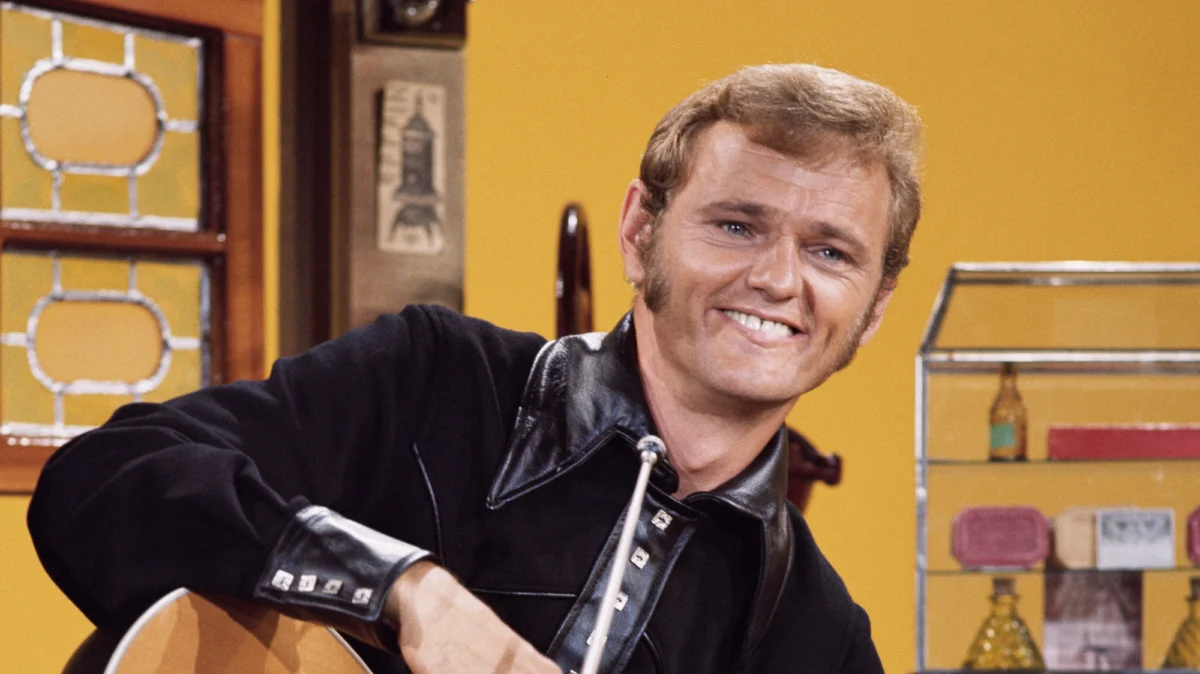
The passing of Jerry Reed on September 1, 2008, marked the end of an era for both the Nashville music establishment and the American film industry. Reed, who succumbed to complications from emphysema at the age of 71 in Nashville, Tennessee, was a rare polymath in the entertainment world—a virtuoso guitarist, a prolific songwriter, a chart-topping recording artist, and a charismatic movie star. Known colloquially as "The Guitar Man" and "the Snowman," Reed’s contributions to American culture spanned over five decades, leaving an indelible mark on the technical execution of country guitar and the cinematic portrayal of the American South.
The Architectural Roots of a Virtuoso
Born Jerry Reed Hubbard in Atlanta, Georgia, on March 20, 1937, Reed’s early life was characterized by the economic hardships of the post-Depression South. His parents, Robert and Cynthia Hubbard, separated shortly after his birth, and Reed spent several years in foster homes and orphanages before returning to his mother’s care. It was during these formative years that he discovered the guitar, an instrument that would become his primary vehicle for expression. By the age of seven, he was already developing the unique fingerstyle technique that would later baffle and inspire generations of musicians.
By the time he reached his teenage years, Reed was performing locally and writing his own material. His professional journey began in earnest at the age of 17 when he was signed to Capitol Records by producer Ken Nelson. His early recordings, such as "If the Good Lord’s Willing and the Creeks Don’t Rise," showcased a raw talent, though the label initially attempted to market him as a teen idol in the vein of Elvis Presley or Gene Vincent. While his early singles like "Goodnight, Irene" saw modest success on the pop charts, peaking at No. 79, it was clear that Reed’s true potential lay in a more sophisticated blend of country, blues, and jazz.
The Nashville Transition and the Elvis Presley Endorsement
After a two-year stint in the United States Army (1959–1961), Reed relocated to Nashville, the epicenter of the country music industry. He quickly gained a reputation as a first-call session guitarist, contributing to the records of established stars. However, his career reached a turning point in 1967 when he signed with RCA Victor and released the self-penned single "Guitar Man." The song was a gritty, rhythmic masterpiece that highlighted his percussive "claw" style of playing.
The song’s impact was amplified when Elvis Presley decided to record a cover version. During the recording session, Presley’s studio musicians found it impossible to replicate the specific "funky" licks that Reed had played on the original track. In a move that has since become legendary in Nashville lore, Presley’s producer, Felton Jarvis, sent for Reed himself. Reed arrived at the studio, tuned his guitar to an unconventional "G" tuning, and provided the iconic accompaniment that defined Presley’s version of "Guitar Man" and "U.S. Male." This collaboration solidified Reed’s status as a premier stylist and opened doors to the highest echelons of the music industry.
A Decade of Dominance: The 1970s Chart Ascent
The 1970s represented the commercial zenith of Jerry Reed’s recording career. He transitioned from a respected musician’s musician to a household name. In 1971, he released "When You’re Hot, You’re Hot," a humorous, talking-blues track that resonated with a broad audience. The single spent five weeks at the top of the country charts and crossed over to the Billboard Hot 100, peaking at No. 9. The song eventually earned Reed a Grammy Award for Best Country Vocal Performance, Male.
Reed’s success continued with a string of hits that balanced technical brilliance with comedic storytelling. "Lord, Mr. Ford," released in 1973, served as a satirical critique of the American automotive industry and the rising cost of living, striking a chord with the working class during the oil crisis. The track became his second No. 1 hit. Throughout this period, Reed also collaborated extensively with his mentor and close friend, Chet Atkins. Their joint albums, such as Me and Jerry (1970) and Me and Chet (1972), showcased the pinnacle of guitar artistry, earning them two Grammy Awards for Best Country Instrumental Performance. Atkins, a legend in his own right, frequently referred to Reed as one of the finest natural talents he had ever encountered.
Cinematic Success and the Smokey and the Bandit Phenomenon
While Reed’s musical pedigree was unquestioned, his transition into acting provided him with a new level of celebrity. His natural charisma and quick wit made him a favorite on the variety show circuit, particularly on The Glen Campbell Goodtime Hour. This exposure led to a close friendship and professional partnership with actor Burt Reynolds.
Reed made his feature film debut in 1975 in W.W. and the Dixie Dancekings, but it was his role as Cledus "Snowman" Snow in the 1977 film Smokey and the Bandit that cemented his place in pop culture. The film, a high-octane comedy about bootlegging Coors beer across state lines, was a massive box office success, trailing only Star Wars in total earnings for that year. Reed’s contribution to the film was twofold: he provided the comedic foil to Reynolds’ "Bandit" and composed the film’s theme song, "East Bound and Down."
The song, with its driving rhythm and trucker-themed lyrics, became an anthem for the CB radio and trucking subculture of the late 70s. It reached No. 2 on the country charts and remains one of the most recognizable songs in the genre’s history. Reed reprised his role in two sequels and continued to work with Reynolds in films like Gator (1976) and High-Ballin’ (1978).
Technical Mastery: The Evolution of the Reed Sound
To understand Jerry Reed’s impact, one must analyze the technical innovations he brought to the guitar. Reed’s playing style, often referred to as "The Claw," involved a complex system of fingerpicking where he used his thumb to maintain a steady bass line while his other fingers plucked syncopated melodies on the higher strings. He often used nylon-string guitars to achieve a warmer, more percussive tone, and he was known for using unconventional tunings that allowed him to play intervals and chords that were physically impossible in standard tuning.
His compositions were often built around these technical "tricks," yet they never felt like mere exercises. Songs like "The Claw," "Bluefinger," and "Struttin’" are still considered "litmus test" pieces for aspiring fingerstyle guitarists. His ability to blend elements of Delta blues, rockabilly, and jazz into a cohesive country framework helped modernize the Nashville sound, moving it away from the polished "Nashville Sound" of the 1960s toward a more rhythmic, groove-oriented approach.
Later Years, Posthumous Honors, and Lasting Influence
As the 1980s progressed, Reed’s presence on the music charts began to wane, though he achieved one final No. 1 hit in 1982 with "She Got the Goldmine (I Got the Shaft)," a humorous take on the financial perils of divorce. He remained active in the industry, touring frequently and making guest appearances on television. In 1998, he gained a new generation of fans by playing the antagonist, Coach Red Beaulieu, in the Adam Sandler comedy The Waterboy.
Despite his declining health in the 2000s due to emphysema, Reed’s influence remained palpable. Following his death in 2008, tributes poured in from across the spectrum of entertainment. Burt Reynolds famously remarked that Reed was "the only person I ever knew who didn’t have an enemy," while Dolly Parton praised his "heart of gold."
In 2017, Jerry Reed was posthumously inducted into the Country Music Hall of Fame, an honor many critics felt was long overdue. The induction recognized not just his hits, but his role as a bridge between the traditionalism of the past and the genre-blurring future of country music.
Broader Impact and Implications
The legacy of Jerry Reed extends beyond his discography and filmography. He represented a specific archetype of the Southern entertainer: intellectually sharp, technically proficient, yet accessible and unpretentious. In an era where "outlaw country" was often defined by rebellion and grit, Reed offered an alternative path—one defined by humor, musicianship, and a relentless work ethic.
His influence is seen today in the playing of modern guitarists like Tommy Emmanuel, Brent Mason, and Brad Paisley, all of whom have cited Reed as a primary influence. His ability to navigate the worlds of high-level session work, mainstream pop success, and Hollywood stardom remains a blueprint for multifaceted careers in the modern entertainment landscape. As the industry reflects on the anniversary of his passing, Reed is remembered not just as a "Guitar Man," but as a foundational architect of the modern Southern aesthetic, whose songs and performances continue to resonate with the same vitality they possessed decades ago.
