

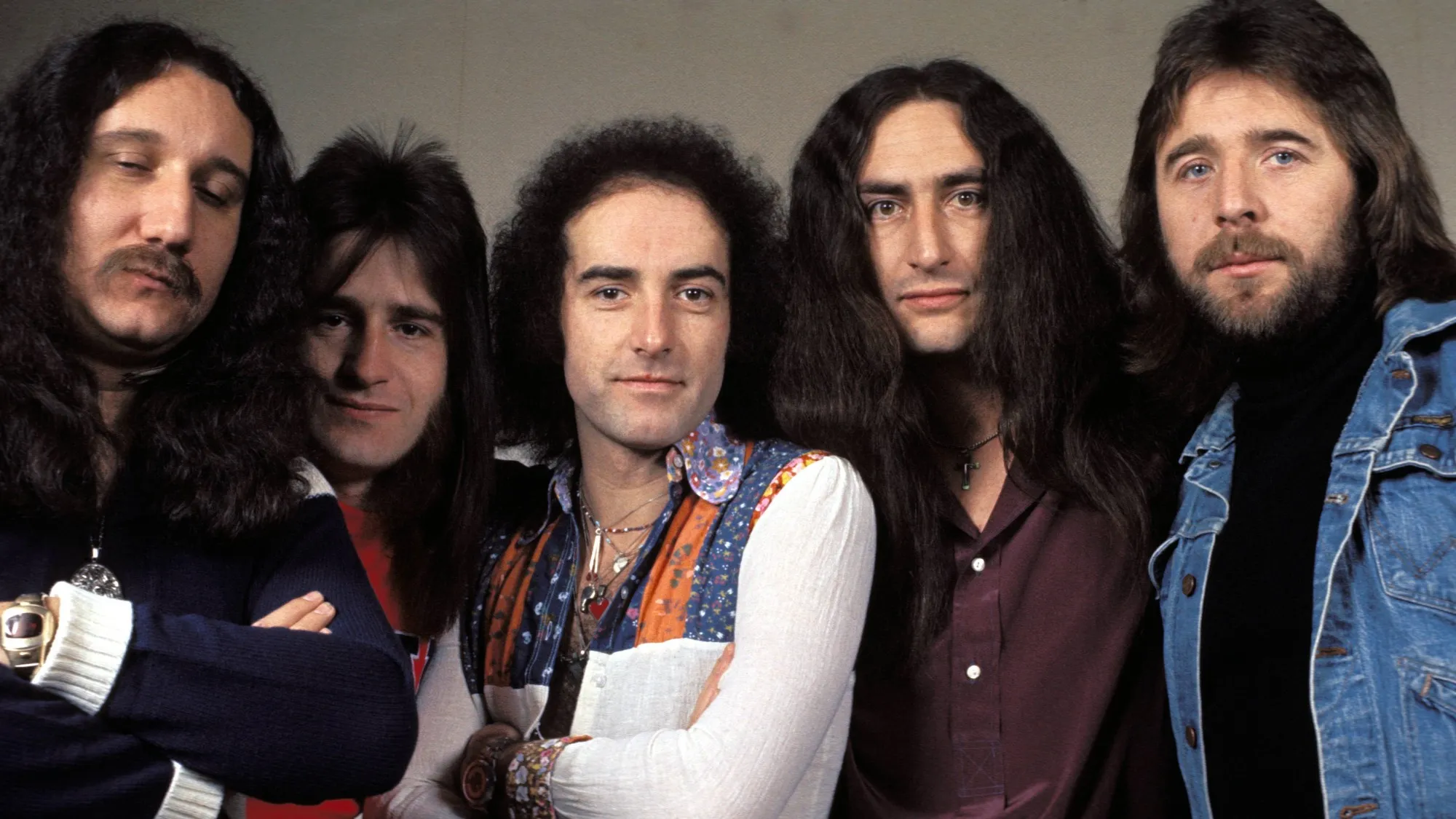
The 1970s represented a transformative decade for the global music industry, characterized by the fragmentation of genres and the emergence of high-fidelity recording techniques. Within this fertile creative environment, the phenomenon of the "one-hit wonder" became a defining characteristic of the Billboard charts. For the Baby Boomer generation, these singular successes provided the soundtrack to a decade of significant social and cultural transition. While many of these artists possessed deep catalogs and sustained careers in international markets or specialized subgenres, their presence in the American Top 40 was often limited to a solitary, career-defining moment. An analysis of the era’s most prominent one-hit wonders—specifically Uriah Heep, The Undisputed Truth, and The Ides of March—reveals a complex interplay between artistic innovation, radio programming trends, and the volatile nature of commercial success in the post-Woodstock era.
The Evolution of the 1970s Music Market
To understand why certain bands achieved only a single major hit despite significant talent, one must examine the shifting landscape of 1970s radio. The decade saw the rise of FM radio, which favored "Album Oriented Rock" (AOR), while AM radio remained the primary driver for the Billboard Hot 100 singles chart. This dichotomy often created a situation where a band could sell millions of albums and sell out arenas while only ever placing one song in the Top 40.
Furthermore, the 1970s saw the professionalization of music promotion. Record labels began investing heavily in "singles" as loss leaders for album sales. If a follow-up single failed to gain immediate traction on the airwaves, labels frequently pivoted their marketing budgets to newer acts, effectively relegating established groups to one-hit wonder status in the eyes of the general public.
Uriah Heep and the Progressive Rock Paradox
Among the most technically proficient bands to be labeled a one-hit wonder in the United States is the British rock outfit Uriah Heep. Formed in London in 1969, the band was a pioneer in the fusion of progressive rock, heavy metal, and hard rock, characterized by the soaring vocals of David Byron and the dense, Hammond organ-driven arrangements of Ken Hensley.
In 1972, Uriah Heep released their fourth studio album, Demons and Wizards. The lead single, "Easy Livin’," became a global sensation. In the United States, the track peaked at No. 39 on the Billboard Hot 100. While a Top 40 hit is a significant achievement, it remains the only time the band reached that tier of the American charts. This statistical anomaly stands in stark contrast to the band’s success elsewhere; in the Netherlands and Germany, "Easy Livin’" was a Top 10 fixture, and the band continued to dominate European charts for years.
The lack of subsequent U.S. hits for Uriah Heep can be attributed to the specific tastes of American radio programmers during the mid-70s. As the U.S. market moved toward the more polished "corporate rock" sound of bands like Foreigner or Journey, Uriah Heep’s penchant for fantasy-themed lyrics and complex, multi-part vocal harmonies was deemed too "European" or "niche" for mainstream AM rotation. Despite this, Demons and Wizards was certified Gold by the RIAA, proving that the band had a massive American audience that simply did not translate into repeated singles success.
The Undisputed Truth and the Era of Psychedelic Soul
While Uriah Heep navigated the world of hard rock, The Undisputed Truth was redefining the boundaries of R&B and soul. Formed by legendary Motown producer Norman Whitfield, the group was designed to be a vehicle for Whitfield’s experimentation with "psychedelic soul"—a genre that blended the traditional Motown sound with the distorted guitars and social consciousness of the late 1960s counterculture.
The group’s 1971 masterpiece, "Smiling Faces Sometimes," remains one of the most enduring tracks of the era. The song reached No. 3 on the Billboard Hot 100 and No. 2 on the R&B charts. Its haunting lyrics, which warned of betrayal and hypocrisy, resonated deeply with a public grappling with the political fallout of the Vietnam War and the burgeoning Watergate scandal.
Statistically, "Smiling Faces Sometimes" was a massive success, but it was also the group’s only foray into the Top 40. The Undisputed Truth’s subsequent output remained critically acclaimed and influential—particularly in the development of disco and funk—but they struggled to emerge from the shadow of Whitfield’s other major project, The Temptations. Many of the songs recorded by The Undisputed Truth were also recorded by The Temptations, who often received more aggressive promotional support from Motown. By the time the 1970s concluded, The Undisputed Truth disbanded, leaving behind a legacy as a group that provided the definitive sound of "cinematic soul" but failed to maintain a permanent residence on the pop charts.
The Ides of March and the Rise of Brass-Driven Rock
The early 1970s were also defined by the "brass rock" movement, where rock bands integrated full horn sections to create a powerful, jazz-inflected sound. Leading this charge was The Ides of March, a band from Berwyn, Illinois, led by the teenage prodigy Jim Peterik.
In 1970, the band released "Vehicle," a high-energy track featuring a driving brass riff and Peterik’s soulful, gravelly vocals. The song was an immediate hit, peaking at No. 2 on the Billboard Hot 100. It is often cited by musicologists as one of the fastest-selling singles in the history of the Warner Bros. label. The track’s success was so sudden that many listeners initially mistook the band for Blood, Sweat & Tears, who were the reigning kings of the jazz-rock genre at the time.
However, The Ides of March were unable to replicate the lightning-in-a-bottle success of "Vehicle." Subsequent singles like "Superman" failed to break the Top 40, and the band eventually transitioned away from the brass-heavy sound. While they are technically one-hit wonders, the band’s frontman, Jim Peterik, would go on to have one of the most successful careers in rock history. Peterik later founded the band Survivor and co-wrote "Eye of the Tiger," as well as numerous hits for 38 Special. The case of The Ides of March illustrates how a one-hit wonder can serve as a launching pad for a multi-decade career in the industry, even if the band name itself falls out of the charts.
Data Analysis: The Statistical Reality of 1970s Charts
To provide context for these artists’ trajectories, it is necessary to look at the broader data regarding the Billboard Hot 100 during the 1970s. Research indicates that the 1970s had a higher turnover of artists in the Top 40 compared to the 1960s or the 1980s.
- Market Saturation: The number of active record labels increased by nearly 30% between 1970 and 1975, leading to a glut of content.
- Genre Volatility: The transition from Bubblegum Pop (1970-1972) to Glam Rock and Singer-Songwriter styles (1973-1975) and finally to Disco (1977-1979) meant that bands often found their signature sound "out of style" within 18 months of a hit single.
- Regional vs. National Success: Artists like Uriah Heep maintained "regional" strongholds in the Midwest or Northeast, which allowed them to remain profitable touring acts despite the lack of national Top 40 singles.
Broader Impact and Cultural Implications
The legacy of these one-hit wonders extends far beyond their chart positions. For the Baby Boomer generation, these songs are inextricably linked to specific historical moments. "Smiling Faces Sometimes" is often cited in documentaries about the 1970s as a sonic representation of the era’s cynicism. "Vehicle" remains a staple of marching bands and sporting events, its riff instantly recognizable even to younger generations who may not know the band’s name.
Furthermore, the "one-hit wonder" status of these groups has led to a modern-day critical re-evaluation. Music historians now argue that the term often does a disservice to the artists’ broader contributions. Uriah Heep, for instance, is now recognized as a fundamental influence on the development of European Power Metal. The Undisputed Truth is celebrated by hip-hop producers, who have frequently sampled Whitfield’s innovative arrangements.
In conclusion, the 1970s one-hit wonders were not failures of talent, but rather victims of a highly volatile and rapidly evolving commercial marketplace. The enduring popularity of "Easy Livin’," "Smiling Faces Sometimes," and "Vehicle" on classic rock and oldies radio stations today serves as a testament to their quality. While these artists may have only reached the pinnacle of the American charts once, their contributions to the cultural fabric of the 20th century remain significant and undisputed. The data suggests that in an era of unprecedented musical diversity, achieving even a single Top 40 hit was a mark of extraordinary distinction—one that continues to resonate with audiences fifty years later.
