

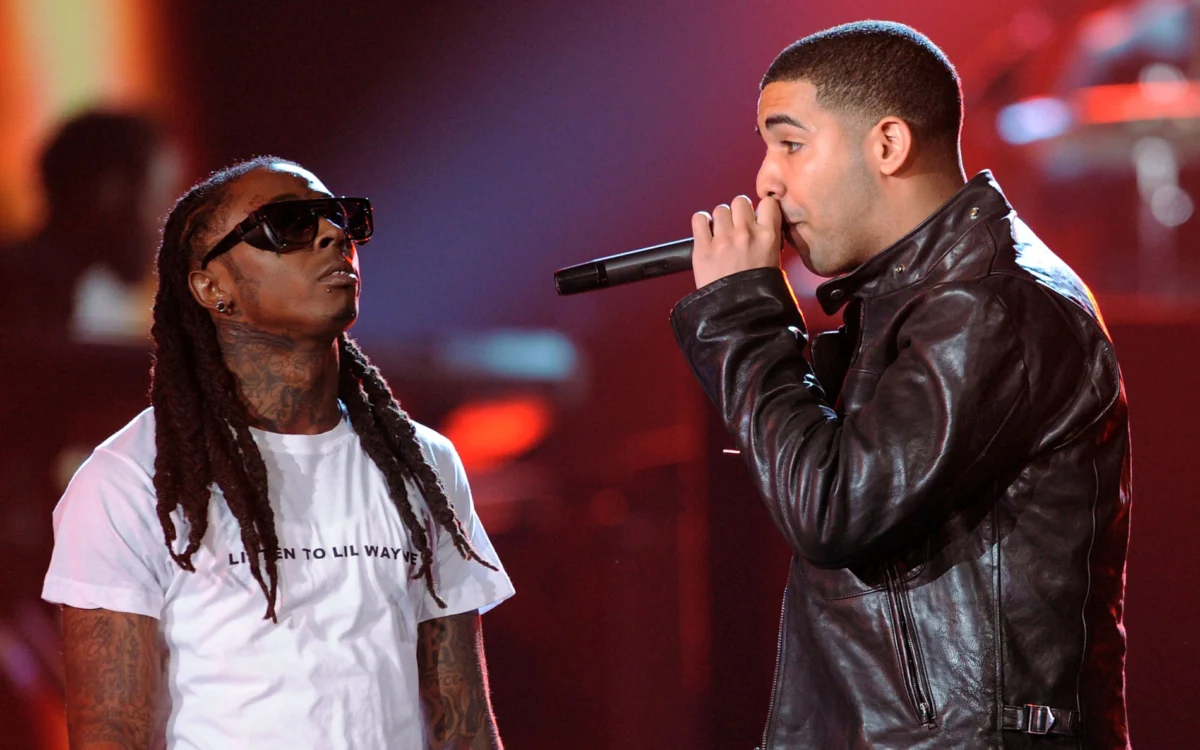
The meteoric rise of Drake, from an aspiring actor on "Degrassi" to a global music phenomenon and co-founder of the influential OVO Sound label, is a well-documented chapter in contemporary hip-hop history. However, a newly surfaced anecdote from Adam Bhala Lough, the director behind Lil Wayne’s seminal documentary series The Carter, sheds light on a period when Drake’s burgeoning presence within the Young Money collective was far from guaranteed, even to the point of being excluded from the rapper’s tour bus. This revelation offers a fascinating glimpse into the early dynamics of a label that would go on to dominate the music charts and redefine urban music culture.
Lough, speaking with music journalist Andre Gee for his Substack newsletter, delved into the intricate process of capturing Lil Wayne at the zenith of his creative powers during the Tha Carter III era. While discussing the making of the documentary and its recently leaked sequel, Lough shared an amusing yet telling story that underscored Drake’s initial outsider status within the tight-knit Young Money entourage. At a time when Drake was still a developing artist, his connection to the core group, particularly Lil Wayne, was not yet cemented.
Early Days of Young Money: A Different Landscape
In the formative years of Young Money, before Drake achieved his multi-platinum success and became a household name, the dynamics within the label were significantly different. Lil Wayne, then at the peak of his powers and widely regarded as the most influential rapper in the game, commanded a considerable presence. His tour bus, often a hub of activity and a symbol of his status, was not an open invitation for everyone.
Lough recounted his experiences during the filming of The Carter, observing the interactions and hierarchies within Lil Wayne’s circle. He noted that much of his time when not directly filming Wayne was spent with Tez Bryant, Wayne’s then-manager, along with Mack Maine and a then-emerging Nicki Minaj. It was during one of these periods, specifically before a performance on The Jimmy Kimmel Show, that Lough witnessed Drake’s initial marginalization.
"At one point, I spent some time with her [Nicki Minaj] before Wayne did The Jimmy Kimmel Show, when nobody knew who she was, and they wouldn’t even let Drake on the bus," Lough stated. "He was, like, such a dork that they wouldn’t even let him on the bus." This seemingly minor exclusion speaks volumes about the perceived status and integration of Drake within the group at that juncture. His "dorky" demeanor, as Lough described it, contrasted with the more hardened personas of some of the other individuals present.
The Shadow of Gang Affiliation and Intimidation
Lough elaborated on the underlying reasons for this exclusion, pointing to the presence of serious Blood gang members who were consistently around Lil Wayne. The environment was one of street credibility and perceived toughness, a stark contrast to Drake’s early image. "When he started selling millions and millions of records, it was a different story entirely," Lough observed. "But he was definitely not allowed on the bus and wouldn’t hang out with any of [them] because there were real Blood gang members around all the time. And I’m sure he was intimidated by them, too. I was, even though they were super cool to me. These are serious, Blood gang members with guns on them. Like, some shit could go down."
This context is crucial for understanding the prevailing atmosphere. Lil Wayne, deeply entrenched in his street persona and surrounded by individuals who embodied that lifestyle, maintained a strict circle. Drake, with his background and early artistic leanings, did not initially fit this mold. The decision to deny him access to the tour bus was likely a combination of gatekeeping, a desire to maintain a specific image, and perhaps a genuine concern for his safety in an environment that could be volatile. The presence of firearms and the potential for violence were real deterrents, and Drake’s relative lack of street affiliation would have made him an anomaly, and potentially a liability, in such settings.
The Evolution of Drake’s Role in Young Money
The trajectory of Drake’s career within Young Money is a testament to his talent and persistence. From being denied entry onto a tour bus, he would evolve into one of the label’s most significant assets, driving its commercial success and global reach. His debut mixtape, So Far Gone, released in 2009, marked a turning point, garnering critical acclaim and commercial attention. This success solidified his position within Young Money, paving the way for his signing and subsequent blockbuster albums.
By the time of his first studio album, Thank Me Later, released in 2010, Drake was no longer an outsider. He was a foundational pillar of the Young Money empire, working alongside Lil Wayne and Nicki Minaj to build a global brand. The contrast between his early exclusion and his later status as a co-headliner and executive demonstrates the transformative power of artistic success and the evolving nature of the music industry. Young Money, under the leadership of Lil Wayne and later Cash Money Records, leveraged Drake’s unique sound and broad appeal to expand its market share and influence.
Behind the Scenes of The Carter Documentary: Unexpected Financiers
Beyond the anecdote about Drake, Lough also shared a startling detail regarding the initial financing of The Carter documentary. He revealed that controversial figures Harvey Weinstein and Steve Bannon were, at one point, slated to be among the original funders of the film.
"Quincy Jones III contacted me. He had seen one of my previous films, and he was like, ‘I really want to work with you. I have this company. We have a deal with an offshoot of Miramax.’ You’re not going to believe this, but it was a company owned by Harvey Weinstein and Steve Bannon," Lough explained. He further elaborated on Bannon’s background, noting, "A lot of people don’t remember, but Steve Bannon actually came from Hollywood; he was a movie producer. So the original financiers of The Carter were going to be Harvey Weinstein and Steve Bannon, which would have been amazing if it had actually happened, but they shut down their company during production of the film."
This revelation adds another layer of intrigue to the documentary’s history. The involvement of Weinstein, a disgraced Hollywood mogul known for his alleged predatory behavior, and Bannon, a political strategist with a controversial past, highlights the complex and often unexpected alliances that can form in the entertainment industry. Fortunately for Lough and the integrity of the project, their company dissolved before production could be completed, averting a potentially problematic association.
The Leaked Sequel: A Treasure Trove of Unreleased Material
The conversation also touched upon the recently leaked sequel to The Carter. Lough confirmed that a rough cut of this footage, captured during the Tha Carter and Tha Carter II eras, was uploaded to YouTube after being made public by hackers. This extensive two-hour video offers fans an unprecedented look at Lil Wayne during a pivotal period of his career.
The leaked footage reportedly features Lil Wayne engaging in various activities, including playing unreleased music, collaborating in the studio with a young 2 Chainz (then known as Tity Boi) and Curren$y, and candidly discussing his ongoing issues with Cash Money Records. This content provides invaluable insight into the creative process and the business challenges that shaped Lil Wayne’s career. The interactions with artists like 2 Chainz and Curren$y offer a glimpse into the collaborative spirit and the emergence of new talent under Wayne’s influence. His discussions about Cash Money Records, a label he would eventually sue for millions, foreshadow the complex relationship and legal battles that would define his later years.
The Future of The Carter Sequel: Official Release Prospects
While the leaked rough cut is accessible, the prospect of an official release for the sequel remains uncertain. Lough expressed his desire to produce a finished version and indicated that he has had positive discussions with Lil Wayne’s current manager, Fabian Marasciullo.
"There’s basically two options: There’s a big [streaming network] that would pick it up and put it out," Lough stated, outlining his ideal scenario. "The other option that I talked to [Fabian] about was some type of self-distribution where we just put it out ourselves to the fans. We’ll see where it ends up. It’ll go how it needs to go."
The possibility of a major streaming platform acquiring the rights offers a path to widespread distribution, while self-distribution could allow for a more direct connection with Lil Wayne’s dedicated fanbase. The footage is extensive, leading Lough to consider the possibility of splitting it into two distinct films. "There’s so much footage, I think maybe there could be two films. So in that regard, it would be like 40% done. But if it’s just this one part, then I would say closer to 70% done. But then it also needs to be mixed and color corrected and all that stuff."
The technical aspects of post-production, including mixing and color correction, are critical for delivering a professional final product. Whether it materializes as one feature-length documentary or a two-part series, the potential for a polished release of this archival material is highly anticipated by fans and music historians alike. The unreleased music and behind-the-scenes glimpses into Lil Wayne’s creative process and business dealings offer a unique perspective on one of hip-hop’s most enduring figures.
The director’s rough cut of the sequel is available for viewing, providing an early look at the material that could eventually be formally released. This ongoing narrative surrounding The Carter films underscores the enduring legacy of Lil Wayne and the significance of documenting the careers of artists who have profoundly impacted popular culture. The journey from a young, aspiring artist denied access to a tour bus to a global superstar, as exemplified by Drake’s story, is a powerful reminder of the unpredictable and often challenging path to success in the music industry.
