

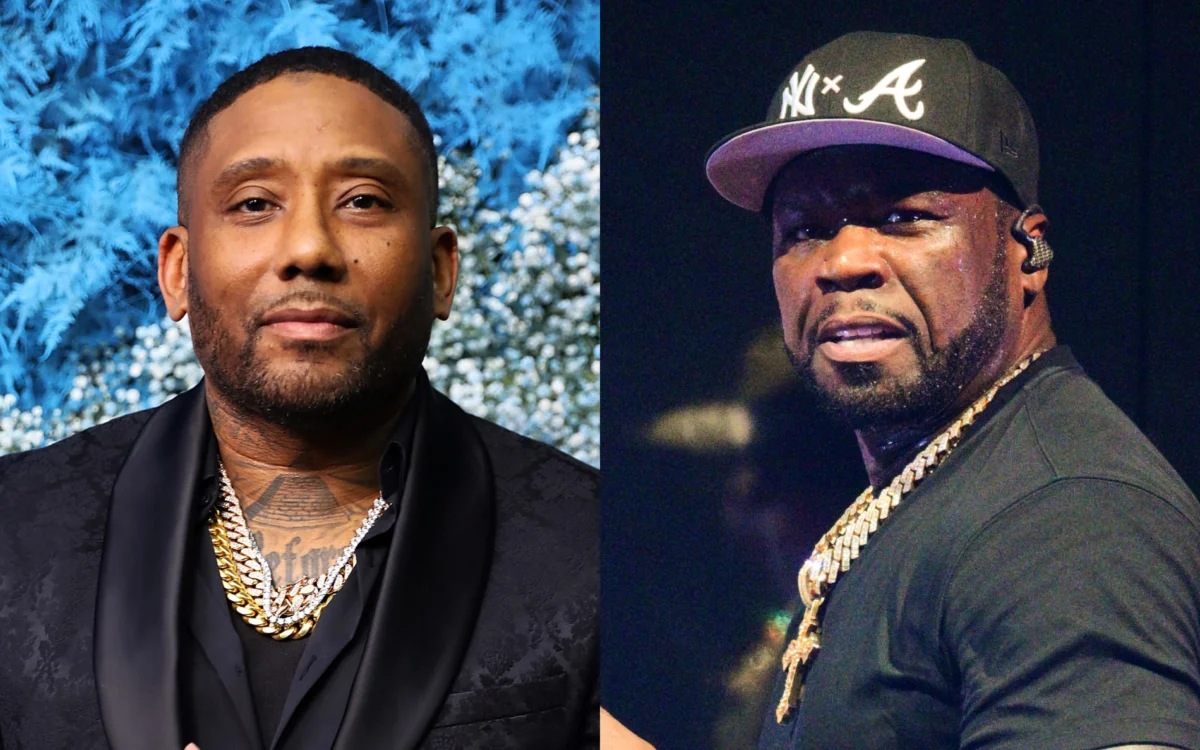
Brooklyn rapper Maino has escalated his ongoing feud with 50 Cent by releasing a new diss track titled "Bleed Like Us." The song, which dropped on Wednesday, March 11, serves as a direct response to 50 Cent’s recent track "No More Tricks, No More Tries," a collaboration with Max B. This latest salvo in their lyrical battle draws inspiration from the iconic Notorious B.I.G. track "N*ggas Bleed," employing a similar confrontational tone and thematic elements to challenge 50 Cent’s credibility and past actions.
The Genesis of the Beef: From Podcast Criticism to Waxed Retaliation
The animosity between Maino, along with fellow artists Jim Jones and Fabolous, and 50 Cent appears to have ignited in late 2023. The initial friction stemmed from a critical discussion on the "Let’s Rap About It" podcast, co-hosted by Maino, Jones, and Fabolous, alongside Dave East. During the episode, the trio openly critiqued 50 Cent’s documentary about Sean "Diddy" Combs, with Jim Jones specifically labeling the film a "mockumentary" and accusing 50 Cent of engaging in "petty behavior" by attempting to tarnish Combs’ character.
50 Cent, never one to shy away from a public dispute, responded swiftly and aggressively. He launched a series of social media attacks, targeting the podcast hosts. A significant claim made by 50 Cent was that Maino, Jones, and Fabolous were allegedly behind on rent for the studio space where they record their podcast, accusing them of being "squatters" and owing a substantial amount, which he stated as $250,000. He further alleged that they were more concerned with fashion than financial responsibility. The situation reportedly intensified when 50 Cent claimed to have purchased the building and posted security footage purportedly showing Jim Jones attempting to force entry, threatening to terminate their tenancy.
While the Diddy documentary critique provided the initial spark, 50 Cent’s song "No More Tricks, No More Tries" and its accompanying AI-generated music video appeared to be a more pointed response aimed directly at Maino and his collaborators. Initially, many listeners and media outlets interpreted the track as a diss directed at T.I., with whom 50 Cent had also engaged in a public war of words. However, 50 Cent clarified his intentions through the visualizer, which featured imagery of Maino, Jim Jones, and Fabolous, alongside explicit taunts and a visual depiction of Maino’s facial scar, a result of a prison attack. This explicit targeting of Maino set the stage for his direct musical retaliation.
"Bleed Like Us": Maino’s Lyrical Assault
Maino’s "Bleed Like Us" is a multi-layered diss track that directly confronts 50 Cent on several fronts. The song’s title and core theme are an homage to The Notorious B.I.G.’s seminal 1997 track, "N*ggas Bleed," which explored themes of street violence and survival. By invoking this iconic song, Maino positions himself within a lineage of respected, hard-nosed lyricists, while simultaneously drawing a stark contrast with 50 Cent.
The lyrics of "Bleed Like Us" delve into several accusations against 50 Cent. Maino directly addresses the past domestic violence allegations leveled against the G-Unit head, implying that these incidents are part of a pattern of behavior that undermines his claims of toughness. Furthermore, Maino challenges 50 Cent’s widely publicized narrative of surviving nine gunshot wounds, suggesting that the rapper has exaggerated or "capped" about the severity of the incident. This questioning of a core element of 50 Cent’s origin story aims to dismantle the myth of invincibility that has been central to his persona.
A particularly potent accusation within the track is the implication that 50 Cent cooperates with law enforcement against his rivals. Maino’s lines, "Why the ones you beef with end up in fed custody? / 50 ways to catch a killer, is that your energy? / Only Black men, no white men, is your enemy?" are a direct jab at 50 Cent’s perceived methods of operation and his history of public disputes, suggesting a pattern of betrayal or snitching. The reference to "50 ways to catch a killer" cleverly twists the title of 50 Cent’s own hit song, "50 Ways to Leave Your Lover," into a sinister implication.
Maino also demonstrates his lyrical prowess by reinterpreting some of 50 Cent’s most famous songs and catchphrases. He flips the narrative of 50 Cent’s early success, stating, "Only white kids in the ‘burbs thought you was gangsta / We fucked with you ’cause of your story, thought you was like us / Just to find out this whole time you was the wanksta." This line directly challenges the authenticity of 50 Cent’s street credibility, suggesting that his appeal was more manufactured for a suburban audience than rooted in genuine street experience. The term "wanksta," a portmanteau of "gangsta" and "wanker," is a direct insult that questions 50 Cent’s supposed tough persona.
The song concludes with an ominous warning, "Getting rich wasn’t enough, still want to die?" This closing statement serves as a direct threat and a challenge to 50 Cent’s continued engagement in these public feuds, implying that his pursuit of conflict could have severe consequences.
The Broader Landscape of Hip-Hop Rivalries
The public disputes between prominent hip-hop artists are a recurring and often captivating element of the genre’s culture. These lyrical battles, or "beefs," can serve multiple purposes: they can reignite interest in artists’ careers, provide a platform for commentary on social issues, and test the lyrical and strategic mettle of the participants.
50 Cent, in particular, has a long and well-documented history of engaging in and instigating hip-hop rivalries. His career was significantly propelled by his aggressive diss tracks against Ja Rule in the early 2000s, which ultimately contributed to Ja Rule’s decline in mainstream popularity. This pattern of targeting rivals with sharp lyrics and strategic public relations has become a hallmark of 50 Cent’s career. His involvement in disputes with artists like Rick Ross, The Game, and now T.I., Maino, Jim Jones, and Fabolous, demonstrates a consistent approach to maintaining relevance and asserting dominance within the industry.
Maino, a veteran of the New York hip-hop scene, has also been involved in his share of controversies and lyrical exchanges. His participation in "Bleed Like Us" signifies a willingness to engage directly with one of hip-hop’s most formidable antagonists. The collaboration with Jim Jones and Fabolous on the "Let’s Rap About It" podcast suggests a united front against 50 Cent, potentially drawing parallels to the formation of supergroups or crews in the past, aimed at collective strength against a perceived threat.
The use of social media and digital platforms has fundamentally changed the nature of these beefs. Artists can now release diss tracks, post retaliatory messages, and share visual content instantaneously, creating a constant stream of engagement for fans. This rapid dissemination of information can amplify the impact of a feud, turning lyrical exchanges into widespread cultural moments. The AI-generated video accompanying 50 Cent’s track, for instance, showcases the innovative (and sometimes controversial) ways artists are utilizing technology to enhance their lyrical warfare.
Analysis of Implications and Future Trajectories
The release of "Bleed Like Us" signals a significant escalation in the conflict between Maino and 50 Cent. By directly addressing past allegations and questioning 50 Cent’s authenticity, Maino aims to inflict reputational damage beyond a simple lyrical exchange. The song’s success will likely be measured not only by its listenership but also by the impact it has on 50 Cent’s public image and his willingness to continue the verbal assault.
The involvement of Jim Jones and Fabolous adds another layer of complexity. If the beef continues to involve this collective, it could evolve into a broader conflict between G-Unit and the artists associated with the "Let’s Rap About It" podcast. This could lead to further diss tracks, social media exchanges, and potentially even broader industry implications, as the influence of these artists and their respective fan bases comes into play.
The historical context of hip-hop rivalries suggests that these disputes often simmer for extended periods, with periods of intense activity followed by lulls. However, the personal nature of the accusations made in "Bleed Like Us," particularly those referencing past trauma and alleged betrayals, suggests that this particular feud may carry more weight and longevity.
For Maino, this track is an opportunity to reassert his presence in the rap game and solidify his reputation as a formidable lyricist capable of challenging established figures. For 50 Cent, responding to Maino’s diss will be crucial for maintaining his image as an unshakeable force in hip-hop. His history suggests he will likely respond with further calculated disses or public provocations. The outcome of this lyrical war remains to be seen, but it has undeniably injected a fresh dose of drama into the current hip-hop landscape.
