

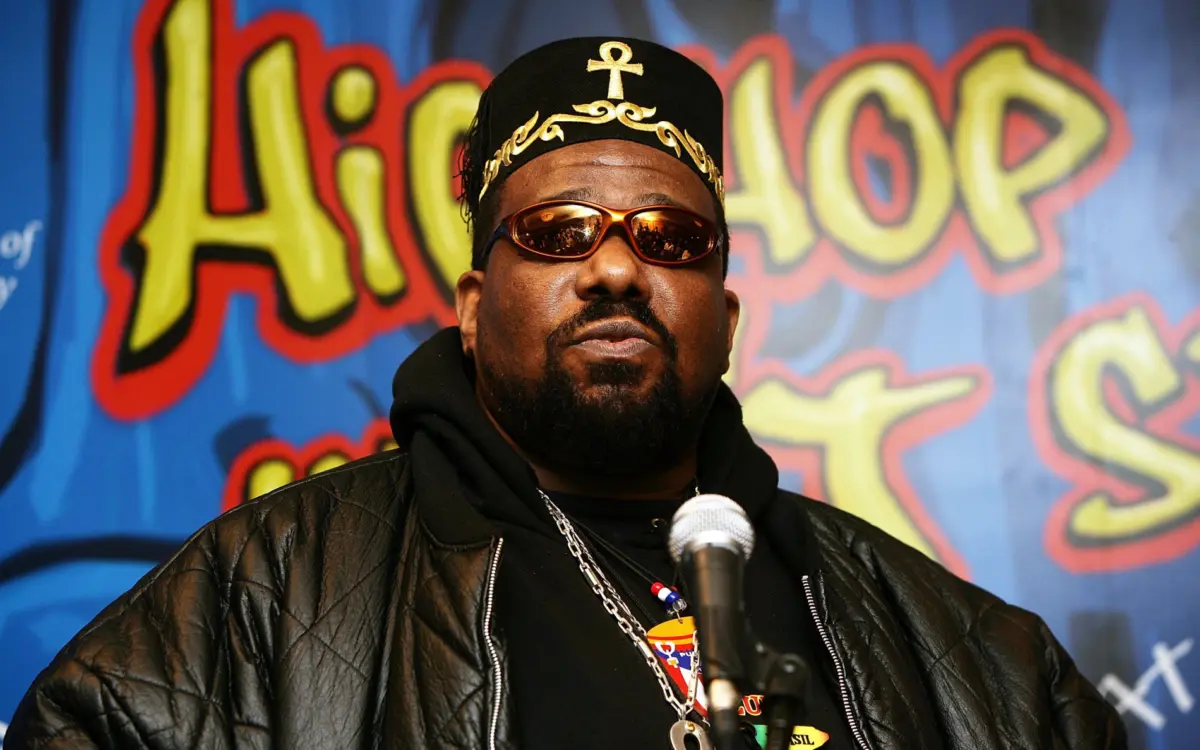
The music world and the cultural landscape of hip-hop are mourning the loss of Afrika Bambaataa, a figure whose innovative spirit and foundational contributions to the genre are undeniable, even as his legacy is marked by deeply troubling allegations of sexual abuse. Bambaataa, born Lance Taylor, passed away on Thursday, April 9, at the age of 68 in Pennsylvania, succumbing to prostate cancer, as confirmed by his lawyer to the Associated Press. His death marks the end of an era for a man who was not only a pioneering DJ and producer but also a visionary who helped to codify and spread the burgeoning culture of hip-hop across the globe.
A Visionary Architect of Hip-Hop Culture
Afrika Bambaataa is widely hailed as one of the principal architects of hip-hop. His influence extended far beyond his own musical output, encompassing the very definition of the culture itself. In the 1970s, emerging from the volatile landscape of the South Bronx, Bambaataa transformed his experiences within the Black Spades street gang into a force for positive change. He founded the Universal Zulu Nation, an organization that sought to channel the energy and creativity of urban youth into the nascent art forms of DJing, graffiti, breakdancing, and MCing. This collective effort established the foundational elements that would come to define hip-hop, turning the Bronx into a crucible of global cultural innovation.
His impact as a DJ was revolutionary. Bambaataa was renowned for his eclectic musical taste, weaving together funk, soul, rock, and electronic music to create a soundscape that was both groundbreaking and accessible. This adventurous spirit was epitomized in his seminal 1982 track, "Planet Rock," a collaboration with the Soulsonic Force. The song, which sampled Kraftwerk and introduced a futuristic electro-funk sound, became a massive hit, reaching the top 50 of the Billboard Hot 100. "Planet Rock" not only cemented Bambaataa’s reputation as a musical innovator but also served as a profound inspiration for a generation of artists, influencing the trajectory of electro-rap and dance-pop music for years to come. It is a testament to his enduring influence that the track remains a touchstone in hip-hop history.
Alongside contemporaries such as DJ Kool Herc and Grandmaster Flash, Afrika Bambaataa is considered a founding father of hip-hop. These artists laid the groundwork for a genre that would evolve into arguably the most dominant and culturally influential artistic movement of the past five decades. Their innovations in turntablism, sampling, and rhythmic storytelling provided the essential building blocks for the music that would later captivate the world.
A Complex Legacy: Achievements and Allegations
However, the narrative of Afrika Bambaataa’s life and career is undeniably complicated by serious and disturbing allegations of sexual abuse. While his contributions to hip-hop are celebrated, these accusations cast a long shadow over his legacy, prompting difficult conversations within the community he helped to create.
The first prominent public accusation emerged in 2016 when a man named Ronald Savage came forward, alleging that Bambaataa had sexually abused him in the 1980s when Savage was a teenager. Bambaataa vehemently denied these claims. Later, in 2024, Savage made further statements to AllHipHop, where he appeared to walk back some of his accusations, suggesting that the interactions he had with Bambaataa were consensual and that Bambaataa believed Savage to be of legal age. This retraction, however, did not erase the initial allegations, nor did it negate subsequent accusations that surfaced.
Following Savage’s initial claims, several other individuals came forward with similar accusations of sexual abuse, detailing experiences with Bambaataa during their adolescence. These allegations painted a picture that stood in stark contrast to the positive and unifying image Bambaataa had cultivated through his public persona and the Universal Zulu Nation.
In 2021, a civil lawsuit was filed against Afrika Bambaataa by an anonymous plaintiff who claimed to have been sexually abused and trafficked by Bambaataa for four years, beginning in 1991 when the plaintiff was 12 years old and Bambaataa was in his thirties. The lawsuit alleged a pattern of exploitation that spanned a significant period of Bambaataa’s life. Bambaataa never formally responded to this lawsuit, leading to a default judgment against him in 2025. The court ruled in favor of the alleged victim, awarding a default judgment, which underscored the seriousness of the legal claims made against him.
These allegations have prompted significant reflection and debate within the hip-hop community and beyond. While many acknowledge Bambaataa’s undeniable role in shaping the genre, the accusations have forced a reckoning with the complexities of his character and the need to protect vulnerable individuals. The Hip Hop Alliance, in a statement released by its executive director, Kurtis Blow, acknowledged this duality. "Today, we acknowledge the transition of a foundational architect of Hip Hop culture, Afrika Bambaataa," Blow stated. "He helped shape the early identity of Hip Hop as a global movement rooted in peace, unity, love, and having fun. His vision transformed the Bronx into the birthplace of a culture that now reaches every corner of the world. At the same time, we recognize that his legacy is complex and has been the subject of serious conversations within our community."
The Genesis of a Global Culture
Afrika Bambaataa’s journey began in the post-industrial landscape of the South Bronx in the late 1960s and early 1970s. This era was characterized by urban decay, economic hardship, and a sense of disenfranchisement for many of its residents. Amidst this challenging environment, young people began to forge their own forms of artistic expression and community. Bambaataa, initially involved with the Black Spades, a prominent street gang, witnessed firsthand the destructive potential of gang violence. However, he also recognized the latent creativity and desire for connection among his peers.
His pivotal decision to shift his focus from gang leadership to cultural organization marked a turning point. By establishing the Universal Zulu Nation, Bambaataa offered an alternative to the violence and despair that plagued the neighborhood. He envisioned hip-hop not just as music but as a holistic culture, a "nation" built on principles of peace, love, and unity. The Zulu Nation provided a framework for young people to express themselves creatively, develop a sense of pride, and build a supportive community. The four pillars of hip-hop—DJing, graffiti art, breakdancing, and MCing—were actively promoted and nurtured within this environment. Bambaataa’s philosophy aimed to provide a positive outlet, encouraging competition through artistic battles rather than physical confrontation.
Musical Innovations and Enduring Influence
Bambaataa’s musical contributions were instrumental in shaping the sound of early hip-hop and its subsequent evolution. His approach to DJing was characterized by an unprecedented eclecticism. While DJs like Kool Herc focused on isolating and extending breakbeats from soul and funk records, Bambaataa expanded the sonic palette considerably. He was one of the first to incorporate elements from a wide array of genres, including disco, rock, and electronic music, into his sets and productions. This willingness to experiment broke down musical barriers and introduced new sonic textures to the emerging hip-hop sound.
The impact of "Planet Rock" cannot be overstated. Released in 1982, it was a bold leap forward. The track’s innovative use of synthesized beats, drum machines, and its clear homage to the German electronic pioneers Kraftwerk, set it apart from anything else being produced at the time. It became an anthem for the electro-funk and early hip-hop scenes, influencing countless artists and solidifying Bambaataa’s status as a musical innovator. The song’s futuristic sound resonated with a generation eager for new forms of expression, and its infectious rhythm and innovative production helped to propel hip-hop into new sonic territories.
Beyond "Planet Rock," Bambaataa produced other significant works, including "Looking for the Perfect Beat" and "Renegades of Funk," further demonstrating his versatility and his commitment to pushing the boundaries of hip-hop music. His discography reflects a deep understanding of rhythm, melody, and the power of sampling.
Broader Impact and Future Considerations
The passing of Afrika Bambaataa brings to a close the life of an individual whose impact on global culture is immense. He was instrumental in transforming a localized urban phenomenon into a worldwide cultural force. His vision of hip-hop as a vehicle for positive social change and artistic expression continues to inspire.
However, the ongoing revelations and legal proceedings surrounding the allegations of sexual abuse necessitate a continued critical examination of his legacy. The hip-hop community, like many cultural movements, faces the challenge of acknowledging the full scope of an artist’s contributions while also confronting their harmful actions. This ongoing dialogue is crucial for ensuring that the culture evolves in a way that prioritizes safety, accountability, and justice for survivors.
The legal repercussions of the civil lawsuit, including the default judgment, highlight the potential for legal consequences even after an artist’s passing. The complexities of such cases, often involving long-delayed accusations and the passage of time, underscore the enduring impact of abuse and the ongoing pursuit of justice.
Afrika Bambaataa’s life story is a potent reminder of the multifaceted nature of influential figures. He was a pioneer who undeniably shaped the course of modern music and culture, offering a vision of community and creativity that resonated globally. Yet, his legacy is inextricably linked to serious allegations that demand ongoing consideration and reflection. As the world remembers Afrika Bambaataa, it does so with an awareness of both his profound artistic achievements and the critical need to address the painful truths that accompany his complex and controversial life. The conversation surrounding his legacy is far from over, and its implications will continue to resonate within the cultural and legal spheres for years to come.
