

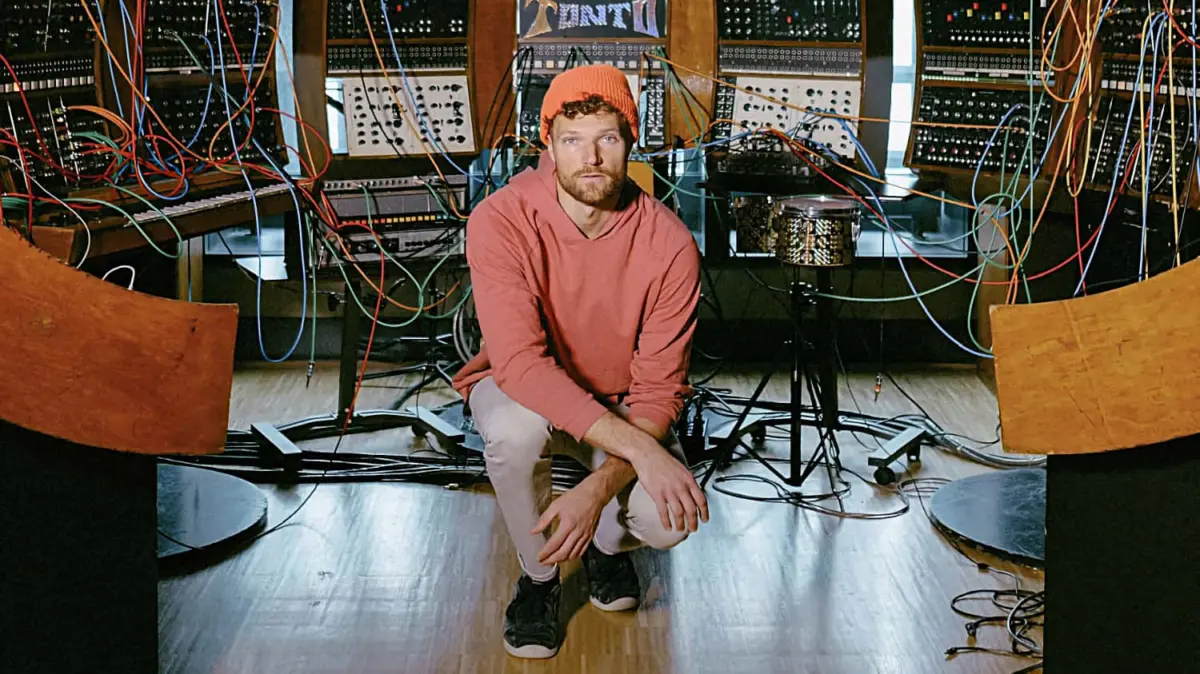
The acclaimed Canadian synthesist and composer Rich Aucoin has officially launched his latest studio project, Classical Tonto, a meticulous reimagining of foundational classical compositions performed entirely on some of the world’s most significant and rare electronic instruments. This release serves as a thematic successor to his ambitious, Juno-nominated quadruple album Synthetic, signaling a continued exploration of the intersection between historical hardware and timeless musical theory. Recorded at the National Music Centre (NMC) in Calgary, Alberta, the album utilizes the legendary TONTO (The Original New Timbral Orchestra) modular synthesizer system, an instrument synonymous with the evolution of electronic music in the 20th century.
Classical Tonto represents a technical and artistic milestone, bridging the gap between the 18th-century compositions of Johann Sebastian Bach and the 20th-century modular synthesis movement. By applying "switched-on" style arrangements—a technique popularized by Wendy Carlos in the late 1960s—Aucoin provides a modern sonic lens through which to view works by Ludwig van Beethoven, Erik Satie, Franz Liszt, Claude Debussy, Tomaso Albinoni, Wolfgang Amadeus Mozart, and Arvo Pärt.
The Genesis of Classical Tonto and the Recording Process
The development of Classical Tonto began following the exhaustive production of Synthetic, a four-part odyssey that established Aucoin as a leading figure in contemporary synthesis. Having spent significant time at the National Music Centre’s Studio Bell, Aucoin sought to return to the facility to utilize its world-class collection of electronic instruments for a project that was more focused on interpretation than original composition.
The National Music Centre, which houses over 2,000 rare instruments and artifacts, provided Aucoin with a residency-style environment conducive to the complex patching and programming required for modular synthesis. The recording sessions were characterized by a rigorous approach to sound design, where each orchestral voice—from strings and woodwinds to brass and percussion—had to be synthesized from scratch using analog and early digital circuitry.
This chronological progression from Synthetic to Classical Tonto demonstrates Aucoin’s commitment to the preservation of electronic music history. While Synthetic was a showcase of what modern and vintage synths could do in a contemporary pop and experimental context, Classical Tonto serves as a tribute to the pioneers of the "Switched-On" era, proving that the structural integrity of classical masterpieces remains intact even when translated through voltage-controlled oscillators and filters.
The Technical Core: TONTO and the Studio Bell Collection
The centerpiece of the album is undoubtedly TONTO, the world’s largest and most famous multitimbral polyphonic analog synthesizer. Created by Malcolm Cecil and Robert Margouleff in the late 1960s, TONTO is not a single instrument but a massive, curved semi-circle of integrated components from various manufacturers, including Moog, ARP, Oberheim, and custom-built modules.
The historical weight of TONTO cannot be overstated. It was the primary engine behind Stevie Wonder’s "classic period" albums, including Talking Book, Innervisions, and Fulfillingness’ First Finale. Its ability to produce warm, organic, and lifelike timbres allowed Wonder to revolutionize the sound of soul and R&B. By utilizing this same instrument for Classical Tonto, Aucoin taps into a legacy of innovation, using the machine’s expansive architecture to handle the polyphonic demands of Bach’s fugues and the delicate impressionism of Debussy.
Beyond TONTO, the technical data of the recording reveals a "who’s who" of synthesizer history. Supporting instruments used in the production include:
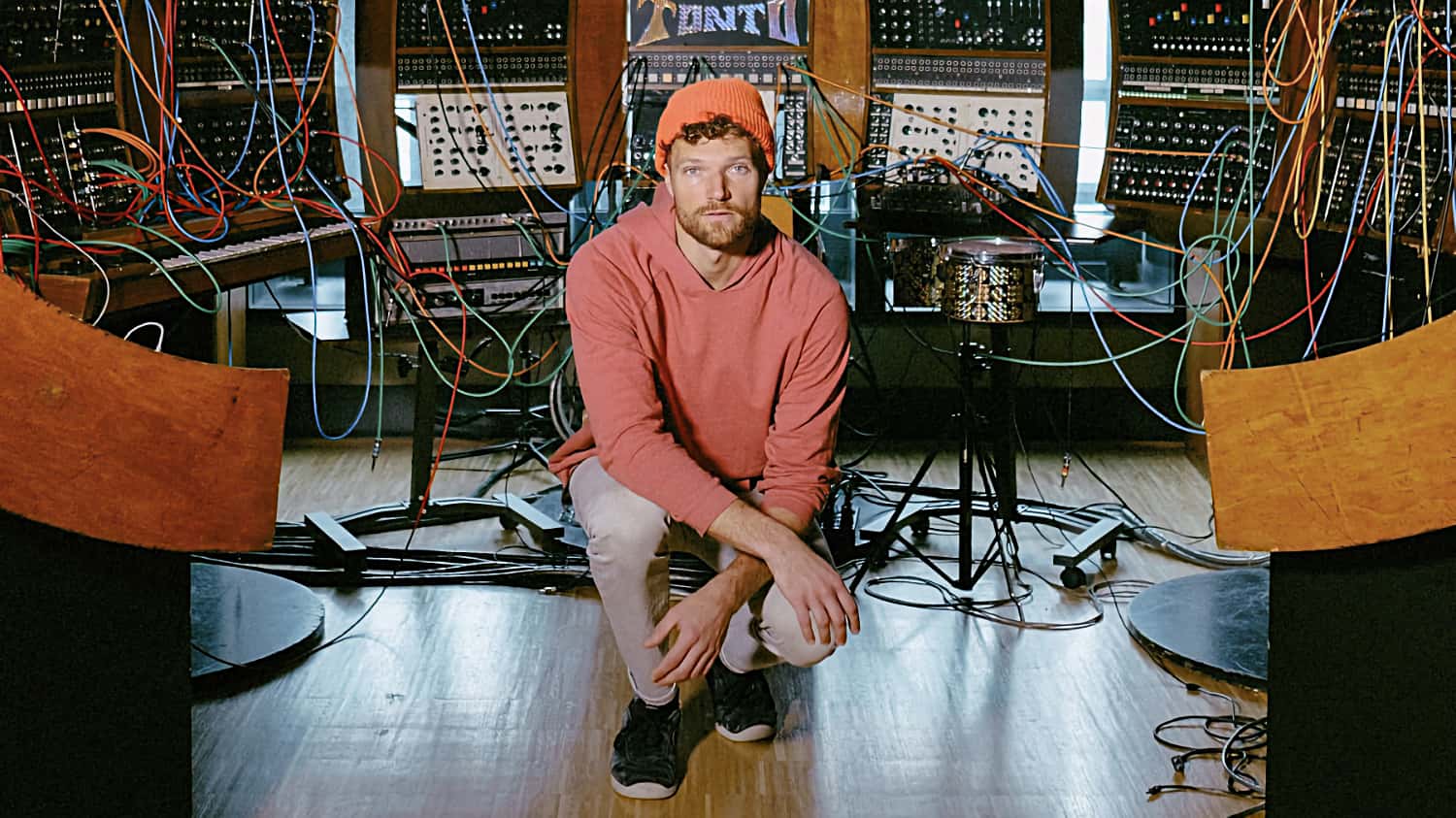
- Moog Modular Model III: The quintessential modular system that defined the sound of the late 60s.
- ARP 2600: Known for its flexibility and used extensively for lead lines and percussive textures.
- Oberheim SEM (Synthesizer Expander Module): Renowned for its unique multi-mode filter and lush, thick sound.
- Roland Juno 106: A 1980s staple providing stable polyphony and iconic chorus effects.
- Yamaha DX7 II FD: A pioneer of Frequency Modulation (FM) synthesis, offering the digital "glassy" tones required for certain classical movements.
- Oberheim OB-8: A powerhouse of the early 80s, providing rich pads and brass-like stabs.
- ARP Rhodes Chroma Expander: A rare, high-end polyphonic synth known for its expressive capabilities.
- Moog Memorymoog: Often cited as one of the most powerful analog poly-synths ever built, featuring three oscillators per voice.
The integration of these various technologies allowed Aucoin to create a rich, layered tapestry that mirrors the complexity of a full symphony orchestra. The use of both analog and digital synthesis ensures that the album captures the full spectrum of electronic sound, from the raw power of the Moog to the precise, bell-like clarity of the DX7.
Curating the Repertoire: From Bach to Pärt
The selection of pieces for Classical Tonto reflects a deliberate survey of Western music history. Aucoin chose works that not only translated well to synthesis but also offered opportunities to showcase the specific strengths of the instruments at his disposal.
- The Baroque and Classical Eras: Featuring Bach and Mozart, these arrangements focus on counterpoint and mathematical precision. The modular systems excel here, providing distinct voices for each melodic line, allowing the listener to hear the intricate weaving of notes with clinical clarity.
- The Romantic and Impressionist Eras: Works by Liszt, Debussy, and Albinoni require a greater degree of expressive modulation. Aucoin utilized the voltage-controlled filters and envelope generators of the Oberheim and Moog systems to mimic the swelling dynamics and tonal shifts of orchestral strings and pianos.
- The Minimalist and Modern Eras: Satie’s Gymnopédies and Arvo Pärt’s compositions provide a contrast to the denser works. These tracks emphasize the "breathing" quality of analog synthesis, where subtle drifts in pitch and timbre add a human element to the electronic execution.
In statements regarding the project, Aucoin expressed a profound sense of responsibility in handling these instruments. "Hearing these favorite famous classical pieces played on this historic rare synthesizer in that museum was such a privilege," Aucoin noted. "I hope that I was able to capture the magic in that room in the recordings and their arrangements."
Broader Impact and the Preservation of Sound
The release of Classical Tonto carries implications beyond the realm of indie-electronic music. It highlights the vital role of institutions like the National Music Centre in preserving "living" history. Unlike static museum pieces, the instruments in the NMC collection are maintained in working order, allowing contemporary artists to interact with the tools that shaped modern music.
Furthermore, the album contributes to the ongoing "analog renaissance." In an era dominated by software instruments and digital workstations, Aucoin’s decision to record on physical, room-sized hardware serves as a reminder of the unique tactile and sonic qualities of voltage-based synthesis. The imperfections, the warmth, and the sheer physical presence of a machine like TONTO offer a depth of sound that is difficult to replicate in a purely digital environment.
From a pedagogical perspective, Classical Tonto serves as an entry point for listeners who may be familiar with electronic music but less so with the classical canon, and vice versa. By stripping away the traditional orchestral trappings and replacing them with oscillators and filters, Aucoin invites a re-evaluation of the compositions themselves, focusing on their melodic and harmonic brilliance.
Conclusion and Availability
Rich Aucoin’s Classical Tonto is a testament to the enduring power of both classical music and electronic innovation. By pairing the works of history’s greatest composers with the machines of history’s greatest engineers, Aucoin has created a project that is simultaneously nostalgic and forward-looking.
The album follows a successful trajectory for the artist, whose work on Synthetic earned him critical acclaim and industry recognition through the Juno Awards. Classical Tonto is likely to appeal to audiophiles, synthesizer enthusiasts, and classical music aficionados alike, offering a high-fidelity exploration of what happens when the past meets the future in the halls of the National Music Centre.
The album is currently available for preview and purchase through digital platforms, including Bandcamp, where listeners can experience the full range of TONTO’s capabilities. As the music industry continues to evolve, projects like Classical Tonto ensure that the foundational sounds of the electronic revolution are not forgotten, but rather celebrated and reinvented for a new generation of listeners.
