

Anders Colsefni Reflects on "Mate. Feed. Kill. Repeat.", Early Slipknot Days, and a Resurrected Musical Legacy
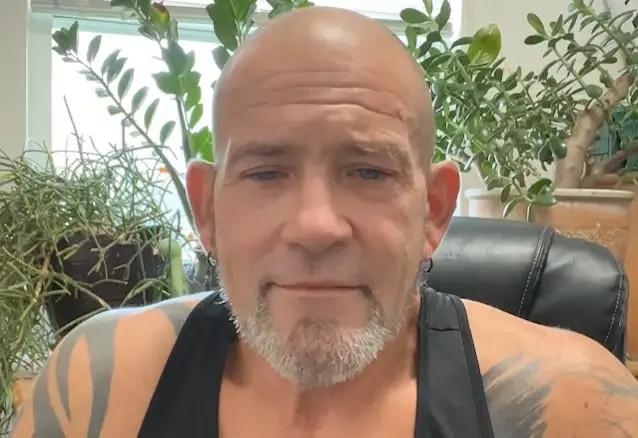
In a candid conversation with Will McLeod of the Minnesota Music Note podcast, Anders Colsefni, the original vocalist for the seminal nu-metal band Slipknot and the voice behind their foundational album "Mate. Feed. Kill. Repeat.", offered a deep dive into his current musical endeavors and reflections on his past. Colsefni, who has recently been performing songs from "Mate. Feed. Kill. Repeat." live, shared his experience of revisiting the raw energy and demanding physicality of those early tracks, his perspective on the album’s enduring appeal, and his thoughts on the evolving landscape of music production and fan discovery.
Revisiting the Crucible: Performing "Mate. Feed. Kill. Repeat." Live
Colsefni described the experience of performing the "Mate. Feed. Kill. Repeat." material live as "pretty incredible," acknowledging that it required a period of adjustment and diligent preparation. "It took me a little while," he admitted. "I had to research some of my lyrics, especially to ‘The Crowz’ songs," referring to a compilation of demo recordings that featured both his vocals and those of current Slipknot singer Corey Taylor. The necessity of revisiting his own lyrical archives highlighted a gap in his personal documentation, a common consequence of a career spanning decades and the passage of time. "I don’t know why I don’t still have notebooks. I might have sold them a while back or something," he quipped.
Beyond lyrical recall, Colsefni emphasized the sheer physical exertion involved in recreating the aggressive soundscapes of the early Slipknot material. His performance demands a multifaceted approach, integrating drumming, a wide vocal range from screaming and growling to singing and rapping, all while navigating the often chaotic stage environment. "My God, I couldn’t remember just how difficult it was to do also. Beat on drums, scream, yell, sing, rap, growl some more, sing some more, beat on drums, kegs, trying to dodge something flying at my head from the Clown across the stage, stuff like that," he elaborated. This physical demand has necessitated a renewed focus on fitness: "I’ve really had to work to keep my old ass in shape in order to do this."
Enduring Fan Favorites and Evolving Interpretations
When asked if any particular tracks from "Mate. Feed. Kill. Repeat." resonated differently now, Colsefni noted that the fan favorites have largely remained consistent. Songs like "Slipknot," "Gently," "Do Nothing," and "Bitchslap" continue to be highly requested, with "Slipknot" itself holding particular significance due to its stark contrast with the band’s later material. He observed that the audience’s appreciation for these songs extends even to deeper cuts like "Killers Are Quiet," which he noted could be transformed into extended, experimental pieces. "They even like ‘Killers Are Quiet,’ and we can take that sucker and make it 20 minutes long if we want to. We can drone that thing out and turn it into a big drone fest," he explained. This suggests an audience that embraces both the raw, unpolished aggression of the original and the potential for more avant-garde interpretations.
The phenomenon of younger generations discovering his early work has been a source of great enthusiasm for Colsefni. He recounted witnessing a diverse crowd at a recent show in Des Moines, Iowa, comprising "little kids, teenagers, [and] old country fans." The latter group, in particular, expressed surprise and appreciation, with many admitting they were drawn to the show by family members or friends. "Every one of them came up to me and said, ‘I’m a country fan, but that was cool.’ They all had a reason why they ended up at the show," he said. This cross-generational appeal and the surprising reception from unexpected demographics underscore the timeless, albeit niche, impact of Slipknot’s early sound. Colsefni also noted the atmosphere of his shows, describing it as "funner, if not a little more hectic, chaotic and scattered about," and humorously pointed out the inherent contradiction of a tambourine’s presence during a heavy performance, highlighting the multifaceted nature of his current musical output.
The "Mate. Feed. Kill. Repeat." 2024 Re-recording Controversy
A significant portion of the interview addressed the controversial 2024 re-recording of "Mate. Feed. Kill. Repeat." featuring New Zealand nu-metal band KAOSIS, which Colsefni had previously described as a "poor representation" of the original material. He elaborated on the communication breakdown that led to his dissatisfaction. Colsefni stressed his explicit requirement for live musicians to perform the re-recorded tracks, not merely digitized computer-generated elements. "I made it very clear that I needed actual live musicians playing the songs. They could not just be digitized and done through a program," he stated. While he re-recorded his vocals live in his son’s studio and was pleased with that aspect, the final product fell far short of his expectations.
Colsefni attributed the subpar outcome to business decisions driven by financial motives. "The entity in question made some business decisions for money-wise purposes, so he didn’t have people play live. They pretty much just did it all on the computer, and thus came out with this really horrible rendition of what was already a really good-sounding album," he explained. He lamented that the re-recording neither improved upon nor offered anything new to the original album, resulting in a "dreadful" outcome. He expressed regret that this situation negatively impacted his relationship with some of the individuals involved. Colsefni emphasized that he has been actively clarifying his stance to fans who might have assumed his endorsement of the 2024 version, stating, "It’s, like, ‘No, I’m not happy about that either.’"
The Genesis of "Mate. Feed. Kill. Repeat." and its Legacy
Reflecting on the origins of "Mate. Feed. Kill. Repeat.," Colsefni described the cramped and noisy conditions of his basement in Des Moines, Iowa, where the music was conceived. The constant complaints from his upstairs neighbor served as a constant reminder of the raw energy being generated. "Yeah, we wrote everything down in my grungy, little, tiny basement with everybody crammed in tightly, with carpet hanging all over the place, try to dampen the sound. It was gross," he recalled.
The classification of "Mate. Feed. Kill. Repeat." as either a demo or a full-fledged album remains a point of discussion. Colsefni views it as a full album, citing the significant investment of time and resources. "With as much time and money we spent on that first one, it might as well have been an album. I mean, it took over a year to do, a lot of arguing in between things about how things should go, and it just took forever," he stated. He highlighted the quality of the recording and production, which he believes stands up well. However, he remains open to differing perspectives, adding, "But it doesn’t really bother me one way or the other if anybody says it’s just a demo."
Regarding the original pressing of the album, Colsefni estimated that the initial run was 1,000 copies, with an additional 1,000 produced through a small distribution deal with -ismist Records. He noted that he was not directly involved in the second pressing and based his estimate on information conveyed to him.
The Path Forward: A Vision for a New "Mate. Feed. Kill. Repeat."
Colsefni expressed a strong desire to record a new, updated version of "Mate. Feed. Kill. Repeat." with his current bandmates. However, this ambition is currently navigating complex legal waters. He revealed that Slipknot’s catalog was sold to a different company, and he is actively investigating his legal options to ensure he can proceed without facing repercussions. "We are looking right now to see what our legal options are with that, obviously. Corey and Shawn sold their catalog to a different company last year, I think, and now trying to track down the new owners and find out if I have the ability to do any of that without legal backlash is something that we’re still trying to figure out," he explained.
If legally feasible, Colsefni envisions his current collaborators recording the entire album. While he doesn’t anticipate generating significant revenue from such a project, his primary motivation is to make a faithful rendition available to fans. "I would love to put out something with my guys recorded for real and not just everything computerized, and do it the way it should be done to allow the people that wanna hear it as close to the original as possible, a new recording of it," he articulated.
He confessed that the enduring significance of "Mate. Feed. Kill. Repeat." continues to "blow my mind," recognizing its status as a foundational work for a globally recognized band. He acknowledged the album’s "demo" quality in the sense that the band was still defining its sound, a process that evolved further with the "Crowz" recordings.
Clarifying "The Crowz" and the Transition to Corey Taylor
Colsefni meticulously clarified the circumstances surrounding the "Crowz" recordings, which featured both his and Corey Taylor’s vocals. He explained that these tracks represented the band’s next phase of songwriting intended for Roadrunner Records after the submission of "Mate. Feed. Kill. Repeat." Songs like "Me Inside," "Prosthetics," and "Scissors" were part of this new material. The inclusion of Taylor’s vocals occurred when Colsefni was away visiting family. He was subsequently presented with a plan where Taylor would handle lead vocals, with Colsefni relegated to backing vocals, a compromise he accepted to facilitate the band’s pursuit of a record deal. "The ‘Crowz’ songs were really me first, and then they brought Corey in to redo them, and then sold it to Roadrunner so that they could get their record deal. And I have no regrets about it," he stated.
Colsefni, a self-described death metal singer, expressed understanding of the band’s strategic decision to incorporate Taylor’s vocal style for broader radio appeal, something he recognized his own vocal approach would not achieve. While acknowledging that this transition "crushed my spirit for a little while," he ultimately came to terms with his role as one of many original singers who preceded a band’s mainstream success, drawing parallels to bands like Korn. He maintains a pragmatic view of his career, balancing his musical pursuits with a demanding work schedule, a reality he shares with the majority of musicians.
The Revival of PAINFACE and a New Musical Direction
Colsefni also discussed his current musical project, PAINFACE, which he originally formed after leaving Slipknot in 1997. He revealed that his decision to revive PAINFACE was catalyzed by a period of deep depression and a subsequent revitalizing experience touring Australia three years prior. "Me going on the road three years ago to do the [‘Mate. Feed. Kill. Repeat.’ tour] thing over in Australia, it just revitalized my life, actually," he stated.
The current iteration of PAINFACE operates under a "MFKR Committee" structure, emphasizing a collaborative decision-making process to ensure the project’s longevity and broader vision. This approach aims to mitigate the impulsiveness often associated with his "ADD" tendencies. The committee comprises dedicated individuals invested in the project’s success.
PAINFACE has recently recorded new singles, "Welcome, Mother Of Death" and "Temple," slated for release in 2025, and is working on additional material intended for a full album. Colsefni describes their current sound as "new death metal," characterized by a groove-oriented style that retains a bounce, suitable for live performance. He is currently focusing on his death metal vocals, aiming to deliver maximum power and depth while incorporating catchy hooks. The band is self-producing their music in the studio, embracing the current music industry paradigm where independent artists can distribute their work rapidly.
Early Slipknot Performances and the "Mate. Feed. Kill. Repeat." Album
Colsefni reminisced about the early days of Slipknot, recalling the band’s first performance in April 1996 at the Safari Club in Des Moines. He noted the subsequent addition of Mick Thomson and Craig Jones to the lineup, which he credits with shaping the trajectory of modern metal. The release of "Mate. Feed. Kill. Repeat." in October 1996 is recognized as the bedrock of Slipknot’s three-decade legacy.
Finding the Original "Mate. Feed. Kill. Repeat."
For fans seeking the authentic original recording of "Mate. Feed. Kill. Repeat.," Colsefni directed them to YouTube, cautioning them to avoid versions with a bright green cover and instead seek out the one featuring the actual album art. He confirmed that the original album is widely available for streaming, though physical copies are not currently obtainable.
A Legacy of Evolution and Acceptance
Colsefni’s journey from the raw aggression of "Mate. Feed. Kill. Repeat." to his current musical explorations reflects a significant evolution. His reflections on his time with Slipknot are marked by a blend of nostalgia, honesty about the industry’s demands, and a profound sense of acceptance. He acknowledges that while his initial departure was personally challenging, he has found peace and a renewed passion for music, embracing the complexities of his past and looking forward to the future with his current musical endeavors. His engagement with fans, his commitment to authentic musical expression, and his willingness to revisit and reinterpret his seminal work underscore his enduring connection to the metal community and his ongoing artistic journey.
