

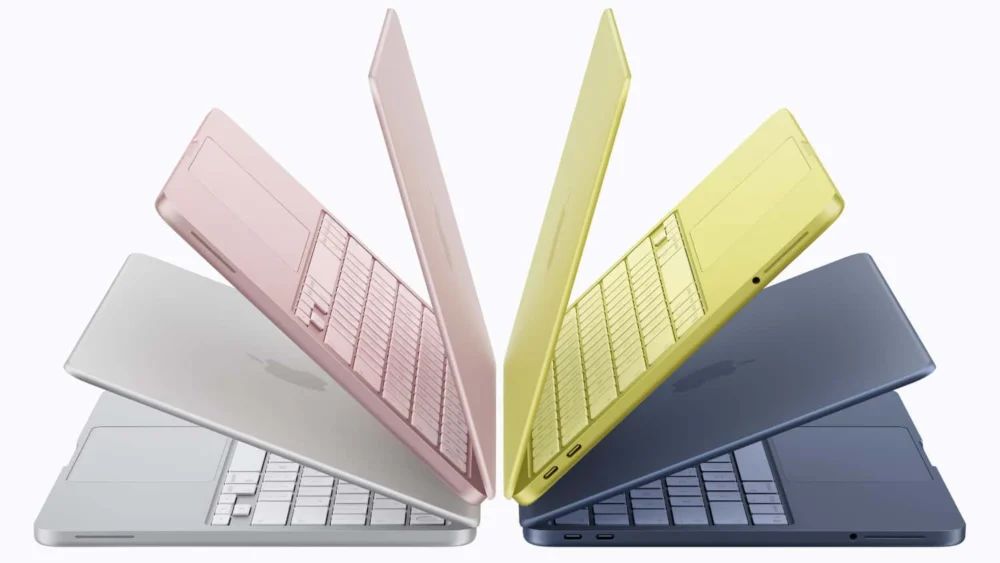
Apple Inc. has officially announced the launch of the MacBook Neo, a new entry-level laptop priced at $599, marking the lowest introductory price for a portable computer in the company’s history. This strategic move signals a significant shift in Apple’s hardware roadmap, moving away from its traditional premium-only pricing model to directly challenge the dominance of mid-range Windows laptops and high-end Chromebooks. Positioned as a "MacBook for the masses," the Neo arrives at a time when the global personal computing market is grappling with a saturation of high-performance machines and a lack of high-quality, affordable alternatives for general consumers, students, and entry-level professionals.
Historical Context: A Parallel to the 1998 iMac Revolution
Industry analysts are already drawing parallels between the MacBook Neo and the original 1998 iMac. When the first iMac was introduced under Steve Jobs, it was met with skepticism by pundits who criticized its lack of a floppy disk drive and its reliance on the then-unproven USB standard. At the time, mainstream publications dismissed the internet-centric branding—where the ‘i’ stood for Internet—as a marketing gimmick. However, the iMac’s success was foundational to Apple’s survival, proving that design-forward, integrated hardware could capture the public imagination and simplify computing for non-technical users.

The MacBook Neo appears to follow a similar philosophy. By stripping away the high-end features required by professional power users—such as high-refresh-rate ProMotion displays, active cooling systems, and an abundance of Thunderbolt ports—Apple has focused on the core essentials: build quality, battery efficiency, and the macOS ecosystem. Just as the original iMac transitioned the industry away from legacy hardware toward a web-centric future, the Neo is designed to transition the general public away from "disposable" low-cost PCs toward a more durable, integrated computing experience.
Technical Specifications and Design Philosophy
The MacBook Neo features a refined, minimalist aesthetic that mirrors the current MacBook Air lineup but utilizes a high-grade recycled aluminum chassis designed for cost-effective manufacturing. While full technical benchmarks are pending independent testing, Apple confirmed the device is powered by a specialized variant of its Apple Silicon. This transition from Intel-based architectures to proprietary ARM-based chips is the primary catalyst allowing for this price point. By leveraging the same semiconductor innovations and supply chain efficiencies developed for the iPhone—a product with over three billion units sold—Apple can produce high-performance processors at a scale that traditional PC manufacturers cannot match.
The device is built around a 13-inch Liquid Retina display and a fanless design, ensuring silent operation. To maintain the $599 price point, Apple has implemented several strategic hardware trade-offs:

- Memory and Storage: The base model begins with 8GB of unified memory and 256GB of SSD storage, which is sufficient for web browsing, office productivity, and light media consumption, but serves as a bottleneck for intensive video editing or large-scale music production.
- Port Selection: The Neo includes two USB-C ports and a MagSafe charging port, omitting the SD card slot and HDMI port found on higher-tier models.
- Thermal Management: Without an internal fan, the Neo relies on passive cooling. Under sustained heavy workloads, the system is designed to throttle performance to manage heat, further distinguishing it from the "Pro" line.
Market Disruptions: The Impact on Windows and ChromeOS
The introduction of a $599 Mac has sent shockwaves through the competitive landscape. Traditionally, the sub-$600 market has been the stronghold of Microsoft’s hardware partners, such as Dell, HP, and Lenovo, as well as Google’s ChromeOS ecosystem. However, these devices often suffer from "e-waste" reputations—constructed from plastic, featuring poor-quality displays, and offering limited longevity due to hardware-software fragmentation.
Tech analysts from Windows Central have noted that Microsoft should be "panicking" over the Neo’s release. In a recent survey conducted by the publication, 83% of respondents—an audience primarily composed of Windows power users—indicated that the MacBook Neo is likely to steal significant market share from the Windows ecosystem. The consensus among reviewers is that while the Neo is an entry-level machine, it maintains the "premium" feel of the Mac brand, offering a level of polish that is rarely seen in the $500–$700 PC price bracket.
Tom’s Guide echoed these sentiments, suggesting that the Neo effectively ends the viability of high-end Chromebooks and cheap Windows laptops. The core value proposition is no longer just the hardware, but the longevity of macOS, which typically receives software updates for seven to eight years, far outlasting the functional lifespan of many budget-tier competitors.

Implications for the Creative and Music Industry
While the MacBook Neo is not marketed as a "pro" machine, its impact on the music and creative industries is expected to be profound. Currently, approximately 70% of professional musicians utilize macOS as their primary operating system. The Neo lowers the barrier to entry for aspiring creators, providing a stable, reliable platform for those just beginning their journey.
The device comes pre-installed with GarageBand and iMovie, offering a powerful, out-of-the-box solution for content creation. For as little as $599, a student or hobbyist can access the same core audio engine used in Logic Pro. This creates a "halo effect," where users are onboarded into the Apple ecosystem at a younger age, eventually graduating to MacBook Pros or Mac Studios as their professional needs evolve.
However, professional audio engineers warn that the Neo’s limitations must be respected. The lack of active cooling and limited RAM means that large orchestral templates or projects with hundreds of CPU-intensive plugins will likely exceed the machine’s capabilities. For the "bedroom producer" or the songwriter capturing ideas on the go, the Neo represents a highly portable, cost-effective tool that integrates seamlessly with iPhones and iPads via iCloud and Universal Control.

Strategic Economic Analysis: Market Share and Ecosystem Growth
Apple currently holds roughly 9% to 10% of the global laptop market. By introducing the MacBook Neo, the company is making a clear play to double this figure within the next three to five years. This strategy mirrors Apple’s approach to the smartphone market, where it captures approximately 23% of global sales but reaps an estimated 85% of total industry profits.
The Neo is not merely a hardware play; it is a gateway to Apple’s Services division. Every Neo sold increases the user base for iCloud, Apple Music, Apple TV+, and the Mac App Store. By capturing the mid-tier market, Apple solidifies its lead among developers. As the user base expands, third-party software developers are more likely to prioritize macOS development, ensuring that Mac users continue to have access to a superior library of applications and peripherals compared to Windows users.
Furthermore, the MacBook Neo is expected to dominate the education sector. Schools that previously opted for Chromebooks due to budget constraints now have a viable path to provide students with a full-featured operating system capable of running professional-grade software. This shift could have long-term effects on workforce development, as a new generation of students enters the job market with native fluency in macOS.

Timeline of Recent Apple Developments
The release of the MacBook Neo follows a series of calculated steps by Apple to verticalize its supply chain:
- November 2020: Apple introduces the M1 chip, proving that ARM-based architecture could outperform Intel’s mobile processors in both speed and efficiency.
- 2021–2023: Expansion of the M-series chips (M2, M3) across the MacBook Air and Pro lines, widening the performance gap between Macs and budget PCs.
- March 2026: Official unveiling of the MacBook Neo, utilizing a high-yield, cost-optimized manufacturing process for Apple Silicon.
Conclusion: A New Era for Personal Computing
The MacBook Neo is more than just a cheaper laptop; it is a declaration of intent. By offering a device that is "actually good" at a price point previously reserved for inferior hardware, Apple is forcing a reckoning across the entire computer industry. The move suggests that the company is no longer content with being a luxury niche player in the laptop space and is instead aiming for broad, global ubiquity.
While power users will continue to look toward the MacBook Pro for their demanding workflows, the Neo is poised to become the standard-issue computer for the general public. Its success will be measured not just by units sold, but by how effectively it reshapes the expectations of what a $600 computer should be. As the market adjusts to this new reality, the MacBook Neo stands as a testament to the power of vertical integration and the enduring appeal of the Mac brand.
