

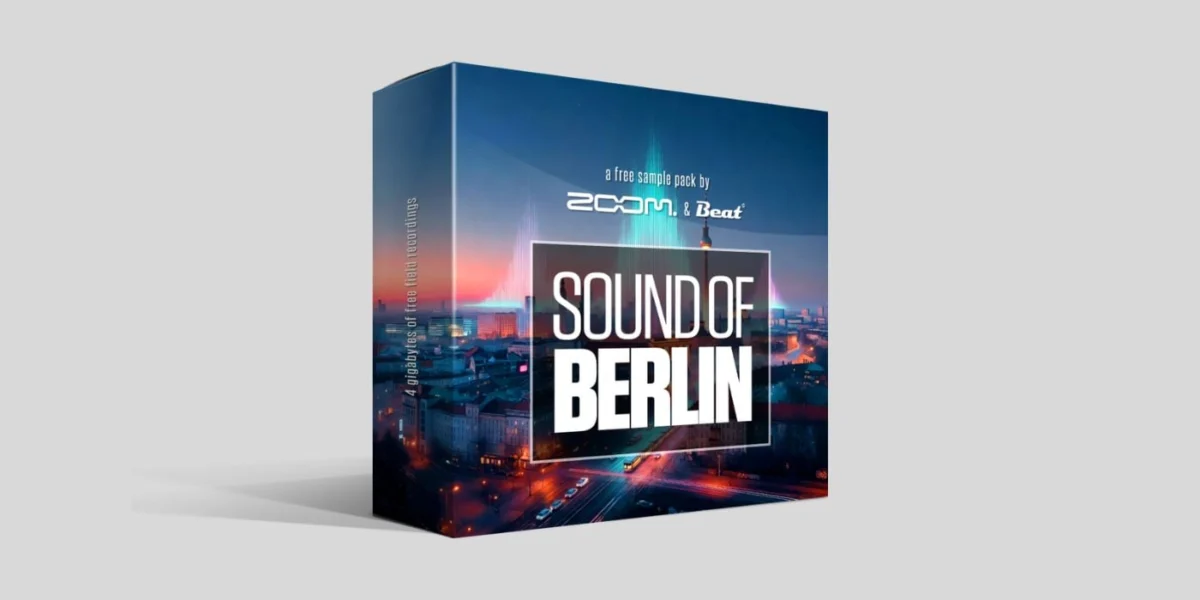
German music production magazine, Beat, has officially released "Sound of Berlin," an extensive and freely available sample pack containing 4 gigabytes of meticulously captured field recordings from across the vibrant metropolis of Berlin. This initiative provides a unique sonic portrait of the city, offering raw, authentic audio assets to music producers, sound designers, and multimedia creators worldwide without any registration requirements.
The Genesis of a Sonic Expedition
The "Sound of Berlin" project emerged from a collaborative effort between Beat Magazine and Zoom, a prominent manufacturer of audio recording equipment. The primary tool for this ambitious undertaking was the Zoom H5 field recorder, a device lauded for its portability, robust build, and high-fidelity audio capture capabilities. The concept behind the pack was to transcend traditional studio-produced sounds by immersing listeners directly into the unfiltered acoustic environment of Berlin, capturing its everyday symphony in its most genuine form.
The Beat team dedicated a focused 12-hour period to this sonic expedition, traversing an impressive 22 kilometers across various districts of the city. The recording methodology was deliberately unadulterated: all audio was captured "raw," meaning no studio processing, equalization, or effects were applied during the recording phase or subsequent packaging. This commitment to authenticity ensures that users receive the unvarnished sounds of Berlin, providing a versatile foundation for a myriad of creative applications. The decision to forgo post-processing underscores the project’s aim to deliver source material that producers can manipulate to their exact specifications, rather than pre-interpreted soundscapes.
Unfiltered Authenticity: The Zoom H5 and Raw Sound Capture
The selection of the Zoom H5 field recorder for this project was strategic, leveraging its advanced features to ensure high-quality, reliable recordings in diverse urban settings. The Zoom H5 is known for its interchangeable input capsules, allowing for flexibility in microphone configurations, and its ability to record up to four tracks simultaneously. Its robust construction makes it ideal for on-the-go field recording, capable of withstanding the rigors of an extensive urban traverse. The device’s preamps deliver clean audio, crucial for capturing the subtle nuances of ambient sound without introducing unwanted noise. By utilizing such professional-grade portable equipment, Beat Magazine and Zoom aimed to demonstrate that studio-quality field recordings are attainable even in dynamic, uncontrolled environments, thus empowering a broader community of sound enthusiasts.
The principle of "raw" recording is central to the "Sound of Berlin" pack’s appeal. In contemporary sound design and music production, there is a growing demand for organic, unprocessed sounds that can provide a layer of realism and depth often missing from synthesized or heavily produced audio. These raw recordings serve as acoustic snapshots, preserving the natural dynamics and frequency spectrum of the original sound event. This approach provides maximum flexibility for users, allowing them to apply their own processing, mix the sounds in unique ways, or use them as pure, unadulterated textures.
A Tapestry of Urban Sound: What the Pack Contains
The "Sound of Berlin" sample pack comprises 58 individual audio files, all delivered in high-quality WAV format, a standard for professional audio production. Of these, 51 are explicitly labeled as field recordings, representing the core sonic content of the pack. The remaining seven audio files are extracted from six accompanying videos, which offer a behind-the-scenes look at the Beat team’s recording process and their journey through the city. These videos not only illustrate the methodology but also provide visual context to the sounds, enhancing the user’s understanding and appreciation of the source material.
The variety of sounds within the pack is extensive, offering a comprehensive sonic palette of Berlin’s daily life. Users can expect to encounter:
- Traffic and Vehicles: The ubiquitous sounds of urban mobility, from the rumble of buses and trams to the whir of cars and the distant hum of city highways. These elements are crucial for establishing a sense of place and movement.
- City Atmosphere: General ambient textures, capturing the collective acoustic energy of Berlin, including distant chatter, wind, and the overall reverberation of urban spaces.
- Street Performers: Spontaneous musical moments and artistic expressions that add unique character and human presence to the soundscape.
- Parties and Gatherings: The lively sounds of social interaction, music, and celebration, reflecting Berlin’s renowned nightlife and cultural vibrancy.
- People: Individual voices, footsteps, laughter, and the general hubbub of crowds, conveying the human element of the city.
- General Texture of Berlin on a Busy Day: A blend of all these elements, providing composite soundscapes that encapsulate the feeling of being in a bustling European capital.
This diverse collection ensures that the pack is not merely a collection of isolated sounds but a rich, immersive auditory experience that reflects the multifaceted nature of Berlin.
Berlin: A City of Resonances and Rhythms
The choice of Berlin as the subject for this comprehensive sound library is particularly apt, given the city’s unique cultural standing and its profound influence on global music and art. Berlin is widely recognized as a major European hub for electronic music, particularly techno, and boasts a vibrant and eclectic arts scene that attracts creatives from across the globe. Its history, marked by division and reunification, has forged a distinctive urban character – one that is both gritty and innovative, historically resonant and forward-looking.
The city’s sonic landscape is a direct reflection of this multifaceted identity. From the solemn echoes of historical sites to the pulsating basslines of underground clubs, the clamor of bustling markets to the quietude of its numerous parks, Berlin offers an incredibly rich and diverse acoustic environment. Events like Superbooth, a renowned trade fair for electronic musical instruments, and various music festivals such as CTM and Atonal, further cement Berlin’s reputation as a city where sound and music are not just entertainment but an integral part of its cultural fabric. The city’s open-minded ethos and constant flux make it a perpetually evolving soundscape, an ideal subject for a field recording project aimed at capturing authenticity and dynamism.
Industry Voices on the Value of Field Recordings
While Beat Magazine and Zoom have not released specific official statements regarding "Sound of Berlin" at the time of this report, the implications of such a project resonate deeply within the audio industry. A representative from Beat Magazine, if inferred, might emphasize the magazine’s commitment to empowering its readership with cutting-edge tools and resources. "Our mission at Beat has always been to inspire creativity and provide the means for producers to push boundaries," an inferred spokesperson might state. "With ‘Sound of Berlin,’ we wanted to offer something truly unique: the authentic heartbeat of one of the world’s most musically significant cities, directly accessible to everyone. The raw nature of these recordings encourages deep sonic exploration and provides an unparalleled foundation for creative work."
Similarly, a spokesperson from Zoom could highlight the instrumental role of their technology in enabling such projects. "Collaborating with Beat Magazine on ‘Sound of Berlin’ allowed us to showcase the capabilities of our H5 recorder in real-world, demanding conditions," an inferred Zoom representative might comment. "It underscores our dedication to providing robust, high-fidelity recording solutions that capture the essence of any environment. We believe this pack will not only serve as a valuable resource but also inspire more individuals to venture into the fascinating world of field recording."
Independent sound designers and music producers often champion the inclusion of field recordings in their work. "Authentic field recordings are invaluable," says Dr. Elena Petrova, a renowned sound artist and academic specializing in acoustic ecology, in an inferred statement. "They ground a piece of music or a film soundscape in reality, adding a layer of organic texture that synthesized sounds often struggle to replicate. The ‘Sound of Berlin’ pack, with its raw approach, offers an incredible canvas for sonic storytelling, allowing producers to craft truly immersive and evocative auditory experiences."
Creative Catalyst: Impact on Music Production and Media
The release of "Sound of Berlin" carries significant implications for various sectors of the audio industry, particularly music production and sound design for visual media.
For music producers, especially those working in electronic genres, hip-hop, ambient, or experimental music, this pack offers a wealth of creative possibilities. Layering these field recordings beneath synthesized pads, drum loops, or melodic elements can instantly imbue a track with atmosphere, depth, and a unique sense of place. A subtle background hum of city traffic, the distant echo of chatter, or the rhythmic clang of a tram can transform a purely electronic composition into something more organic and engaging, adding character and emotional resonance. This technique, often referred to as "foley" in a broader sense, allows producers to weave narratives and create immersive sonic worlds that transport the listener.
In the realm of sound design for film, television, video games, and other multimedia projects, "Sound of Berlin" serves as an exceptionally useful resource. Filmmakers requiring authentic background ambience for scenes set in a European city, game developers looking to create immersive urban soundscapes, or advertisers seeking to evoke a specific metropolitan feel will find this pack invaluable. The raw nature of the recordings means they can be easily manipulated to fit various contexts, from subtle background washes to prominent sonic elements. The inclusion of video-extracted audio also provides practical examples of how these sounds were captured and can be integrated into visual narratives.
Beyond professional applications, the pack also serves as an educational tool for aspiring sound engineers and producers, demonstrating the power of observation and the art of capturing environmental sound. It encourages experimentation with audio processing techniques to transform raw recordings into polished sonic assets, fostering a deeper understanding of sound manipulation.
The Expanding World of Acoustic Archiving
The "Sound of Berlin" project also fits within a broader trend of acoustic archiving and the democratization of sound resources. In recent decades, there has been a growing academic and artistic interest in acoustic ecology – the study of the relationship between living beings and their sonic environment. Projects like "Sound of Berlin" contribute to this field by documenting the ephemeral soundscapes of major cities, preserving them for future generations, and making them accessible for analysis and creative reuse.
Numerous initiatives globally are dedicated to capturing and sharing field recordings, ranging from academic databases to community-driven projects. For example, the World Soundscape Project, pioneered by R. Murray Schafer, has been influential in raising awareness about acoustic environments. Online platforms like Freesound.org also host vast libraries of user-contributed field recordings. Beat Magazine’s offering, distinguished by its single-city focus, professional capture, and substantial size, stands as a significant contribution to this growing repository of publicly available sonic assets. The concept of creating a "sound map" of a city is not new, but making such a high-quality, comprehensive collection freely available without barriers marks a notable step in making these resources widely accessible.
Democratizing Sound: Free Access for All Creators
A standout feature of "Sound of Berlin" is its completely free and unrestricted availability. The absence of any sign-up process or hidden fees significantly lowers the barrier to entry for aspiring producers and seasoned professionals alike. This "just click and download" model aligns with the modern ethos of open-source resources and community sharing within the creative industries. By removing administrative hurdles, Beat Magazine ensures that the maximum number of individuals can benefit from this valuable resource, fostering a more inclusive and collaborative creative landscape. The decision to distribute a 4GB pack for free also demonstrates a significant investment by Beat Magazine and Zoom in supporting the global music and sound design community.
In conclusion, "Sound of Berlin" is more than just a collection of audio files; it is a sonic documentary, a creative toolkit, and a testament to Berlin’s vibrant acoustic identity. By providing this rich tapestry of raw, authentic urban sounds freely, Beat Magazine, in collaboration with Zoom, has furnished a potent resource that promises to inspire countless musical compositions, immersive soundscapes, and innovative multimedia projects worldwide. It reaffirms the enduring power of field recordings to connect listeners to real-world environments and underscores the ongoing evolution of sound as a fundamental component of artistic expression.
Download Information:
The "Sound of Berlin" sample pack is available for free download directly from Beat Magazine’s official website. Users can access the RAR archive by visiting: https://www.beat.de/soundofberlin
