

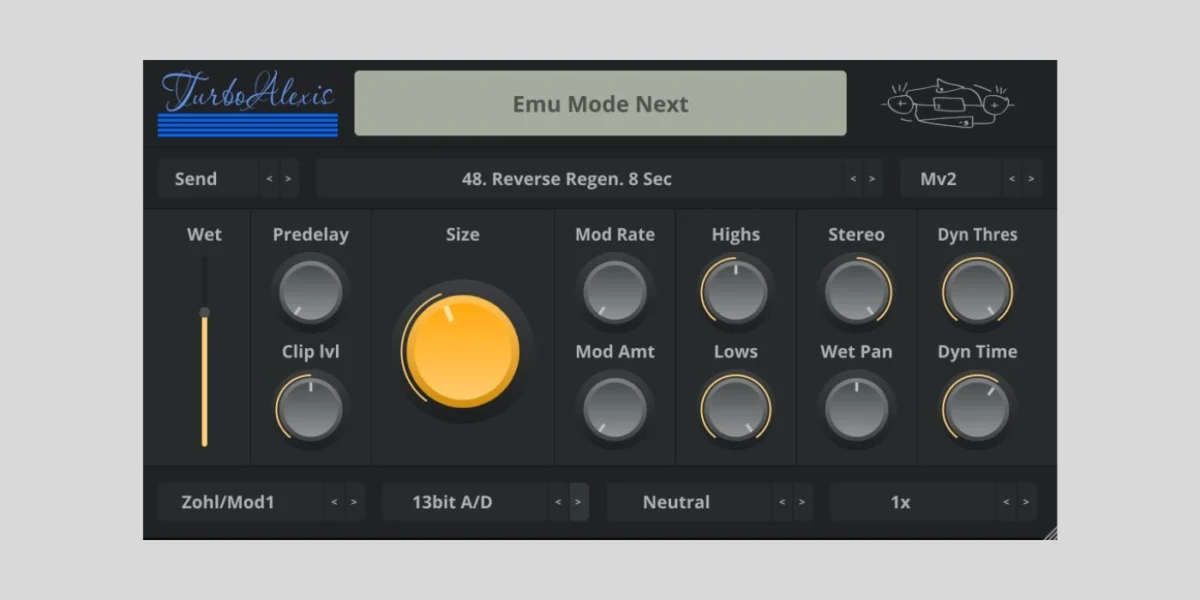
In a significant development for the audio production community, developer ArtV has officially launched TurboAlexis, a free VST3 plugin meticulously designed to emulate the revered Alesis MidiVerb, MidiVerb II, and MidiFex digital reverb and effects processors. This release arrives amidst a burgeoning interest in vintage digital hardware emulation, particularly for iconic units from the late 20th century, and notably follows closely on the heels of another recent Alesis MidiVerb II emulation, Temecula DSP’s MDV-II, underscoring a clear resurgence in demand for these distinctive sonic textures. TurboAlexis is currently available for Windows and Linux operating systems, offering a robust and enhanced software rendition of hardware that shaped countless recordings across various genres.
The Enduring Legacy of Alesis MidiVerb Series
To fully appreciate the impact of TurboAlexis, it is essential to delve into the historical context of the Alesis MidiVerb series. Introduced in 1986, the original Alesis MidiVerb was a groundbreaking product that democratized studio-quality digital reverb. Prior to its release, high-fidelity digital effects units were largely the domain of professional studios, often costing thousands of dollars. The MidiVerb, with its surprisingly affordable price point (initially around $399 USD), brought sophisticated reverb, delay, chorus, and flanging algorithms within reach of home studio enthusiasts, project studios, and gigging musicians. It was a 16-bit processor operating at a 48kHz sample rate, offering 64 preset algorithms and 32 user-definable patches, all accessible via MIDI, which was revolutionary for its time. Its distinct, often shimmering, and sometimes grainy character became a signature sound of the late 1980s and early 1990s, gracing tracks by artists from diverse fields, including electronic music, rock, and hip-hop.
Building on this success, Alesis released the MidiVerb II in 1988. While maintaining the core philosophy of affordability and quality, the MidiVerb II refined its algorithms, particularly its reverbs, offering a smoother and often more expansive sound. It expanded the program memory to 99 presets and 99 user-programmable slots. The MidiVerb II became arguably the most popular unit in the series, cementing its status as a studio workhorse due to its versatility and the distinctive character of its "Large Reverb," "Hall," and "Plate" algorithms. It became an essential piece of gear for musicians looking to add depth and atmosphere without breaking the bank.
The Alesis MidiFex, though less widely recognized than its MidiVerb counterparts, was another significant entry, focusing more on multi-effects combinations and unique modulations. Released slightly later, it offered a different flavor of Alesis digital processing, often characterized by its more experimental and sometimes "quirky" effects, which have garnered a strong cult following among those seeking unusual sonic textures. All three units shared a common design philosophy: compact rackmount form factors, simple front-panel controls (often criticized for their lack of immediate deep editing, relying more on preset selection and basic parameter adjustments), and a robust, if somewhat limited, MIDI implementation. Their sonic imprints, often described as "lo-fi digital warmth" or "classic 80s sheen," have remained highly sought after in modern production for their nostalgic appeal and ability to cut through a mix distinctly.
A New Wave of Digital Reverb Emulation: Chronology and Market Context
The current landscape of audio production is witnessing a profound appreciation for vintage digital signal processing. While analog hardware emulation has been a cornerstone of the plugin market for decades, the focus has increasingly shifted to early digital units. These processors, once considered technically inferior to their analog counterparts or surpassed by newer, cleaner digital designs, are now celebrated for their unique sonic artifacts, computational limitations that produced distinctive characters, and the nostalgic sound they represent.
This trend has recently accelerated, particularly concerning Alesis’s legacy. Just days before the announcement of TurboAlexis, on March 18, 2026, Temecula DSP released MDV-II, an emulation specifically targeting the Alesis MidiVerb II for macOS users. This parallel development is not merely coincidental but indicative of a broader market demand and a collective recognition within the developer community of the need to preserve and make accessible these classic sounds. The simultaneous emergence of two distinct, high-quality emulations within a short timeframe highlights the significance of the Alesis MidiVerb series in audio history and its continued relevance to contemporary producers.
ArtV’s TurboAlexis positions itself as a crucial offering by extending this access to a wider user base. While MDV-II caters to the macOS ecosystem, TurboAlexis addresses the substantial Windows and Linux user communities, which often face fewer options for high-fidelity, free emulations of specific vintage hardware. This strategic availability ensures that a broader spectrum of producers can integrate these classic Alesis textures into their digital audio workstations (DAWs) without operating system barriers or significant financial investment.
TurboAlexis: A Deep Dive into ArtV’s Emulation and Enhancements
TurboAlexis is not merely a faithful recreation but an enhanced interpretation of the Alesis hardware, designed to leverage modern computing power while retaining the authentic character of the original units. The plugin is built upon the JUCE framework, a popular C++ application framework for developing cross-platform audio applications, known for its robustness and flexibility. Crucially, ArtV openly acknowledges that TurboAlexis is based on the foundational code of "Thement’s Midiverb Emulator." This nod to Thement underscores a collaborative spirit within the open-source and plugin development communities, where shared knowledge and iterative improvements often lead to superior products. ArtV’s contribution, however, extends significantly beyond mere compilation of existing code.
The developer’s primary objective with TurboAlexis was to address some of the inherent limitations of the original Alesis hardware, particularly concerning user interface and flexibility, without sacrificing sonic authenticity. The original MidiVerb units, while sonically distinct, were often criticized for their somewhat cryptic interfaces, requiring users to navigate through menus with limited displays to tweak parameters. ArtV has reimagined this, offering a more intuitive and user-friendly graphical interface that provides immediate access to critical controls.
Key enhancements introduced in TurboAlexis include:
- Predelay Parameter: A dedicated predelay control allows users to precisely adjust the time before the reverb tail begins. This is crucial for maintaining clarity in a mix, preventing the reverb from cluttering the initial transient of a sound, and shaping the perceived space.
- Serial Lowpass/Highpass Filtering: The inclusion of comprehensive filtering options – both lowpass and highpass – applied in series, provides unprecedented control over the reverb’s tonal character. This allows producers to sculpt the frequency content of the reverb tail, removing muddy low-end build-up or harsh high-frequency content, making the reverb sit more effectively within a dense mix. This level of spectral control was entirely absent in the original hardware.
- Stereo Width Control: While the original Alesis units offered stereo outputs, the ability to continuously adjust the stereo image of the reverb within the plugin is a significant enhancement. Users can dial in anything from a mono-like, focused reverb to a super-wide, enveloping wash, providing greater creative flexibility.
- Panning: Integrated panning controls allow for precise placement of the reverb effect within the stereo field, further enhancing mixing capabilities.
- Algorithm/Program Size Adjustment (25% to 200%): This is perhaps one of the most transformative enhancements. The original Alesis hardware had fixed algorithm sizes, meaning a "small hall" was always a small hall. TurboAlexis introduces the ability to scale the core algorithm’s size from a compact 25% to an expansive 200%. This feature dramatically expands the sonic palette, allowing users to create subtle, tight ambiences or cavernous, infinite spaces from the same core algorithms, opening up applications far beyond the original hardware’s scope. This goes beyond simple decay time adjustment, fundamentally altering the perceived physical dimensions of the emulated space.
- Varied Modulation with Adjustable Rate and Amount: TurboAlexis incorporates diverse modulation types with adjustable rate and amount parameters. This allows for the introduction of subtle movement and character to the reverb tails, from classic chorus-like swirls to more experimental textures. With eight selectable modulation combinations, producers can infuse the vintage Alesis sound with dynamic life, adding depth and complexity that was previously unavailable.
These enhancements collectively transform TurboAlexis from a mere emulation into a powerful, creatively expanded digital effects unit. It preserves the cherished sonic fingerprint of the Alesis MidiVerb series while addressing their historical operational limitations, making them more adaptable to modern production paradigms.
Developer’s Vision and Community Engagement
ArtV’s approach to developing TurboAlexis is characterized by a strong commitment to refinement and community-driven improvement. The developer explicitly welcomes feedback and suggestions, particularly from individuals intimately familiar with the original Alesis hardware. This invitation is crucial for ensuring that the emulation remains faithful to the hardware’s nuances while continuing to evolve in response to user needs. Such an open development model fosters a sense of collaboration between the developer and the user base, often leading to more robust, feature-rich, and bug-free software. It also signals ArtV’s dedication to authenticity, valuing the insights of those who spent countless hours with the physical units. This ethos is particularly valuable in the realm of vintage emulation, where subjective "feel" and specific sonic characteristics are paramount.
The release of TurboAlexis further exemplifies the collaborative and often open-source spirit that underpins much of the independent plugin development scene. By building upon Thement’s foundational work and then significantly enhancing it, ArtV contributes to a cycle of innovation where developers learn from and build upon each other’s efforts, ultimately benefiting the entire audio community.
Comparative Landscape and Accessibility: Implications for Producers
The arrival of TurboAlexis, alongside Temecula DSP’s MDV-II, reshapes the landscape for accessing vintage Alesis sounds. For macOS users, MDV-II offers a dedicated MidiVerb II emulation. For Windows and Linux users, TurboAlexis provides a broader scope, encompassing the original MidiVerb, MidiVerb II, and MidiFex, all within a single, free plugin. This complementary availability ensures that producers, regardless of their operating system, now have high-quality, authentic emulations of these classic units readily at hand.
The "free" aspect of TurboAlexis is a game-changer. It democratizes access to sounds that previously required tracking down aging hardware units on the used market (often with associated maintenance risks) or purchasing commercial plugins that, while excellent, come with a price tag. For home studio producers, students, and those operating on tight budgets, TurboAlexis represents an invaluable tool, allowing them to experiment with iconic vintage textures without financial barriers. This significantly lowers the entry point for incorporating these specific sonic characters into their music, fostering greater creative exploration.
For professional audio engineers and producers, TurboAlexis offers convenience and workflow advantages. Instead of relying on physical rack gear that consumes space, requires specific cabling, and introduces potential noise or latency, the plugin integrates seamlessly into modern DAW environments. The enhanced parameters, such as extended filtering and modulation, allow for precise surgical application or expansive creative manipulation, often surpassing the capabilities of the original hardware in a mix context.
The Broader Implications for Audio Production
The phenomenon of detailed software emulations like TurboAlexis carries several broader implications for the audio production industry:
- Preservation of Audio Heritage: These emulations serve as digital archives of historical audio processing techniques and sounds. As physical hardware ages and becomes more fragile or difficult to repair, software versions ensure that the sonic character of these influential units remains accessible for future generations of musicians and producers.
- Creative Reinvention: By adding modern controls and expanded parameters (like algorithm size adjustment and comprehensive filtering), developers are not just replicating but reinjecting creative potential into these vintage designs. Producers can now achieve sounds that were simply not possible with the original hardware, pushing the boundaries of what these classic algorithms can do.
- Economic and Environmental Impact: The availability of high-quality free or affordable emulations reduces the pressure on the second-hand market for vintage gear, potentially making the remaining physical units more accessible to collectors and enthusiasts, while also reducing the environmental footprint associated with manufacturing and shipping new physical units or maintaining old ones.
- Innovation Through Collaboration: The open acknowledgment of building upon prior code (Thement’s emulator) highlights a positive trend of collaborative innovation in software development, where shared resources and collective effort lead to more robust and feature-rich tools for the entire community.
- Democratization of Sound: Free plugins like TurboAlexis empower a wider range of artists to produce professional-sounding music by providing access to tools and sounds that were once exclusive or expensive. This fosters a more diverse and inclusive creative landscape.
ArtV’s Ecosystem and Future Outlook
ArtV’s release of TurboAlexis is part of a broader, active engagement within the plugin development community. The developer is also currently running an exclusive giveaway for five licenses of their "BuzzCut" erosion clipper, with winners announced on March 30, 2026, and a 30% discount for those who miss out. This indicates a developer committed not only to creating valuable tools but also to fostering an active user base and contributing to the wider ecosystem of digital audio production.
The future of emulations like TurboAlexis is promising. As computing power continues to increase and development techniques evolve, the fidelity and flexibility of software emulations will only improve. Continued feedback from the user community, combined with ArtV’s apparent dedication to refinement, suggests that TurboAlexis could become a cornerstone free plugin for anyone seeking the distinctive and beloved sounds of Alesis’s pioneering digital reverb units, further cementing their legacy in the digital age.
Last Updated on March 24, 2026 by Tomislav Zlatic.
