

The Genesis and Evolution of the Seven-Year Project
The project began as a conceptual challenge: to extract the legendary sound engine of the Commodore 64 (C64) and house it within a functional, aesthetically pleasing, and musically versatile hardware interface. While the C64 has been used as a musical tool since its inception, it was originally designed as a personal computer, meaning its form factor and input methods were never optimized for live musical performance or studio integration. Passavanti’s vision was to bridge this gap by creating a dedicated synthesizer housing that provided tactile control over the SID chip’s internal parameters.
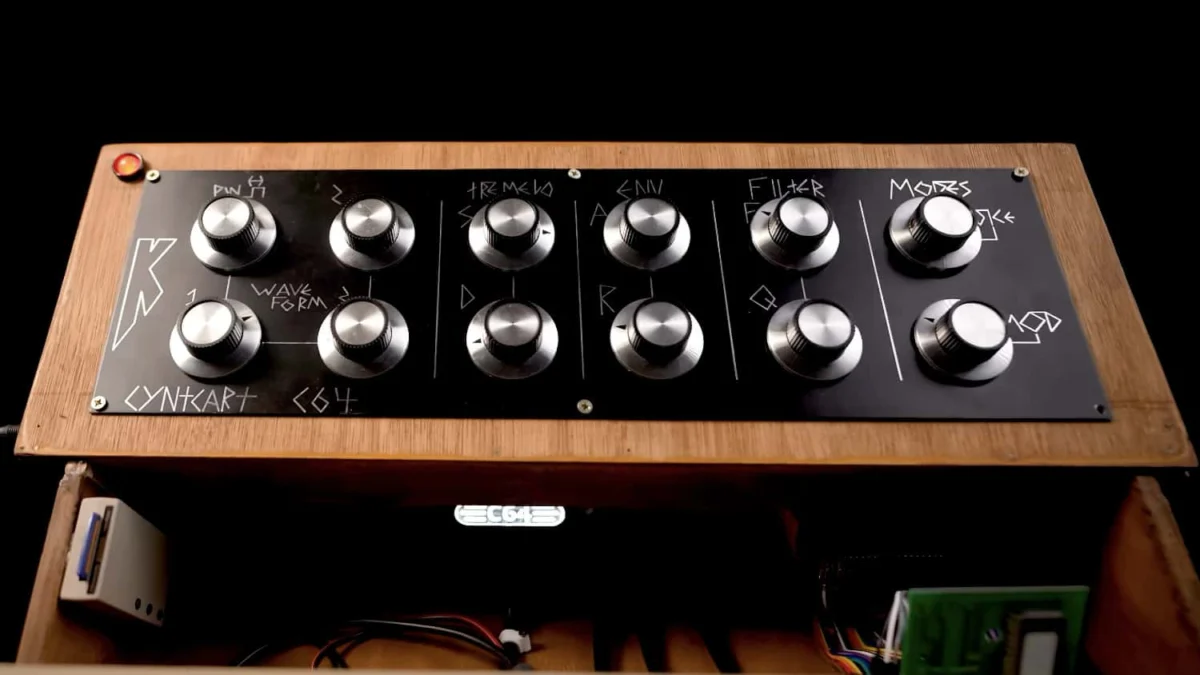
The timeline of the project spans nearly a decade, reflecting the complexities of integrating vintage silicon with modern electronics. Early stages involved sourcing functional Commodore 64 motherboards and identifying the specific SID chips required for the build. The collaboration with Sam Battle was instrumental in designing the initial control panel, which features an array of potentiometers and switches to manipulate oscillators, filters, and envelopes in real-time. However, the project faced a long hiatus, described by Passavanti as an "unfinished synth" phase, where the internal components and the control panel existed but lacked a cohesive, durable enclosure and finalized firmware.
Technical Specifications: The Power of the SID Chip
At the heart of the Doctor Mix synthesizer are two vintage MOS Technology SID chips. The SID chip, designed by Robert Yannes (who later co-founded Ensoniq), is unique in the history of computing because it is a hybrid of digital and analog technology. Unlike modern digital synthesizers that use mathematical models to generate sound, the SID chip contains three independent oscillators capable of producing four different waveforms: sawtooth, triangle, variable pulse, and noise.
Crucially, the SID chip includes an analog multi-mode filter, which provides the distinctive "grit" and warmth associated with 1980s computer audio. Because these chips were manufactured using an NMOS process, no two chips sound exactly the same; variations in the production of the analog filters mean that each chip has its own unique resonance and distortion characteristics.
In this specific build, Passavanti implemented a "True Stereo" configuration. By using two separate SID chips—one for the left channel and one for the right—the synthesizer achieves a spatial depth that was impossible on the original C64 hardware, which was strictly monophonic. This setup allows for complex polyphonic textures and wide, evolving soundscapes that retain the 8-bit character while meeting the standards of modern stereo mixing.
Engineering the Custom Enclosure and Hardware Interface
The final phase of the project focused on the physical manifestation of the instrument. Passavanti documented a rigorous woodworking process to create a professional enclosure. The construction involved precision cutting, gluing, and clamping of high-quality wood, finished with an oil coating to ensure durability and a premium aesthetic. This was not merely a cosmetic choice; the enclosure had to be engineered to house the delicate vintage motherboards, the heavy-duty control panel, and the power supply units required to drive the various voltage requirements of the SID chips.
One of the primary challenges in the build was the mounting of the control panel. During the assembly process, Passavanti reported technical difficulties involving electrical grounding and physical alignment, noting that "sparks flew" during the mounting of the panel. This highlights the inherent risks of working with vintage electronics, where modern metal enclosures must be carefully isolated from aged circuit boards to prevent short circuits.
The design also includes a dedicated base for the original Commodore 64 chassis, allowing it to sit alongside the control interface. This maintains the "DNA" of the original machine while providing the user with a streamlined workflow. The final "beauty shot" of the instrument reveals a hybrid machine that looks like a piece of high-end laboratory equipment from an alternate 1980s timeline.
Troubleshooting Vintage Silicon and Custom Firmware
The restoration of the internal components required deep technical intervention. Upon testing, Passavanti discovered that one of the primary SID chips was completely non-functional. Rather than replacing it with a modern emulation (such as the SwinSID), he chose to repair the original hardware to preserve the authentic analog artifacts of the 6581 chip. This involved a "down the electronics rabbit hole" approach, utilizing oscilloscopes and MIDI testers to trace signal paths and identify points of failure.
In a modern twist, Passavanti utilized Artificial Intelligence tools to assist in diagnosing circuit issues and optimizing the integration of the hardware. The firmware of the device was also customized; the startup sequence and internal software now display "DOCTOR MIX," signifying the transition from a general-purpose computer to a specialized musical instrument. This firmware allows for full MIDI integration, enabling the 40-year-old chips to be controlled via modern DAW (Digital Audio Workstation) software, external sequencers, or MIDI keyboards.
The Virtual Counterpart and Digital Accessibility
Recognizing that the hardware version of the C64 synth is a unique, one-of-a-kind instrument, Passavanti has expanded the project into the digital realm. To make the sound of his creation accessible to a wider audience, he launched a virtual version of the C64 synth that can be played for free within a web browser. This digital twin replicates the interface and signal flow of the hardware unit, allowing users to experience 8-bit synthesis without the need for vintage hardware.
This move follows a growing trend in the music industry where hardware developers create "software versions" of their instruments to build community engagement and provide a low-barrier entry point for hobbyists. The browser-based synth serves as both a promotional tool for the project and a preservation effort, documenting the specific sonic characteristics of Passavanti’s dual-SID configuration.
Future Implications: The Commodore 64 Ultra
The conclusion of this seven-year project is not the end of Passavanti’s involvement with retro-computing synthesis. The announcement of the "Commodore 64 Ultra" suggests a new phase of development. While details remain sparse, the "Ultra" designation implies a more refined, perhaps commercially available or highly standardized version of the DIY synth. This signals a continued interest in the "New-Old" market—a sector of the music industry where vintage chips are integrated into modern workflows to provide textures that digital plugins often struggle to replicate.
Broader Context and Industry Impact
The successful completion of the Doctor Mix C64 Synthesizer reflects a broader cultural and technical movement toward "Retrotouring" and hardware hacking. In an era dominated by software-based music production, there is an increasing premium placed on "unperfect" sounds. The SID chip, with its aliasing noise, non-linear filter response, and 8-bit limitations, offers a palette that contrasts sharply with the clinical precision of modern digital audio.
Furthermore, the collaboration between Passavanti, Murray, and Battle highlights the power of the "maker" community on platforms like YouTube. By documenting the failures and the "one big mistake" mentioned in the build process, the team provides an educational resource for future engineers. This transparency demystifies the process of hardware hacking and encourages the preservation of obsolete technology through creative repurposing.
As the supply of original MOS 6581 and 8580 chips continues to dwindle, instruments like the Doctor Mix C64 synth become more than just musical tools; they become archival pieces. They represent a period in engineering history where the constraints of memory and processing power forced designers to create incredibly efficient and characterful audio solutions. The transition of the Commodore 64 from a toy in the 1980s to a "serious" synthesizer in 2024 is a testament to the timelessness of well-designed hardware.
