

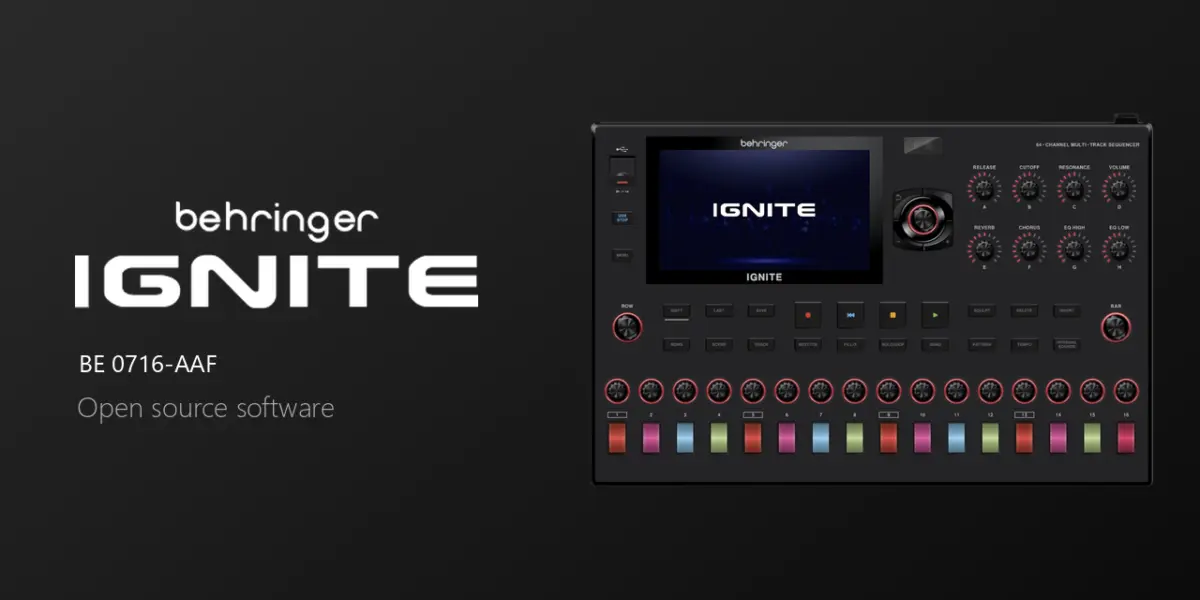
Music Tribe, the global parent company for brands including Behringer, Midas, and Klark Teknik, has officially updated its public GitHub repository to include the source code and documentation for the Behringer IGNITE, a high-capacity 64-channel multitrack sequencer. This release, hosted under the Music Tribe Open Source organization, grants developers and enthusiasts unprecedented access to the internal architecture of the device, including its application layer, audio engine, and the proprietary communication protocols used to bridge software commands with physical hardware controls. The move signals a continued commitment by the company to embrace a "community-driven" development model, allowing the global synthesis and coding community to inspect, modify, and potentially enhance the functionality of the hardware before its formal commercial debut.
The Behringer IGNITE is designed as a central hub for modern music production environments, bridging the gap between traditional hardware sequencing and modern digital flexibility. It features a large touchscreen interface supplemented by physical step-entry controls, providing a tactile workflow for composition. On the technical side, the IGNITE is equipped with a robust array of I/O, including eight Control Voltage (CV) outputs and eight Gate outputs, making it a powerful contender for controlling Eurorack modular systems and vintage analog synthesizers. Additionally, the unit features extensive MIDI connectivity and an internal General MIDI (GM) sound engine, allowing it to function as a standalone workstation capable of generating audio without the need for external sound modules.
Technical Architecture and Open Source Scope
The repository, titled "0716-AAF" on GitHub, provides a comprehensive look into the software stack that powers the IGNITE. According to the project’s documentation, the release includes the primary application code and the core audio engine. Perhaps most importantly for third-party developers, the communication protocol documentation is included, which outlines how the IGNITE’s firmware interacts with its various hardware components, such as the touch panel, rotary encoders, and the internal synth engine.
However, the release is not a "turnkey" firmware solution for the hardware. Music Tribe has noted that several third-party components and proprietary libraries were removed from the public repository to comply with licensing agreements. Consequently, developers attempting to compile the project will need to identify and integrate equivalent libraries or write custom code to replace the missing modules. This approach is common in the transition of commercial products to open-source formats, as it protects intellectual property owned by external vendors while still providing the community with the "heavy lifting" code written by Behringer’s internal engineering teams.
The Strategic Evolution of Music Tribe Open Source
The release of the IGNITE source code is part of a broader strategic shift initiated by Music Tribe founder Uli Behringer. Over the past several years, the company has faced both praise for its aggressive pricing and criticism regarding its software stability and development timelines. By moving toward an open-source model, Music Tribe aims to leverage the collective intelligence of the global developer community to accelerate bug fixes, implement feature requests, and foster a sense of ownership among its user base.
This initiative follows previous open-source releases from Music Tribe, which have included components for other digital products and mixer platforms. By opening the IGNITE’s audio engine and communication protocols, Behringer is effectively inviting the community to create custom firmware—a move that mirrors the success of "hacker-friendly" devices like the Monome or the Organelle. This transparency could mitigate long-term concerns regarding product support, as the community would have the tools necessary to maintain the software even if official manufacturer support were to eventually conclude.
Hardware Specifications and Workflow Integration
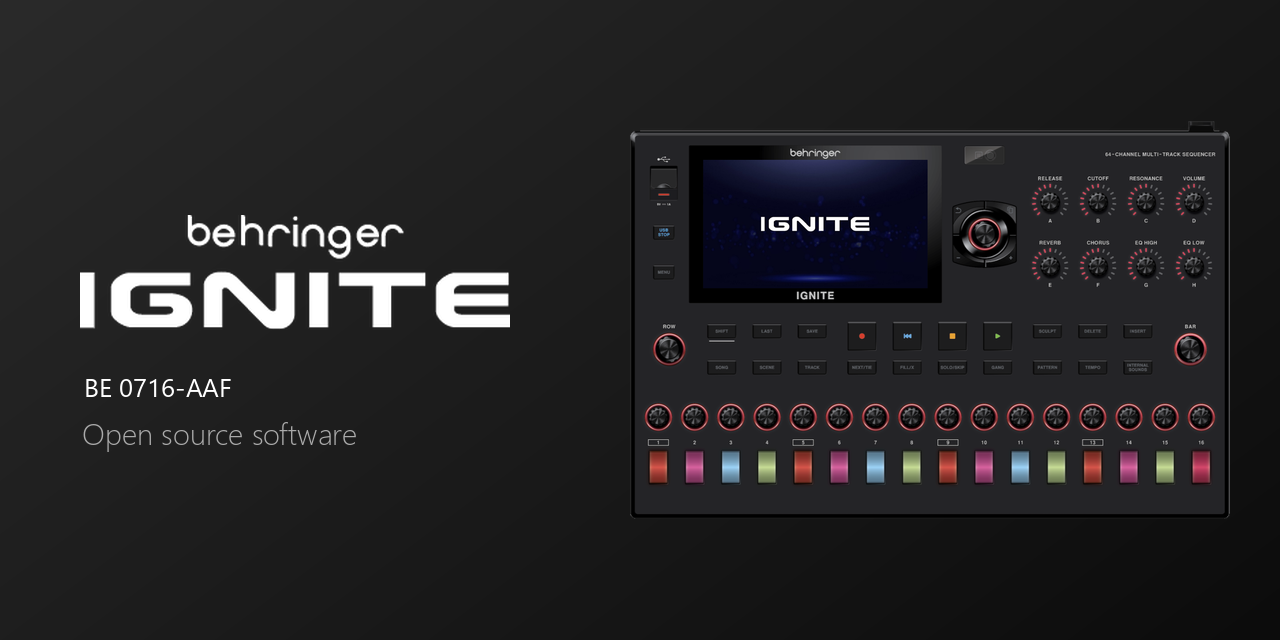
The Behringer IGNITE is positioned as a "studio brain," a category of hardware that has seen a resurgence in recent years as musicians seek to move away from Computer-Based Digital Audio Workstations (DAWs). The 64-channel capacity allows for immense complexity in arrangement, supporting massive multi-timbral setups.
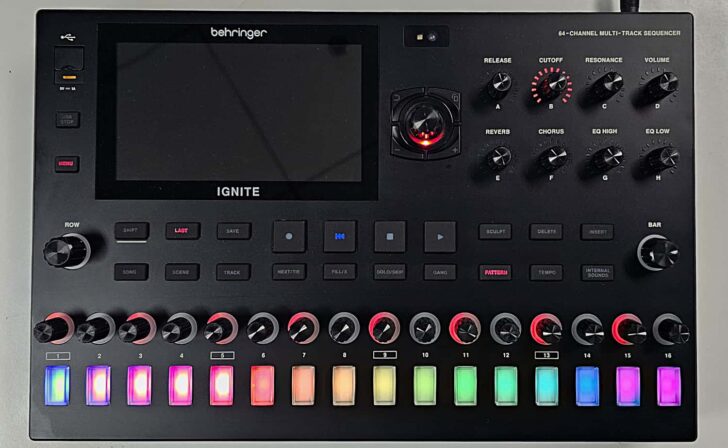
Key hardware features identified in the release and product images include:
- 64 Independent Tracks: Each track can be assigned to MIDI, internal sounds, or the CV/Gate outputs.
- Tactile Interface: A combination of a high-resolution touchscreen for deep editing and dedicated buttons/encoders for rhythmic step entry.
- Analog Connectivity: Eight CV and eight Gate outputs allow for polyphonic sequencing of modular gear or simultaneous control of multiple monophonic synthesizers.
- Internal Sound Engine: The General MIDI sound engine provides a diverse palette of sounds for sketching out ideas or performing live without additional gear.
- Comprehensive MIDI I/O: Multiple MIDI ports allow for the synchronization of extensive hardware chains, ensuring the IGNITE can act as the master clock for an entire studio.
The integration of CV/Gate outputs is particularly noteworthy. While many modern sequencers focus exclusively on MIDI or USB connectivity, Behringer’s decision to include 16 total analog outputs suggests a direct appeal to the modular synthesizer market. This allows the IGNITE to perform complex "West Coast" style sequencing or traditional "East Coast" melodic lines across a vast array of analog equipment simultaneously.
Chronology of Development and Market Context
The development of the IGNITE follows a long lineage of Behringer sequencing tools. The company’s history in this space dates back to the BCR2000 and BCF2000 MIDI controllers, which became legendary in the 2000s for their versatility and the subsequent "Zaquencer" third-party firmware that turned the BCR2000 into a standalone sequencer.
The official timeline for the IGNITE’s development has been a subject of interest since early leaks appeared on social media platforms. By 2024, Behringer began hinting at a new generation of digital control surfaces that would move beyond simple MIDI controllers into the realm of fully integrated workstations. The publication of the source code in late 2025/early 2026 (based on repository timestamps) suggests that the hardware is nearing its final production stages, or that the company is seeking final community validation of the software architecture before a mass-market rollout.
The IGNITE enters a competitive landscape currently occupied by high-end sequencers such as the Akai MPC series, the National Instruments Maschine+, and boutique offerings like the Polyend Play or the Squarp Instruments Hapax. Behringer’s entry into this market is expected to follow its traditional "disruptive pricing" model, potentially offering 64-channel sequencing at a fraction of the cost of its competitors.
Analysis of Implications for the Music Industry
The open-sourcing of a flagship sequencer’s audio engine has several significant implications for the industry. First, it sets a precedent for transparency. If successful, this move could pressure other manufacturers to open parts of their software ecosystems, particularly for products that rely on community longevity.
For the end-user, the open-source nature of the IGNITE means that the device’s feature set is theoretically "infinite." If a user requires a specific generative sequencing mode or a unique MIDI transformation tool not included in the factory firmware, the code exists for a developer to build it. This could lead to a "forking" of the firmware, where different versions of the IGNITE software are optimized for different styles of music, such as techno-focused algorithmic sequencing versus traditional linear song composition.
However, the "missing components" mentioned in the GitHub documentation present a hurdle. The success of this open-source venture depends on whether the community finds the core engine valuable enough to invest the time required to "fill in the blanks." If the community embraces the project, the IGNITE could become the most versatile sequencer on the market. If not, the open-source release may remain a curiosity for specialized developers rather than a benefit for the average musician.
Official Responses and Developer Reactions
While Music Tribe has not issued a formal press release accompanying the GitHub update, the company’s social media channels have historically encouraged users to engage with their open-source repositories. Early reactions from the developer community on platforms like Lines and Gearspace have been cautiously optimistic. Coders have noted that the inclusion of the communication protocol is a "major win," as it simplifies the process of creating custom editors or integrating the IGNITE with other software environments like Max/MSP or Pure Data.
Critics, however, point out that without an official firmware binary or a "ready-to-build" environment, the barrier to entry remains high for non-programmers. There is a call from the community for Music Tribe to provide a "lite" version of the proprietary libraries or a sandbox environment where features can be tested without needing to navigate complex licensing hurdles.
Future Outlook and Availability
As of the latest update, Behringer has not announced an official MSRP or a confirmed shipping date for the IGNITE hardware. Traditionally, Behringer products transition from "development" to "shipping" within 6 to 18 months of major software or prototype reveals, depending on component availability and global supply chain conditions.
The IGNITE represents more than just a new product; it is a test case for Behringer’s ability to marry complex digital software with its established hardware manufacturing prowess. By inviting the public to look under the hood, the company is betting that transparency will lead to a more stable, feature-rich, and ultimately more successful product in the highly competitive professional audio market. Whether the IGNITE becomes the new standard for studio sequencing will likely depend on the synergy between Behringer’s production scale and the creativity of the open-source community.
