

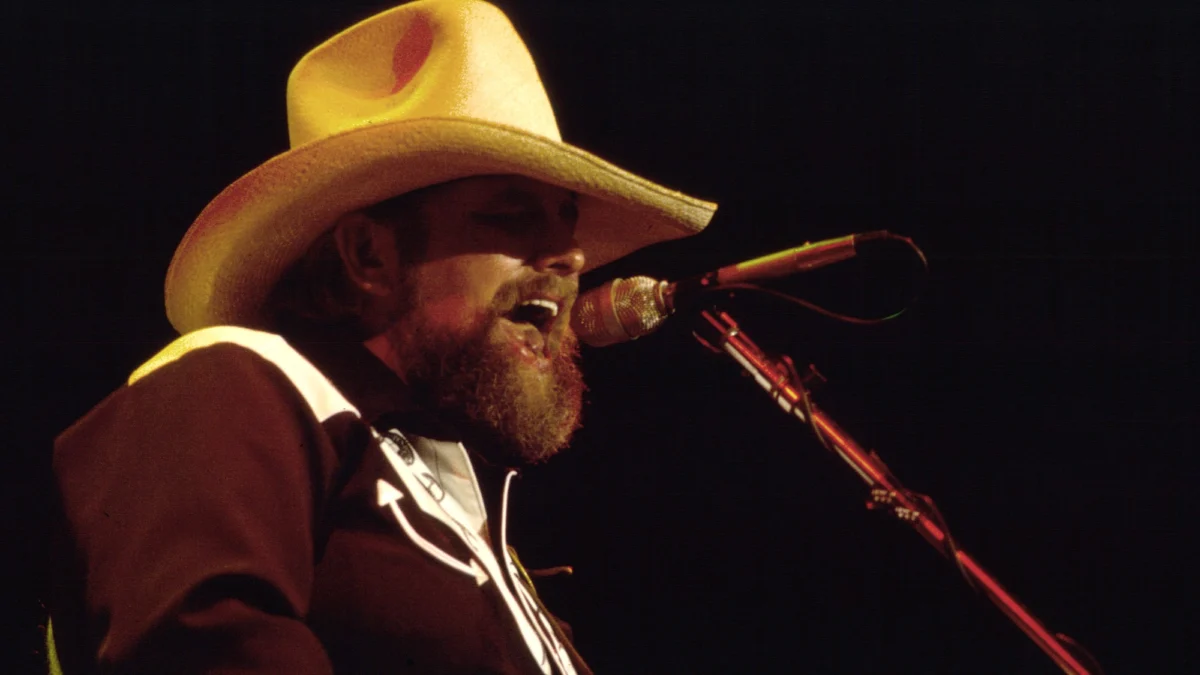
While the high-octane fiddle duel of The Devil Went Down to Georgia remains the definitive hallmark of Charlie Daniels’ career, the breadth of his musical contributions extends far beyond that 1979 crossover sensation. As a central figure in the evolution of Southern rock and a stalwart of modern country music, Daniels cultivated a catalog that blended bluegrass technicality, rock and roll energy, and a distinctively populist songwriting voice. By examining three of his most enduring works—Long Haired Country Boy, Drinkin’ My Baby Goodbye, and Simple Man—it becomes evident that his legacy is built on a foundation of storytelling that resonated with the complexities of the American experience across three decades.
The Foundation of a Southern Rock Icon
To understand the significance of Daniels’ secondary hits, one must first look at his trajectory within the music industry. Born in 1936 in Wilmington, North Carolina, Daniels was a product of the post-Depression South, influenced equally by the gospel music of his youth and the burgeoning rock and roll movement of the 1950s. Before becoming a frontman, he was a highly respected session musician in Nashville. His credentials included playing bass on Bob Dylan’s seminal 1969 album Nashville Skyline and contributing to recordings by Leonard Cohen and Ringo Starr.
This background as a "musician’s musician" provided Daniels with a technical versatility that most of his contemporaries lacked. When he formed the Charlie Daniels Band (CDB) in the early 1970s, he didn’t just aim for country stardom; he sought to create a fusion of genres that could appeal to both the long-haired rock fans of the era and the traditional country audience.
Long Haired Country Boy: An Anthem of Individualism
Originally released in 1974 on the landmark album Fire on the Mountain, "Long Haired Country Boy" serves as a definitive statement of Daniels’ early persona. Written solely by Daniels, the track emerged during a period of intense cultural friction in the United States. The lyrics depict a protagonist who exists on the fringes of polite society, rejecting the moralizing of television preachers and the judgments of the establishment.
The song’s narrative arc is centered on the concept of self-reliance. In the mid-1970s, the "long-haired" aesthetic was often associated with the counterculture, yet Daniels’ character reclaimed the look within a rural, Southern context. The lyrics—specifically the lines regarding a "preacher man talking on TV"—highlighted a burgeoning skepticism toward the commercialization of faith, a theme that would recur in various forms throughout his career.
Chronologically, the song’s success was not immediate in a commercial sense. While a staple of his live sets and a fan favorite, it did not reach its peak chart potential until it was re-released in 1980, following the massive success of Million Mile Reflections. During its second life, it climbed into the Top 30 on the Billboard Hot Country Singles chart. The song’s longevity was further cemented in 2019 when Cody Johnson, a leader in the neo-traditionalist country movement, covered the track for his major-label debut, Ain’t Nothin’ To It. This bridge between generations underscores the song’s status as a timeless piece of Southern songwriting.
Drinkin’ My Baby Goodbye: The Evolution of the Honky-Tonk Sound
By the mid-1980s, the musical landscape had shifted. The raw, improvisational Southern rock of the 1970s was giving way to a more polished, radio-friendly country sound. Daniels adapted to this shift without sacrificing his signature grit. In 1986, he released "Drinkin’ My Baby Goodbye" as part of the album Me and the Boys.
Unlike the sprawling, narrative-heavy compositions of his earlier years, "Drinkin’ My Baby Goodbye" is a masterclass in the "tears-in-your-beer" honky-tonk tradition, albeit delivered at a breakneck tempo. The song reached the Top 10 on the country charts, proving that Daniels could compete with the new wave of country stars while maintaining his instrumental prowess. The track is characterized by a rapid-fire delivery and a driving rhythm that showcases the CDB’s tight ensemble playing.
The song deals with the universal theme of using substances to mask the pain of a failed relationship. However, Daniels injects the track with a sense of self-aware humor. The lyrics describe a man "actin’ like a durn fool" on a barstool, acknowledging the futility of his actions even as he calls for another round. This blend of heartbreak and high-energy performance became a staple of Daniels’ live shows, often serving as a showcase for his lightning-fast guitar and fiddle work.
Simple Man: Social Commentary and the Late-Career Resurgence
In 1989, Daniels released "Simple Man," the title track of an album that marked a significant pivot in his public image and lyrical focus. Co-written with band members Taz DiGregorio, Jack Gavin, and Charles Hayward, the song moved away from the hippie-adjacent individualism of the 1970s toward a more overtly conservative social commentary.
"Simple Man" arrived at a time when the United States was grappling with rising crime rates and a shifting moral compass. The song’s lyrics are direct and unapologetic, advocating for "an eye for an eye" and criticizing the abandonment of traditional biblical values. It resonated deeply with a segment of the American population that felt alienated by the complexities of modern legal and social systems.
The song’s impact was significant, becoming Daniels’ final Top 15 single on the Billboard country charts. It also sparked considerable debate. While some listeners praised its straightforwardness and moral clarity, others found its rhetoric regarding justice to be overly simplistic. Regardless of the political interpretation, "Simple Man" demonstrated Daniels’ ability to tap into the cultural zeitgeist and articulate the frustrations of his core demographic. It solidified his role not just as an entertainer, but as a vocal representative of a specific American worldview.
Historical Timeline and Career Milestones
The trajectory of Charlie Daniels’ career is marked by several key eras that define his contribution to American music:
- 1958–1967: The early years. Daniels tours with his band, The Jaguars, and begins to make a name for himself as a songwriter, notably co-writing "It Hurts Me" for Elvis Presley.
- 1967–1971: The Nashville session era. Daniels becomes a first-call musician, contributing to iconic albums by Bob Dylan and helping bridge the gap between folk and country.
- 1972–1978: The rise of the Charlie Daniels Band. This era saw the release of Honey in the Rock and Fire on the Mountain, establishing the band as a powerhouse of the Southern rock movement alongside the Allman Brothers and Lynyrd Skynyrd.
- 1979–1989: The peak of commercial success. Following the Grammy-winning "The Devil Went Down to Georgia," Daniels maintained a consistent presence on the charts with hits like "In America," "The Legend of Wooley Swamp," and the aforementioned trio of songs.
- 1990–2020: The Elder Statesman era. Daniels transitioned into a legendary figure, continuing to tour extensively and hosting the "Volunteer Jam," a multi-artist concert series that became a Nashville institution.
Analytical Perspective: Why These Songs Persist
The enduring popularity of Daniels’ work can be attributed to his ability to inhabit different archetypes. In "Long Haired Country Boy," he is the rebel; in "Drinkin’ My Baby Goodbye," he is the everyman; and in "Simple Man," he is the moralist. This versatility allowed him to maintain a career that spanned over six decades in an industry notorious for its short memory.
From a technical standpoint, Daniels’ music remained grounded in high-level musicianship. Even as country music trended toward pop-oriented production in the 1980s and 90s, the CDB continued to emphasize live instrumentation. This commitment to the "band" dynamic ensured that their records possessed a timeless quality that synthesized various strands of American roots music.
Broader Impact and Industry Recognition
Charlie Daniels’ influence is reflected in his numerous accolades and his standing within the Nashville community. In 2008, he was inducted into the Grand Ole Opry, a crowning achievement for any country artist. This was followed by his induction into the Country Music Hall of Fame in 2016. At the time of his induction, Kyle Young, the CEO of the Country Music Hall of Fame and Museum, noted that Daniels "refused to be pigeonholed," describing him as a "fiddler, a guitarist, a singer, a songwriter, and a bandleader."
The reaction to his passing in 2020 further illustrated his impact. Peer artists ranging from Brad Paisley and Dolly Parton to members of the rock community like Greg Harris (CEO of the Rock & Roll Hall of Fame) issued statements praising his integrity and his role as a mentor. Paisley remarked that Daniels "taught me so much about being a man and an artist," while Parton highlighted his "heart as big as his fiddle."
Conclusion: A Legacy Beyond the Hit
While "The Devil Went Down to Georgia" may be the song that introduced Charlie Daniels to the world, it is songs like "Long Haired Country Boy," "Drinkin’ My Baby Goodbye," and "Simple Man" that provided the substance of his long-term career. These tracks offer a more nuanced look at a man who was deeply connected to his roots yet unafraid to evolve with the times.
Daniels’ work serves as a sonic map of the American South’s transition from the counterculture-influenced 70s to the traditionalist 80s and beyond. By maintaining a focus on authentic storytelling and instrumental excellence, he ensured that his music would continue to resonate with listeners long after the final notes of his fiddle had faded. His legacy remains a testament to the power of a "simple man" with a complex talent.
