

The global independent music sector has undergone a seismic shift over the last decade, transitioning from a peripheral segment of the industry to a dominant force that generated approximately $1.2 billion in 2023, according to MIDiA Research. As the barriers to entry for recording and distribution have effectively vanished, the primary challenge for the modern independent artist has shifted from production to visibility. In an era where over 100,000 tracks are uploaded to streaming platforms daily, the capacity to network and collaborate has emerged as the most critical determinant of long-term career viability. While the prospect of professional networking often carries a connotation of corporate formality that may seem antithetical to the creative process, industry analysts argue that community-based collaboration is the most effective hedge against the "discovery deficit" currently plaguing digital platforms.
Recent data suggests that the "lone wolf" model of artistry is becoming increasingly obsolete. A 2023 survey of independent creators indicated that musicians who engaged in at least three collaborative projects per year saw a 40% higher growth rate in their monthly listeners compared to those who worked in isolation. This growth is attributed to the "cross-pollination" of audiences, where artists gain access to one another’s established fanbases. However, the mechanics of effective networking require a strategic approach that transcends simple social media interactions. To navigate this landscape, artists are increasingly turning to interdisciplinary engagement, community-led workshops, and digital-first collaborative ecosystems.
The Rise of Interdisciplinary Engagement in Local Ecosystems
The traditional music networking model—frequenting bars and nightclubs in hopes of meeting a promoter—is being replaced by a more sophisticated, interdisciplinary approach. The contemporary creative economy is increasingly integrated, meaning that opportunities for musicians often exist within the spheres of visual arts, theater, and digital media. Local art galleries, for instance, have become unexpected hubs for musical discovery. In these settings, the demand for "sonic branding" or atmospheric soundscapes provides a unique entry point for musicians to showcase their work to a demographic that values aesthetic curation.

Industry observers note that cross-sector collaborations often yield more sustainable professional relationships than peer-to-peer music networking alone. When a musician collaborates with a visual artist for a gallery opening or provides a score for a local theater production, they are not competing for the same "ear share" as they would at a traditional battle of the bands. Instead, they are providing a necessary service that integrates their art into a larger cultural event. This strategy broadens the artist’s professional portfolio and establishes them as a versatile creative professional, rather than just a performer.
Case Study: The Feedback Collective and the Power of Peer Review
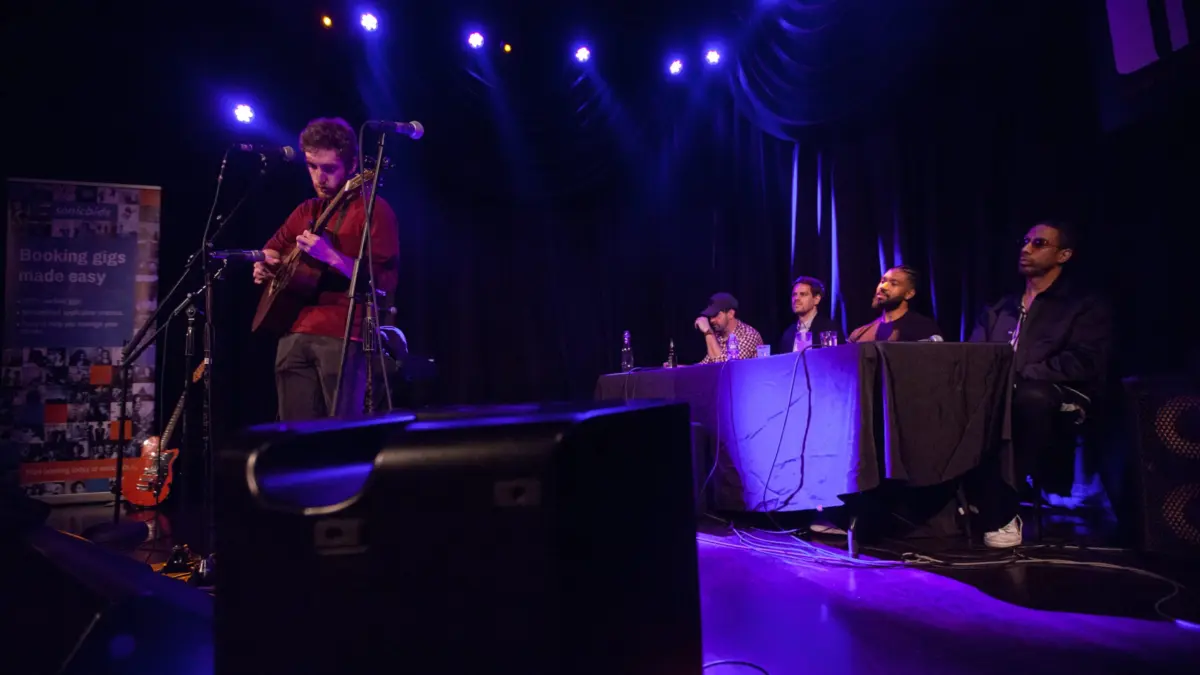
The shift toward structured networking is perhaps best exemplified by initiatives like the "Feedback Collective," a series of panel discussions and songwriting workshops hosted by Sonicbids. These events represent a formalization of the "jam session" concept, providing a controlled environment where artists can receive professional critiques and connect with industry veterans. The chronology of these events often follows a specific trajectory: an initial educational segment, followed by a peer-review session, and concluding with an open networking period.
Participants in these workshops often report that the structured nature of the interaction reduces the "intimidation factor" inherent in traditional networking. By focusing on a shared task—such as deconstructing a song’s arrangement or discussing distribution strategies—the social barriers are lowered. Furthermore, these sessions serve as a vetting process. When an artist demonstrates their technical proficiency and openness to feedback in a workshop setting, they are more likely to be recruited for future projects by their peers. This "demonstration of value" is a cornerstone of professional networking that is often missing from purely social interactions.
Digital Ecosystems and the Evolution of Remote Collaboration
While local physical presence remains vital, the digital landscape has evolved beyond the promotional confines of Instagram and TikTok. Platforms like BandLab and SoundCloud have introduced integrated tools that facilitate remote, asynchronous collaboration. BandLab, which reported over 60 million users in 2023, allows musicians to invite others to contribute tracks to a shared project in real-time, effectively serving as a global, virtual recording studio.

This technological advancement has democratized the networking process, allowing an artist in a rural area to collaborate with a producer in a major urban hub. However, the professional etiquette of these platforms requires a nuanced approach. Successful digital networking is predicated on "meaningful engagement"—the practice of providing specific, constructive feedback on another artist’s work before proposing a collaboration. Data from digital marketing firms suggests that personalized outreach on these platforms has a 65% higher response rate than generic "check out my music" solicitations. The implication is clear: in the digital realm, networking must be viewed as a value-exchange rather than a self-promotional exercise.
The Strategic Value of Event Voluntarism and Industry Access
For many emerging artists, the most significant barrier to networking is access to decision-makers. Music festivals and large-scale industry conferences often have high costs of entry, both financially and socially. To bypass these barriers, a growing number of independent musicians are utilizing volunteer positions as a strategic entry point. By working in logistics, artist relations, or stage management at major festivals like SXSW or Coachella, musicians gain a "behind-the-scenes" perspective on the industry’s operational requirements.
The benefits of this approach are twofold. First, it provides direct proximity to industry professionals—agents, managers, and established artists—in a context where the volunteer is seen as a helpful peer rather than a solicitor. Second, it offers an education in the "business of music" that is rarely taught in the studio. Understanding the pressures and requirements of event organizers allows an artist to tailor their future pitches to be more professional and "venue-friendly." Statements from festival coordinators often highlight that volunteers who demonstrate reliability and a positive attitude are frequently the first individuals considered when local performance slots become available.
Leveraging the Fanbase as a Collaborative Engine
One of the most underutilized assets in an independent artist’s networking toolkit is their existing audience. The modern music industry has shifted toward a "community-led" model, where the line between fan and collaborator is increasingly blurred. Through platforms like Discord and Patreon, artists can engage their fanbase in the creative process, often discovering that their audience contains skilled photographers, web designers, or even other musicians.

By conducting surveys or hosting "Ask Me Anything" (AMA) sessions, artists can crowdsource ideas for future collaborations. This not only strengthens the bond between the artist and the audience but also provides the artist with data-driven insights into what their fans want to hear. For example, if a significant portion of a singer-songwriter’s audience also follows a specific local electronic producer, a collaboration between the two becomes a low-risk, high-reward venture. This "audience-first" networking strategy ensures that collaborative efforts are aligned with market demand, increasing the likelihood of commercial success.
Broader Economic Implications and Career Longevity
The shift toward a more collaborative and networked independent music sector has significant implications for the broader creative economy. As musicians become more adept at cross-disciplinary and digital networking, they are essentially becoming "micro-entrepreneurs" who can navigate multiple revenue streams. This diversification is essential in an era where streaming royalties alone are rarely sufficient to support a full-time career.
A fact-based analysis of the current market indicates that the most successful independent artists are those who view themselves as part of a larger ecosystem. By building a robust network of peers, industry professionals, and interdisciplinary partners, these artists create a "safety net" of opportunities. When one revenue stream—such as live performance—is disrupted, their network can provide alternative paths, such as sync licensing, session work, or educational workshops.
In conclusion, networking for the independent musician is no longer an optional "soft skill"; it is a foundational pillar of professional practice. The transition from a solitary creator to a community-integrated artist requires a proactive, strategic approach that encompasses local physical events, digital collaboration tools, and audience engagement. As the industry continues to decentralize, those who embrace the collaborative spirit will be the ones who define the future of music. The "adventure" of networking is, in reality, the hard work of building a sustainable, resilient career in an ever-changing cultural landscape. By utilizing these five unexpected strategies, independent musicians can move beyond the limitations of the "DIY" label and enter a new era of "DIT"—Doing It Together.
