

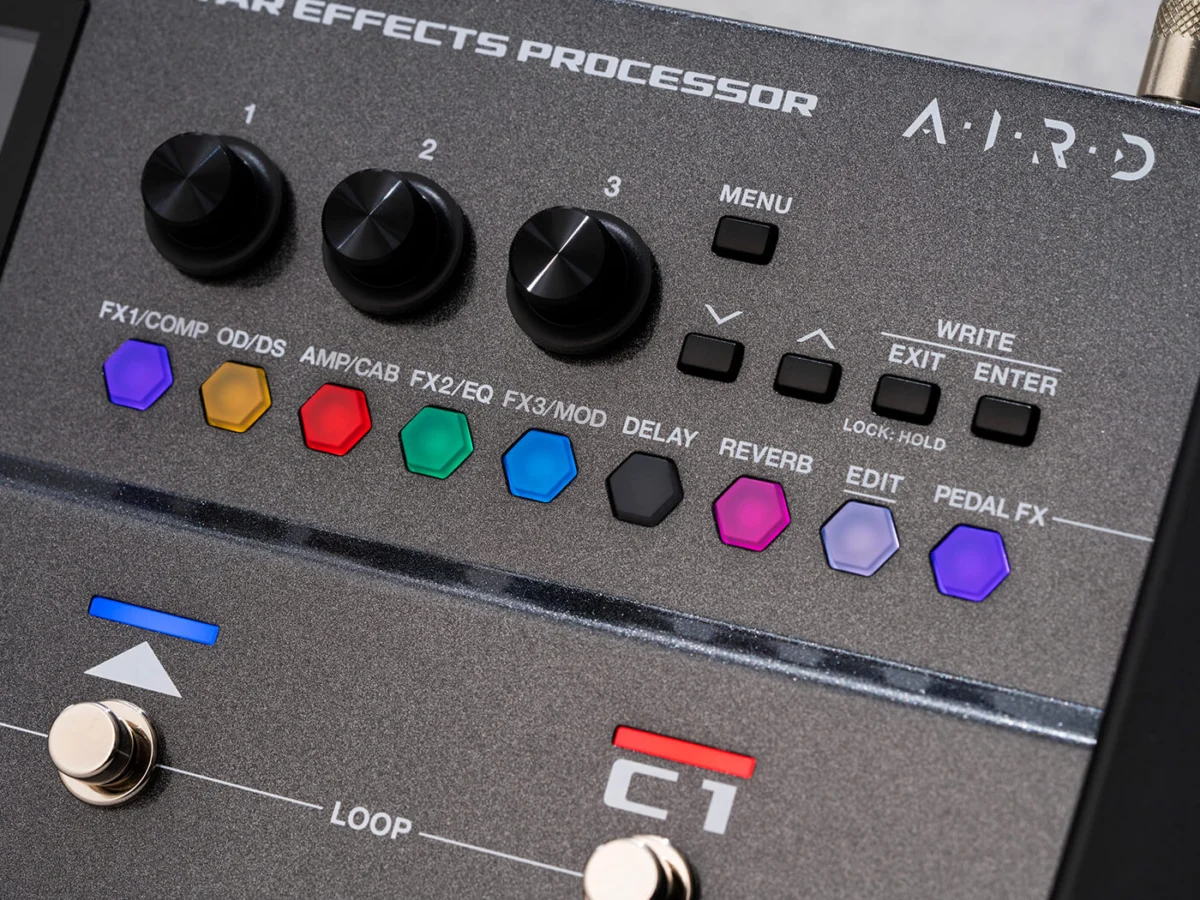
The launch of the Boss GX-1 multi-effects processor marks a significant strategic move by the iconic Japanese brand, aiming to redefine expectations for budget-friendly guitar effects units. Priced at an accessible $229 (£219), the GX-1 is positioned as an all-in-one solution for entry-level and intermediate guitarists, promising a comprehensive suite of effects, intuitive usability, and Boss’s renowned build quality in a compact, portable package. This release arrives nearly five decades after Boss first introduced its groundbreaking compact effects pedals, a legacy that has cemented its reputation as a consistent and reliable innovator in the music technology landscape.
Boss’s Enduring Legacy and the GX-1’s Strategic Position
For 49 years, Boss has been synonymous with dependable and high-quality guitar effects. From the ubiquitous OD-1 Overdrive in 1977 to countless innovations in delay, modulation, and digital processing, the company has consistently delivered products that strike a crucial balance: affordability, robust construction, and excellent sound. This philosophy has made Boss pedals indispensable tools for countless musicians, from bedroom hobbyists to touring professionals. The brand’s compact pedals, in particular, have achieved iconic status, revered for their ruggedness and sonic integrity.

The GX-1 continues this tradition, but within the rapidly evolving multi-effects landscape. In an era dominated by sophisticated, four-figure digital modelers like Line 6 Helix and Neural DSP, there’s a burgeoning market for more accessible, less intimidating alternatives. However, this segment often suffers from a glut of overly complex, menu-driven units that can overwhelm new users. Boss’s mission with the GX-1 is clear: to offer a powerful yet user-friendly multi-effects processor that sidesteps the common pitfalls of budget gear, providing a seamless introduction to the world of diverse guitar tones without requiring a steep learning curve or a significant financial outlay. At its core, the GX-1 is designed to be a "guitarist starter kit" – thoughtfully curated to inspire exploration and foster musical development.
A Chronology of Multi-Effects Innovation and Boss’s Contribution
The evolution of guitar effects has seen a continuous cycle of innovation, from individual stompboxes to integrated multi-effects units.
- 1970s-1980s: The Rise of Compact Pedals: Boss played a pivotal role in this era, standardizing the compact pedal format and introducing foundational effects like overdrive, distortion, chorus, and delay. These individual units offered musicians unparalleled control over their sound.
- Late 1980s-1990s: Emergence of Rackmount & Floor Multi-Effects: As digital technology advanced, manufacturers began integrating multiple effects into single units. Rackmount processors offered extensive sonic palettes for studio and professional touring rigs, while early floor-based multi-effects pedals aimed to offer convenience to gigging musicians, albeit often with compromises in sound quality and user interface. Boss’s ME (Multi Effects) series, introduced in the late 1980s, and later the GT (Guitar Effects Processor) series, were key players in this transition, bringing integrated effects processing to a wider audience.
- 2000s-2010s: Digital Modeling Revolution: The turn of the millennium saw a rapid advancement in digital amp modeling and cabinet simulation. Companies like Line 6 with their POD series, and later Fractal Audio with the Axe-Fx, began to accurately replicate the sound and feel of classic amplifiers. This technology, initially expensive, gradually became more accessible.
- 2010s-Present: High-End vs. Budget Divide: The market has bifurcated. On one end, premium units like the Line 6 Helix, Kemper Profiler, and Neural DSP Quad Cortex offer studio-grade sound quality, extensive routing, and deep editing capabilities, often costing upwards of $1,000-$2,000. On the other, a proliferation of budget multi-effects units has emerged, attempting to offer similar features at a fraction of the cost, frequently sacrificing user experience and sonic fidelity in the process.
It is into this nuanced landscape that the Boss GX-1 steps, aiming to bridge the gap by focusing on an unparalleled user experience and solid core tones at an entry-level price point. It’s not attempting to compete with the flagship modelers but rather to provide a robust and inspiring alternative to the often-frustrating budget options, ensuring that new players have a positive and productive introduction to digital guitar processing.

Design Philosophy: Accessibility and Robustness
The Boss GX-1’s design philosophy is centered on accessibility. The unit’s physical layout and software interface are meticulously crafted to ensure that players can spend more time creating and less time navigating complex menus. This is a crucial distinction in a market often criticized for its steep learning curves.
- User Interface: The interface is notably clean and logical. Instead of requiring users to delve deep into multi-layered digital menus, the GX-1 offers a more direct, pedal-like experience. Effects are accessed via dedicated buttons, and holding down an effect button intuitively brings up its parameters on the screen for easy adjustment. This streamlined approach minimizes cognitive load, making it ideal for beginners who might be unfamiliar with effect chains or parameter adjustments. It allows for quick preset recall and on-the-fly tweaking, fostering a sense of immediate gratification and encouraging experimentation.
- Build Quality: True to Boss’s heritage, the GX-1 exhibits exceptional build quality for its price point. While lightweight for portability, its chassis possesses the characteristic Boss ruggedness. The footswitches are responsive and durable, designed to withstand the rigors of regular use, whether in a practice room or on a small stage. The integrated expression pedal, which can function as a wah, volume, or other parameter controller, is similarly robust, inviting dynamic performance without fear of premature wear. This physical resilience is a significant advantage, ensuring the GX-1 can withstand being transported in a gig bag without constant worry, offering peace of mind to its users.
- Portability and Power Solutions: Weighing in at a modest mass and featuring compact dimensions, the GX-1 is highly portable, making it an excellent companion for bedroom practice, guitar lessons, band rehearsals, and even casual gigs. A notable design choice is its power source: while it can be powered by a standard DC adapter, it also operates on four AA batteries. This decision, while perhaps not the most "environmentally friendly" in terms of disposables, offers significant practical advantages. It enhances the unit’s longevity by avoiding the inevitable degradation of built-in rechargeable batteries and allows for quick, ubiquitous replacement, ensuring the unit remains operational even in situations where a power outlet is unavailable. This design choice also contributes to keeping the initial retail price low, aligning with its budget-conscious target demographic. For environmentally conscious users, the option of using rechargeable AA batteries provides a sustainable alternative.
Sonic Capabilities: A Balanced Buffet of Tones
The core of any multi-effects unit lies in its sonic capabilities, and the Boss GX-1 delivers a compelling array of sounds, particularly for its price.

- Effect Quality and Breadth: The GX-1 offers a broad spectrum of effects, leveraging Boss’s extensive library of acclaimed algorithms. From foundational overdrives and distortions (ranging from subtle crunch to aggressive high-gain fuzz) to lush modulation effects (chorus, flanger, phaser, tremolo, vibrato), and expansive delays and reverbs, the unit provides a rich palette for sonic exploration. The quality of these effects is consistently high, reflecting Boss’s expertise in digital signal processing. This inspires new players to experiment with different textures and colors, helping them to discover their unique sound without needing to invest in multiple individual pedals.
- Integrated Looper: A significant inclusion, particularly for practice and songwriting, is an excellent looper function. While its activation might require a brief learning curve (necessitating simultaneous pressing of two footswitches), its operation thereafter is straightforward. Loopers are invaluable tools for developing rhythm, practicing improvisation, layering ideas, and even creating complex soundscapes, making its inclusion a major asset for the target audience.
- Amp Models: A Nuanced Performance: The GX-1 includes 23 built-in amp models, providing a diverse range of amplifier emulations. The performance of these models is, however, a mixed bag, reflecting the unit’s price point and target.
- Clean and Mid-Gain: The clean presets are consistently impressive, offering pristine, articulate tones suitable for a wide array of musical genres. These require minimal adjustment and are more than adequate for live use, recording demos, or practicing. Many of the crunch and mid-gain sounds also hold their own, providing dynamic and responsive tones that sit well in a full band mix.
- High-Gain Limitations: Where the GX-1’s amp modeling shows its limitations is in the higher-gain territory. These tones, while present, can sometimes feel less authentic, described as a "photocopy of a photocopy" rather than the rich, complex harmonic response of a real tube amplifier. They may lack the depth, dynamic range, and nuanced articulation that discerning tone purists, accustomed to high-end modelers or boutique amplifiers, might expect.
Contextualizing Sound Quality: It is crucial to evaluate the GX-1’s sonic performance within its intended context. For a beginner learning the ropes, an intermediate player needing a versatile practice tool, or for low-stakes applications like rehearsals or open mic nights, these amp models are perfectly functional and inspiring. They provide a practical introduction to different amplifier characteristics and allow players to experiment with a vast array of sounds without the need for multiple physical amplifiers. While they may not satisfy the "Mayer-like ear" of a seasoned professional seeking absolute tonal perfection, they are more than capable of supporting musical creativity and skill development for the vast majority of its users.
Market Position and Broader Implications
The Boss GX-1 enters a highly competitive market, yet its specific blend of features, usability, and price positions it uniquely.
- Disrupting the Budget Segment: At $229, the GX-1 directly challenges the prevailing notion that affordable multi-effects must compromise heavily on user experience or core functionality. By delivering Boss’s trademark reliability and an intuitive interface, it sets a new standard for what entry-level players can expect. Industry analysts suggest this move by Boss is a strategic play to capture a larger share of the burgeoning entry-level market, providing a gateway product that upholds the brand’s reputation for quality and ease of use.
- Addressing the "Newbie" Challenge: The "glut of menu-heavy and often clunky equipment" in the budget multi-effects space is a significant barrier for new guitarists. The GX-1’s user-friendly design actively combats this, lowering the barrier to entry and making the exploration of guitar effects an enjoyable rather than frustrating experience. This fosters greater engagement and retention among new players.
- Ecosystem Integration: The GX-1 also fits into Boss’s broader product ecosystem, offering a clear upgrade path for users who eventually desire more advanced features. For instance, Boss’s own GX-10 ($439.99/£349) provides a more in-depth experience for those ready to delve deeper into sound editing and more extensive connectivity. This tiered product strategy allows Boss to cater to a spectrum of needs and budgets, ensuring customer loyalty as players progress.
- Competitive Landscape: Competitors in the budget multi-effects space, such as NUX MG-300 ($169/£129) and Mooer GE150 (£149), offer compelling alternatives at similar or slightly lower price points. However, the GX-1 distinguishes itself with the Boss brand prestige, often associated with superior build quality and reliability, which can be a deciding factor for many consumers. Other alternatives like the Line 6 POD Express ($179.99/£149.99) and Blackstar ID:X Floor One ($269.99/£169) also offer simplicity, but the GX-1’s specific feature set and interface carve out its own niche.
Conclusion: A Faithful Companion for the Journey

For guitarists just beginning their tonal journey or those seeking a versatile, no-fuss multi-effects unit for practice, lessons, or demo recording, the Boss GX-1 stands as a highly compelling option. Its combination of approachable design, extensive effects library, and robust construction — all at an eyebrow-raisingly affordable price point — makes it an excellent value proposition. While its amp modeling capabilities might not satisfy the most demanding audiophiles, the overall strengths of the unit far outweigh its limitations, especially considering its intended audience and purpose.
The Boss GX-1 is more than just a multi-effects processor; it is a meticulously crafted tool designed to inspire and facilitate musical growth. It serves as a faithful companion, capable of teaching valuable lessons about effects and tone shaping, potentially guiding players through their formative musical years. Its emphasis on intuitive interaction over technical complexity ensures that the joy of playing and sonic exploration remains at the forefront, solidifying its place as a new benchmark for accessible, high-quality guitar effects in the modern market.
