

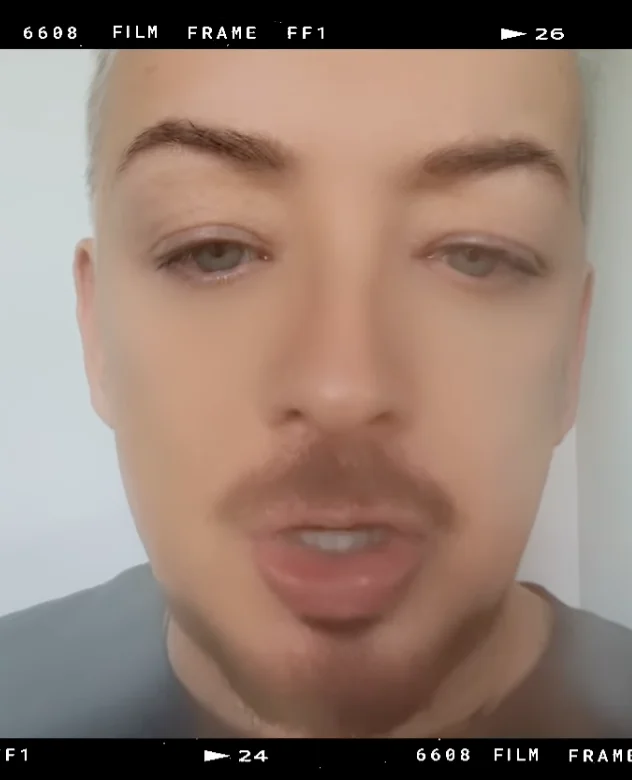
The acclaimed pop icon Boy George, born George Alan O’Dowd, has ignited a significant and rapidly unfolding controversy following the release of an AI-generated track, "We Will Dance Again," which he describes as pro-Israel. This singular artistic decision has cascaded into a series of professional setbacks, including his withdrawal from a prominent theatrical production and the severing of ties with his indie label manager, alongside a highly public and acrimonious online feud with fellow musicians. The incident highlights the volatile intersection of celebrity activism, artificial intelligence in creative industries, and the increasingly polarized landscape of public discourse.
Genesis of the Controversy: The AI-Generated Pro-Israel Track
The catalyst for the current storm was Boy George’s announcement and subsequent release of "We Will Dance Again." The track, created with the assistance of artificial intelligence, immediately drew attention not only for its technological origin but, more significantly, for its explicit pro-Israel stance. In an era marked by heightened geopolitical sensitivities, particularly surrounding the Israeli-Palestinian conflict, an artist of Boy George’s stature publicly aligning with a specific side via new music was bound to provoke strong reactions. The use of AI in its creation further complicated matters, tapping into ongoing debates within the music industry regarding artistic integrity, intellectual property, and the role of human creativity in an increasingly automated world. While specific lyrics of "We Will Dance Again" were not extensively detailed in initial reports, the stated intent behind the song—to "stand up for [his] Jewish friends"—set the tone for the ensuing debate.
Professional Repercussions: Stage Exit and Managerial Split
The immediate professional consequences for Boy George were swift and impactful. Within days of the track’s announcement, it was confirmed that he had pulled out of a scheduled production of Andrew Lloyd Webber’s iconic rock opera, Jesus Christ Superstar. While the official reasons for his withdrawal were not fully elaborated, the timing strongly suggested a connection to the burgeoning backlash against "We Will Dance Again." Boy George’s participation in such a high-profile theatrical role would have placed him firmly in the public eye, and the controversy likely created an untenable environment for both the artist and the production. His exit from Jesus Christ Superstar marked a significant professional blow, disrupting a planned engagement in a critically acclaimed and commercially successful show.
Further illustrating the depth of the professional fallout, Boy George also announced a parting of ways with Tony Pontius, the long-standing manager of his independent record label, Boy George Presents (BGP). According to a statement shared by Boy George on social media on July 31, 2026, the split occurred due to Pontius’s unequivocal refusal to release "We Will Dance Again" through the label. Boy George quoted Pontius as stating, "I want nothing to do with this song," to which the artist responded, "ok, we are done." In his post, Boy George invoked Buddhist principles, stating, "In Buddhism we understand that every action comes with a consequence. Due to my decision to stand up for my Jewish friends I am losing a few people from my life." He characterized Pontius’s stance as "gutless" but affirmed his unwavering faith in humanity and truth. This development forced Boy George to independently release the AI reggae track on Bandcamp, bypassing traditional label distribution channels and underscoring the severity of the internal dissent his controversial song had generated.
The Broader Context of AI in Music
The use of AI in "We Will Dance Again" is not an isolated incident but rather a symptom of a rapidly evolving technological landscape within the music industry. Artificial intelligence tools are increasingly being employed for various aspects of music production, from composition and arrangement to vocal generation and mastering. While proponents highlight AI’s potential to democratize music creation and inspire new artistic forms, a significant portion of the creative community and industry stakeholders express deep reservations. Concerns range from the erosion of human artistry and authenticity to complex issues of copyright infringement, fair compensation for original works used in AI training data, and the potential for AI-generated content to dilute the market with derivative or ethically questionable material.
Boy George’s utilization of AI for a politically charged song amplifies these concerns. It raises questions about the artistic responsibility when deploying such tools, particularly for content that is inherently divisive. Critics often argue that while AI can mimic styles and generate content, it lacks the lived experience and emotional depth that traditionally define human artistic expression, especially in sensitive thematic areas. This specific instance serves as a high-profile case study in the ongoing debate, pushing the boundaries of what constitutes "authorship" and accountability in the age of artificial intelligence.
Escalating Feuds: Sean Dickson and MC Kinky
Beyond the professional consequences, Boy George has found himself embroiled in a bitter public feud with Sean Dickson, former lead singer of the early ’90s Scottish rock band The Soup Dragons, now known as DJ and producer HiFi Sean. Dickson was among the early and vocal critics of Boy George’s AI-generated track, initiating a social media exchange that quickly spiraled into personal attacks.
On July 29, 2026, Boy George initially posted a tweet, stating, "Sean, if I was only thinking of myself I would just say nothing. It would be much easier but the interesting thing for me is the verbal attacks from gay people. Proving to some extent that these accusations of community are just a farce. The question I would ask you is what are…" This indicated an existing tension.
The conflict intensified when Dickson clarified his criticism on social media, asserting on August 1, 2026, that his initial concerns were not about "Gaza or Israel politics ever regarding @BoyGeorge." Instead, Dickson specifically targeted Boy George’s alleged support for a "regime that denies the help to AIDS charities and their patients." Dickson, identifying as a "gay / queer ‘supposed’ icon," expressed shame on behalf of Boy George, arguing that the controversy was not as politically divisive as Boy George was portraying. He further accused Boy George of blocking him on Instagram and subsequently "ripping him to shreds with accusations that are wrong," labeling the behavior as "very sad really. And pathetic."
Boy George’s response to Dickson’s criticism was to release another AI-generated track, this time a direct diss track aimed at Dickson. He posted snippets of the song on Instagram, featuring lyrics such as: "Jealousy has got you where you are / It’s not hard to be bitter / Look how well you do it / Get out your computer / And pretend to be a DJ." The lyrics mock Dickson’s current career as a DJ and producer, implying his criticism stems from envy.
In the accompanying Instagram caption for the diss track, Boy George broadened the scope of his attack, implicating reggae musician Caron Geary, also known as MC Kinky. Geary is a former collaborator of Boy George and, by implication, also a critic of "We Will Dance Again." Boy George wrote: "The friends of Caron Geary are out in force again while she continues to spread lies about me which could get her into serious legal trouble. Although I’m not sure she has a pot to piss in or a window to throw it out of. Low Fi Sean has come at me out of nowhere for defending my Jewish friends but it turns out he is best mates with creepy Caron who has forgotten that the only reason anyone knows her is me." He then launched a highly personal attack on Geary, making unsubstantiated claims about "black face masks" and threatening legal action: "What a shame, she was amazing but with her ‘black face’ masks she would be cancelled if anyone knew who she was. Talk about partners in slime. Any more crap from you Caron and I will take legal action. I am not joking." This further escalated the personal nature of the conflict, dragging a third party into the public spat and introducing accusations that carry significant social and legal weight.
Analysis of Implications and Broader Impact
The unfolding saga surrounding Boy George carries several significant implications for his career, the music industry, and the landscape of celebrity engagement with political issues:
-
Artistic Freedom vs. Responsibility: The controversy reignites debates about the boundaries of artistic freedom, particularly when art intersects with highly sensitive political conflicts. While artists are generally afforded creative liberty, public figures face increased scrutiny and accountability for the messages they convey, especially those that can be perceived as inflammatory or divisive.
-
The Double-Edged Sword of Social Media: Boy George’s use of social media to announce his artistic and professional decisions, engage with critics, and launch counter-attacks underscores its power as both a direct communication channel and a breeding ground for escalating conflict. The immediacy and public nature of platforms like X (formerly Twitter) and Instagram mean that disputes can spiral rapidly, often bypassing traditional media filters.
-
AI’s Role in Content Creation: This incident serves as a stark reminder of the ethical and reputational risks associated with using AI in creative works, especially when the content is controversial. The "AI-generated" label can itself become a point of contention, adding another layer to the criticism beyond the song’s thematic content. As AI tools become more sophisticated, the industry will need to grapple with clearer guidelines for their ethical deployment.
-
Celebrity Activism and Endorsements: Boy George’s explicit "pro-Israel" stance positions him firmly in a highly contentious geopolitical debate. While some celebrities embrace such roles, others navigate these waters with extreme caution. His decision highlights the potential for significant backlash and professional disruption when an artist takes a definitive public stance on a globally sensitive issue, particularly one that is deeply polarizing. The perceived alignment with one side in a conflict often leads to alienation from segments of the audience or professional network that hold opposing views.
-
Impact on Boy George’s Legacy: Boy George has cultivated a career spanning decades, marked by musical innovation, a distinctive public persona, and a pioneering role as an openly gay icon. This current controversy, particularly the public feuds and the nature of his responses, risks impacting how his legacy is perceived. Critics suggest that his use of AI for diss tracks and the personal nature of his attacks could detract from his established artistic reputation.
The drama surrounding Boy George’s AI-generated pro-Israel track is far from over. It represents a complex confluence of technological advancement, political statement, personal dispute, and professional reckoning, all playing out on the unforgiving stage of social media and public opinion. The unfolding events will undoubtedly continue to generate discussion regarding the responsibilities of artists, the ethics of AI, and the increasingly intertwined nature of celebrity, politics, and technology.
