

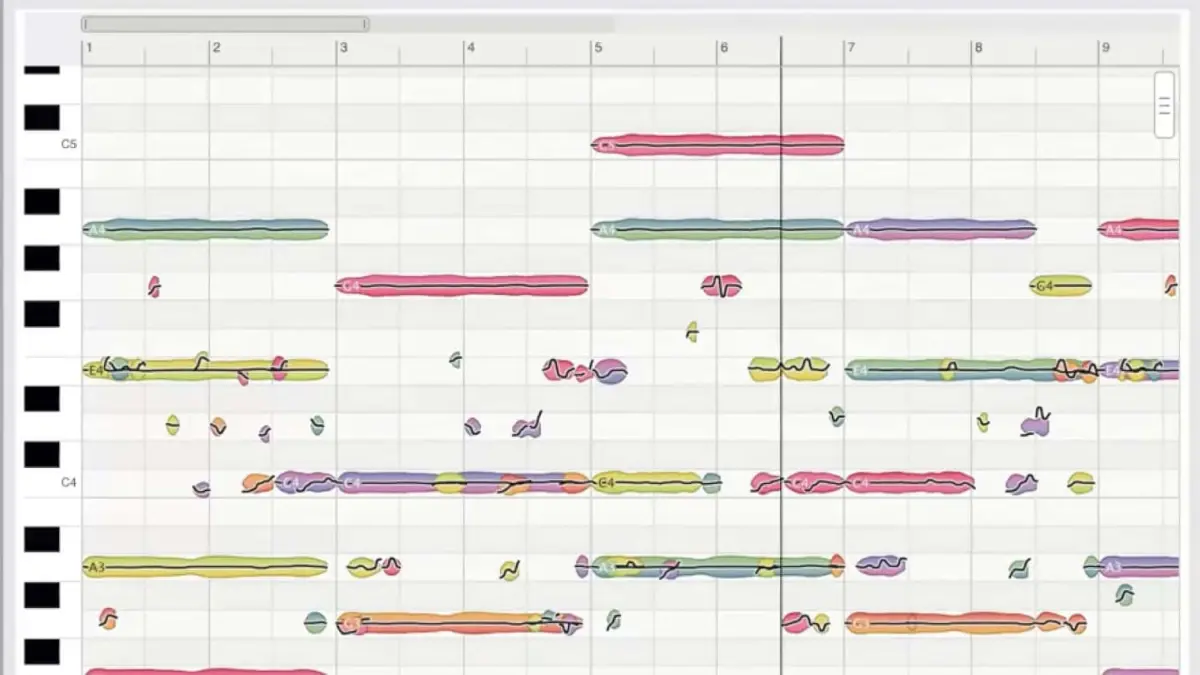
The landscape of digital audio workstation (DAW) tools has undergone a significant transformation with the release of Bubblegum, a sophisticated, free polyphonic pitch editing plugin designed for Linux, macOS, and Windows. Developed to address a specific gap in the freeware market, Bubblegum provides musicians and sound engineers with the ability to manipulate individual notes within polyphonic recordings—a feat traditionally reserved for high-priced, industry-standard software such as Celemony’s Melodyne. By offering features such as pitch shifting, time stretching, and note-tuning within complex chords, the plugin represents a democratization of advanced digital signal processing (DSP) technology.
Technical Capabilities and Core Functionality
Bubblegum operates as a comprehensive pitch and time manipulation suite. Its primary draw is its polyphonic capability, which allows the software to analyze an audio file and identify individual notes even when they are played simultaneously, such as in a guitar strum or a piano chord. Once these notes are identified, the user can interact with them via a visual interface that represents audio as "blobs" on a piano roll.
The plugin provides three primary modes of manipulation. First is pitch correction, which enables users to snap notes to a specific scale or fine-tune them to a precise frequency. This is essential for correcting minor performance errors in vocal takes or instrumental recordings. Second is time stretching, allowing users to alter the duration of a specific note without affecting its pitch, or vice versa. Third is the ability to move notes entirely, changing the melodic or harmonic structure of a recorded performance after the fact.
The user interface of Bubblegum is designed for transparency and ease of use, mimicking the workflow of established premium tools. By integrating seamlessly into various DAWs through standard plugin formats, it allows for a non-destructive editing environment. This means that the original audio remains intact while the plugin applies real-time or rendered changes based on the user’s manual adjustments.
The Evolution of Pitch Correction Technology
To understand the significance of Bubblegum’s release, one must look at the history of pitch correction in the music industry. Pitch manipulation first entered the mainstream in the late 1990s with the introduction of Antares Auto-Tune. Initially, these tools were strictly monophonic, meaning they could only process one note at a time, such as a single vocal line or a solo flute.
The breakthrough in polyphonic editing occurred in the late 2000s when Celemony introduced Direct Note Access (DNA) technology. This allowed engineers for the first time to reach "inside" a mixed audio file and change a single out-of-tune note within a chord. For over a decade, this technology was proprietary and expensive, often costing hundreds of dollars for the full version.
The arrival of Bubblegum marks a pivotal moment in this chronology. It signifies that the complex algorithms required for spectral analysis and polyphonic resynthesis have become accessible enough for independent developers to offer them for free. This shift follows a broader trend in the software industry where complex tools—once the exclusive domain of professional studios—are being made available to the "bedroom producer" community.
Cross-Platform Availability and System Integration
One of the most notable aspects of the Bubblegum release is its comprehensive platform support. While many audio plugins focus on Windows and macOS, Bubblegum includes native support for Linux. The Linux audio community has historically been underserved by major plugin manufacturers, often forced to rely on open-source alternatives that may lack the polished user interfaces or advanced features of their commercial counterparts.
The plugin’s availability on Linux is indicative of the growing professionalization of the Linux audio ecosystem, supported by DAWs like Bitwig Studio, Reaper, and Ardour. By providing a unified experience across all three major operating systems, the developers of Bubblegum ensure that project files and workflows can be shared between different environments without compatibility issues.
Technical specifications suggest that Bubblegum is optimized for modern hardware, utilizing efficient DSP routines to minimize CPU overhead. This is a critical factor for pitch editors, as the process of "de-mixing" audio and resynthesizing it in real-time is computationally intensive. The developer has prioritized a lightweight footprint, ensuring that the plugin can run on both high-end studio machines and modest laptop setups.
Market Impact and the Democratization of Audio Tools
The release of a free polyphonic pitch editor carries significant implications for the music production market. For years, the barrier to entry for professional-grade pitch editing was financial. Students, hobbyists, and independent creators often had to settle for basic monophonic tools or manual "cut-and-pitch" techniques that were time-consuming and often resulted in audible artifacts.
Industry analysts suggest that the introduction of high-quality free alternatives like Bubblegum puts pressure on commercial developers to innovate further. When features that were once considered "premium" become available at no cost, commercial entities must justify their price points through superior workflow integration, additional AI-driven features, or expanded sound libraries.
Furthermore, Bubblegum’s release aligns with the "open" movement in music technology. While the plugin itself may or may not be open-source depending on its specific licensing, its existence as a free resource encourages a culture of accessibility. It allows creators from lower-income backgrounds to achieve the same "polished" sound that was previously the hallmark of big-budget productions.
User Reactions and Community Reception
Initial reactions from the online music production community have been overwhelmingly positive. Early adopters have praised the plugin for its intuitive layout and the transparency of its pitch-shifting algorithms. On platforms like Reddit’s r/Logic_Studio and various Linux audio forums, users have noted that while the plugin is "inspired" by Melodyne, it maintains its own identity and workflow logic.
Some professional engineers have pointed out that while Bubblegum may not yet have the deep "spectral editing" or "formant shifting" capabilities of the $600 versions of commercial competitors, it covers 90% of the needs for standard pitch correction tasks. The ability to quickly fix a flubbed note in a guitar recording or slightly adjust the timing of a piano chord without re-recording the entire take is a massive utility for any producer.
Feedback from the Linux community specifically highlights the importance of having a reliable, visual pitch editor that does not require complex "Wine" layers or bridges to run Windows-based software. This native support is seen as a major win for the stability of Linux-based studio setups.
Future Implications for Digital Signal Processing
The technology behind Bubblegum—often referred to as "Source Separation" or "Spectral Deconvolution"—is at the forefront of modern audio research. As machine learning and artificial intelligence continue to evolve, we can expect tools like Bubblegum to become even more accurate.
In the near future, the logic used in polyphonic pitch editing may expand into automated transcription (turning audio into MIDI with 100% accuracy) or advanced "un-mixing" services where vocals, drums, and instruments can be perfectly isolated from a single stereo track. Bubblegum serves as a foundational tool in this trajectory, proving that these complex mathematical processes can be packaged into a user-friendly plugin format.
Moreover, the rise of the CLAP (CLever Audio Plugin) format and the continued refinement of VST3 and AU standards mean that plugins like Bubblegum will likely enjoy long-term stability. The developer’s commitment to a free model suggests a focus on community building and perhaps a tiered approach to future updates, though no official announcements regarding a "Pro" version have been made.
Conclusion and Final Assessment
Bubblegum stands as a testament to the rapid advancement of audio software development. By providing a free, cross-platform, polyphonic pitch editor, the developers have removed one of the last remaining financial hurdles in the path of high-quality music production. Whether used for subtle correction or creative sound design, the plugin offers a level of control over audio that was unthinkable for a free tool just a few years ago.
For the professional, it represents a lightweight alternative for quick edits. For the student or hobbyist, it is an essential gateway into the world of professional-grade audio manipulation. As the plugin continues to be adopted by the global production community, it will likely become a staple in the digital toolkits of creators across Linux, Mac, and Windows platforms. The release of Bubblegum is not merely the launch of a new piece of software; it is a significant step toward an era where the quality of one’s music is determined by their creativity and skill, rather than the depth of their pockets.
