

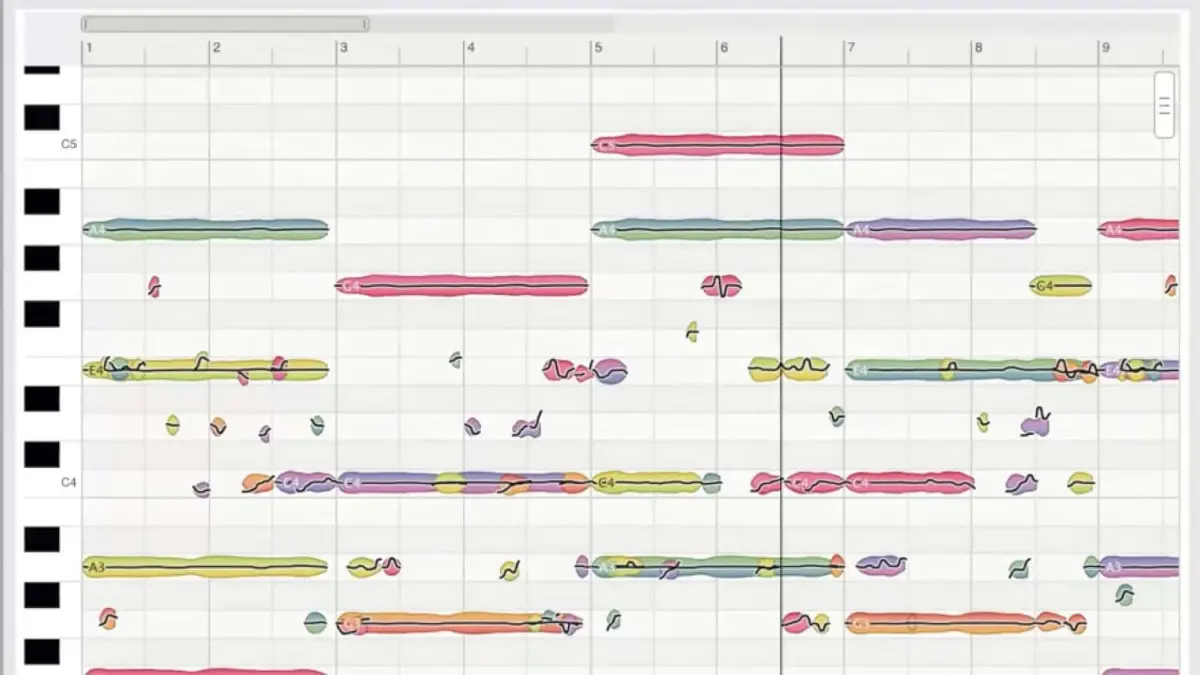
The landscape of digital audio workstations and signal processing has been fundamentally altered by the introduction of Bubblegum, a sophisticated polyphonic pitch editing plugin designed for Linux, macOS, and Windows environments. In an industry where high-end pitch correction and manipulation tools often command premium prices, Bubblegum emerges as a significant freeware entry, offering capabilities that were previously the exclusive domain of expensive proprietary software. The application provides users with the ability to move, tune, and stretch individual notes, even when those notes are embedded within complex polyphonic structures such as chords or layered instrumental recordings. This release represents a pivotal moment for independent producers and sound designers who require surgical precision in audio editing without the financial barriers typically associated with Direct Note Access (DNA) technologies.
Technical Capabilities and Core Functionality
Bubblegum is engineered to handle the complexities of polyphonic audio, a task that historically presented a significant challenge in digital signal processing. Unlike monophonic pitch editors, which track a single fundamental frequency—such as a solo vocal or a monophonic bass line—polyphonic editors must analyze a composite signal and identify multiple overlapping frequencies simultaneously. Bubblegum utilizes advanced spectral analysis to deconstruct audio files into their constituent "notes," allowing users to interact with the audio data in a way that resembles MIDI editing.
The primary feature set of Bubblegum includes three core manipulation types: pitch shifting, time stretching, and note positioning. Users can select individual notes within a recorded chord and adjust their pitch independently of the surrounding harmony. This allows for the correction of out-of-tune notes in a guitar recording or the creative transformation of a major chord into a minor chord after the recording session has concluded. Furthermore, the time-stretching capabilities allow for the lengthening or shortening of specific notes within a performance, enabling the correction of rhythmic inconsistencies or the creation of avant-garde temporal effects.
The Evolution of Polyphonic Pitch Manipulation
To understand the significance of Bubblegum’s release, one must look at the chronology of pitch correction technology. The field was revolutionized in the late 1990s with the advent of monophonic correction, most notably through Antares Auto-Tune and later Celemony Melodyne. However, for over a decade, these tools were limited to single-voice inputs. It was not until 2009 that Celemony introduced Direct Note Access (DNA), a breakthrough that allowed for the editing of individual notes within polyphonic audio.
For the past 15 years, the market for polyphonic editing has been relatively consolidated, with a small number of developers dominating the space due to the extreme mathematical complexity required for accurate note separation. The development of Bubblegum signals a shift in this hierarchy. By providing a free, cross-platform alternative that replicates the "blob-based" visual interface popularized by industry leaders, the developers of Bubblegum are democratizing a technology that was once restricted to high-budget professional studios.
Comparative Market Analysis and Pricing Structures
The release of Bubblegum provides a stark contrast to the existing commercial landscape of audio plugins. Professional-grade polyphonic pitch editors generally fall into several pricing tiers:
- Entry-Level Monophonic Tools: Typically priced between $50 and $100, these tools offer basic pitch correction but lack polyphonic capabilities.
- Mid-Tier Polyphonic Editors: Priced between $200 and $400, these versions offer polyphonic support but often limit the number of tracks or the depth of spectral manipulation.
- Professional Studio Suites: Ranging from $600 to $800, these comprehensive packages offer full polyphonic editing, multi-track integration, and advanced formant control.
By offering Bubblegum as a free download, the developers have eliminated the entry cost for polyphonic editing. While commercial products like Melodyne or Synchro Arts ReVoice Pro offer extensive feature sets including automatic vocal alignment and complex harmonic matching, Bubblegum focuses on the essential "move, tune, and stretch" workflow. This focus on core utility makes it an attractive option for students, hobbyists, and professional engineers who need a lightweight, functional tool for quick corrections.
Cross-Platform Integration and Linux Support
One of the most notable aspects of Bubblegum’s release is its native support for Linux, alongside Windows and macOS. Historically, the professional audio software industry has been slow to adopt Linux, largely due to the fragmented nature of the operating system’s audio drivers and the smaller market share compared to Apple and Microsoft. However, the rise of the CLAP (CLever Audio Plugin) standard and improvements in the VST3 framework on Linux have led to an increase in high-quality audio software for the platform.
Bubblegum’s availability on Linux is a major development for the open-source creative community. It fills a critical gap in the Linux audio ecosystem, which has long had powerful DAWs like Ardour and Bitwig Studio but lacked a dedicated, native polyphonic pitch editor. The plugin’s ability to run seamlessly across all three major operating systems ensures that projects can be moved between different studio environments without losing the ability to edit pitch data.
Workflow and User Interface Design
Bubblegum adopts a visual paradigm that is intuitive for modern music producers. The interface presents audio as a series of "blobs" on a pitch-versus-time grid, similar to a piano roll. This visual representation allows users to see the exact pitch drift and rhythmic placement of every note in a recording.
The workflow generally involves three steps:
- Analysis: The plugin analyzes the audio clip to identify individual notes and their harmonic content.
- Manipulation: The user interacts with the visual blobs to adjust pitch, duration, and timing.
- Rendering: The processed audio is played back in real-time or bounced down to a new audio file.
This non-destructive editing environment allows for experimentation. Producers can audition different harmonic arrangements or fix performance errors without permanently altering the original source material. The inclusion of "stretching" functionality is particularly useful for vocal production, where the duration of certain vowels or consonants needs to be adjusted to match the groove of a track.
Broader Implications for the Music Industry
The arrival of free, high-quality polyphonic editors like Bubblegum has several long-term implications for the music industry. First, it accelerates the "democratization of production." As the tools for high-end audio manipulation become available at no cost, the barrier to producing "radio-ready" content continues to lower. This allows artists from lower-income backgrounds or developing regions to compete on a more level playing field with established studio entities.
Second, the availability of such tools may influence the standard of performance expectations. With polyphonic correction becoming easily accessible, the "perfection" of instrumental recordings—once a labor-intensive process involving multiple takes—can now be achieved through post-production editing. While some critics argue this may lead to a loss of "human" feel in music, others see it as a powerful creative tool that allows for the realization of complex musical ideas that might be physically difficult to perform perfectly in a single take.
Community Response and Future Development
While official statements from the developer, yoursileis.art, emphasize the current utility of the plugin, the audio engineering community has already begun to speculate on future updates. Early adopters have noted that the plugin’s minimalist approach is its greatest strength, offering a fast learning curve compared to the dense manuals of its commercial counterparts.
Industry analysts suggest that the success of Bubblegum may prompt commercial developers to reconsider their pricing models or focus more heavily on AI-driven features that go beyond simple pitch and time manipulation. As machine learning becomes more integrated into audio processing, the next frontier for tools like Bubblegum will likely involve timbre shifting and automated harmonic suggestion.
Conclusion
Bubblegum stands as a testament to the evolving nature of software development in the music technology sector. By providing a robust, polyphonic pitch editor for free across Linux, Mac, and Windows, it challenges the traditional economic models of the audio industry. Whether used for subtle pitch correction in a jazz guitar solo or radical time-stretching in an electronic composition, Bubblegum provides a versatile and accessible solution for modern creators. As the software continues to circulate within the global production community, its impact on the accessibility of professional-grade audio editing will likely be felt for years to come.
