

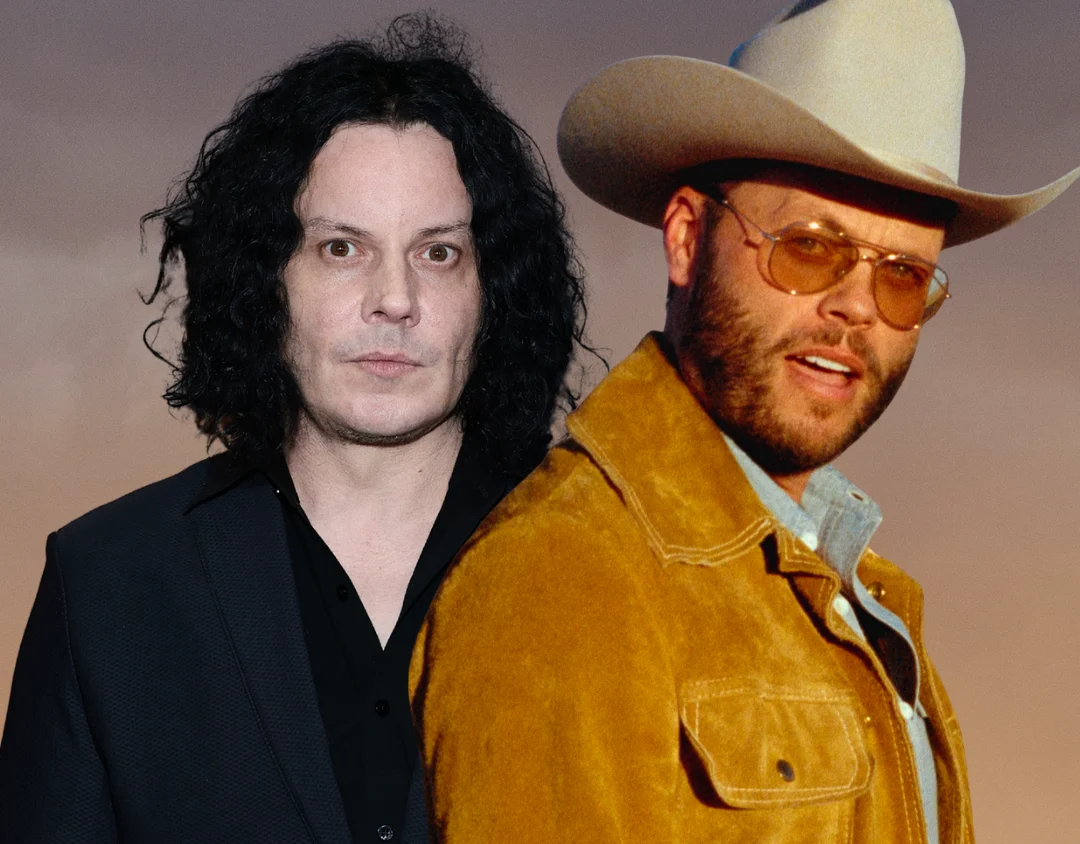
A public dispute has erupted between country musician Charley Crockett and rock icon Jack White, escalating from an initial controversy involving the band Twin Temple into a broader debate about artistic freedom, political activism, and authenticity within the music industry. The feud, which began last month, intensified with a series of pointed social media exchanges, revealing deep-seated differences in philosophy and career perception between the two artists. At its core, the conflict originated from Crockett’s decision to remove Twin Temple from his tour dates, reportedly due to their "Satanic imagery," a move that Jack White seemingly challenged by subsequently inviting the Los Angeles-based duo to open for one of his upcoming shows. This act of solidarity by White was met with swift condemnation from Crockett, igniting a fiery back-and-forth that has captivated fans and industry observers alike.
The Genesis of the Controversy: Twin Temple and Allegations of Censorship
The initial spark for this highly public disagreement was the unceremonious removal of Twin Temple from Charley Crockett’s tour itinerary. Twin Temple, known for their distinctive "Satanic doo-wop" sound and pronounced occult-themed aesthetic, reported last month that they were dropped from Crockett’s shows. While the band itself did not explicitly state Crockett’s reasons, media reports, including a piece by Stereogum, indicated that the decision was allegedly linked to their "Satanic imagery." This particular genre and visual presentation, characterized by dark liturgical attire, inverted crosses, and references to occult practices, is central to Twin Temple’s artistic identity, which they describe as "Satanic Mass."
However, Charley Crockett has since contested this widely circulated narrative. In a recent statement, he explicitly claimed that his decision to drop Twin Temple "had nothing to do with Satanic imagery." While he has not offered an alternative explanation for their removal, this denial adds a layer of ambiguity to the foundational event of the feud, suggesting that the initial perception of censorship might be a misrepresentation of his true motivations. Twin Temple, comprised of Alexandra and Zachary James, has garnered attention for their unique blend of 1950s rock-and-roll sensibilities with overt Satanic themes, releasing their new album, Doomed Lovers, in October. Notably, this album was produced by Shooter Jennings, an artist who also co-produced Crockett’s recently re-released record, Clovis, highlighting a tangential connection within their professional circles.
Jack White’s Intervention and Crockett’s Initial Indignation
The controversy took a significant turn when Jack White, the influential frontman of The White Stripes and a revered figure in alternative rock, entered the fray. In what was widely perceived as a direct response and a gesture of support for artistic freedom, White recruited Twin Temple to open for one of his upcoming shows in Los Angeles next month. This move by White was interpreted by many as an implicit rebuke of Crockett’s decision, championing the right of artists to express themselves without fear of reprisal, regardless of the perceived controversy of their chosen imagery or themes.
Charley Crockett did not take kindly to White’s intervention. Shortly after White’s announcement, Crockett publicly expressed his dismay, stating that he had "lost a lot of respect" for the White Stripes frontman. Crockett’s initial criticism extended beyond the immediate Twin Temple issue, delving into broader observations about White’s career and public persona. He specifically claimed that White "used to avoid political issues," implying a perceived inconsistency or hypocrisy in White’s recent actions compared to his past public engagements. This initial accusation laid the groundwork for a more personal and ideologically charged exchange, shifting the focus from the specific incident with Twin Temple to a wider critique of White’s artistic integrity and socio-political stances.
The Escalation: White’s "Rappin’ Duke" Retort
The dispute further intensified when Jack White responded to Crockett’s initial criticisms with a characteristically unconventional and somewhat enigmatic social media post. Taking to his platform, White addressed Crockett directly, writing, "I never said nothing about this young buck before but since he’s trying to drag me into this here rodeo again, here’s my official response to Cowboy Charley’s accusations." What followed was not a direct rebuttal in prose, but rather the full lyrics to Shawn Brown’s 1984 novelty rap song, "Rappin’ Duke."
"Rappin’ Duke" is a comedic parody of John Wayne, delivered in a distinctive, gruff vocal style mimicking the iconic actor. The song’s lyrics are largely boastful and self-aggrandizing, replete with declarations of toughness and dismissiveness towards perceived challengers. By deploying these lyrics, White’s response carried multiple layers of potential meaning. It could be interpreted as a sarcastic dismissal of Crockett’s criticisms, playfully mocking his "cowboy" persona while refusing to engage in a serious, direct debate. Alternatively, it might have been intended as a theatrical taunt, inviting Crockett to a "rodeo" of words in a manner consistent with the flamboyant, performance-driven aspects of White’s own artistic history. This indirect, almost artistic, response further fueled the public’s intrigue, setting the stage for Crockett’s subsequent, much more extensive, rebuttal.
Crockett’s Comprehensive Rebuttal: A Challenge to Authenticity and Ideology
In his latest and most detailed social media post, Charley Crockett, aged 42, launched a comprehensive counter-attack against Jack White, 51, addressing White’s "young buck" comment and expanding on his earlier accusations of hypocrisy. Crockett’s response was a multifaceted critique, touching upon his own prolific career, his distrust of media, White’s perceived political inconsistencies, and the broader commercial pressures within the music industry.
Crockett began by directly challenging White’s ageist slight: "Hey Jack, you might get 6 into me before I get 1 into you but I don’t miss. And actually I ain’t that young. I got 300 songs out and 150 unreleased plus a new record on the way which puts me about even with your entire career output in a third the time." This statement serves to establish Crockett’s credentials as a prolific artist, asserting his considerable output in a relatively shorter timeframe compared to White’s storied career. He then quoted Jay-Z, implying White’s naiveté: "you sound a little naive in those articles I read."
The critique then shifted to White’s perceived disconnect from political realities and media scrutiny. Crockett referenced White’s past comments about needing to stop watching the news, contrasting it with his own lifelong skepticism: "I was born in 1984 surrounded by cotton fields and I never trusted the media from the beginning. That goes for my whole generation old man. The younger they get the less they trust the machine." Crockett then listed a litany of historical and contemporary events – from the Epstein Files, the pandemic, 9/11, Gulf Wars, Net Neutrality, the telecommunications act, Vietnam, to the assassination of JFK – challenging White on what specific events triggered his alleged media disillusionment. This was a direct accusation that White’s political engagement was selective or belated, especially compared to Crockett’s own claimed consistent activism, citing his early record A Stolen Jewel.
Perhaps the most potent aspect of Crockett’s rebuttal was his accusation of ideological hypocrisy. He painted a picture of White as someone who might outwardly align with progressive icons like Che Guevara, Malcolm X, and Fred Hampton, yet simultaneously benefits from and embodies the very capitalist structures he might implicitly criticize: "Lemme guess, you got Che Guevara and Malcolm X on your shelf, maybe even Fred Hampton, but at the end of the day you get in the Lamborghini and put your kids in private school." This statement aimed to highlight a perceived disconnect between White’s public image and his personal lifestyle, questioning the authenticity of his political convictions.
Crockett further delved into the intricacies of the music industry, suggesting that both he and White have "seen behind the same curtain." He alluded to the compromises artists must make to achieve mainstream success: "if you don’t play it just like they say they’ll never let you on the radio. So how’d you get on there?" He contrasted this with his own independent stance, claiming that Universal Music Group (UMG) "hate me because they couldn’t own me."
Finally, Crockett returned to the core of the Twin Temple controversy, reiterating his belief that "some art kids lied for publicity at my expense and you poured gas on it stereotyping me at a glance." He accused White of "conveniently ignor[ing] the fact that they lied" and labeled this as "the same hypocrisy as the demagogues you claim to stand against." Crockett ended with a stark warning about the potential harm of public shaming, especially for younger artists, and a defiant challenge to White: "Lucky it was me, too strong to beat, around long enough not to let it kill me, but when that kind of public shame gets dumped on some poor kid who ain’t ready it might mean their life. Happens everyday big hoss. If you want the smoke, I’m your man." This concluding statement underscored the gravity of the dispute for Crockett, framing it not just as a personal feud but as a matter of principle concerning integrity and the power dynamics of public perception.
Background on the Artists: Contrasting Paths to Prominence
The public spat between Charley Crockett and Jack White highlights the contrasting trajectories and philosophies of two significant figures in contemporary music.
Charley Crockett, born in San Benito, Texas, has carved out a distinctive niche in the Americana, country, and blues landscape. His music, often described as "Gulf Coast country & soul," blends traditional sounds with a contemporary edge, drawing heavily from his diverse life experiences as a street performer, drifter, and independent artist. Crockett’s image is deeply rooted in authenticity and a working-class ethos. He is known for his prolific output, releasing numerous albums since his debut in 2015, often at a rate of one or two per year. His independent spirit and often critical stance on the music industry machine have become hallmarks of his persona, resonating with fans who value raw talent and unvarnished honesty. His recent album, The Man from Waco, received critical acclaim, further cementing his status as a unique voice in modern roots music.
Jack White, on the other hand, rose to international stardom as the frontman and creative force behind The White Stripes in the late 1990s and early 2000s. With a distinctive blend of garage rock, blues, and punk influences, The White Stripes became one of the most iconic bands of their generation. White’s career has since diversified, encompassing other successful projects like The Raconteurs and The Dead Weather, as well as a prolific solo career. Beyond his musical output, White is celebrated as a passionate advocate for analog recording, vinyl records, and independent artistry, famously establishing Third Man Records. While often seen as a champion of artistic integrity and unique talent, Crockett’s accusation regarding White’s past avoidance of political issues points to a perceived shift in White’s public engagement, which has become more overtly vocal on social and political matters in recent years. His decision to support Twin Temple, therefore, can be viewed through the lens of an artist who increasingly uses his platform to champion causes he believes in, particularly those related to artistic freedom.
Broader Implications and Industry Context
This public feud transcends a mere celebrity spat, touching upon several critical themes within the music industry and contemporary culture.
Artistic Freedom vs. Perceived Offense: The initial conflict with Twin Temple reignites the perennial debate about the boundaries of artistic expression. While Crockett denies his decision was due to "Satanic imagery," the public perception and White’s subsequent actions frame it within the context of whether artists should be penalized for challenging conventional sensibilities, particularly religious or moral ones. Twin Temple’s aesthetic, though theatrical, is an integral part of their artistic identity, raising questions about whether promoters and venues should dictate creative content.
Authenticity and Commercialism: Crockett’s pointed remarks about White’s "Lamborghini and private school" lifestyle juxtaposed with his perceived progressive leanings highlight a recurring tension in the arts: the struggle between maintaining artistic authenticity and navigating the commercial realities of a highly lucrative industry. Crockett, an artist often lauded for his independent spirit and grassroots appeal, positions himself as an outsider challenging the perceived compromises of mainstream success, a narrative that resonates with many fans wary of corporate influence in music.
The Role of Social Media as a Battleground: The entire exchange has unfolded predominantly on Instagram, underscoring the platform’s role as a primary arena for public disputes, artistic statements, and direct communication between artists and their audiences. This directness, while offering unfiltered access, also removes traditional media filters, allowing for rapid escalation and raw, unedited confrontations.
Inter-artist Solidarity and Disagreement: White’s decision to support Twin Temple can be seen as an act of industry solidarity, a veteran artist using his influence to uplift a younger, controversial act. However, Crockett’s reaction demonstrates that such solidarity is not universally appreciated, especially when it is perceived as an intervention based on incomplete information or a misreading of another artist’s motivations. This highlights the complex web of relationships and unspoken codes within the music community.
The Impact of Public Shaming: Crockett’s closing remarks about the potential for "public shame" to harm or even "kill" a young artist underscore a significant concern in the era of "cancel culture." While he asserts his own resilience, his warning serves as a broader commentary on the power of public opinion and media narratives, particularly when they are perceived as misinformed or driven by sensationalism.
As the dust settles on this latest exchange, the music world awaits any potential further responses from Jack White. The ongoing public dialogue between Charley Crockett and Jack White serves as a potent reminder that beneath the veneer of artistic collaboration and mutual respect, deeply held philosophical differences about art, politics, and integrity can erupt into highly public and passionately debated confrontations. This feud not only sheds light on the individual personalities of these two musicians but also reflects broader ideological currents flowing through the contemporary cultural landscape.
