

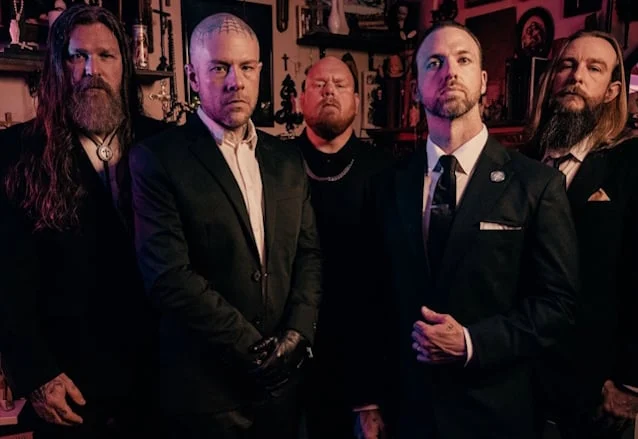
Christian metal band Demon Hunter, through its corporate entity Hyde Lane, has initiated legal proceedings against streaming giant Netflix, Netflix Studios, and live entertainment promoter AEG Presents, alleging that the defendants’ massively successful "KPop Demon Hunters" franchise has created a significant likelihood of consumer confusion and infringed upon the band’s long-established intellectual property rights. The lawsuit, filed in the Central District of California, marks a high-profile clash between a veteran independent music act and a global entertainment conglomerate over brand identity and market saturation.
The Genesis of the Dispute: A Tale of Two "Demon Hunters"
At the heart of the legal battle lies the starkly similar naming convention employed by both parties. Demon Hunter, a band formed nearly a quarter-century ago, has cultivated a dedicated global fanbase through a consistent output of a dozen studio albums, extensive touring, and merchandise sales. The band, a prominent force in the heavy music scene since its inception in 2002, has achieved considerable commercial success, with multiple albums charting on the Billboard 200, including two No. 1 Independent Albums and six Top 5 Hard Rock Albums. Their ongoing presence is further evidenced by a substantial monthly listener count of 350,000 on Spotify. Hyde Lane, the band’s corporate umbrella, officially registered the "Demon Hunter" trademark for live performances in 2014, later expanding these protections to encompass recorded music and merchandise in 2022.
The conflict arose following the release of Netflix’s film "KPop Demon Hunters" in late June 2025. The movie, lauded as the streamer’s most popular English-language film of all time, chronicles the clandestine double lives of the fictional K-pop group HUNTR/X, who secretly operate as elite demon hunters. The film’s success was meteoric, spawning a critically acclaimed soundtrack that garnered five Grammy nominations, and its hit single "Golden" secured an Academy Award for Best Original Song at the 98th Academy Awards. This cinematic triumph was further amplified by Netflix’s partnership with AEG Presents to launch a global "KPop Demon Hunters" concert tour, slated to commence in 2027 and span 150 cities worldwide.
Netflix subsequently filed ten applications with the U.S. Patent and Trademark Office in August 2025 for "KPop Demon Hunters" merchandise, a move that the lawsuit contends directly encroaches upon Demon Hunter’s established market presence.
Demon Hunter’s Allegations: A Deliberate Infringement for Profit
The lawsuit filed by Hyde Lane asserts that Netflix and its partners have "willfully disregarded the rights of others in pursuit of profits," while simultaneously "jealously guarding and enforcing their own intellectual property rights." The complaint meticulously details the band’s decades-long investment in building the "Demon Hunter" brand, arguing that they are the "senior user" with established goodwill.
According to the filing, the inclusion of the term "KPop" before "Demon Hunters" does not sufficiently differentiate the brands. Demon Hunter’s legal team argues that "KPop" is a generic descriptor, akin to suggesting that "KPop Metallica," "KPop U2," or "KPop Black Sabbath" would be acceptable alternatives for other established bands. The complaint states, "Simply put, Netflix is no more entitled to use the mark ‘KPop Demon Hunters’ than it would be to launch a recording artist, live touring show and merchandise under the marks ‘KPop Metallica,’ ‘KPop U2,’ or ‘KPop Black Sabbath.’"
The lawsuit emphasizes the "substantial likelihood of confusion" and claims that "actual confusion has already resulted." A particularly striking example cited is an incident in February 2026, where a consumer allegedly sought a refund for $500 tickets to a Demon Hunter concert in Albany, New York, having mistakenly believed they had purchased tickets for a "KPop Demon Hunters" event. An email included in the filing reads, "If I dont get it refunded I will not be able to purchase tickets to the actual ‘K pop demon hunters show.’"
Furthermore, Demon Hunter contends that Netflix’s "superior resources and reach" are actively eclipsing the band’s own brand identity. The complaint argues that the streaming giant’s overwhelming market presence effectively "misappropriates the marks’ source-identifying significance," leading consumers to perceive Demon Hunter as affiliated with, sponsored by, or derived from the Netflix franchise, thereby diminishing the band’s autonomy over its commercial destiny. The lawsuit underscores the band’s perspective that the "brand that Hyde Lane has carefully built over the course of the past quarter century now faces an existential crisis."
Netflix’s Firm Rebuttal: Allegations Deemed "Without Merit"
In response to the lawsuit, a spokesperson for Netflix issued a decisive statement asserting that the allegations are "without merit." The streaming service defended its "KPop Demon Hunters" franchise, characterizing it as an "Academy Award-winning global phenomenon that has inspired fans around the world with its powerful music, storytelling, and characters." Netflix expressed its intention to "vigorously defend this matter."
The statement highlights the significant cultural impact and critical acclaim of the "KPop Demon Hunters" film and its associated elements, implicitly suggesting that its established success and distinct identity should not be challenged by a music group. The reference to the film’s Oscar win underscores its prominent position in mainstream entertainment.
A Timeline of Brand Evolution and Escalation
The legal dispute unfolds against a backdrop of distinct, yet increasingly overlapping, brand development timelines:
- Prior to 2002: The conceptualization and formation of the Christian metal band DEMON HUNTER.
- 2002: DEMON HUNTER officially emerges as a musical act, beginning its career.
- 2014: Hyde Lane, the corporate entity for DEMON HUNTER, successfully registers the "Demon Hunter" trademark specifically for entertainment services, including live performances.
- 2014-2022: DEMON HUNTER continues to release music, tour extensively, and build its brand through merchandise and dedicated fan engagement.
- 2022: Hyde Lane expands its trademark protections for "Demon Hunter" to include recorded music and merchandise, solidifying its commercial interests across various product categories.
- August 2025: Netflix initiates filings for ten trademark applications under the U.S. Patent and Trademark Office for "KPop Demon Hunters," targeting merchandise.
- Late June 2025: The film "KPop Demon Hunters" premieres on Netflix, rapidly achieving widespread popularity and critical recognition.
- September 2025: DEMON HUNTER releases its twelfth studio album, "There Was A Light Here."
- February 2026: An alleged incident of consumer confusion leads to a refund request for concert tickets, as documented in the lawsuit.
- August 18 (Year Not Specified, Assumed Current Year): Hyde Lane files a lawsuit against Netflix, Netflix Studios, and AEG Presents in the Central District of California.
Broader Implications and Market Dynamics
This legal confrontation brings to the forefront critical questions regarding intellectual property, brand dilution, and the challenges faced by independent artists in an era of massive media consolidation. The case highlights the potential for confusion when similar names are applied to distinct yet potentially intersecting entertainment products.
For independent artists and established bands, the "Demon Hunter" lawsuit serves as a stark reminder of the importance of robust trademark protection and the need for vigilance against potential infringements. The band’s long history and consistent investment in its brand are central to its claim of being the "senior user."
From Netflix’s perspective, the defense of its "KPop Demon Hunters" franchise underscores its commitment to protecting its creative and commercial investments. The streaming giant’s assertion of the franchise’s unique artistic merit and global appeal suggests a belief that the brand has achieved a level of distinctiveness that transcends simple name similarity.
The involvement of AEG Presents, a major player in the live entertainment industry, further broadens the scope of the dispute, indicating that the conflict extends beyond digital streaming to encompass live performances and global touring. The concert tour, with its ambitious 150-city plan, represents a significant commercial undertaking that, if impacted by the lawsuit, could have far-reaching consequences.
The court’s eventual decision in this case could set important precedents for how intellectual property rights are navigated in the increasingly interconnected digital and entertainment landscapes, particularly concerning the balance between established artist brands and new, high-profile media ventures. The outcome will be closely watched by artists, record labels, and major entertainment corporations alike, as it will undoubtedly influence strategies for brand management and legal recourse in future disputes. The lawsuit seeks injunctive relief to prevent Netflix from using the "KPop Demon Hunters" name for recorded music, live shows, and merchandise, in addition to unspecified damages.
