

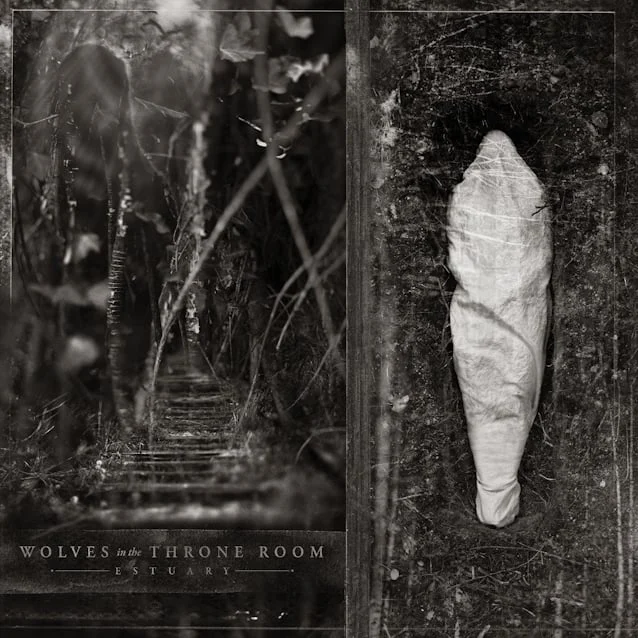
The acclaimed purveyors of atmospheric black metal, Wolves in the Throne Room, are poised to reassert their dominance in the genre with the imminent release of their highly anticipated seventh studio album, "Estuary." Scheduled for a worldwide launch on October 23rd, 2026, via the venerable Relapse Records, this new offering promises to be their most ambitious and genre-bending work to date, a testament to their enduring commitment to visceral, analog production and unwavering artistic vision. The band, renowned for their pioneering contributions to the USBM (United States Black Metal) scene, has consistently pushed the boundaries of their sound, and "Estuary" is poised to continue this trajectory, delving into themes of post-apocalyptic landscapes, emergent spirituality, and the primal interplay between the natural and the artificial.
A Glimpse into the Post-Civilizational Soundscape
Frontman and principal songwriter Nathan Weaver has offered a profound conceptual framework for "Estuary," situating the album’s narrative one thousand years into the future, long after the collapse of modern civilization. This future is depicted as a desolate realm inhabited by survivors navigating the spectral remnants of a fallen world. The lyrical tapestry weaves tales of mutant creatures, interdimensional portals, and the genesis of new, untamed religions taking root in a radically transformed natural environment. "Our new LP ‘Estuary’ is set 1000 years in the future after the end of civilization," Weaver explained. "Survivors of a cataclysm wander the haunted ruins. It is a world of mutant creatures and open portals. Post-apocalyptic religion takes form in a wild landscape."
This conceptual bedrock directly informs the sonic architecture of "Estuary." The album is characterized by a palpable rawness and an intensified volatility, incorporating the storming sensuality of noisy industrial elements that coalesce with the organic textures of rain-drenched forests and the ethereal glow of diffused starlight. The band’s signature sonic intensity is amplified by massive percussion, designed to obliterate any sense of stagnation in the listener’s psyche, and seething gothic guitars that aim to transform individuals into active conduits of evolutionary thought. This meticulous sonic construction aims to mirror the album’s thematic exploration of the tension between stillness and noise, the animalistic and the mechanical, the elemental forces of nature and the pervasive influence of electricity, and the nascent sophistication inherent in humanity’s mysterious origins.
Weaver further elaborated on the significance of the album’s title and its conceptual implications. "If wilderness overcame the cities in the future, the estuaries would be realms of power and magic," he stated. "Within the album’s world-building, the estuaries are key nexus points where magic has taken on physical form. Spirits good and evil walk the earth." This evocative imagery suggests a world where the boundaries between the physical and the metaphysical have blurred, where ancient energies surge through the detritus of human endeavor, and where the natural world reclaims its dominion with a potent, almost supernatural force.
Genesis of "Estuary": Production and Personnel
The creation of "Estuary" was a deeply immersive and hands-on process, reflecting Wolves in the Throne Room’s steadfast dedication to analog techniques and the tangible craft of music production. The band itself helmed the production duties, ensuring that every sonic detail meticulously aligned with their artistic vision. The crucial element of the low-end frequencies was expertly handled by touring bassist Galen Baudhuin, a musician known for his work with Aridus and Street Tombs, who injected a devastating sub-terranean depth into the album’s sonic foundation.
The majority of "Estuary" was recorded at the band’s own sanctuary, Owl Lodge studio, located in Olympia, Washington. This intimate setting has long been a creative hub for the band, allowing for an unhurried and focused approach to songwriting and recording. The vital rhythmic backbone of the album was captured at The Unknown, a unique recording facility in Anacortes, Washington. The Unknown, a converted former church, offers a distinctive acoustic environment, and the drums were expertly tracked by Nicholas Wilbur, whose work has contributed to the distinctive sonic character of numerous Pacific Northwest metal releases. The choice of these studios and engineers underscores the band’s commitment to organic sound capture and a rejection of overly processed or digital aesthetics.
"Ghosts Among The Obelisks": First Single and Visual Narrative
Accompanying the album’s announcement, Wolves in the Throne Room released the first single, "Ghosts Among The Obelisks," along with a compelling music video. The visual narrative depicts a solitary warrior undertaking a pilgrimage, journeying from the desolate lowlands of a forgotten past to a remote mountain sanctuary. This arduous trek takes the protagonist through the spectral ruins of bygone eras, places now haunted by the lingering presence of ancient spirits. The video masterfully conveys a sense of profound temporal decay, where the earth patiently reclaims the remnants of human ambition, and the distant memory of the old world has dissolved into the realm of myth and legend. The visual aesthetic, characterized by sweeping landscapes and an almost palpable sense of solitude, perfectly complements the album’s thematic concerns.
Track Listing and Anticipation
The full track listing for "Estuary" has been revealed, offering fans a clear roadmap of the sonic journey that awaits them:
- Estuary
- Knights Of Tiamat
- Foretold In Reflections
- The Orca Cliffs
- Ghosts Among The Obelisks
- Wretched Spirits, Land Of Light
The concise yet impactful tracklist suggests a tightly curated experience, with each song potentially serving as a distinct movement within the album’s overarching narrative. The titles themselves evoke a sense of ancient lore, elemental power, and spectral encounters, further solidifying the album’s rich conceptual depth.
Historical Context and Genre Significance
Wolves in the Throne Room emerged in the early 2000s, quickly becoming a cornerstone of the burgeoning American black metal scene. Their early work, characterized by its raw aggression, atmospheric passages, and a distinct embrace of natural imagery, set them apart from their European counterparts. Albums like "Diadem of Epiphany" (2004), "Two Hunters" (2007), and "Black Cascade" (2009) established their signature sound, often incorporating elements of shoegaze and post-rock, creating a more expansive and emotionally resonant form of black metal.
Their influence on subsequent generations of black metal musicians cannot be overstated. They demonstrated that the genre could be both intensely brutal and profoundly beautiful, capable of evoking a wide spectrum of human emotion and exploring complex philosophical and environmental themes. Their commitment to analog recording and their often esoteric lyrical themes have cultivated a dedicated fanbase that values authenticity and artistic integrity.
The decision to release "Estuary" through Relapse Records is a significant one. Relapse has a long-standing reputation for releasing groundbreaking and influential music across a spectrum of heavy genres, including a substantial catalog of seminal black metal albums. This partnership signals a strong belief in the artistic merit and commercial potential of "Estuary" within the international metal community.
Broader Implications and Future Trajectory
The release of "Estuary" arrives at a time when the themes of environmental collapse, societal upheaval, and the search for meaning in a fragmented world are more resonant than ever. Wolves in the Throne Room’s exploration of a post-civilizational future can be interpreted as a potent commentary on contemporary anxieties, offering a sonic space for reflection and catharsis. The album’s emphasis on the resurgence of natural forces and emergent spiritualities may resonate with a growing audience seeking alternatives to mainstream narratives and a deeper connection to the planet.
The band’s continued dedication to analog production and their refusal to compromise their artistic vision in favor of trends position them as enduring figures in the extreme music landscape. "Estuary" is not merely an album; it is an invitation to immerse oneself in a meticulously crafted sonic universe, a testament to the enduring power of art to explore the darkest and most profound aspects of the human condition and our relationship with the natural world. The anticipation for "Estuary" is palpable, and its release is expected to be a major event within the black metal community and beyond, further solidifying Wolves in the Throne Room’s legacy as pioneers and innovators. The visual elements accompanying the release, particularly the music video for "Ghosts Among The Obelisks," suggest a holistic artistic statement, where sonic and visual narratives converge to create a powerful and immersive experience for the listener and viewer alike. The band’s ability to consistently deliver conceptually rich and sonically compelling works ensures that their impact on the genre will continue to be felt for years to come.
