

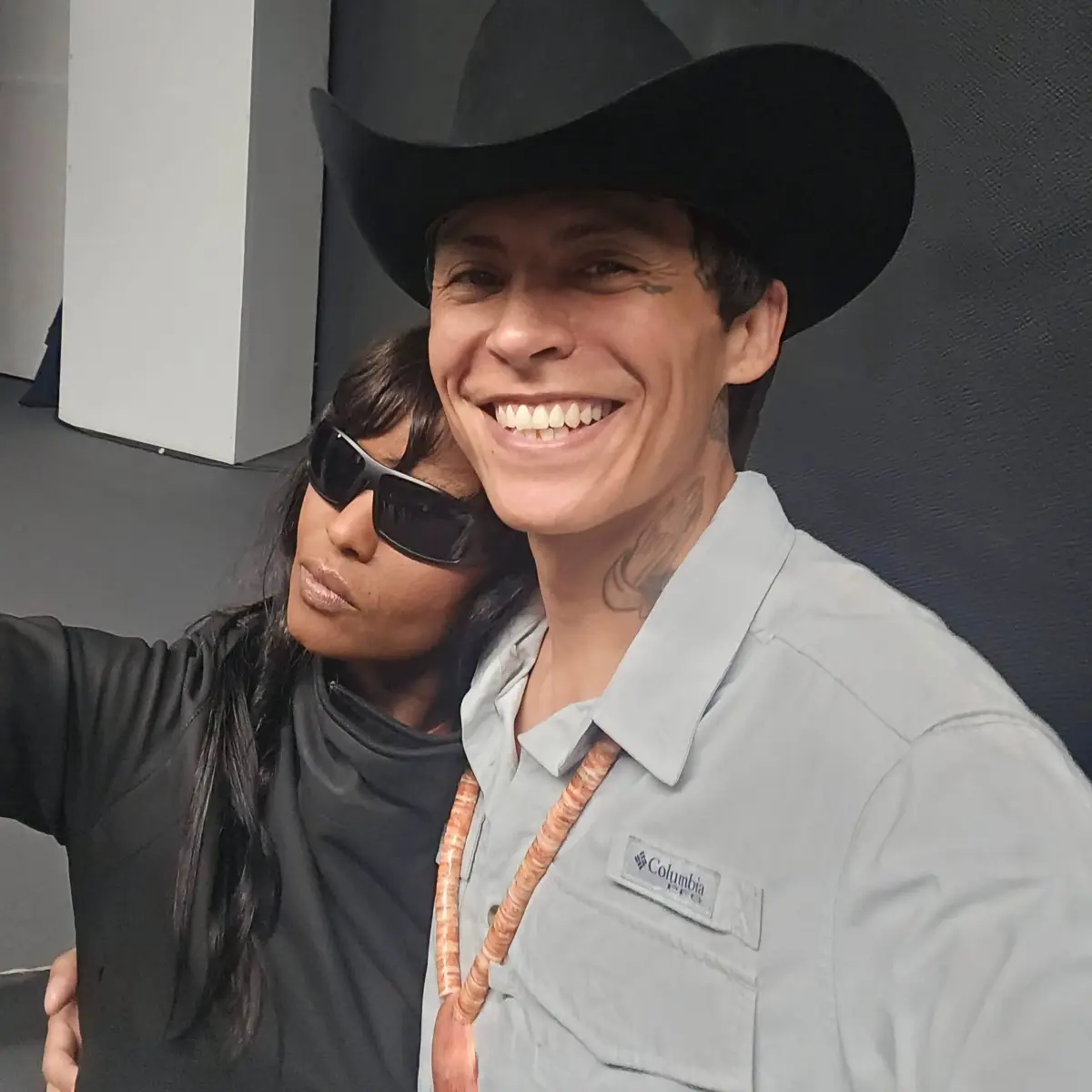
The prolific artistic trajectory of Chuquimamani-Condori, an artist whose work has consistently challenged genre conventions and infused electronic music with profound cultural narratives, reached another significant milestone this week with the unexpected release of eight new edits of tracks by acclaimed vocalist Kelela. This collection, made available directly to the public via a Mediafire link shared on Chuquimamani-Condori’s Instagram, marks a poignant continuation of a collaborative relationship that spans nearly a decade, intertwining the experimental soundscapes of both artists with themes of gratitude and mutual support, encapsulated in the Andean concept of "ayni."
Ayni: The Ethos Behind the Release
The release was accompanied by a message from Chuquimamani-Condori, stating, "Sharing some Kelela edits from old dj sets over the years – this is my ayni to you Kelela, an unpayable debt for your generosity." This invocation of "ayni" is central to understanding the cultural and artistic context of this offering. Ayni, a foundational principle in Andean Indigenous communities, particularly among the Aymara people from whom Chuquimamani-Condori descends, denotes a system of reciprocal exchange, mutual aid, and collective responsibility. It signifies an "unpayable debt" not in a negative sense, but as an ongoing commitment to reciprocity, where acts of generosity are met with reciprocal support, fostering community and solidarity. By framing the release of these edits within the framework of ayni, Chuquimamani-Condori elevates the artistic exchange beyond mere collaboration, positioning it as a deeply ingrained cultural practice that honors sustained creative partnership and shared spirit. This perspective underscores a broader movement within contemporary art to integrate Indigenous philosophies and worldviews, offering alternatives to conventional commercial models of production and distribution.
Chuquimamani-Condori’s Ascendant Influence: 2025 and Beyond
The past two years have witnessed an extraordinary acceleration in Chuquimamani-Condori’s already impactful career. While 2025 was widely heralded by critics and listeners alike as "the year of Chuquimamani-Condori," a period marked by significant critical acclaim and an expanding global audience for their unique sound, 2026 has proven to be equally momentous. Their work, often characterized by its intricate blend of traditional Andean sounds, experimental electronics, deconstructed club rhythms, and poignant political commentary, has resonated deeply across diverse musical landscapes.
Central to their recent output is Los Thuthanaka, the collaborative project with their brother, Joshua Chuquimia Crampton. The duo’s "wonderful Wak’a EP," released earlier this year, further solidified their reputation for crafting deeply atmospheric and rhythmically complex soundscapes that transcend conventional genre boundaries. The Wak’a EP, named after the sacred objects or places in Andean cosmology, exemplifies their commitment to embedding Indigenous spiritual and cultural narratives within their avant-garde electronic compositions. Critics lauded the EP for its innovative production, emotional depth, and its powerful articulation of Aymara identity in a contemporary musical idiom.
Concurrently, Chuquimamani-Condori, also known by the moniker DJ E, has continued to release a series of compelling individual edits. These tracks, often characterized by their signature string arrangements and meticulous sound design, demonstrate a keen ability to reimagine and deconstruct existing musical works, transforming them into entirely new sonic experiences. Their recent string-laden edit of Lainey Wilson’s "4x4xu," for instance, showcased a remarkable versatility and an innate talent for finding unexpected connections between disparate musical forms, further cementing their status as a visionary producer and remixer. This consistent output and critical acclaim underscore a period of intense creative fertility and increasing recognition for an artist who operates at the cutting edge of global electronic music.
Kelela: A Pillar of Experimental R&B
Kelela, the Ethiopian-American singer-songwriter, stands as a formidable figure in contemporary music, renowned for her innovative approach to R&B and electronic music. Since her debut, she has consistently pushed the boundaries of genre, blending intricate vocal performances with avant-garde production to create a sound that is both deeply emotional and intellectually stimulating. Her work is celebrated for its ethereal textures, futuristic soundscapes, and poignant explorations of themes such as identity, intimacy, and vulnerability.
Kelela’s discography, including critically acclaimed albums like "Take Me Apart" (2017) and "Raven" (2023), has cemented her reputation as a singular voice in modern music. She has garnered widespread praise for her ability to navigate complex emotional territories while maintaining an unwavering commitment to sonic experimentation. Her collaborations often involve some of the most forward-thinking producers in electronic music, a testament to her adventurous spirit and her influence within the experimental music community. Her presence on a track or in a collaborative context invariably elevates the material, imbuing it with a distinct blend of sophistication and raw emotionality.
A Decade of Artistic Synergy: The Chuquimamani-Condori and Kelela Timeline
The artistic connection between Chuquimamani-Condori and Kelela is not a recent phenomenon but a relationship built on a foundation of shared artistic sensibilities and mutual respect that spans over a decade. This enduring partnership is characterized by a reciprocal influence that has enriched both artists’ respective outputs.
-
2016 Berlin Biennale – Genesis of Collaboration: The earliest documented collaboration between the two artists dates back to 2016, a pivotal year that saw them contribute to the 9th Berlin Biennale for Contemporary Art. This prestigious international exhibition, known for its focus on experimental and politically charged artistic expressions, provided a fertile ground for their initial joint ventures. For the Biennale, Chuquimamani-Condori and Kelela collaborated on two tracks: "Final Exam" and "Reference Track." These pieces were more than just musical compositions; they were sonic interventions that engaged with the Biennale’s overarching themes, which often explored post-colonialism, digital culture, and identity politics. The tracks, which first emerged in a "reference track" format, offered a glimpse into their shared vision for deconstructed, yet deeply evocative, electronic sound. Their work at the Biennale was noted for its ability to weave complex narratives through sound, foreshadowing the depth of their future collaborations.
-
October 2026 – NTS Radio Resurgence: More recently, in October 2026, Chuquimamani-Condori provided a significant hint of their renewed collaborative energy during their "Turn mix" for NTS Radio. NTS Radio, an online station celebrated globally for its eclectic programming and commitment to showcasing underground and avant-garde music, provided an ideal platform for this subtle re-engagement. The "Turn mix" featured several unreleased edits of Kelela’s work, sparking immediate interest among fans and industry observers. This inclusion signaled a deliberate artistic gesture, indicating that the creative dialogue between the two artists was not only ongoing but intensifying. NTS mixes often serve as a curated space for artists to experiment, showcase new material, and pay homage to influences, making the inclusion of Kelela edits particularly meaningful.
-
Weeks Ago – C2C Festival Reunion: The most recent public interaction preceding the release of the edits occurred just a few weeks ago at the C2C Festival in Turin, Italy. Formerly known as Club To Club, C2C is one of Europe’s most esteemed festivals dedicated to avant-garde electronic music and pop culture. It has a reputation for hosting cutting-edge artists and fostering environments for creative exchange. The reunion of Chuquimamani-Condori and Kelela at such a prominent event was not merely a social encounter but a significant symbolic moment. Festivals like C2C often serve as crucibles for new ideas and rekindled collaborations, and their shared presence there likely provided the immediate impetus for the release of these accumulated edits, transforming a personal connection into a public offering.
The Mediafire Drop: A Direct-to-Fan Statement
The decision to release the eight Kelela edits via a Mediafire link, shared through Instagram, is itself a noteworthy aspect of this event. In an era dominated by streaming platforms and highly curated digital distribution channels, opting for a direct, free download link harks back to an earlier era of internet music sharing. This method underscores Chuquimamani-Condori’s independent spirit and their commitment to bypassing traditional industry gatekeepers. It creates a direct conduit between the artist and their audience, fostering a sense of community and generosity that aligns perfectly with the "ayni" philosophy.
This approach not only democratizes access to the music but also highlights a growing trend among experimental artists to reclaim control over their distribution. It allows for immediate dissemination without the constraints of release schedules, royalties, or platform algorithms, presenting the work as a gift rather than a commodity. For dedicated fans, this direct access often fosters a deeper sense of connection and appreciation for the artist’s integrity and creative freedom.
Anticipated Sonic Characteristics and Broader Implications
While the specific sonic characteristics of the eight Kelela edits are yet to be fully analyzed by the wider public, insights can be gleaned from Chuquimamani-Condori’s established artistic vernacular. Given their propensity for deconstructed club music, intricate string arrangements, and the incorporation of traditional Andean elements, it is highly probable that these edits transform Kelela’s already innovative R&B compositions into new, perhaps even more ethereal and rhythmically complex forms. Listeners can anticipate a blend where Kelela’s haunting vocals and intricate melodies are recontextualized within Chuquimamani-Condori’s signature sound design – potentially featuring warped percussive elements, expansive ambient textures, and unexpected harmonic shifts. The edits are likely to oscillate between moments of intense rhythmic propulsion and introspective, almost ritualistic, sonic landscapes.
The release carries several broader implications for the contemporary music landscape:
- Reinforcement of Collaborative Models: This release champions a model of artistic collaboration rooted in mutual respect and cultural exchange, rather than purely commercial motivations. The "ayni" concept provides a powerful counter-narrative to the transactional nature often perceived in the music industry.
- Decolonial Aesthetics in Practice: Chuquimamani-Condori consistently integrates their Aymara heritage into their work, and this release, framed by "ayni," further solidifies their position as a leading voice in decolonial aesthetics within electronic music. It demonstrates how Indigenous philosophies can enrich and inform contemporary artistic practice.
- Elevation of the Edit as an Art Form: In the hands of Chuquimamani-Condori, an "edit" is far more than a simple re-mix; it is a profound artistic reinterpretation. This collection of Kelela edits is likely to be viewed as a significant contribution to the art of reimagining and transforming existing musical works.
- Influence on DJ Culture and Club Sound: These edits, originally crafted for DJ sets, are poised to become valuable tools for other DJs and producers, influencing club sounds and introducing new sonic textures into live performances globally. They push the boundaries of what constitutes "club music," blending experimental R&B with avant-garde electronic frameworks.
- Strengthening Artistic Bonds and Future Prospects: The public nature of this "ayni" offering not only celebrates a current creative bond but also hints at the potential for deeper, perhaps more formally structured, collaborations between Chuquimamani-Condori and Kelela in the future. Their shared history and renewed creative energy could lead to new original productions, joint performances, or even a full collaborative album, further solidifying their unique space within the experimental music canon.
In conclusion, Chuquimamani-Condori’s release of eight Kelela edits is far more than a simple musical offering; it is a profound artistic statement. It encapsulates a decade of shared creative exploration, grounded in the powerful Andean principle of ayni, and delivered with an independent spirit that challenges conventional industry norms. As both artists continue to push the boundaries of their respective genres, this release serves as a vibrant testament to the enduring power of collaboration, cultural resonance, and unyielding artistic generosity.
