

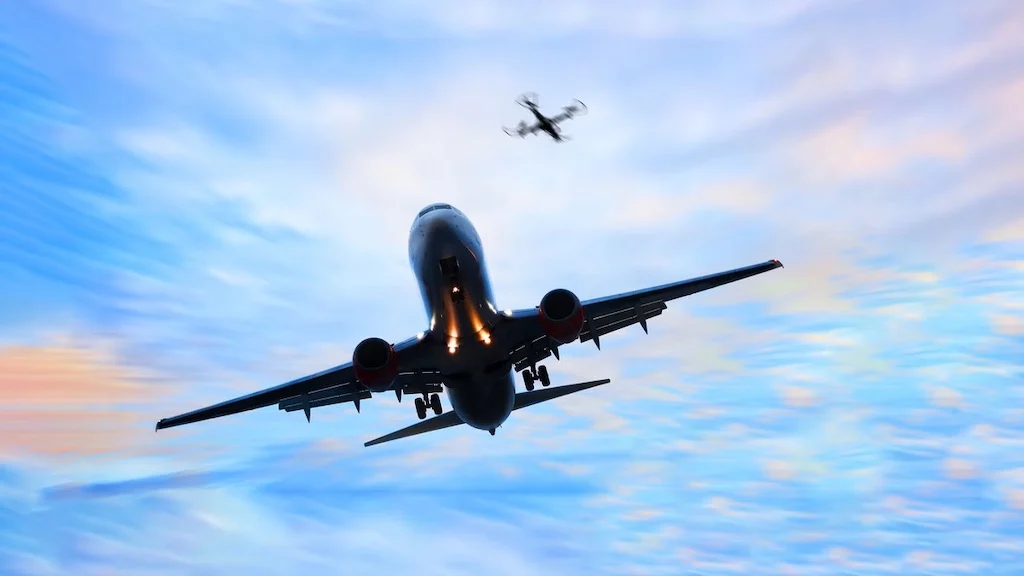
At the Digital X exhibition in Cologne, Deutsche Telekom has publicly debuted its advanced drone protection shield, marking a significant milestone in the telecommunications giant’s decade-long expansion into specialized security services. While the company has been active in the drone detection and defense sector since 2016, this latest presentation represents the first time the integrated system has been demonstrated in a live, public-facing environment. The showcase highlights a strategic pivot for the Bonn-based corporation, positioning itself not merely as a connectivity provider, but as a primary architect of national security infrastructure in an era where unmanned aerial systems (UAS) pose escalating risks to public safety, industrial secrets, and critical assets.
During the live demonstration, Deutsche Telekom showcased its ability to detect drones using sophisticated Radio Frequency (RF) sensors. The technology relies on the fact that the vast majority of commercial and hobbyist drones are operated via remote control, emitting distinct radio signals that can be intercepted and analyzed. By utilizing RF sensors, the system can not only identify the presence of a drone in protected airspace but also pinpoint the exact location of the pilot. This dual-tracking capability provides security forces, law enforcement, and critical infrastructure operators with actionable intelligence, including the specific drone model and the frequency protocols being utilized for flight control.
A Decade of Evolution in Airspace Security
The journey toward this comprehensive protection shield began in 2016, a period when the commercial drone market began to see exponential growth. Recognizing the potential for misuse—ranging from industrial espionage to physical attacks on infrastructure—Deutsche Telekom started integrating security protocols into its existing network capabilities. Over the past eight years, the project has evolved from a theoretical research initiative into a field-tested reality.
The current iteration of the system is the result of extensive collaboration with international technology leaders. Deutsche Telekom’s primary RF sensor partners include Vorpal, an Israeli firm specializing in high-precision signal geolocation, and Senhive, a Belgian company known for its robust airspace monitoring solutions. By combining these technologies with its own extensive network of cell towers and fiber-optic backhaul, Telekom has created a detection grid that is both scalable and highly accurate.
The evolution of the drone shield mirrors the changing threat landscape. In 2016, the primary concern was privacy and hobbyist interference. By 2026, the focus has shifted toward "Multi-Threat Protection," a concept that addresses the convergence of physical and cyber threats. As drones become more autonomous and less dependent on traditional RF links, Telekom is already looking toward the next generation of detection, including the integration of 5G and future 6G mobile networks as sensing tools.
The Mechanics of Passive RF Detection and Multi-Sensor Integration
The core of the Telekom drone shield is its reliance on passive RF sensors. Unlike traditional radar systems, which emit active signals that bounce off objects, passive sensors simply "listen" to the environment. This approach offers several distinct advantages in urban and industrial settings. First, because the sensors do not emit signals, they do not interfere with sensitive mobile communication equipment or other electronic systems. This allows Telekom to install the sensors directly onto its existing fleet of thousands of cell towers without degrading the quality of mobile service for consumers.
However, the company acknowledges that RF detection is only one piece of the puzzle. To provide a truly comprehensive "protection shield," the system is designed to be sensor-agnostic and modular. Depending on the specific requirements of a client—such as an airport, a nuclear power plant, or a military installation—Telekom can integrate additional layers of detection:
- Optical and Infrared Sensors: High-definition cameras equipped with AI-driven image recognition can visually confirm a drone’s identity and payload once the RF sensors have alerted the system to its presence.
- Acoustic Sensors: Specialized microphones can detect the unique "signature" of drone propellers, providing a backup detection method in environments where RF signals might be jammed or absent.
- Remote ID Integration: As European and international regulations increasingly mandate "Remote ID" for drones (a digital license plate), Telekom’s system can ingest this data to distinguish between authorized commercial drones and unidentified, potentially hostile intruders.
- Drone Radar: For high-security zones, active radar can be deployed to detect "dark" drones—those that are flying autonomously via GPS waypoints without any active radio link to a pilot.
Future-Proofing via 5G and 6G Research
Looking toward the future, Deutsche Telekom is positioning itself at the forefront of "Integrated Sensing and Communication" (ISAC). This research field explores how mobile network signals themselves can be used to detect objects in the air, essentially turning the entire cellular network into a massive, distributed radar system.
Telekom is currently a key scientific partner for the Helmut Schmidt University of the Federal Armed Forces (Bundeswehr) and the Federal Ministry of Education and Research. This partnership focuses on how 5G and upcoming 6G standards can be leveraged to detect drones that do not emit traditional radio signals. By analyzing how drone bodies disturb the propagation of high-frequency mobile signals, the network could potentially track every object in the lower airspace with centimeter-level precision. This would eliminate current blind spots and provide a level of situational awareness that was previously only available to military-grade radar installations.
Regulatory Drivers: The KRITIS-Dachgesetz
The timing of Telekom’s public rollout is closely tied to the shifting regulatory environment in Germany and the European Union. The "KRITIS-Dachgesetz" (Critical Infrastructure Umbrella Act) has introduced stringent new requirements for operators of vital services. Under this law, entities in sectors such as energy, water, transport, and finance are legally obligated to perform comprehensive risk analyses of all relevant threats—including those from the air.
If a risk assessment identifies a vulnerability to drone-based interference or attack, the operator is mandated to implement "appropriate measures" to mitigate that risk. Deutsche Telekom’s drone shield provides a turnkey solution for these organizations to meet their legal obligations. Ferri Abolhassan, a member of the Board of Management for T-Systems and CEO of T-Systems, emphasized this during the Cologne event: "The threat from drones is unfortunately real. That is why we must act now to protect citizens and critical infrastructure. The technologies for detection and defense are here and have already been proven in use."
The system is also designed with a "multi-tenant" architecture, which is particularly beneficial for urban areas. In a city like Cologne or Berlin, multiple critical infrastructure operators (e.g., a city hospital, a power utility, and a government district) can share the same network of sensors. While the hardware is shared, each client has a private, secure portal to view data relevant to their specific perimeter. This shared-service model significantly lowers the cost of entry for individual organizations while increasing the overall security density of the city.
Strategic Alliances and the Rheinmetall Partnership
A significant highlight of Telekom’s announcement is its partnership with Rheinmetall, Germany’s leading defense contractor. While Telekom focuses on the "soft" side of security—detection, tracking, and cyber-integration—Rheinmetall brings expertise in physical protection and "hard" defense mechanisms.

The goal of this partnership is the development of a "Multi-Threat-Protection" approach. This framework combines cybersecurity (protecting the data links and software of a facility) with physical security (protecting the perimeter from drones and other mobile threats). While the companies have kept specific details of their joint projects confidential for security reasons, the implication is clear: a unified command-and-control system that can detect a threat in the digital or physical realm and respond accordingly.
Beyond Rheinmetall, Telekom is collaborating with a suite of market leaders to round out its ecosystem. These include:
- Quantum Systems: For advanced aerial surveillance.
- Hensoldt: For high-end radar and electronic warfare components.
- DFS (Deutsche Flugsicherung): To ensure that drone detection is integrated into the broader German air traffic management system, preventing conflicts between security measures and legitimate manned aviation.
Command, Control, and Network Slicing
One of the technical hurdles in drone defense is the rapid transmission of data. A drone can move at high speeds, and security forces require real-time updates to respond effectively. Telekom addresses this through standardized interfaces and open integration concepts, allowing its sensors to feed data into almost any existing Command & Control (C2) software used by police or corporate security teams.
To ensure that this data is never delayed by network congestion, Telekom utilizes "Network Slicing" within its 5G infrastructure. This technology allows the company to "slice" a dedicated portion of the mobile network exclusively for mission-critical security data. Even during a major public event where thousands of people are using their phones simultaneously, the drone defense data maintains its own high-speed lane, ensuring zero-latency communication between the sensor and the response team.
Implications for National Security and the Private Sector
The entry of a major telecommunications provider into the drone defense market signals a maturation of the industry. For years, drone defense was a niche market occupied by specialized military startups. By integrating these capabilities into the national telecommunications grid, Deutsche Telekom is making airspace security a standard utility rather than an exotic add-on.
The implications for the private sector are profound. Large industrial sites, which have long struggled with the "open flank" of their airspace, now have a scalable way to monitor for corporate espionage. At the same time, the system provides a framework for the future of the "U-Space"—the envisioned automated airspace for delivery drones and air taxis. By providing the detection and tracking infrastructure, Telekom is essentially building the "air traffic control" for the drone age.
As the Digital X exhibition concludes, the message from Telekom is clear: the technology to secure Germany’s skies is no longer a futuristic concept but a deployed reality. With the backing of the KRITIS-Dachgesetz and a network of powerful industrial partners, the drone protection shield is set to become a foundational component of Germany’s national security architecture, bridging the gap between digital connectivity and physical safety.
