

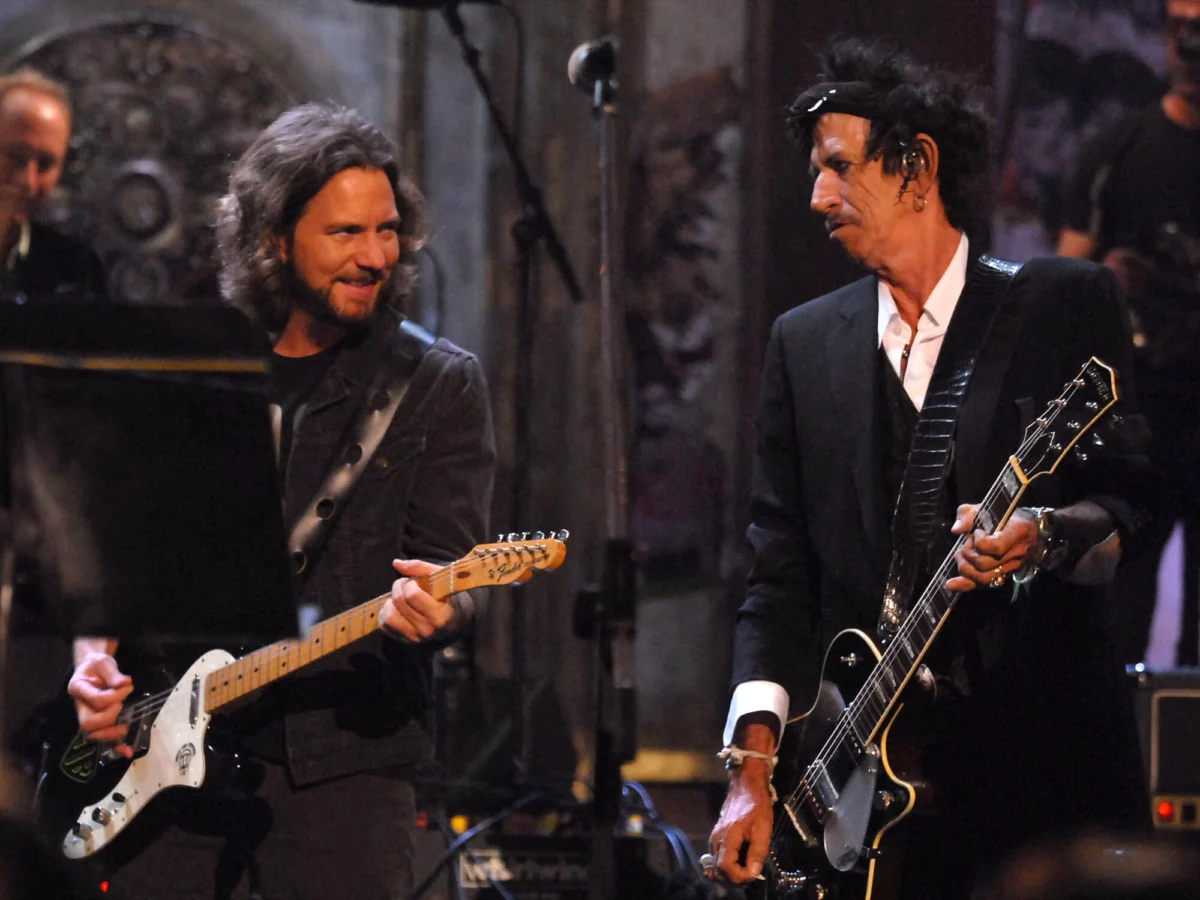
In November 1997, the legendary Oakland Stadium in California bore witness to a unique convergence of rock titans as Pearl Jam, one of the most influential bands of the grunge era, served as the opening act for the iconic Rolling Stones across a series of four monumental shows. This multi-night engagement culminated in a particularly memorable moment on the final evening when Pearl Jam’s frontman, Eddie Vedder, was extended the rare invitation to join the Stones on stage for a single song. This extraordinary encounter, a bridge between generations of rock royalty, has recently been revisited by Vedder in a candid interview with Howard Stern, offering intricate details and personal insights into the experience, particularly his observations on guitarist Keith Richards.
The opportunity to share the stage with a band of the Rolling Stones’ stature is a career highlight for any musician, and Vedder’s recollection underscores the blend of excitement and trepidation that such an occasion naturally evokes. During his conversation with Stern, Vedder delved into the process of selecting the song he would perform alongside Mick Jagger, Keith Richards, Charlie Watts, and Ron Wood. Initially, he considered "Let’s Spend the Night Together," a vibrant and energetic track from the Stones’ 1967 album Between the Buttons. However, Vedder ultimately decided against it, citing a concern that he might not be able to "keep up" with the famously dynamic and high-energy performance of Mick Jagger. This self-aware assessment led him to opt for "Waiting on a Friend," the introspective and blues-infused ballad from the band’s 1981 album, Tattoo You. This particular choice, known for its more relaxed tempo and soulful saxophone solo originally performed by jazz legend Sonny Rollins, presented a different, perhaps more comfortable, entry point for a guest vocalist.
The Bridges to Babylon Tour: A Colossal Undertaking
To fully appreciate the context of Vedder’s guest appearance, it is essential to understand the scale and significance of The Rolling Stones’ "Bridges to Babylon" tour. Launched in September 1997, just two months prior to the Oakland residency, the tour was a massive global undertaking designed to support their critically acclaimed album of the same name. Bridges to Babylon marked a creative resurgence for the band, showcasing a renewed vigor and experimental spirit while retaining their signature blues-rock foundation. The tour itself was a spectacle of epic proportions, featuring a colossal stage design that included a 160-foot main stage, a smaller B-stage extending into the audience, and a massive video screen. It traversed North America, Europe, and Asia, becoming one of the highest-grossing tours of the decade, reaffirming The Rolling Stones’ unparalleled status as a live act and their enduring commercial appeal well into their fourth decade.
Pearl Jam, by 1997, had firmly established themselves as one of the most important and commercially successful bands to emerge from the grunge movement. While their album No Code had been released in 1996, the band was actively working on what would become Yield, an album that would see them returning to a more direct rock sound. Opening for The Rolling Stones was not merely a supporting slot; it represented a symbolic passing of the torch, a recognition of Pearl Jam’s own legendary status in the making, and an opportunity for both bands to expose their respective fan bases to different facets of rock history. The Oakland Stadium shows, held on November 12, 14, 15, and 19, 1997, were highly anticipated events, drawing tens of thousands of fans each night to witness this unprecedented double-bill.
The Moment on Stage: A Dauntless Experience
Vedder described his performance with the rock legends as an "interesting experience," a phrase that, beneath its understated delivery, hints at the immense pressure and unique dynamics involved. He recounted the daunting nature of performing on such a colossal stage, emphasizing the minimal prior rehearsal for his guest spot. This lack of extensive preparation is often characteristic of spontaneous rock collaborations, relying more on the innate musicality and stage presence of the artists involved rather than meticulous planning.
The moment of Vedder’s entry onto the stage was particularly striking due to its lack of fanfare. "There was no introduction or anything," Vedder revealed, as reported by American Songwriter. When he inquired backstage about the appropriate time to join the band as they began performing "Waiting on a Friend," he was met with a collective shrug and averted gazes from the Stones’ entourage. "Everyone turned their head, like, ‘I have nothing to do with this,’" he recalled, illustrating the seasoned, almost detached professionalism that often surrounds such long-running, self-sufficient operations.
Stepping out onto the vast expanse of the Oakland Stadium stage, Vedder described a sense of spatial disconnect, particularly concerning Mick Jagger. "Mick looked like a football field away," he quipped, vividly conveying the immense scale of the venue and the distance between band members. Jagger had already commenced singing the song’s opening lines, leaving Vedder to find his precise moment of entry. "He’s singing it already, and I’m coming in for the second verse," Vedder recounted. His strategy was simple and direct: "So I just kind of tucked my head down… and then just walked to the middle and started singing. It was okay." This unvarnished account speaks volumes about the raw, live nature of rock performance, where even seasoned veterans like Vedder must navigate the unexpected and make split-second decisions under immense scrutiny. The archival footage of the performance corroborates this understated entrance, showing Vedder calmly walking to the microphone, blending seamlessly into the band’s rhythm.

A Glimpse into the Jagger-Richards Dynamic
Perhaps one of the most revealing anecdotes from Vedder’s interview came from a backstage interaction with Keith Richards following the performance. Vedder, with a touch of humor, expressed his mild frustration to Richards regarding Jagger’s distant presence on stage. "Hey, sorry, man – your man [Mick] left me hanging a bit there," Vedder reportedly told Richards, acknowledging the slight awkwardness of his unceremonious stage entry and the challenge of syncing with a frontman who was already well into the song.
Richards’ response was not only characteristic of his legendary dry wit but also offered a rare, candid glimpse into the enduring, complex dynamic between the Stones’ principal songwriters and frontmen. "Don’t you worry about it, me boy. He’s been doing that to me for 35 years," Richards retorted. This quip, delivered with the quintessential Richards swagger, transcends mere humor. It serves as a profound, albeit laconic, commentary on the nearly four-decade-long partnership between Jagger and Richards – a relationship celebrated for its unparalleled creative synergy but also famously punctuated by periods of tension, rivalry, and a mutual understanding born from decades of shared experience. For Vedder, a frontman in his own right, this exchange likely offered a unique perspective on the inner workings of rock’s most enduring band. It highlighted the unwritten rules, the unspoken understandings, and the occasional, inherent chaos that define such a long-standing and creatively powerful collaboration.
The "Liquidity" of Keith Richards’ Playing
Beyond the stage performance and the witty banter, Vedder also shared a profound musical observation about Keith Richards’ guitar playing, an insight that resonates deeply with guitarists and music connoisseurs. Standing "right next to Keith’s amp, like behind it" on the side of the massive stage, Vedder was afforded an intimate perspective on Richards’ technique that few ever experience. He was struck by what he termed the "liquidity" of Richards’ playing. "You’re listening to the liquidity of what he plays. It’s like he’s never playing the same thing once," Vedder articulated.
This observation speaks to the core of Richards’ iconic style. Renowned for his innovative rhythm guitar work, often employing open G tuning and a five-string setup, Richards has always approached the guitar not just as an instrument for melody or chords, but as a percussive and textural element. His playing is characterized by a unique blend of blues, R&B, and rock and roll, where riffs are woven together with an organic, almost improvisational feel. The "liquidity" Vedder describes refers to this fluid, ever-evolving quality, where each note and chord progression, while serving the song, retains a spontaneous, unquantized feel. It is a testament to Richards’ mastery that his playing, even within the structured confines of a stadium performance, maintains a fresh, unpredictable quality, never simply replicating what has come before. This insight from Vedder, a highly respected songwriter and musician himself, underscores Richards’ enduring influence and the subtle genius of his contributions to The Rolling Stones’ sound.
Broader Implications and Legacy
The 1997 Oakland Stadium collaboration between Eddie Vedder and The Rolling Stones, though a single song in a long and illustrious career for both parties, holds significant implications within the broader narrative of rock music. It symbolized a rare moment of cross-generational camaraderie, bridging the raw, intense energy of grunge with the timeless, blues-infused swagger of classic rock. For Pearl Jam and Eddie Vedder, it cemented their status as not just contemporaries but peers, capable of standing alongside the giants of the genre. While not a pivotal turning point in Pearl Jam’s trajectory, it added a notable highlight to Vedder’s personal and professional journey, reinforcing his reputation as a respected and versatile artist.
For The Rolling Stones, guest appearances like Vedder’s served to demonstrate their continued relevance and their willingness to engage with contemporary artists. It helped to introduce their music to a younger generation of fans who might have primarily been followers of grunge or alternative rock, while also thrilling their established fan base with unique, unrepeatable moments. The "Bridges to Babylon" tour itself was a powerful statement about the band’s enduring vitality, showcasing their ability to fill stadiums globally and continue producing impactful new music. The candid reflections from Vedder, particularly his interactions with Richards and his appreciation of his playing, offer a valuable, intimate window into the dynamics of one of the most legendary bands in history, enriching the cultural tapestry of rock and roll for fans and musicians alike. The memory of that night in Oakland, a brief but potent fusion of two distinct eras of rock, continues to resonate as a testament to music’s power to connect artists and audiences across time.
