

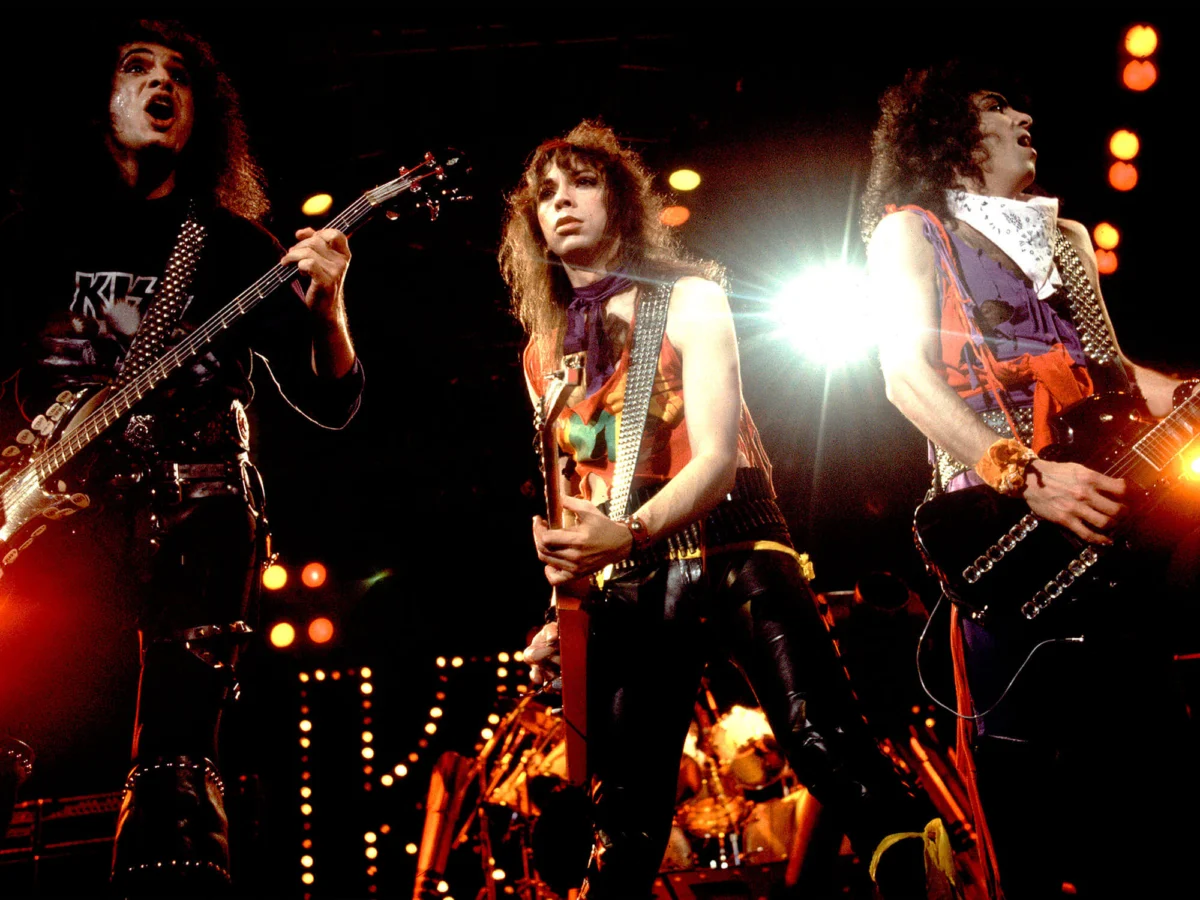
Former KISS guitarist Vinnie Vincent has announced his new album, Guitarmaggedon, will be released with an audacious $2 million price tag, positioning it as one of the most exclusive and potentially lucrative music releases in history. Vincent, known for his flamboyant guitar work and enigmatic persona, has declared the 10-track album to be "one of the greatest rock albums of all time," a testament to his unwavering confidence in his latest musical endeavor. This unique sales model requires a single wealthy fan or entity to purchase the master recording, granting them the discretion to subsequently release it to the wider public.
The "Guitarmaggedon" Proposition: An Exclusive Offering
Guitarmaggedon is presented as a fully completed album, comprising ten distinct tracks. The $2 million asking price translates to an astonishing $200,000 per song, a figure that dwarfs traditional album sales metrics and positions this release firmly in the realm of high-value collectibles and unique cultural artifacts. The proposition extends beyond just the music; the fee encompasses a comprehensive package designed to provide significant value and control to the buyer.
According to Vincent’s detailed explanation, first reported by Guitar World, the $2 million secures the master format of the entire album. This includes all ten songs mixed in their final product format, along with all master files for the accompanying artwork. The artwork package is extensive, featuring related posters and ten separate vinyl and CD packaging art designs, tailored for each individual song. This meticulous attention to detail suggests Vincent envisions the album having a strong visual identity, whether released as a complete package or on a per-song basis.
The terms of the sale grant the buyer considerable autonomy over the album’s distribution. The purchaser is free to release the entire album in any desired format—vinyl, CD, or any other configuration, in whole or in part—at their sole discretion. However, Vincent maintains a degree of creative and strategic oversight, stipulating that all marketing plans and ideas associated with the release require his explicit approval. This clause underscores Vincent’s desire to protect the artistic integrity and public perception of Guitarmaggedon, even after its sale.
Crucially, the $2 million price explicitly does not include any right, title, or interest in the copyrights and/or trademarks related to Vinnie Vincent or the product itself. Should the buyer wish to acquire associated rights in the compositions, a separate agreement would need to be arranged and negotiated. This distinction is vital, as it delineates between the physical/master assets and the underlying intellectual property. However, the deal does include a perpetual license to use the brand names "Vinnie Vincent Invasion" and "Vinnie Vincent" for the life of the album, offering a significant branding advantage to the eventual owner. This license allows the buyer to leverage Vincent’s established identity and the legacy of his previous band, Vinnie Vincent Invasion, in promoting Guitarmaggedon.
A Bold Marketing Gambit in the Digital Age
In an era where music streaming services have largely devalued individual song sales and shifted the industry towards subscription models, Vinnie Vincent’s strategy stands as a provocative outlier. It defies conventional wisdom regarding music monetization and challenges the prevailing notions of accessibility. While most artists strive for maximum reach, Vincent has embraced extreme exclusivity, targeting a niche market of ultra-wealthy collectors, dedicated patrons, or even investors looking for a unique asset.
This approach bypasses traditional record labels, distributors, and streaming platforms, placing the artist in direct control of the initial sale and setting a precedent for potential future models of artistic independence. It reflects a growing trend among some artists to explore alternative revenue streams and direct-to-fan engagement, though Vincent’s price point takes this philosophy to an unprecedented extreme for a completed studio album.
Vinnie Vincent: A Legacy of Intrigue and Innovation
To fully appreciate the significance of this announcement, it is essential to understand Vinnie Vincent’s unique trajectory within the rock music landscape. Born Vincent John Cusano, he rose to prominence in the early 1980s as the enigmatic "Ankh Warrior" lead guitarist for KISS, joining the band after Ace Frehley’s departure. His tenure with KISS, though relatively brief (1982-1984), was marked by his distinctive, shredding guitar style and significant songwriting contributions to albums like Creatures of the Night and Lick It Up. His intricate solos and fast-paced playing left an indelible mark on the band’s sound during their unmasked era.
Following his departure from KISS, Vincent formed Vinnie Vincent Invasion, a glam metal band that released two albums, Vinnie Vincent Invasion (1986) and All Systems Go (1988). While critically acclaimed for their musicality and Vincent’s virtuosity, the band’s commercial success was limited, and they eventually disbanded. Throughout the 1990s and 2000s, Vincent largely receded from the public eye, cultivating a reclusive image that fueled speculation and mystery among fans.
His occasional re-emergences, often involving legal disputes, convention appearances, and tantalizing hints of new music, have only added to his mystique. In recent years, Vincent has made more public appearances, engaging with fans at events and discussing his past and future projects. These appearances often involved intimate Q&A sessions, where he would hint at new material, fueling anticipation among his loyal fanbase. The announcement of Guitarmaggedon therefore marks a significant moment in his storied career, breaking a decades-long silence on new studio output and doing so in a characteristically unconventional manner. His decision to price the album at $2 million is consistent with his history of bold moves and a flair for the dramatic.
Precedents and Parallels in High-Value Music and Collectibles
While the $2 million price tag for Guitarmaggedon is extraordinary for an album, there are precedents within the broader cultural and music collectibles market that provide context for such a valuation.

The most direct parallel is the infamous Wu-Tang Clan album, Once Upon a Time in Shaolin. In 2015, the legendary hip-hop group sold a single copy of this album for $2 million to pharmaceutical executive Martin Shkreli. The terms of that sale stipulated that the album could not be commercially exploited until 2103, though the owner was free to play it privately or display it. The album was later seized by the U.S. government and eventually sold to the crypto collective PleasrDAO for $4 million in 2021. This case demonstrated the potential for music to be treated as a rare art object or investment, driven by scarcity and cultural significance, rather than mass consumption. Vincent’s Guitarmaggedon differentiates itself by explicitly allowing the buyer to release it commercially, shifting the dynamic from a pure art object to a potential commercial venture for the purchaser.
Beyond albums, the market for music memorabilia and instruments regularly sees multi-million dollar transactions. The article itself references the Jim Irsay auction, where David Gilmour’s legendary black Fender Stratocaster sold for an astounding $14,550,000. This record-breaking sale for a musical instrument highlights the immense value placed on items with historical significance, provenance, and connection to iconic artists. While an album is not an instrument, the psychological drivers behind such purchases—exclusivity, historical importance, and a desire to own a piece of cultural history—are shared. Other examples include Kurt Cobain’s MTV Unplugged guitar selling for $6 million, and various handwritten lyrics and stage costumes fetching hundreds of thousands.
The emergence of Non-Fungible Tokens (NFTs) in the music industry also offers a conceptual parallel, even if Vincent’s album is not explicitly an NFT. NFTs have allowed artists to tokenize unique digital assets, including music, and sell them directly to fans or collectors, often for significant sums. Artists like Kings of Leon, Grimes, and 3LAU have experimented with NFT album releases and exclusive digital content, generating millions in sales and demonstrating a viable market for high-value, exclusive digital goods tied to musical artistry. Vincent’s Guitarmaggedon, while a master audio file rather than a blockchain token, taps into the same desire for digital ownership, exclusivity, and direct artist-to-fan (or investor) interaction that underpins the NFT market.
The Economics of Exclusivity and Investment Potential
Vincent’s strategy is predicated on the existence of a specific demographic: the ultra-wealthy music enthusiast or investor. For this individual or entity, $2 million might represent not just a purchase, but an investment. The buyer gains the unique opportunity to be the sole initial owner of a new album from a legendary, albeit enigmatic, rock figure.
The "first-mover" advantage is significant. If the buyer chooses to release Guitarmaggedon commercially, they would effectively become its sole publisher and distributor, potentially recouping their investment through sales, streaming royalties, and licensing deals. The perpetual license to use the "Vinnie Vincent Invasion" and "Vinnie Vincent" brand names for the album’s life adds further commercial appeal, allowing the buyer to leverage established brand recognition. This transforms the purchase from a mere acquisition into a potential business venture.
The psychological appeal of scarcity and prestige cannot be underestimated. Owning the sole master copy of a Vinnie Vincent album, especially one he touts as "one of the greatest rock albums of all time," carries immense bragging rights and cultural cachet. This is a purchase not just of music, but of a unique piece of rock history and a direct, exclusive connection to an iconic artist.
Industry Reactions and Fan Speculation
The announcement of Guitarmaggedon has generated considerable buzz across the music industry and among rock fans. While no official industry statements have been released, reactions can be inferred. Music critics and industry professionals are likely to view the move with a mixture of skepticism and curiosity. Some might dismiss it as a publicity stunt or an unrealistic gambit, given the prevailing economic realities of the music industry. Others might see it as an intriguing, albeit extreme, experiment in artist monetization, potentially opening new avenues for established artists with devoted followings.
Within the fan community, reactions are diverse. Long-time Vinnie Vincent devotees are undoubtedly excited by the prospect of new music, regardless of the unorthodox release method. Many will debate the album’s actual value, the feasibility of finding a buyer, and the ethical implications of such an exclusive release. Social media platforms are abuzz with discussions, ranging from fervent support and declarations of its genius to outright condemnation of its perceived elitism or unreasonableness. The sheer audacity of the price tag ensures that Guitarmaggedon will remain a talking point, regardless of its immediate sales success.
Intellectual Property and Long-Term Control
The detailed terms outlined by Vinnie Vincent regarding intellectual property rights are crucial for understanding the long-term implications of this sale. The separation of the master recording ownership from the underlying copyright ownership of the compositions is a standard legal practice but highlights Vincent’s intention to retain creative control and future revenue streams from the songs themselves. Should the buyer achieve significant commercial success with Guitarmaggedon, Vincent would still hold the copyright to the compositions, allowing him to negotiate separate licensing agreements for synchronization (film, TV, advertising), covers, or other uses.
The requirement for Vincent’s approval on all marketing plans further cements his ongoing involvement and control over the album’s public presentation. This ensures that the eventual release aligns with his artistic vision and brand image, preventing any dilution or misrepresentation of his work. The perpetual license for the "Vinnie Vincent" and "Vinnie Vincent Invasion" brand names, however, is a significant concession, providing the buyer with powerful marketing tools directly tied to Vincent’s legacy for the duration of the album’s commercial life. This clause suggests a careful balance between relinquishing control for a substantial sum and maintaining artistic integrity and future revenue potential.
The Future of "Guitarmaggedon": An Unfolding Narrative
The question that remains is whether Guitarmaggedon will find its elusive $2 million buyer. The success of this strategy hinges on a confluence of factors: the depth of a wealthy individual’s devotion to Vinnie Vincent, an investor’s belief in the album’s commercial viability, or a collector’s desire for unparalleled exclusivity. If a buyer emerges, it will validate Vincent’s unconventional approach and potentially inspire other artists to consider similar, albeit perhaps less extreme, direct-to-patron models.
Should the album fail to find a buyer at its stated price, Vincent might be faced with reconsidering his strategy, perhaps lowering the price, offering limited editions, or exploring more traditional release methods. Regardless of its immediate outcome, Guitarmaggedon has already made an impact by sparking a global conversation about artistic value, exclusivity, and the evolving economics of the music industry. It stands as a bold, unprecedented move by a legendary artist, challenging conventional wisdom and pushing the boundaries of how music can be created, valued, and ultimately shared in the 21st century. The unfolding narrative of Guitarmaggeddon promises to be a fascinating case study in artistic entrepreneurship and the pursuit of unparalleled exclusivity in the digital age.
