

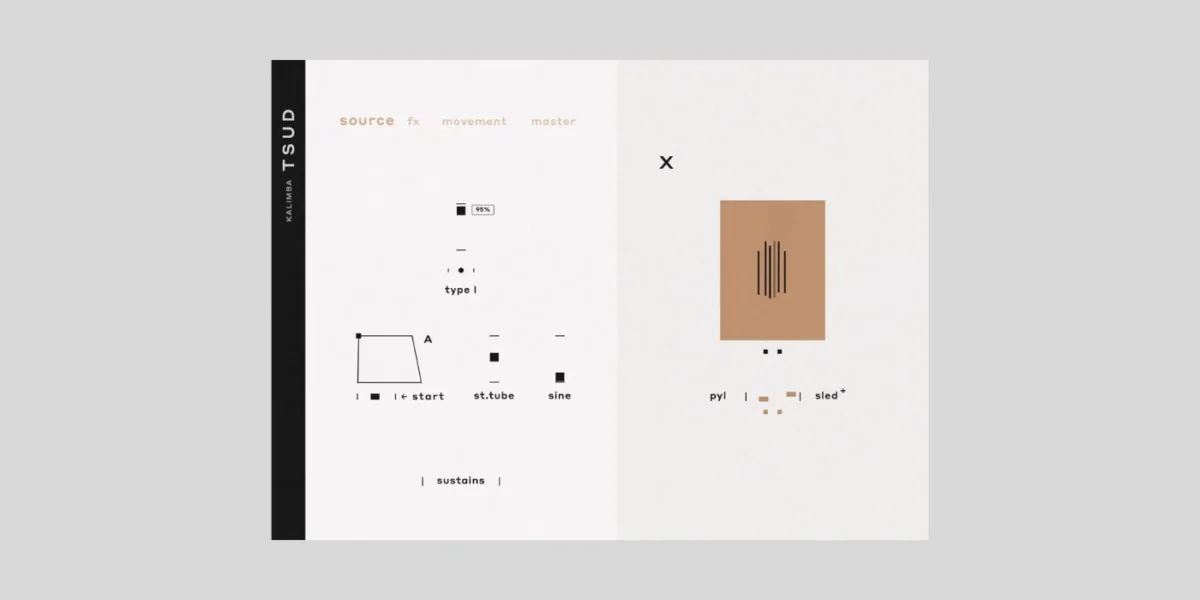
Elementary Sounds has officially unveiled TSUD, a sophisticated sample-based virtual instrument that meticulously recreates the distinctive tones of a kalimba. This release marks a significant return for the developer after an approximate year-long hiatus and stands as their inaugural free offering, making it accessible to a broad spectrum of music producers and sound designers across macOS and Windows platforms. TSUD is available in VST3 and AU formats, catering to a majority of modern Digital Audio Workstations (DAWs) that support these widely adopted plugin standards.
A Strategic Return and a Distinctive Portfolio
Elementary Sounds’ re-emergence with TSUD is particularly noteworthy within the competitive landscape of virtual instrument development. Prior to this free release, the company had cultivated a reputation for crafting high-quality, character-rich paid instruments, including a detailed vibraphone, an authentic old acoustic piano, and a nuanced Fender Rhodes. This established portfolio underscores their commitment to sampling instruments that possess inherent personality and are often overlooked by larger developers who tend to focus on more common or broadly commercial sounds. The release of a free, meticulously crafted instrument like TSUD serves not only as a generous contribution to the music production community but also as a strategic move to re-engage with their user base and introduce their unique sampling philosophy to a new audience. The company’s prior offerings have consistently demonstrated a preference for sonic authenticity and a departure from generic, over-sampled instruments, a philosophy that is evidently carried forward and perhaps even amplified in TSUD.
The Growing Niche of Character Instruments in Music Production
The music production industry has witnessed a steady increase in demand for virtual instruments that offer distinct character and an organic feel, moving beyond the pristine, often sterile sounds of digital synthesis. Producers across genres, from ambient and electronic to film scoring and indie pop, increasingly seek tools that can inject warmth, imperfection, and a human touch into their compositions. The kalimba, with its bright, percussive, and bell-like tones, fits perfectly into this niche, offering a unique sonic texture that can complement or contrast with more conventional instruments. Its versatility allows it to function as a lead melodic instrument, a rhythmic accent, or a textural layer. This growing appreciation for instruments with unique timbres provides a fertile ground for developers like Elementary Sounds, whose approach aligns with this evolving aesthetic.
The Genesis of TSUD: From Forgotten Toy to Virtual Masterpiece
The inspiration behind TSUD is as captivating as its sound. The instrument’s core samples originate from a miniature kalimba discovered within a forgotten box of toys. This origin story imbues TSUD with an immediate sense of charm and nostalgia, hinting at the potential for sonic exploration beyond typical expectations. The decision to sample such an unassuming object speaks volumes about Elementary Sounds’ dedication to finding and capturing unique sonic signatures that often lie hidden in plain sight.
The recording methodology employed for TSUD is a testament to the developer’s meticulous approach to sound design. To capture the kalimba’s intricate nuances, Elementary Sounds utilized Soviet-era ribbon microphones, strategically positioned mere inches from the instrument. This specific choice of vintage microphones is crucial; ribbon microphones are renowned for their warm, natural sound and excellent transient response, making them ideal for capturing the delicate attack and complex overtones of acoustic instruments. One ribbon microphone was carefully placed to capture the initial, crisp attack of each tine strike, while a second was positioned slightly off-axis. This off-axis placement was designed to pick up the broader body resonance, the shimmering overtones, and the gradual, natural decay of each note, adding depth and spatial richness to the core sound.
Further enhancing the instrument’s sonic environment, a stereo microphone array was employed to capture the ambient room acoustics surrounding the kalimba. This multi-microphone setup allows for a rich, multi-dimensional sound profile, enabling users to blend close-mic detail with natural room reverberation, providing a sense of realism and space that is often absent in simpler sample libraries. This comprehensive approach to capturing the source instrument ensures that TSUD delivers an authentic and immersive playing experience.
Unprecedented Depth in Sampling and File Size Justification
The commitment to sonic fidelity extends to TSUD’s deep sampling architecture. The instrument boasts up to four velocity layers per note, ensuring a highly dynamic and expressive response to varying playing intensities. This means that as a user plays softer or harder, the sampled sound morphs realistically, reflecting the natural variations in a physical kalimba’s output. Complementing this, TSUD incorporates five round robins for each note. Round robins are distinct, alternate samples triggered sequentially for the same note at the same velocity, effectively eliminating the "machine gun" effect that can plague less sophisticated sample libraries when notes are played repeatedly. This level of detail ensures that even rapid passages sound natural and varied, mimicking the subtle inconsistencies and organic feel of a live performance.
The extensive sampling, encompassing multiple velocity layers, numerous round robins, and a multi-microphone setup, results in a substantial uncompressed file size of 2.4 GB. While this might seem considerable for a kalimba instrument, it is a direct reflection of the unparalleled depth and quality of the captured samples. For producers and sound designers who prioritize sonic authenticity, expressive playability, and a nuanced sound palette, this file size represents a justifiable trade-off for the superior quality and realism that TSUD delivers. It underscores the developer’s commitment to providing a truly professional-grade virtual instrument, even in a free package.
TSUD’s Intuitive Interface and Expansive Sound Design Capabilities
Beyond its foundational samples, TSUD distinguishes itself through a thoughtfully designed interface and a powerful array of sound-shaping tools. The instrument’s visual interface is described as abstract yet remarkably intuitive, a design philosophy that prioritizes user experience and creative flow. For many producers, a well-designed graphical interface is not merely aesthetic; it significantly enhances the interaction with the instrument, making complex sound manipulation feel more immediate and inspiring. TSUD’s cool and engaging visual presentation contributes positively to the overall creative process.
Under the hood, TSUD offers two primary sound types, providing immediate versatility:
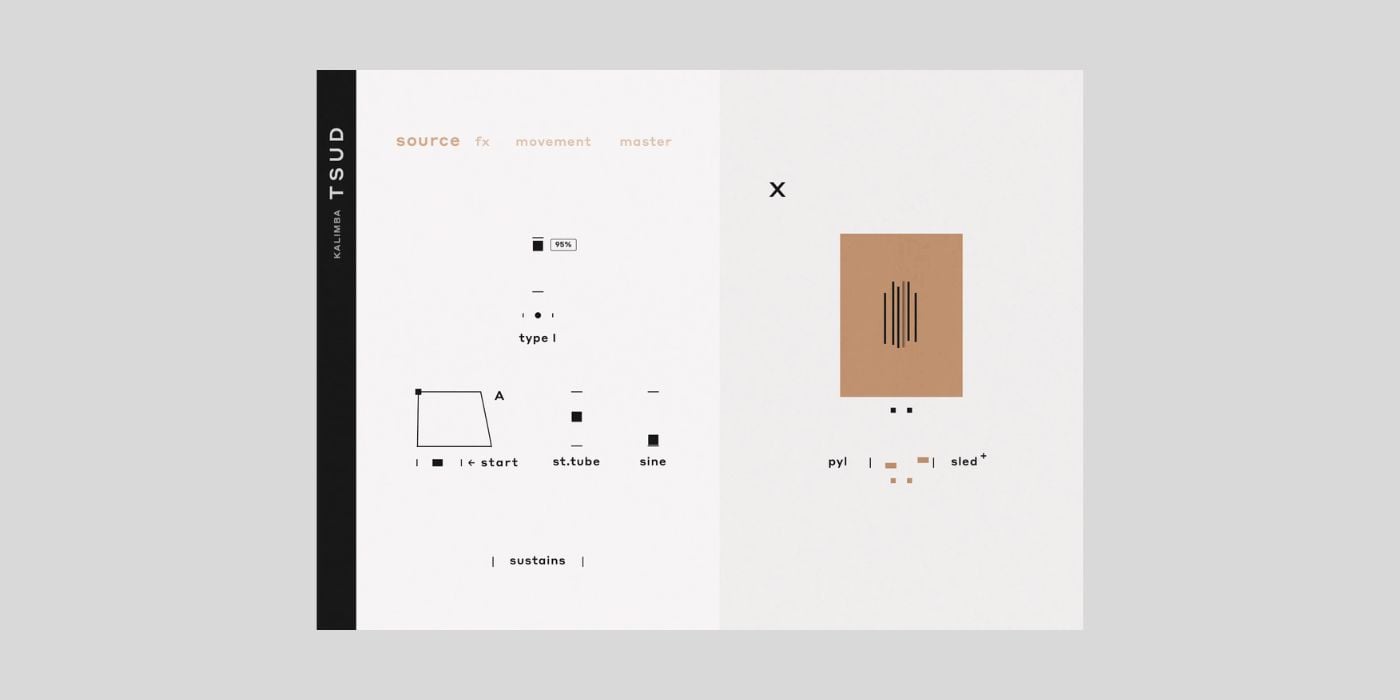
- Type I: This mode presents the pure, unadulterated recorded sound, preserving every minute detail and imperfection of the original miniature kalimba. This includes subtle artifacts like fingers brushing against the tines, which contribute significantly to the instrument’s organic character and realism. Type I is ideal for those seeking the most authentic and uncolored kalimba sound.
- Type II: In contrast, Type II routes the raw kalimba signal through a series of internal filters and tube preamps. This processing transforms the instrument’s timbre, allowing it to closely emulate the warm, mellow characteristics of a muted electric piano. This demonstrates TSUD’s capacity to transcend its acoustic origins, offering a distinct and creatively inspiring alternative sound.
The instrument’s sound design capabilities are further expanded by an innovative X-slider, which facilitates crossfading between the raw kalimba sound and four additional, ethereal sound layers. These layers are derived from the original kalimba signal but have been stretched and softened, evolving into something weightless and atmospheric. This feature allows users to seamlessly blend the percussive attack of the kalimba with evolving, pad-like textures, creating complex and dynamic soundscapes.
Adding further depth and grit are two dedicated sliders. One introduces a Soviet synthesizer sine wave, tuned precisely one octave below the kalimba notes, providing a foundational weight and sub-harmonic richness that can thicken the overall sound. The second slider injects a tube-saturated version of the signal, meticulously routed through a cassette recorder. This introduces authentic analog warmth, subtle tape compression, and the sought-after "grit" and lo-fi character associated with vintage recording mediums. These blending options enable producers to sculpt a vast array of unique sounds, from delicate and ethereal to gritty and robust.
Comprehensive Effects and Modulation for Dynamic Performance
TSUD’s robust FX section is designed to further enhance and transform the kalimba’s sound, offering a suite of high-quality processing tools. These include:
- Vibrato: Adds a natural, pulsating pitch modulation, bringing expressive life to sustained notes.
- Warm Distortion: Introduces harmonic richness and subtle saturation, enhancing the instrument’s presence without harshness.
- Shimmer Reverb with Pitch Shifting: A highly creative effect that adds ethereal, long-decaying reverbs with subtle upward or downward pitch shifts, ideal for ambient textures and atmospheric soundscapes.
- Chorus: Creates a thick, swirling, detuned effect, adding width and depth to the sound.
- Echo: Provides rhythmic repetitions, useful for creating space and rhythmic patterns.
- Reverb: A standard but essential effect for placing the instrument within various acoustic environments.
Beyond static effects, TSUD incorporates powerful modulation capabilities to inject movement and evolution into its sound. A 12-step sequencer allows users to create rhythmic patterns and modulate various parameters over time, opening up possibilities for complex arpeggiations or evolving textural sequences. Additionally, two independent LFO (Low-Frequency Oscillator) modules provide continuous, cyclical modulation to different sound layers, enabling the creation of dynamic, breathing textures and expressive sonic shifts.
The master panel of TSUD provides a final layer of control and refinement. It features vintage octave filters, which can shape the frequency content with a distinct analog character. A three-band shelving EQ allows for broad tonal adjustments, enabling users to tailor the instrument’s overall brightness, mid-range presence, and low-end warmth to fit any mix. Finally, dedicated pitch and noise controls offer further creative manipulation, allowing for subtle detuning or the introduction of atmospheric noise elements to enhance the instrument’s unique sonic identity.
Broader Implications and Market Positioning
The release of TSUD represents more than just a new virtual instrument; it signifies Elementary Sounds’ strategic re-entry into the market with a strong statement of intent. By offering such a high-quality, deeply sampled, and feature-rich instrument for free, the company is likely aiming to achieve several objectives:
- Brand Re-engagement: Reconnecting with their existing user base and reminding them of the company’s commitment to unique sound design.
- Audience Expansion: Attracting new producers and musicians who might not have previously encountered Elementary Sounds’ paid offerings, showcasing their quality without an initial financial barrier.
- Industry Influence: Setting a benchmark for what can be achieved with free virtual instruments, potentially inspiring other developers to focus on quality and innovation rather than just quantity.
- Market Differentiation: Further solidifying their niche as a developer of boutique, character-rich instruments that stand apart from the mainstream.
TSUD’s versatility, particularly its ability to seamlessly integrate with electronic music productions, makes it an invaluable asset. The article highlights its efficacy in "layering over synths," where even a subtle touch of kalimba can imbue electronic sounds with an organic feel and depth that might be challenging to achieve with synthetic patches alone. This makes TSUD a compelling tool for producers looking to bridge the gap between acoustic warmth and electronic precision, a common goal in contemporary music production.
For the individual producer, TSUD is undeniably a "definite keeper." Its combination of pristine, deeply sampled sounds, innovative sound-shaping features, intuitive interface, and the sheer value of being a free offering makes it an indispensable addition to any virtual instrument collection. It empowers producers with a unique sonic palette, encouraging experimentation and fostering creativity.
Availability and Technical Specifications
TSUD is officially available for download now from the Elementary Sounds website. It supports both macOS (version 10.11 and higher) and Windows operating systems. The instrument is provided in VST3 and AU formats, ensuring compatibility with most modern DAWs, including Logic Pro, Ableton Live, Cubase, FL Studio, Studio One, and Reaper. It is important for users to note that TSUD is not compatible with Pro Tools or other DAWs that do not natively support the VST3 or AU plugin standards.
This release not only enriches the landscape of available free virtual instruments but also reaffirms Elementary Sounds’ position as a developer dedicated to sonic excellence and creative innovation.
Download: TSUD by Elementary Sounds (FREE)
Last Updated on April 15, 2026 by Tomislav Zlatic.
