

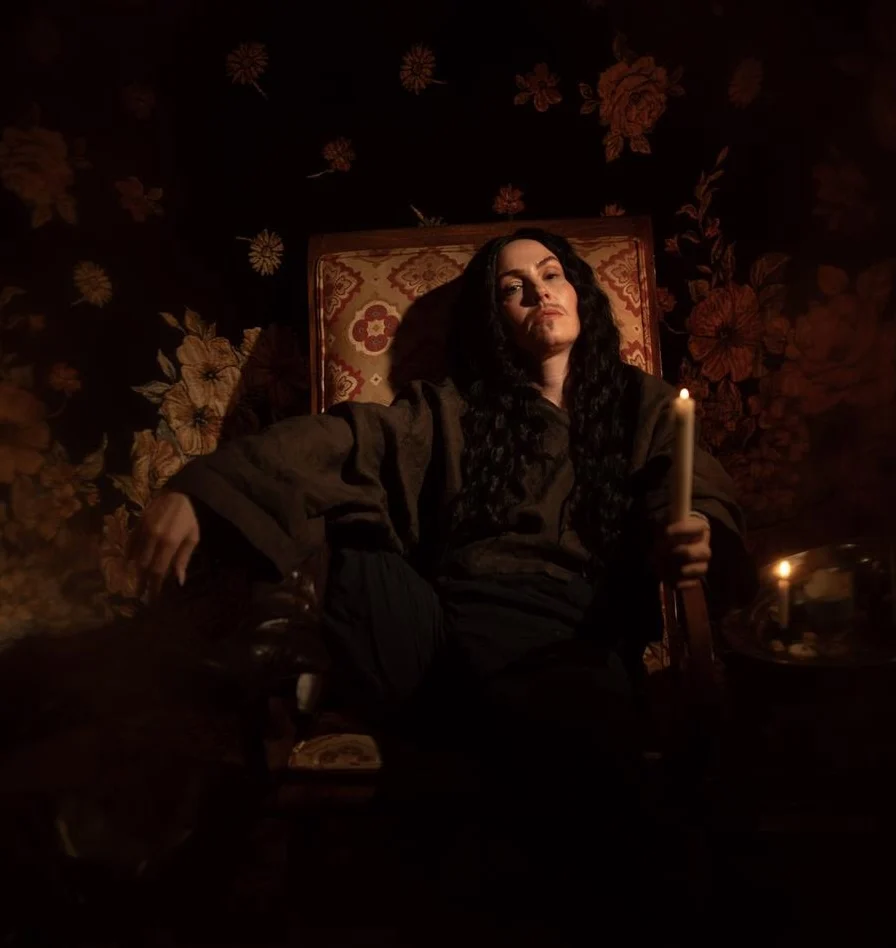
Emma Ruth Rundle, an artist celebrated for her profound contributions to bleak and heavy mood music, has released "God’s Picture," a new single poised as the thematic and musical core of her forthcoming album, These Killing Times. The track immediately commands attention with its evocative opening lyric: "God’s got a picture of the whole world burning, down to the details of his hot white ash," a line that encapsulates the song’s stark, apocalyptic vision and its central fantasy. The album is slated for release on September 18 via Errant Child, promising a continuation and evolution of Rundle’s signature sound and introspective lyricism.
"God’s Picture": A Profound Meditation on Modern Crises
"God’s Picture" serves not merely as another single but as the thesis statement for These Killing Times, as articulated by Rundle herself. The composition embarks as a somber, gothy torch song, meticulously building in intensity before crescendoing into a majestically crushing sonic experience. This dynamic progression mirrors the escalating urgency of its lyrical content, which delves deeply into some of the most pressing issues confronting humanity today.
In a press release accompanying the single, Rundle describes "God’s Picture" as "a meditation on the state of the world, particularly climate disaster, global conflict and class." These themes are not new to Rundle’s expansive discography, but in "God’s Picture," they are presented with an unflinching directness and an unparalleled sense of urgency. The song also carries a significant political undertone, expressing "a plea for the demolition of western hegemony," a bold statement reflecting a critical engagement with geopolitical power structures and their historical impact.
Musically, the track represents a crucial bridge in Rundle’s artistic journey. She notes its sound as a "segue from Engine Of Hell, with its gentle piano and guitar, to These Killing Times, with its more lush arrangements and message." This indicates a deliberate evolution, moving from the stripped-down, raw intimacy of her previous critically acclaimed work to a more expansive, layered, yet equally potent soundscape. The interplay of acoustic vulnerability and towering electric instrumentation creates a rich tapestry that supports the gravity of the song’s message.
The Visual Narrative: Rundle’s Directorial Vision
Complementing the profound audio experience, Emma Ruth Rundle directed the official music video for "God’s Picture." This self-directed endeavor sees Rundle embodying a multitude of mythic roles, a visual metaphor that likely reinforces the archetypal struggles and epic scope of the song’s themes. The creation of the video involved significant personal investment, with Rundle meticulously constructing the sets herself during the preceding winter. This hands-on approach underscores her holistic artistic vision, where every element, from composition to visual presentation, is a direct extension of her creative intent. The detailed, handcrafted sets suggest a world-building effort, drawing viewers deeper into the apocalyptic landscape painted by the lyrics and music. This dedication to craft, both aural and visual, speaks volumes about the significance Rundle places on this particular track within her broader body of work.
Collaborative Excellence: The Musicians Behind the Sound
While Emma Ruth Rundle herself commands guitar and keyboard duties on "God’s Picture," the track benefits from the contributions of a stellar lineup of collaborators who enrich its sonic texture and rhythmic foundation. Patrick Shiroishi, renowned for his versatile saxophone work across various genres, adds a distinctive layer of atmospheric depth and melodic complexity, his sax lines weaving through the heavy instrumentation with an almost mournful beauty. Troy Zeigler provides the foundational bass, anchoring the track with a powerful yet nuanced presence that allows the song’s dynamics to breathe and swell. On drums, Jess Gowrie, a frequent collaborator with Chelsea Wolfe—another luminary in the realm of heavy, atmospheric music—delivers a performance that is both intricate and impactful, driving the song’s building intensity with precision and emotive force. This carefully curated ensemble not only supports Rundle’s vision but elevates the track, creating a rich, immersive listening experience that is both heavy and exquisitely detailed.
Precursors to the Apocalypse: Early Singles from These Killing Times
"God’s Picture" is the third single to be released from These Killing Times, following the earlier unveiling of "Powerless" and "Enough." These preceding tracks have already provided fans and critics with a glimpse into the sonic and thematic direction of the album, setting a formidable precedent for "God’s Picture."
"Powerless," released as the album announcement single, immediately established the album’s darker, more introspective tone. It showcased Rundle’s ability to craft emotionally resonant soundscapes, blending her characteristic melancholic vocals with powerful instrumentation to evoke a sense of vulnerability and impending weight. The track hinted at the album’s explorations of existential dread and personal struggle, themes that are now clearly expanding into broader societal critiques with "God’s Picture."
"Enough," the second single, further solidified the album’s atmospheric intensity. It continued to demonstrate Rundle’s mastery of dynamic shifts, often juxtaposing moments of quiet introspection with explosive, cathartic crescendos. Lyrically, "Enough" likely touched upon themes of endurance, breaking points, and the search for resolution amidst chaos, echoing the overarching narratives of struggle and resilience that permeate her work. Together, "Powerless" and "Enough" have effectively built anticipation, preparing listeners for the expansive and emotionally charged journey that These Killing Times promises to be, with "God’s Picture" now confirming the album’s profound thematic core.
A Chronology of Bleak Beauty: Emma Ruth Rundle’s Artistic Journey
Emma Ruth Rundle’s artistic trajectory has been marked by a consistent evolution, transitioning from foundational band work to a highly distinctive solo career that has garnered critical acclaim and a dedicated global fanbase.
Early Career & Collaborative Foundations: Rundle’s musical journey began to take shape through her involvement in various projects, notably The Nocturnes and Marriages. With The Nocturnes, she explored more traditional indie-rock territories, honing her songwriting and guitar skills. Marriages, a post-rock trio formed in 2011, saw Rundle delve into more expansive, instrumental-heavy soundscapes, releasing albums like Salome (2015). These early experiences were crucial in developing her nuanced approach to heavy music, blending intricate guitar work with atmospheric textures. Her contributions to these bands showcased an emerging talent for creating immersive, emotionally charged music, laying the groundwork for her eventual solo explorations.
Solo Breakthroughs and Maturation: Rundle officially launched her solo career with Some Heavy Ocean in 2014. This debut was a more intimate, largely acoustic affair, highlighting her powerful vocals and deeply personal lyricism. It was a stark departure from the louder, more collaborative efforts of Marriages, establishing her as a formidable solo artist capable of conveying immense emotional weight with minimal instrumentation.
Subsequent albums saw her sound expand and deepen. Marked for Death (2016) introduced a heavier, more abrasive edge, incorporating elements of doom and post-metal while retaining her melancholic core. This album was lauded for its raw emotional honesty and increased sonic intensity, marking a significant step in her artistic development. On Dark Horses (2018) continued this trajectory, featuring a more band-oriented sound and exploring themes of resilience and hope amidst darkness. It showcased a greater sense of grandeur and lush arrangements, hinting at the "more lush arrangements" Rundle now speaks of for These Killing Times.
Her collaboration with drone metal band Thou on May Our Chambers Be Full (2020) further demonstrated her versatility and willingness to push boundaries, merging her ethereal vocals and intricate guitar work with Thou’s crushing heaviness. This project was a testament to her ability to thrive within diverse heavy music contexts.
Engine of Hell (2021) represented another significant shift, returning to a more stripped-down, piano-and-guitar-centric sound. This album was praised for its profound vulnerability and stark beauty, exploring themes of trauma, healing, and introspection with an almost confessional intimacy. The "gentle piano and guitar" Rundle references from Engine of Hell in relation to "God’s Picture" highlights this album’s role as a precursor to the emotional depth and subtle power that continues to inform her work.
The Road to These Killing Times: Each album in Rundle’s discography has served as a crucial stepping stone, refining her unique blend of folk, post-rock, doom, and experimental music. From the raw vulnerability of Some Heavy Ocean to the expansive soundscapes of On Dark Horses and the stark introspection of Engine of Hell, Rundle has consistently evolved her sound while maintaining an unwavering commitment to emotional authenticity and thematic depth. These Killing Times, with its explicit focus on global crises and its blend of intimate instrumentation with lush arrangements, represents a culmination of these experiences, positioning itself as perhaps her most ambitious and politically charged statement to date.
Thematic Undercurrents: Global Crises and Societal Commentary
Emma Ruth Rundle’s decision to explicitly address themes like climate disaster, global conflict, class disparity, and Western hegemony places These Killing Times firmly within a growing body of contemporary art that seeks to confront the profound challenges of the 21st century.
Climate Disaster: The urgency of climate change has become an undeniable reality, with scientific consensus pointing to human activity as the primary driver of escalating global temperatures, extreme weather events, and ecological collapse. From rising sea levels threatening coastal communities to unprecedented wildfires and prolonged droughts, the impacts are felt worldwide. Artists like Rundle often channel this collective anxiety and grief into their work, using metaphor and direct language to reflect the profound sense of loss and impending doom. Her lyric, "God’s got a picture of the whole world burning," serves as a stark, poetic representation of this global catastrophe, framing it within a spiritual or existential context.
Global Conflict and Class Disparity: The post-Cold War era has not brought an end to global conflict, but rather a proliferation of complex, often localized, and frequently asymmetric warfare, exacerbated by geopolitical tensions and resource competition. Concurrently, class disparity continues to widen globally, with wealth increasingly concentrated in the hands of a few, leading to growing social unrest and economic instability. The COVID-19 pandemic, for instance, starkly illuminated and exacerbated existing inequalities, demonstrating how systemic vulnerabilities disproportionately affect marginalized communities. Rundle’s meditation on these themes underscores the interconnectedness of global issues, suggesting that environmental degradation, conflict, and economic injustice are not isolated problems but facets of a larger, systemic crisis.
Critique of Western Hegemony: The concept of Western hegemony refers to the dominance of Western (primarily European and North American) political, economic, and cultural influence across the globe. Historically rooted in colonialism and imperialism, this dominance has been critiqued for perpetuating inequalities, exploiting resources, and imposing cultural norms that often undermine local traditions and sovereignty. A "plea for the demolition of western hegemony" in Rundle’s work is a call for a rebalancing of global power, an acknowledgment of the historical injustices perpetrated under its banner, and a vision for a more equitable future. This perspective aligns with a broader intellectual and activist movement seeking to decolonize thought and practice, advocating for diverse voices and alternative models of societal organization. By weaving these complex geopolitical and socio-economic critiques into her music, Rundle transcends mere introspection, positioning herself as an artist engaged with the macroscopic forces shaping human destiny.
Musical Landscape and Collaborative Dynamics
Emma Ruth Rundle’s signature sound is a unique amalgamation that defies easy categorization, drawing from the expansive textures of post-rock, the intimate storytelling of doom folk, the raw power of experimental rock, and the melancholic introspection of goth. She has been consistently hailed as a "master of bleak and heavy mood music," a descriptor that captures her unparalleled ability to evoke profound emotional states through sonic landscapes that are both beautiful and unsettling. Her compositions are often characterized by their dynamic shifts, moving seamlessly from delicate, sparse arrangements to towering, distorted climaxes, creating a sense of dramatic tension and catharsis.
Rundle’s Signature Sound: Her guitar work is particularly distinctive, ranging from intricate, fingerpicked melodies to crushing, effects-laden riffs. Her vocals, often layered and ethereal, possess a haunting quality that perfectly complements the lyrical depth. This blend creates an immersive experience that is both intensely personal and universally resonant, allowing listeners to project their own experiences onto her evocative soundscapes. The evolution from the "gentle piano and guitar" of Engine Of Hell to the "more lush arrangements" of These Killing Times signifies a deliberate expansion of her palette, integrating richer orchestrations and perhaps a broader array of instruments to convey the album’s weighty themes.
The Ensemble’s Contribution: The collaborators on "God’s Picture" are integral to this expanded sound. Patrick Shiroishi’s saxophone contributions are a standout feature. Saxophone, particularly in heavy or experimental music, can add a unique textural and melodic dimension, often imbuing tracks with a jazzy improvisation, a mournful wail, or an almost industrial drone, enhancing the song’s emotional complexity without overshadowing Rundle’s core vision. Troy Zeigler’s bass provides the essential rhythmic and harmonic foundation, his playing likely adapting to the song’s dynamic shifts, holding the piece together during its more delicate moments and driving its colossal crescendos. Jess Gowrie’s drumming, informed by her extensive work with Chelsea Wolfe, is crucial. Gowrie is known for her powerful yet nuanced percussion, capable of delivering thunderous beats while maintaining intricate rhythms and textural subtleties. Her presence on drums ensures that the song’s building intensity is supported by a dynamic and compelling rhythmic backbone, connecting Rundle’s current work to a broader network of artists pushing the boundaries of heavy and experimental music. This collaborative synergy ensures "God’s Picture" is not just a solo statement but a meticulously crafted piece of collective artistry.
Industry Context: Errant Child and the Independent Scene
These Killing Times is set to be released on Errant Child, an independent record label. The choice of label for an artist of Rundle’s stature and unique musical style is often indicative of a shared artistic philosophy and a commitment to creative freedom. Independent labels frequently serve as crucial platforms for artists who operate outside the mainstream, providing the necessary support and infrastructure without imposing commercial pressures that might compromise artistic integrity.
Errant Child, while perhaps not as globally ubiquitous as major labels, likely aligns with Rundle’s vision, allowing her the autonomy to explore complex themes and push sonic boundaries without compromise. Such labels play a vital role in nurturing diverse musical ecosystems, enabling niche genres and experimental artists to reach dedicated audiences worldwide. For Rundle, whose music is deeply personal and often challenging, being with an independent label like Errant Child ensures that her artistic vision remains unadulterated, fostering an environment where authenticity and creative expression are paramount. This partnership underscores the importance of the independent music scene in sustaining and promoting artists who contribute significantly to the cultural landscape, often through music that is both critically acclaimed and profoundly impactful.
Anticipation and Broader Implications
The release of "God’s Picture" and the impending arrival of These Killing Times are generating significant anticipation within the heavy, experimental, and independent music communities. Given Emma Ruth Rundle’s consistent track record of critical success and her fearless exploration of challenging themes, the new album is poised to be a landmark release in her career.
Implications for Rundle’s Career: These Killing Times has the potential to further solidify Rundle’s position as one of the most compelling and essential voices in contemporary heavy and experimental music. By explicitly engaging with global crises and offering a potent critique of existing power structures, she is expanding her artistic scope beyond personal introspection to encompass a broader, more politically charged commentary. This move could resonate deeply with a wider audience concerned with these issues, cementing her status not just as a musician but as a significant cultural commentator. The album’s blend of her signature bleak beauty with lush arrangements also demonstrates a continued evolution, preventing stagnation and ensuring her work remains fresh and relevant.
Impact on the Genre: Rundle’s work consistently blurs the lines between genres such as post-rock, doom folk, goth, and singer-songwriter traditions. These Killing Times, particularly with "God’s Picture" as its centerpiece, may further push these boundaries, inspiring other artists to explore similar thematic and sonic territories. Her ability to weave delicate piano and guitar with majestically crushing instrumentation, all while addressing profound societal issues, serves as a testament to the versatility and expressive power of heavy and experimental music. She demonstrates that "heavy" can encompass not just volume and distortion, but also emotional weight, intellectual depth, and profound thematic resonance.
Art as Commentary: Ultimately, These Killing Times positions Emma Ruth Rundle’s art as a vital form of social and political commentary. In an era marked by overwhelming information and complex global challenges, artists play a crucial role in processing, reflecting, and challenging the status quo. Through "God’s Picture" and the album as a whole, Rundle offers a powerful artistic response to the anxieties of our time, inviting listeners to confront difficult truths while simultaneously finding solace or catharsis in her meticulously crafted soundscapes. Her work serves as a poignant reminder of art’s enduring power to illuminate, provoke, and inspire thought amidst the darkness.
These Killing Times is scheduled for release on September 18, promising an album that is not only a profound musical statement but also a deeply resonant reflection on the contemporary human condition, delivered with Emma Ruth Rundle’s unparalleled artistic vision.
