

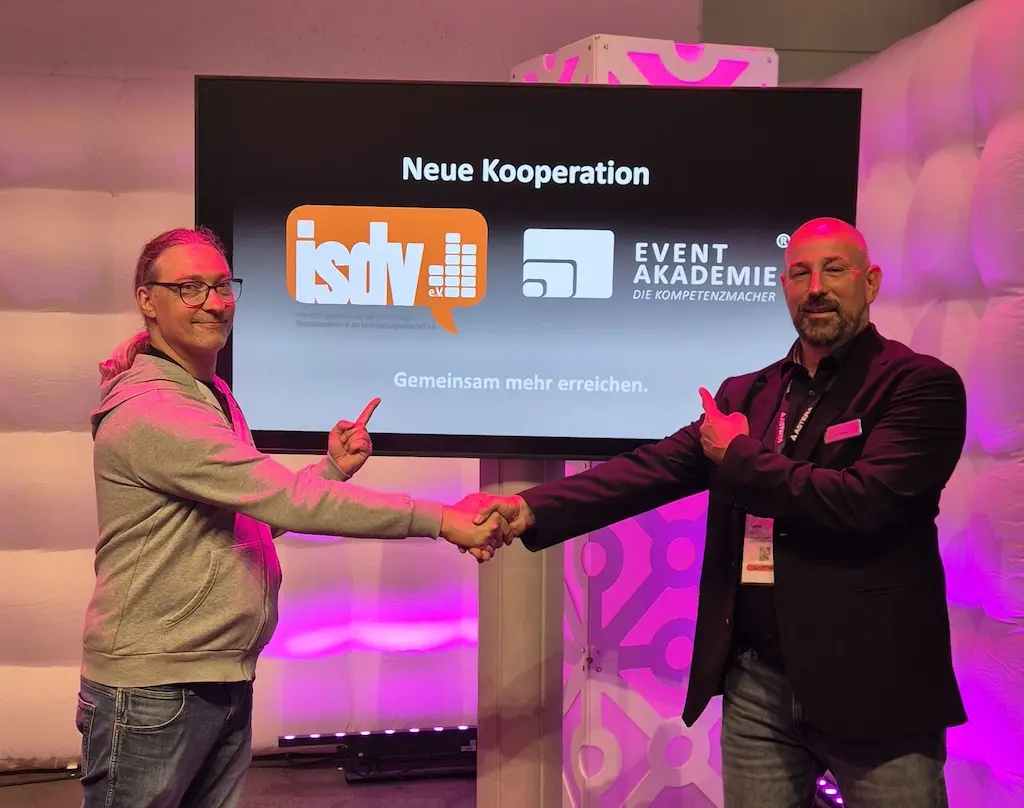
The Event-Akademie, an educational branch of the EurAka Baden-Baden gGmbH, and the Interessengemeinschaft der selbständigen DienstleisterInnen in der Veranstaltungswirtschaft (ISDV e.V.) have finalized a strategic cooperation agreement designed to bolster the entrepreneurial competencies of freelancers and small business owners within the German event industry. Beginning in January 2027, this partnership will manifest as a monthly webinar series specifically tailored to the unique challenges faced by independent operators. The announcement, which was formalized during the LEAT Con 26 trade fair by Marc Stähly of ISDV and Adrian Walz of the Event-Akademie, marks a significant shift toward structured, accessible vocational training for the backbone of the event sector: the solo self-employed and small-scale entrepreneurs.
Bridging the Gap Between Technical Expertise and Business Acumen
The event industry has long been characterized by a high degree of technical specialization. From lighting designers and sound engineers to stage builders and production managers, the sector relies heavily on a workforce that is predominantly self-employed. However, while these professionals often possess world-class technical skills, the administrative and legal complexities of running a business in a highly regulated European market present a constant hurdle.
The new webinar series aims to address this discrepancy. By combining the pedagogical expertise of the Event-Akademie with the industry-specific advocacy and grassroots knowledge of the ISDV, the program seeks to provide practical, actionable advice. The curriculum is designed to cover the intersection of technical safety, legal compliance, and financial management—areas that are often overlooked in traditional technical training but are vital for long-term commercial viability.
Detailed Program Schedule and Curriculum for Early 2027
The collaboration will launch with a series of four high-impact sessions, each targeting a specific pain point in the professional life of an event service provider.
January 12, 2027: Annual Update for Electrical Specialists
The series commences with a mandatory-style update for "Elektrofachkräfte" (Qualified Electricians) specializing in event technology. In an industry where temporary electrical installations are the norm, staying abreast of evolving safety standards—such as DIN VDE 0100-711—is a legal necessity. This session will focus on recent changes in regulations, new safety protocols for mobile power distribution, and liability issues that arise from faulty installations. For freelancers, maintaining this certification is not just a matter of safety but a prerequisite for insurance coverage and contract eligibility.
February 9, 2027: "The Bill, Please! – Invoicing Without Pitfalls"
Financial administration remains one of the most significant administrative burdens for independent contractors. This webinar will delve into the intricacies of German and European tax law as it pertains to the event industry. Topics will include correct VAT (Umsatzsteuer) application for domestic and cross-border services, the requirements of the "Reverse Charge" procedure, and the prevention of formal errors that could trigger audits by the tax authorities (Finanzamt).
March 9, 2027: "From First Thought to Foundation: The Bedrock of Your Business"
Aimed at both newcomers and those looking to restructure their existing operations, the March session focuses on the fundamentals of business start-ups. It will cover the selection of legal forms (e.g., sole proprietorship vs. GmbH/UG), social security obligations through the Künstlersozialkasse (KSK) or the Deutsche Rentenversicherung, and the importance of professional liability insurance. This session serves as a strategic guide for navigating the bureaucratic landscape of the German "Mittelstand."
April 13, 2027: "Backstage Business: International Production Management in Touring"
As the event industry becomes increasingly globalized, the complexity of international touring has escalated. This webinar will address the logistical and administrative challenges of managing productions across borders. Key focus areas include ATA Carnets for equipment transport, visa requirements for crew members in post-Brexit environments and non-EU territories, and the management of international withholding taxes.
The Strategic Importance of the ISDV and Event-Akademie Alliance
To understand the impact of this cooperation, one must look at the roles of the two organizations involved. The ISDV e.V. has emerged as the leading voice for the self-employed in the event sector, particularly gaining prominence during the COVID-19 pandemic when it campaigned for better government support for freelancers. Their focus is on improving the social and legal standing of "solo-selbstständige," advocating for fair pay, and fighting against the risks of "Scheinselbstständigkeit" (false self-employment).
On the other side of the partnership, the Event-Akademie in Baden-Baden is recognized as one of the premier vocational training centers for event technology and management in Germany. By merging the ISDV’s advocacy-driven insights with the Akademie’s academic rigor, the partnership ensures that the educational content is not only theoretically sound but also deeply rooted in the current realities of the marketplace.
The pricing structure of the webinars further reflects this mission. Members of the ISDV will benefit from free or significantly discounted access, incentivizing professional association membership while lowering the barrier to entry for essential education. Non-members will be able to participate at standard market rates, ensuring the program remains sustainable and open to the wider industry.
Industry Context: The Post-2024 Economic Landscape
The launch of this initiative in 2027 comes at a critical juncture for the European event industry. Following the disruptions of the early 2020s, the sector has seen a robust recovery in terms of event volume, yet it faces new systemic challenges. Inflationary pressures have driven up the costs of materials and logistics, while a persistent shortage of skilled labor has increased the workload on existing professionals.
Data from industry associations suggest that while revenue in the German event sector has returned to pre-pandemic levels, profit margins for freelancers are under pressure due to rising overheads and complex regulatory requirements. In this environment, "entrepreneurial literacy" is no longer an optional skill but a survival mechanism. The ability to invoice correctly, manage international logistics efficiently, and maintain high-level safety certifications allows freelancers to command higher day rates and minimize non-billable administrative hours.

Reactions and Implications for the Sector
Industry analysts view this cooperation as a maturing of the event sector’s professional infrastructure. By standardizing the knowledge base of the freelance workforce, the industry as a whole becomes more resilient and professional.
"The collaboration between an advocacy group like ISDV and an educational powerhouse like the Event-Akademie is a logical evolution," says a spokesperson for the industry. "It acknowledges that the ‘technician’ and the ‘entrepreneur’ are two sides of the same coin for a modern freelancer. Providing a monthly touchpoint for this knowledge ensures that the workforce stays updated in real-time, rather than relying on sporadic, multi-day seminars that are often difficult for busy professionals to attend."
Furthermore, the focus on international production management in the April session highlights the industry’s recognition of Germany’s role as a hub for European touring. As sustainability regulations (such as the Green Deal) and digital reporting requirements (like E-Invoicing) become more stringent toward the end of the decade, this webinar series provides a platform to disseminate these changes rapidly across the freelance community.
Timeline and Accessibility
As the January 2027 start date approaches, both organizations have committed to a transparent rollout of further details. Registration portals and specific module syllabi are expected to be published on the official websites of the Event-Akademie and ISDV by late 2026. This timeline allows professionals to integrate these training sessions into their 2027 tour and production schedules.
The webinars will be conducted in a digital-first format, acknowledging the nomadic nature of event professionals who may be on-site or traveling during the sessions. Recorded versions and supplementary digital materials are expected to be part of the offering, allowing for asynchronous learning—a vital feature for a workforce that rarely operates on a standard nine-to-five schedule.
Conclusion: A Model for Vocational Evolution
The partnership between the Event-Akademie and ISDV serves as a blueprint for how industry-specific education can be modernized. By focusing on the "Backstage Business" as much as the "Backstage Technology," the initiative empowers independent contractors to view themselves as businesses first. This shift in perspective is essential for the long-term health of the event industry, ensuring that the professionals who build the stages, manage the lights, and mix the sound are as robust in their business practices as they are in their technical execution. As the first session kicks off in January 2027, the industry will be watching closely to see how this model of continuous, accessible, and highly specialized education influences the professional standards of the German event landscape.
