

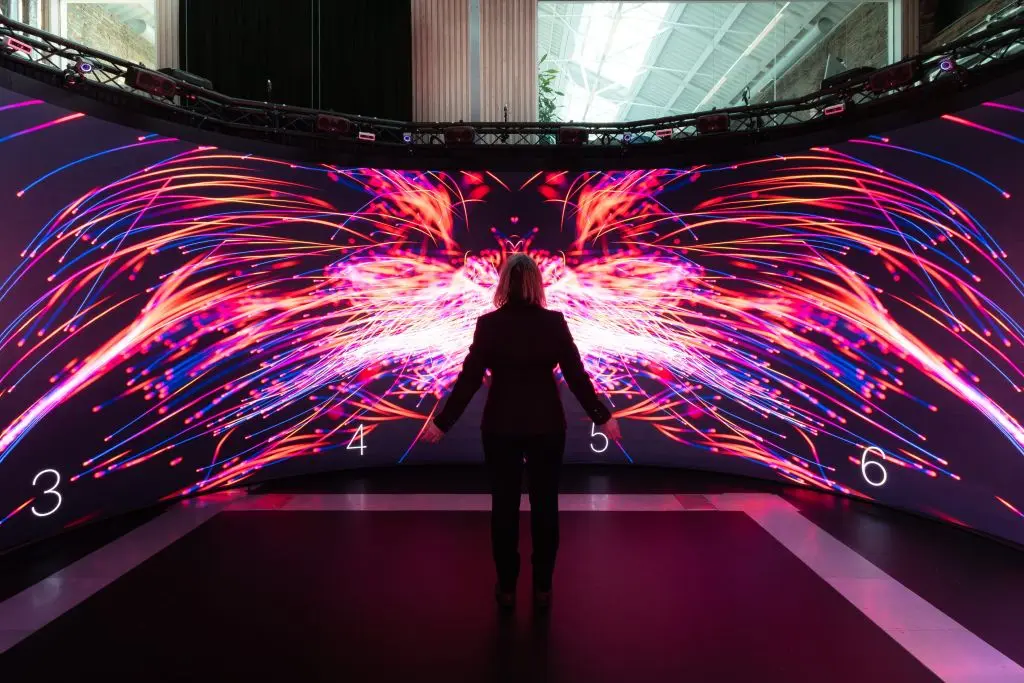
The University of Bristol has officially inaugurated the Reality Emulator, a pioneering immersive visualization facility housed within the Bristol Digital Futures Institute (BDFI). This world-class research environment represents a significant leap forward in the field of digital simulation, allowing researchers to physically step into complex datasets, high-fidelity simulations, and expansive virtual worlds. The centerpiece of this facility is a sophisticated, curved 360-degree LED wall developed by ClearLED, boasting a staggering 31 million pixels. The project was brought to fruition through a strategic partnership with Mechdyne, a global leader in high-end visualization and audiovisual system integration. By combining cutting-edge display technology with advanced system architecture, the Reality Emulator provides an unparalleled platform for interdisciplinary research, ranging from artificial intelligence and game engine development to urban planning and climate modeling.
The Engineering Behind the Immersion
The realization of the Reality Emulator required a departure from traditional display configurations. To achieve a truly seamless 360-degree environment, the project team had to overcome significant architectural and technical hurdles. Mechdyne was responsible for defining the overarching system architecture, ensuring that the complex flow of data from high-performance computing clusters could be rendered in real-time across the massive pixel canvas. ClearLED, meanwhile, was tasked with specifying and manufacturing the display technology that would form the visual foundation of the room.
From the earliest stages of the project, the geometry of the housing, structural statics, image processing workflows, and content delivery mechanisms were planned in a collaborative effort. The core of the display is a bespoke solution based on ClearLED’s Ribbon Series Indoor. Unlike standard direct-view LED panels, which are rigid and typically restricted to flat or slightly angled surfaces, the Ribbon Series is designed for flexibility. This flexibility was essential to accommodate the unique, egg-shaped geometry of the room at the University of Bristol.
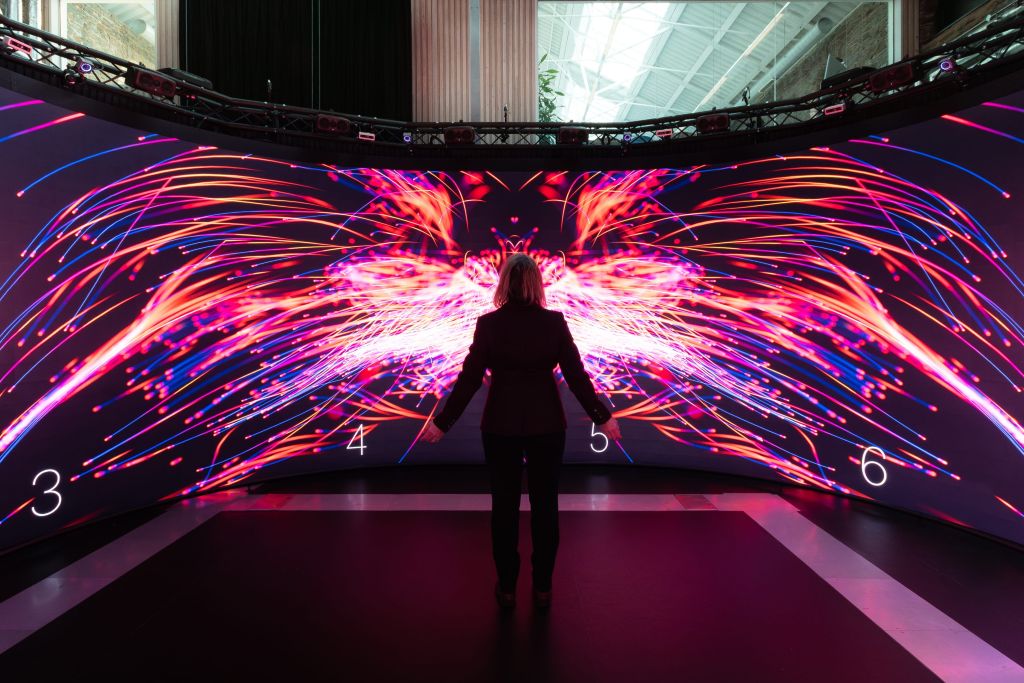
The installation comprises 1,562 individual flexible modules. These modules are engineered to bend and contour, following the continuous curve of the room’s interior without the need for visible edges, flat facets, or distracting seams. This results in a uniform, pixel-perfect alignment across the entire 360-degree circumference. With a pixel pitch of 1.2 millimeters, the display offers high-density resolution that maintains visual clarity even when observers are standing in close proximity to the wall. The sheer scale of the 31-million-pixel array ensures that even the most intricate data visualizations remain sharp and legible, providing the level of detail required for scientific analysis.
A Visionary Approach to Digital Research
The primary objective of the Reality Emulator is to make the technology "disappear," allowing the user to become fully absorbed in the simulated environment. Gus Hadaya, President and CEO of ClearLED, emphasized the importance of this psychological immersion during the facility’s unveiling. He noted that for a researcher sitting in the center of the room, the screen must cease to be a visible object and instead become a window into another reality. Upon experiencing the completed installation, Hadaya remarked that the sense of presence was so profound that it felt authentic, suggesting that the technology now has the power to transport scientists to any location on Earth—or beyond—to explore scenarios that were previously unimaginable.
The facility is now a permanent pillar of the University of Bristol’s digital research infrastructure. It is located within the BDFI, which is part of the university’s ambitious £500 million Temple Quarter Enterprise Campus. The institute was established to transform how digital technologies are created, ensuring they are designed with social needs and human behavior at the forefront. The Reality Emulator serves this mission by providing a "living lab" where the interactions between humans and digital systems can be observed and analyzed in real-time.
Technical Specifications and Performance Data
The technical prowess of the Reality Emulator is evidenced by its rigorous specifications. The integration of 1,562 modules into a single, cohesive display unit required a sophisticated signal processing backbone. The system utilizes high-bandwidth controllers capable of managing the massive data throughput required to drive 31 million pixels at high refresh rates. This is particularly critical for applications involving game engines like Unreal Engine 5 or Unity, where low latency is essential for maintaining the illusion of reality during interactive sessions.
Key technical data points include:
- Total Resolution: 31 million pixels.
- Module Count: 1,562 flexible ClearLED Ribbon Series modules.
- Pixel Pitch: 1.2mm, providing high-definition clarity at close range.
- Field of View: Full 360-degree horizontal coverage.
- Curvature: Custom-contoured to the specific elliptical geometry of the BDFI research hall.
- Integration: Managed by Mechdyne’s proprietary system architecture for synchronized playback and interactive rendering.
The use of direct-view LED technology over traditional projection systems offers several advantages in this context. LED walls provide significantly higher brightness and contrast ratios, allowing the facility to be used in various lighting conditions without washing out the image. Furthermore, the absence of shadows—a common issue in projection-based CAVE (Cave Automatic Virtual Environment) systems—allows researchers to move freely within the space and interact with the content without obstructing the visual feed.

Chronology of Development and Implementation
The journey toward the completion of the Reality Emulator followed a multi-year timeline involving international cooperation between the university, architects, and technology providers.
- Conceptualization (2021-2022): The University of Bristol identified the need for a flagship visualization facility to anchor the Bristol Digital Futures Institute. The goal was to create a space that surpassed traditional VR headsets by allowing for collaborative, multi-user immersion.
- Design and Specification (2022-2023): Mechdyne and ClearLED were brought on board to solve the challenge of the room’s non-standard geometry. During this phase, the Ribbon Series was selected for its unique ability to conform to tight curves.
- Prototyping and Testing (Late 2023): Small-scale tests were conducted to ensure that the 1.2mm pixel pitch modules could maintain structural integrity and color consistency when bent to the required radii.
- Installation and Calibration (Early to Mid-2024): The 1,562 modules were installed on a custom-engineered frame. This phase required precise mechanical alignment to ensure that the 31 million pixels aligned perfectly across module boundaries.
- Software Integration and Launch (Late 2024): The final phase involved integrating the display with the university’s high-performance computing assets and developing the software interfaces necessary for researchers to port their data into the environment.
Research Applications and Broader Implications
The Reality Emulator is not merely a display; it is a dynamic research tool. Unlike traditional cinema screens or static video walls, the content within the Reality Emulator is designed to be reactive. Using advanced tracking sensors and AI-driven software, the environment can respond to the movements and inputs of the users. This capability is being leveraged in several key research areas:
Artificial Intelligence and Robotics: Researchers use the facility to simulate complex environments for AI training. By placing an AI "agent" or a human operator in a perfectly replicated digital twin of a city or a factory, they can study decision-making processes and safety protocols in a controlled yet realistic setting.
Urban Planning and Digital Twins: The City of Bristol and its surrounding areas can be rendered as a "Digital Twin"—a real-time, data-rich virtual model. Planners can visualize the impact of new infrastructure, changes in traffic flow, or the effects of rising sea levels on the local landscape, allowing for data-driven civic decisions.
Climate Science: The 360-degree display allows scientists to "stand inside" weather patterns or ocean currents. By visualizing multi-dimensional climate data on a massive scale, researchers can identify trends and anomalies that might be missed on standard 2D monitors.
Healthcare and Psychology: The facility provides a unique environment for studying human behavior and psychological responses to various stimuli. This has applications in treating phobias, rehabilitating patients with neurological conditions, or designing more intuitive medical devices.
Strategic Impact on the Region
The launch of the Reality Emulator solidifies Bristol’s reputation as a global hub for digital innovation. The University of Bristol has long been a leader in telecommunications, having played a pivotal role in the development of 5G technology. The BDFI and its new visualization suite represent the next chapter in this legacy, bridging the gap between hardware engineering and social science.
By providing local industries—including Bristol’s thriving aerospace, creative media, and tech sectors—with access to such high-end infrastructure, the university is fostering a collaborative ecosystem. The Reality Emulator allows commercial partners to test prototypes and visualize complex systems in a way that reduces the need for expensive physical models, thereby accelerating the pace of innovation.
The successful implementation of the ClearLED and Mechdyne solution at the Bristol Digital Futures Institute serves as a blueprint for future immersive installations worldwide. As the demand for large-scale, seamless, and high-resolution visualization grows in both academic and industrial sectors, the lessons learned from the Reality Emulator’s unique curved architecture will likely influence the next generation of digital research facilities. Through this project, the University of Bristol has not only created a tool for today’s scientists but has also built a gateway to the discoveries of tomorrow.
