

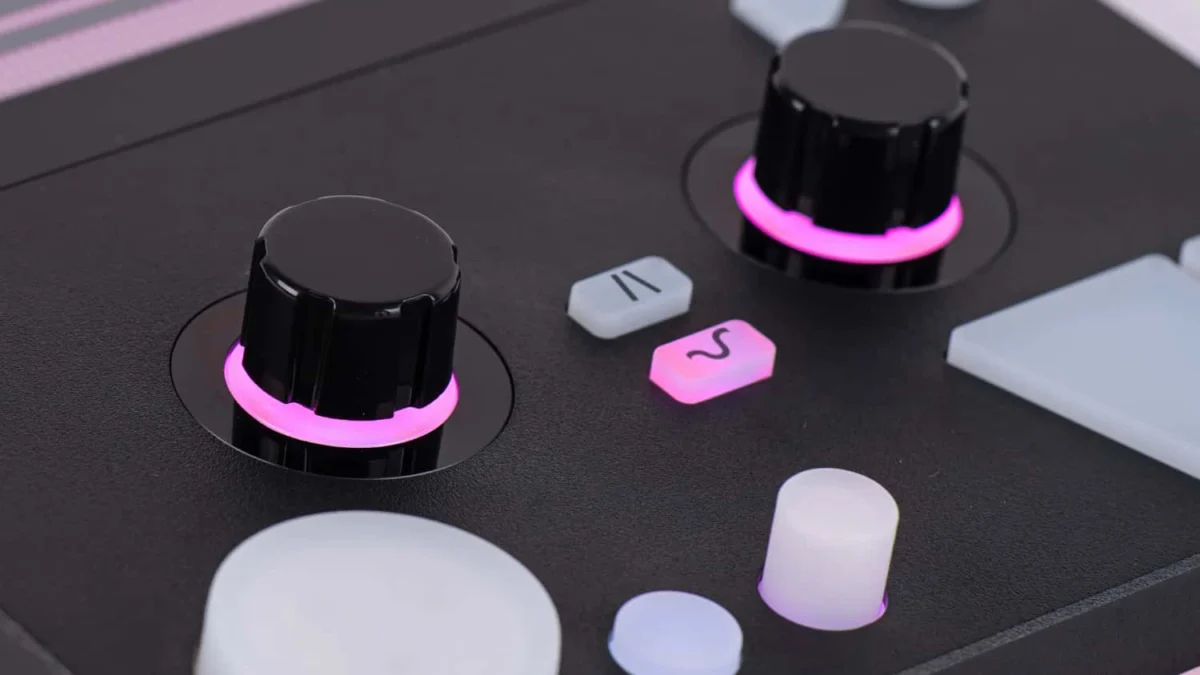
LOVE Synthesizers has officially opened pre-orders for First Love, a standalone electronic instrument designed to demystify Frequency Modulation (FM) synthesis through a combination of modern touchscreen technology and traditional tactile controls. Priced at $699 USD, the device represents a significant attempt to lower the barrier of entry for one of the most notoriously complex forms of sound design. Traditionally, FM synthesis has been associated with steep learning curves and "menu-diving" interfaces, a reputation established in the 1980s that LOVE Synthesizers aims to dismantle with this new hardware offering.
The Evolution and Challenge of FM Synthesis
To understand the significance of the First Love synthesizer, one must consider the historical context of FM synthesis. Developed by John Chowning at Stanford University in the 1960s and later commercialized by Yamaha in the 1980s with the legendary DX7, FM synthesis utilizes the frequency of one waveform to modulate another. While this method produces rich, harmonically complex, and bell-like tones that are difficult to achieve with traditional subtractive synthesis, it is famously difficult to program.
For decades, musicians have struggled with the mathematical nature of FM, where small changes in "operator" ratios can lead to drastic and often dissonant sonic shifts. The First Love synthesizer enters the market with the specific mandate of making these connections "accessible and understandable." By integrating a high-resolution touchscreen, the instrument provides visual feedback that allows users to see the relationships between operators and carriers in real-time, effectively translating abstract algebraic concepts into an interactive, visual medium.
Hardware Architecture and Interface Design
The First Love is housed in a compact, standalone chassis that prioritizes a hybrid workflow. At the center of the unit is a large color touchscreen, which serves as the primary hub for sound shaping and modulation routing. Surrounding the screen are tactile encoders and buttons, ensuring that users can still perform physical adjustments during live sets or studio sessions.
The sound engine is robust, supporting up to four simultaneous instruments or timbres. This multitimbral capability allows the First Love to function as a self-contained production station, capable of playing basslines, leads, pads, and percussion at the same time. The engine supports both polyphonic and monophonic operation, catering to a wide range of musical styles from complex jazz harmonies to aggressive, monophonic techno sequences.
A standout feature of the hardware is its custom FM connection matrix. Unlike vintage FM synths that relied on fixed "algorithms" (preset configurations of operators), First Love allows users to create custom connections. This flexibility, paired with wave-shaping capabilities, enables the creation of timbres that go beyond the standard sine-wave FM of the past.

Advanced Sound Shaping and Morphing Envelopes
The internal architecture of First Love emphasizes movement and evolution. The inclusion of "morphing envelopes" allows for sounds that change over time in non-linear ways. In traditional synthesis, an envelope typically controls the attack, decay, sustain, and release of a sound. In the First Love, these envelopes can be morphed between different states, allowing a sound to transition smoothly from a short, percussive pluck to a long, atmospheric pad without abrupt cuts.
Furthermore, the instrument includes an extensive modulation matrix and built-in effects. While the core of the sound is generated through FM, the addition of digital effects—such as reverb, delay, and chorus—allows users to polish their sounds within the box. The wave-shaping tools further expand the sonic palette, allowing users to distort or reshape the fundamental waveforms before they enter the FM modulation chain, resulting in grittier, more modern textures.
Performance Tools: Sequencing, Looping, and Arpeggiation
Beyond its synthesis engine, the First Love is equipped with a suite of performance tools designed for live electronic music. The instrument features a 4×4 live looper, which allows musicians to capture phrases in real-time and layer them to build complex arrangements. This is complemented by a riff-based arpeggiator, which can generate melodic patterns based on the chords being played.
The MIDI looping and arrangement functions turn the First Love into a central brain for a larger studio setup. Users can sequence internal sounds or send MIDI data to external gear, making it a versatile tool for both stage and studio. The arrangement functions allow for the organization of these loops into full song structures, bridging the gap between a simple synthesizer and a Digital Audio Workstation (DAW).
Microtonality and Alternative Tunings
In a move that appeals to avant-garde and experimental composers, LOVE Synthesizers has included comprehensive support for custom musical scales and microtonal tunings. Most Western synthesizers are locked into the 12-tone equal temperament system, but the First Love provides tools for creating and switching between various scales on the fly.
Microtonality allows for the exploration of intervals between the standard keys on a piano, a feature essential for many non-Western musical traditions and for contemporary experimental music. By making these tunings easily accessible through the touchscreen interface, First Love positions itself as a forward-thinking instrument that encourages harmonic exploration.
Industry Context: The Superbooth Debut
The First Love synthesizer was a highlight at Superbooth 25, the world’s premier trade fair for electronic musical instruments held annually in Berlin. Superbooth has become the epicenter of the "boutique" synthesizer movement, where small manufacturers showcase innovative designs that challenge the dominance of major corporations like Roland, Korg, and Yamaha.

During the "Gesprächskonzert" (talk-concert) at Superbooth, the developers demonstrated the unit’s ability to handle complex FM routing with minimal effort. Industry observers noted that the First Love feels like a response to a growing demand for "tactile FM." While software plugins like FM8 or Ableton’s Operator offer powerful FM synthesis, many musicians prefer the immediate, "no-latency" feel of dedicated hardware. The positive reception at Superbooth suggests a strong market interest in instruments that combine deep digital synthesis with an intuitive physical interface.
Market Positioning and Pricing Analysis
At $699, the First Love is positioned in the mid-range of the synthesizer market. It competes with instruments like the Korg Opsix and the Elektron Digitone. However, the First Love distinguishes itself through its large touchscreen and its emphasis on being a standalone "looper-workstation."
The pricing strategy appears aimed at "prosumers"—serious hobbyists and professional musicians who are looking for a unique sound source that doesn’t require a computer. By offering four-part multitimbrality, LOVE Synthesizers provides significantly more value than single-timbre instruments in the same price bracket. For the cost of one unit, a musician effectively gains four high-end FM synthesizers and a sequencer/looper.
Broader Impact on the Synthesizer Industry
The release of First Love marks a broader trend in the music technology industry: the "humanization" of complex synthesis. For years, the industry trend was to add more features and more menus. However, the current generation of musicians—raised on intuitive smartphone interfaces—demands power without the friction of outdated UI design.
By proving that FM synthesis can be made visual and tactile, LOVE Synthesizers may influence how other manufacturers approach digital synthesis. The focus on "understandable" design could lead to a resurgence of FM in mainstream music, as a new generation of producers finds themselves able to craft original sounds rather than relying on factory presets.
Conclusion and Availability
First Love represents a bold step forward for LOVE Synthesizers, blending the sophisticated, crystalline sounds of FM with a user experience designed for the 21st century. Its combination of a 4-part multitimbral engine, live looping, microtonal support, and an intuitive touchscreen makes it a compelling option for electronic musicians across genres.
The instrument is currently available for pre-order through the official LOVE Synthesizers website for $699 USD. As the company prepares for the initial shipping phase, the global synth community remains watchful of how this "accessible FM" philosophy will perform in real-world studio and stage environments. With its debut at Superbooth 25 having already generated significant momentum, First Love is poised to become a staple for those looking to fall in love with frequency modulation all over again.
