

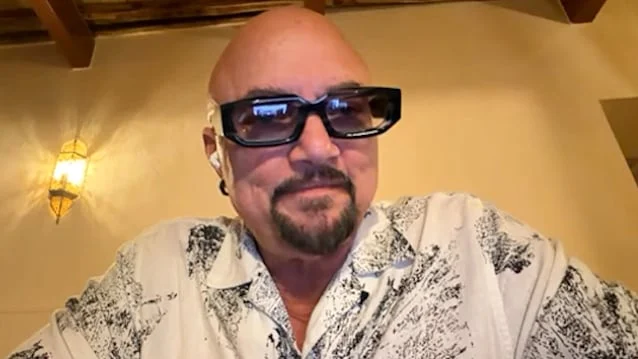
In a recent and revealing interview with V and Metalhead Fred of Creativity Talkin, former Queensrÿche frontman Geoff Tate delved into the complexities and potential of performing his seminal concept album series, "Operation: Mindcrime," in its entirety on a future tour. The discussion, which coincided with the imminent release of "Operation: Mindcrime III" recorded with his solo band, highlighted Tate’s ongoing dedication to the ambitious narrative he first conceived decades ago.
The Challenge of Live Performance: A Trilogy on Stage
Tate articulated the significant logistical and artistic hurdles involved in bringing all three chapters of the "Operation: Mindcrime" saga to a live audience. "It’s so difficult," Tate admitted, expressing a deep-seated desire to share his extensive body of work. "I wish I could play everything I ever wrote. I really do. At least I’d like to do a concert, like a series of concerts, of just playing different stuff that I don’t normally play. There’s music on albums I’ve never played live. I would love to do that at some point. It’s just time in the day. What do you do?"
The primary constraint, as Tate explained, lies in the standard concert format and audience endurance. "Concerts are usually like around an hour and a half," he noted. "That’s pretty much what audiences can withstand, really, at least for hard rock and metal shows. So, I don’t know. ‘Mindcrime I’ for example, is 60 minutes. ‘Mindcrime II’ is, like, 65 minutes. And actually, I haven’t timed the third one yet to know what it is. But it’s around that same length. It’s 13 songs, so it’s right around the same time."
This realization leads to a practical conundrum: fitting three full-length concept albums, each approaching an hour in runtime, into a typical performance slot is impossible. Tate humorously pondered potential solutions, including the idea of separate matinee and evening shows to accommodate the vastness of the material. "So there’s no way I could play all three back to back with an audience," he stated. "I’d have to split ’em up. Do I do a matinee show, like an afternoon show, and then an evening show? [Laughs] Wait a minute. That’s a great idea. [Laughs]."
"Operation: Mindcrime III": A New Perspective on a Familiar Tale
The release of "Operation: Mindcrime III" on May 3rd marks a significant milestone in the ongoing narrative. The album’s first single, "Power," was slated for release on Friday, March 20th, offering fans a first taste of the new material. "Power" is a collaborative effort, written by Geoff Tate and his guitarist/producer Kieran Robertson. The track features Tate on vocals, with contributions from Rich Baur on drums, Disturbed bassist John Moyer (who also co-produced the album) on bass, Dario Parente and Amaury Altmayer on guitar, and synths and strings handled by Tate and Robertson. The song was mixed and mastered by Juan Urteaga at Trident Studios in Pacheco, California.
"Operation: Mindcrime III" continues the tradition of being a concept album, following the intertwined fates of Nikki, a drug addict turned assassin, and the enigmatic Dr. X, the shadowy figure manipulating him. However, this installment diverges by presenting the narrative from Dr. X’s point of view. "It’s kind of interesting, I think, because we’ve only heard it from Nikki’s point of view, and he’s been sort of this victim throughout the whole story," Tate explained in a prior interview. "And Dr. X’s perspective is completely different, ’cause he’s not the victim at all. So it’s very aggressive."
In a conversation with Dean Delray on the "Let There Be Talk" podcast, Tate described "Power" as a "cool track" and the initial release from the album. He characterized it as "very, very energetic, very up, and kind of says a lot in a very short time, which I like."
The Creative Process: Crafting a Coherent Narrative
Tate elaborated on his songwriting methodology for "Operation: Mindcrime III," emphasizing a structured approach to storytelling. "I think you use whatever sort of way you can in order to get what you want," he stated. "And, for me, I sort of look at it as a story, and I write the story out first of what is happening, and then I kind of dissect it and create chapters, and those chapters turn into songs. And then I kind of work to link them all together and follow a storyline that makes sense. And then you gotta kind of factor in musically how you’re gonna tie it together. Does it make sense musically and melodically to put this song before this song, before this song, before this song? ‘Cause that’s a big thing too, is making it flow, so it doesn’t seem obtrusive and people don’t have to turn the page back to find out what happened, and they’re kind of following along in a chronological order."
When Delray remarked that "Power" possessed a sound reminiscent of Queensrÿche, Tate affirmed the deliberate stylistic choice. "Yeah. Well, part of the whole writing process was keeping the music in the universe of ‘Mindcrime,’ writing within that style, I guess you’d say."
The recording of "Operation: Mindcrime III" embraced a global, nomadic approach, leveraging modern technology to capture performances in diverse locations. "There’s 13 songs on the record, and it was recorded all over the world," Tate revealed. "And the beauty of modern recording is that if you have the right equipment, the quality gear, we just take it with us wherever we go. And we set up in hotel rooms backstage at shows, venues. I think one track was recorded in a church. Just wherever we have the right kind of room for the sound, we can record there." He recounted an anecdote about recording a song in a historic Italian castle once inhabited by Casanova, noting the unique sonic contribution of the ancient structure. "So anyway, we just kind of took advantage of that wherever we could and wrote the album as we were touring around the world, really. And I wrote music for the album and lyrics for the album. And Kieran Robertson, my writing partner for this project, contributed so much to this record, playing guitar and also writing music and lyrics too."
The Enduring Appeal of the "Mindcrime" Saga
Tate’s continued fascination with the "Operation: Mindcrime" universe stems from his deep interest in the characters and their complex interrelationships. In an earlier interview with The Metal Voice, he articulated his motivation for creating a third installment. "I’m interested in it. It’s a subject I’ve always been interested in, the ‘Mindcrime’ saga, the story of these three characters, really: Nikki, Dr. X and Sister Mary. A fascinating triangle there of… Oh, it’s an interesting relationship between all three of them. And Nikki’s story has really been kind of chronicled on ‘Mindcrime I’ and ‘Mindcrime II,’ and nothing has really been written about Dr. X. Like, who is he? What’s he all about? Why is he the way he is? What got him to this place he’s at?"
Tate also reflected on how his own life experiences and aging have informed his perspective on Dr. X. "And I just found the subject to be interesting. And especially at the age I’m at now, where I’m probably very close to Dr. X’s age, I’m looking at life differently now, and [I have] different goals, [and I have] a different reason to be, really, which I think probably happens with people as they age and get older. You’ve had past accomplishments, you’ve had things that you’ve done that you’ve really been interested, and you’ve followed your dreams, you followed your muse, and now you’re at a different place where those wants and needs kind of change. So Dr. X is a character study, really, of where he is at and how he got to where he is."
Clarifying the timeline of "Operation: Mindcrime III," Tate confirmed it exists within the same conceptual universe as its predecessors but offers a distinct viewpoint. "It’s kind of a… hmm, I’d say it’s in the same universe, but a different perspective. It’s X’s perspective. It’s happening in time at the same time as ‘Mindcrime I’."
Musically, Tate suggested that "Operation: Mindcrime III" rivals and even surpasses the original in terms of sonic weight. "Oh, yes. The new one is probably, I guess in the same realm. It’s heavier than ‘Mindcrime I’," he stated, though he humorously admitted he would need to re-listen to "Mindcrime II" for a direct comparison.
Sonic Fidelity and Production Excellence
Tate expressed his hopes that listeners would engage with "Operation: Mindcrime III," particularly through headphones, to fully appreciate the intricate details. "I just hope everybody can give it a spin, check it out. And especially with headphones. It’s a wonderful headphone album. Absolutely. We spent a lot of time dialing all the details in that I find to be very important with the record, is it’s gotta sound good on headphones."
He lauded the production work of John Moyer, highlighting the exceptional sound quality of the rhythm section. "And it really sounds great with the mixing and the engineering on it. John [Moyer] did an amazing job putting it all together, and the sound, especially of the rhythm section – oh, it’s phenomenal. It’s really, really crunchy, punchy, big… I think it’s miles above ‘Mindcrime I’ – absolutely. Especially the bottom end – the bass and drums, rhythm section. It’s so modern, so huge." Tate contrasted this with the sound of the original "Operation: Mindcrime," noting its historical significance as one of the early digital recordings. "If you listen back to the ‘Mindcrime I’ album, it sounds like… I think it was one of the three first digital recordings made, and so it has a brittleness to it that you just don’t hear anymore, ’cause the technology has gotten so much better now. The analog-to-digital converters are so much more sophisticated now. So, yeah, it sounds miles about that. I’m very happy, very happy with it."
Historical Context: The Legacy of "Operation: Mindcrime"
Released in May 1988, Queensrÿche’s "Operation: Mindcrime" was a groundbreaking concept album that catapulted the band to new heights. The narrative centered on Nikki, a disillusioned drug addict manipulated by Dr. X and the cult-like revolutionary group he led. Nikki’s journey involved assassinating political figures until his relationship with Sister Mary provided him with a clearer understanding of the truth. Widely recognized as one of the greatest concept metal albums of all time, "Operation: Mindcrime" achieved platinum status in the U.S. in 1991 and received critical acclaim from publications like Kerrang! and Billboard, with Rolling Stone noting its enduring relevance nearly three decades after its release. The album explored themes of religion, drug abuse, and radical politics, weaving a complex and compelling story.
The 2006 follow-up, "Operation: Mindcrime II," was met with a more mixed reception. While considered a competent record in its own right, many critics and fans viewed it as an unnecessary sequel that, in their opinion, diluted the impact of the original.
The Shadow of Legal Disputes and Band Dynamics
The creation of "Operation: Mindcrime II" was fraught with internal conflict within Queensrÿche, culminating in significant legal battles between Geoff Tate and the remaining members of the band. During a 2012 legal dispute over the rights to the band’s name, guitarist Michael Wilton submitted a sworn declaration detailing his exclusion from the "Operation: Mindcrime II" project. Wilton claimed that the idea for the sequel was initially proposed by Geoff Tate’s wife and then-manager, Susan Tate. According to Wilton, the band was hesitant to create a sequel that might diminish the original’s stature. However, he alleged that Geoff and Susan Tate proceeded with a "budget producer" and took control of the project, effectively sidelining other band members. Wilton described instances where songs were written without his input, and his contributions were allegedly minimized or replaced. He stated he was denied access to final recordings and mixes, a situation he termed the "final straw." Wilton also pointed to the album’s sales figures, noting that "Operation: Mindcrime II" sold fewer than 150,000 copies, a stark contrast to the original’s success of over 500,000 units within its first year.
In April 2014, a settlement was reached, ending a nearly two-year legal battle that began when Tate sued over the rights to the Queensrÿche name after his dismissal from the band in 2012. The settlement stipulated that Wilton, Scott Rockenfield, and Eddie Jackson would continue as Queensrÿche, while Tate retained the exclusive right to perform "Operation: Mindcrime" and "Operation: Mindcrime II" in their entirety live.
Since Tate’s departure, the current iteration of Queensrÿche, fronted by Todd La Torre, has released four albums: "Queensrÿche" (2013), "Condition Hümän" (2015), "The Verdict" (2019), and "Digital Noise Alliance" (2022).
The ongoing exploration of the "Operation: Mindcrime" saga by Geoff Tate, now with the release of "Operation: Mindcrime III" and the contemplation of a monumental live performance, underscores the enduring power of his narrative vision and his commitment to bringing this complex story to his dedicated fanbase. The potential for a trilogy-spanning tour, though logistically challenging, represents an ambitious undertaking that could offer a comprehensive and immersive experience for followers of this iconic concept album series.
