

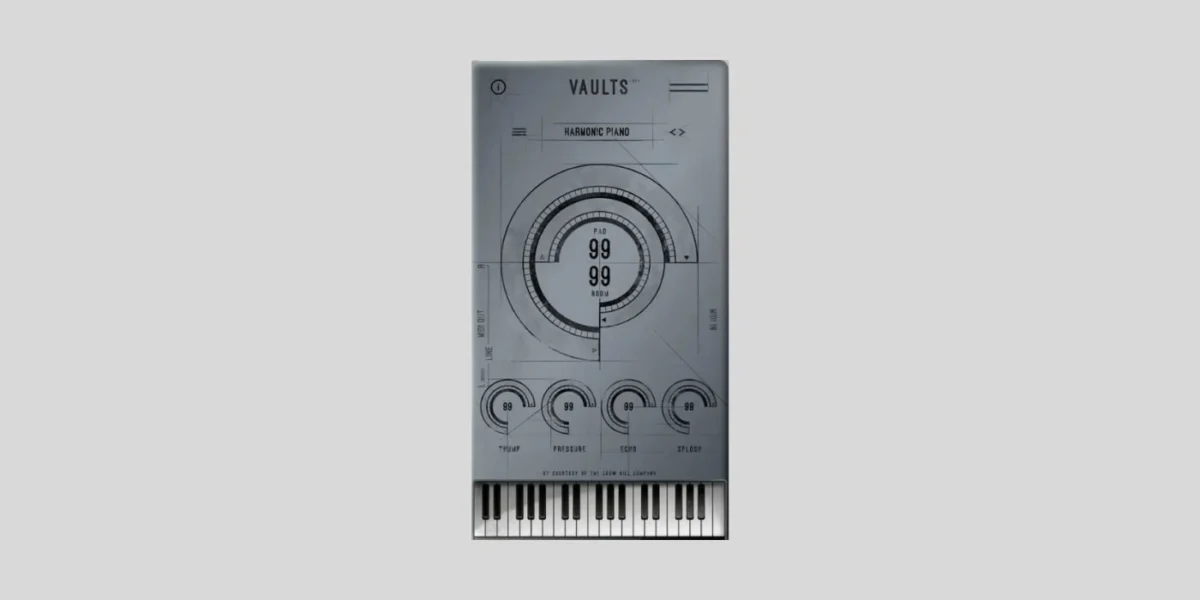
The Crow Hill Company has announced the release of "Harmonic Piano," a groundbreaking new addition to their celebrated Vaults series. This free, experimental piano instrument, available to musicians and producers worldwide, represents a significant exploration into the subtle and often overlooked sonic textures achievable from grand pianos. Rooted in the company’s distinctive philosophy of challenging conventional sound capture and application, Harmonic Piano invites users to delve into a unique auditory experience, transforming the ethereal nature of piano harmonics into a highly playable and versatile virtual instrument.
A Deep Dive into Unconventional Sound Sourcing
The development of Harmonic Piano saw The Crow Hill Company return to the familiar and esteemed acoustics of Castlesound Studios, nestled just outside Edinburgh, Scotland. Renowned for its exceptional recording environment and state-of-the-art facilities, Castlesound provided the ideal backdrop for capturing the nuanced intricacies of harmonic overtones. The studio’s meticulously designed live rooms and control spaces are conducive to isolating and articulating the delicate frequencies that define harmonic sounds, ensuring that every subtlety was preserved in the recording process. This choice of location underscores the company’s commitment to sonic fidelity and their pursuit of pristine audio quality, even when dealing with experimental sound sources.
Harmonics, in the context of stringed instruments, refer to the higher partials or overtones of a fundamental note, produced by lightly touching a vibrating string at specific nodal points. While guitarists and other stringed instrument players frequently employ harmonics for their distinctive, bell-like quality, their deliberate and controlled application on a piano is considerably less common. Pianists typically interact with the keys to strike hammers against strings, or, in more extended techniques, might directly manipulate the strings inside the piano. The conventional piano repertoire rarely calls for the systematic exploration of harmonics as a primary sonic palette. This inherent challenge, however, appears to be precisely what drew The Crow Hill Company to this particular avenue of experimentation.
The innovation lies not merely in the act of recording piano harmonics, but in the meticulous process of extracting and shaping these "almost hidden" sounds from two grand pianos. This endeavor required specialized microphone techniques, careful dampening, and an acute understanding of acoustic physics to isolate the desired overtones without interference from the fundamental notes or other ambient resonances. The goal was to render these typically ephemeral sounds into a robust and musically functional instrument, moving beyond a mere curiosity to a powerful compositional tool. This approach distinguishes Harmonic Piano from other piano sample libraries that primarily focus on traditional key-striking articulations, pushing the boundaries of what a virtual piano instrument can offer.
The Genesis of the Vaults Series: A Commitment to Experimentation
The Harmonic Piano is the latest installment in The Crow Hill Company’s "Vaults" series, a collection characterized by its commitment to releasing free, experimental virtual instruments that challenge conventional musical paradigms. The Vaults series emerged from the company’s desire to share innovative sound design and recording techniques with the broader music production community, democratizing access to unique sonic tools that might otherwise be prohibitively expensive or technically complex to produce. Each release in the series showcases a distinct concept, ranging from unusual sampling methodologies to novel synthesis approaches, always maintaining a high standard of audio quality and playability.
The philosophy behind the Vaults series is deeply embedded in the company’s DNA: to foster creativity by providing musicians with unconventional sonic textures that inspire new compositional directions. This commitment extends beyond mere sound capture; it encompasses thoughtful instrument design, intuitive interfaces, and robust technical implementation, ensuring that even experimental concepts are delivered in a user-friendly and reliable format. The ongoing success and enthusiastic reception of previous Vaults releases attest to the industry’s appetite for such innovative, high-quality, and accessible instruments.
Interface and Sonic Architecture: Bridging Experimentation with Playability
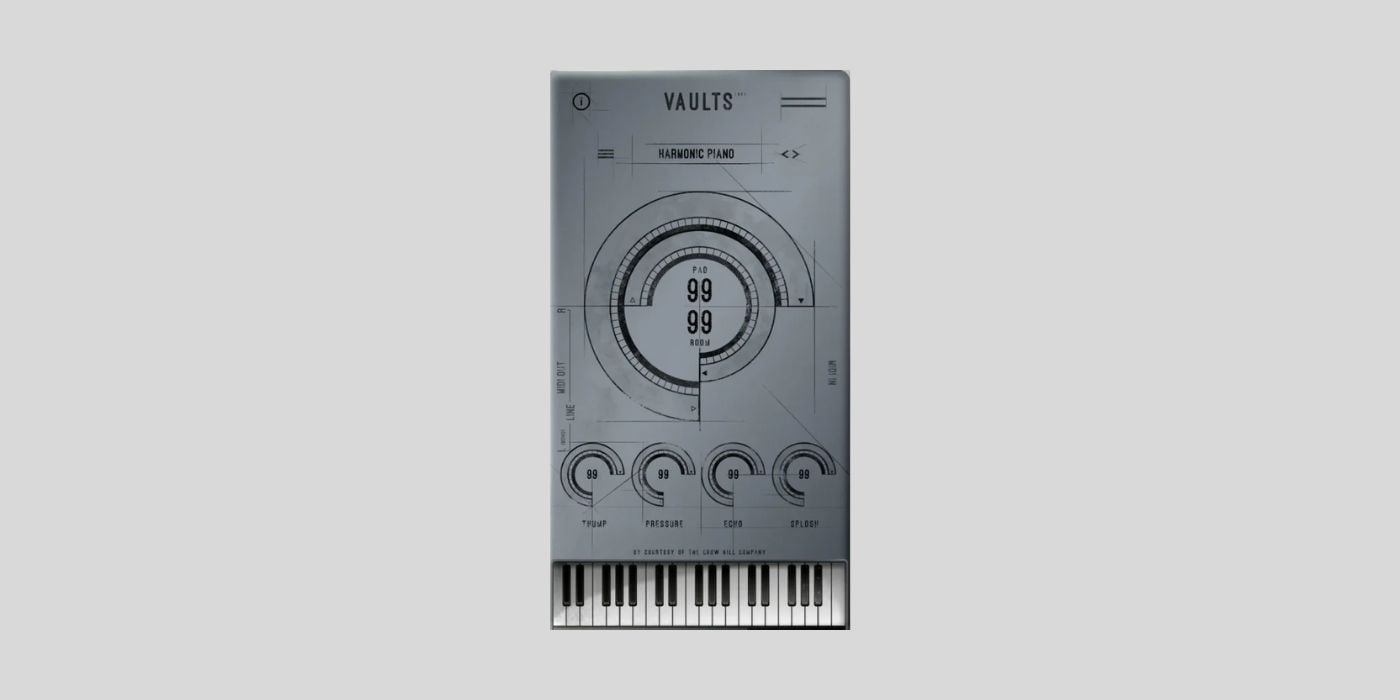
At first glance, Harmonic Piano presents users with the familiar and streamlined interface characteristic of the Vaults series, prioritizing clarity and immediate usability. The two prominent large dials on the interface control the Low-Pass Filter (LPF) / High-Pass Filter (HPF) and Expression. The LPF/HPF combination offers comprehensive spectral shaping, allowing users to sculpt the tonal character of the harmonic sounds, from bright and airy to warm and subdued. This is crucial for integrating the instrument into diverse mixes and achieving specific emotional qualities. The Expression dial, a standard in virtual instruments, provides dynamic control over the instrument’s volume and sometimes its timbre, enabling nuanced performances that respond to the player’s touch.
However, the true creative depth of Harmonic Piano unfolds with its smaller, more specialized controls, which transform the raw harmonic samples into a polished, versatile, and highly expressive instrument.
-
Synth Layer: The "Synth" dial introduces a concert-pitched synth layer designed to address a common characteristic of harmonic sounds: their inherent lack of low-end presence. Harmonics, by nature, are higher partials and often sound thinner or more fragile than fundamental tones. The integrated synth layer provides a subtle yet effective foundation, adding weight, body, and sustain to the sound. This feature is instrumental in making Harmonic Piano feel more substantial and "polished," bridging the gap between an esoteric sound effect and a fully-fledged musical instrument capable of holding its own in a mix. The ability to blend this synth layer seamlessly allows users to dial in the desired amount of foundation, from a pure harmonic texture to a rich, layered soundscape.
-
Reverb: Complementing the synth layer, the Reverb control further enhances the instrument’s sonic environment. While the Castlesound recordings undoubtedly captured some natural studio ambiance, the onboard reverb allows for additional spatialization and depth. This control can transform the sound from intimate and dry to vast and atmospheric, enabling the Harmonic Piano to fit into a wide array of musical contexts, from ambient soundscapes to cinematic scores. The careful calibration of the reverb ensures that it enriches the harmonic textures without muddying them, preserving their inherent clarity.
-
Delay: The "Delay" control stands out as a particularly potent tool for rhythmic and textural manipulation. The percussive and often delicate attack of piano harmonics lends itself exceptionally well to rhythmic patterns created by delays. By adjusting delay time and feedback, users can generate intricate echoes, cascading arpeggios, or evolving textural washes. This feature encourages experimentation, allowing composers to craft complex rhythmic interplay that would be difficult or impossible to achieve with traditional piano techniques. The interplay between the instrument’s inherent percussive quality and the rhythmic potential of the delay creates a fertile ground for innovative musical ideas.
-
Pitch Shift: Perhaps the most experimental of the controls, the "Pitch Shift" dial offers transformative capabilities. This feature allows users to manipulate the pitch of the harmonic samples, opening up a realm of sonic possibilities that range from beautifully ethereal to strikingly eerie. The ability to subtly detune or dramatically shift the pitch of the harmonics can create shimmering textures, otherworldly pads, or unsettling atmospheres. This versatility makes Harmonic Piano suitable for a broad spectrum of compositional applications, from adding delicate accents to creating unsettling sound design elements for film or game scores. The pitch shifting complements the inherent character of the harmonics, expanding their emotional range and ensuring that the instrument can evoke a wide array of feelings.
Broader Musical Context and Application
The concept of extracting unconventional sounds from a piano is not entirely new in the history of music. Composers like John Cage, particularly with his "prepared piano" works, famously altered the instrument’s timbre by placing objects between or on the strings, fundamentally changing its sonic output. While Harmonic Piano does not physically alter the instrument, its focus on non-traditional playing techniques and the manipulation of inherent acoustic properties places it in a similar lineage of pushing the boundaries of piano sound. However, unlike the prepared piano, which often results in highly percussive and sometimes jarring sounds, Harmonic Piano aims to render the subtle and often fragile beauty of harmonics into a robust, playable instrument.
In contemporary music production, the demand for unique and inspiring sounds continues to grow. Producers and composers are constantly seeking instruments that offer distinctive textures to differentiate their work. Harmonic Piano fulfills this need by providing a middle ground: it retains the acoustic authenticity of grand pianos while offering a sound palette that is distinct from traditional piano samples. The percussive element of the harmonics, combined with the extensive modulation options, allows for rhythmic experimentation often associated with muted or plucked piano strings, but with a richer, more resonant quality.
The "extremely playable" nature of Harmonic Piano, despite its experimental origins, is a testament to the thoughtful design of its onboard controls. These controls empower users to sculpt the sound in real-time, adapting it to various musical contexts. For instance, the delicate, bell-like quality can be used for introspective ambient pieces, while the eerie pitch-shifted textures might find a home in suspenseful cinematic cues. The synth layer and reverb allow it to function as a pad instrument, providing sustained harmonic backdrops, while the delay can drive rhythmic patterns in electronic music. This versatility ensures that Harmonic Piano is not just a niche sound effect but a genuinely useful and inspiring musical tool.
Technical Specifications and Accessibility
Harmonic Piano is meticulously engineered to be compatible with a wide range of digital audio workstations (DAWs) and operating systems. It is available in the most common plugin formats: AU (Audio Units) for macOS, VST and VST3 for both macOS and Windows, and AAX for Avid Pro Tools users. This broad compatibility ensures that virtually any modern music producer or composer can integrate Harmonic Piano seamlessly into their existing workflow.
System requirements are also kept reasonable, making the instrument accessible to a broad user base. It requires macOS 11 (Big Sur) or later, or Windows 10/11. These specifications align with current industry standards for virtual instruments, minimizing compatibility issues for most contemporary setups.
The most significant aspect of its accessibility, however, is its price point: completely free. In an industry where high-quality virtual instruments can often command significant prices, The Crow Hill Company’s decision to offer Harmonic Piano for free is a remarkable gesture. This move democratizes access to advanced sound design and experimental instruments, allowing aspiring musicians, hobbyists, and professional producers alike to explore new sonic territories without financial barrier. This commitment to accessibility reinforces Crow Hill Company’s reputation as a community-focused developer, dedicated to fostering creativity across all levels of musical expertise.
Concluding Thoughts on Innovation and Future Impact
The release of Harmonic Piano represents more than just a new virtual instrument; it signifies The Crow Hill Company’s continued dedication to innovation and their pioneering spirit in the field of sound design. By meticulously capturing and ingeniously transforming the seldom-heard harmonics of grand pianos, they have crafted an instrument that is both deeply rooted in acoustic authenticity and boldly experimental in its application.
Industry observers note that the consistent quality and innovative concepts emerging from the Vaults series set a high bar for free virtual instruments. Such releases not only enrich the toolkit of countless musicians but also inspire other developers to explore unconventional sound sources and design philosophies. The implications for the broader music production landscape are significant, as these tools empower artists to create unique sonic identities and push the boundaries of genre.
For anyone involved in music production, sound design, or composition, regularly checking the latest releases from The Crow Hill Company’s Vaults series is always a worthwhile endeavor. Each installment offers a fresh perspective on sound, and Harmonic Piano stands as a shining example of how creative vision, technical expertise, and a commitment to accessibility can converge to produce an instrument that is both profoundly inspiring and immensely playable. It is a testament to the idea that even familiar instruments like the piano still hold untold sonic secrets waiting to be discovered and brought to light.
