

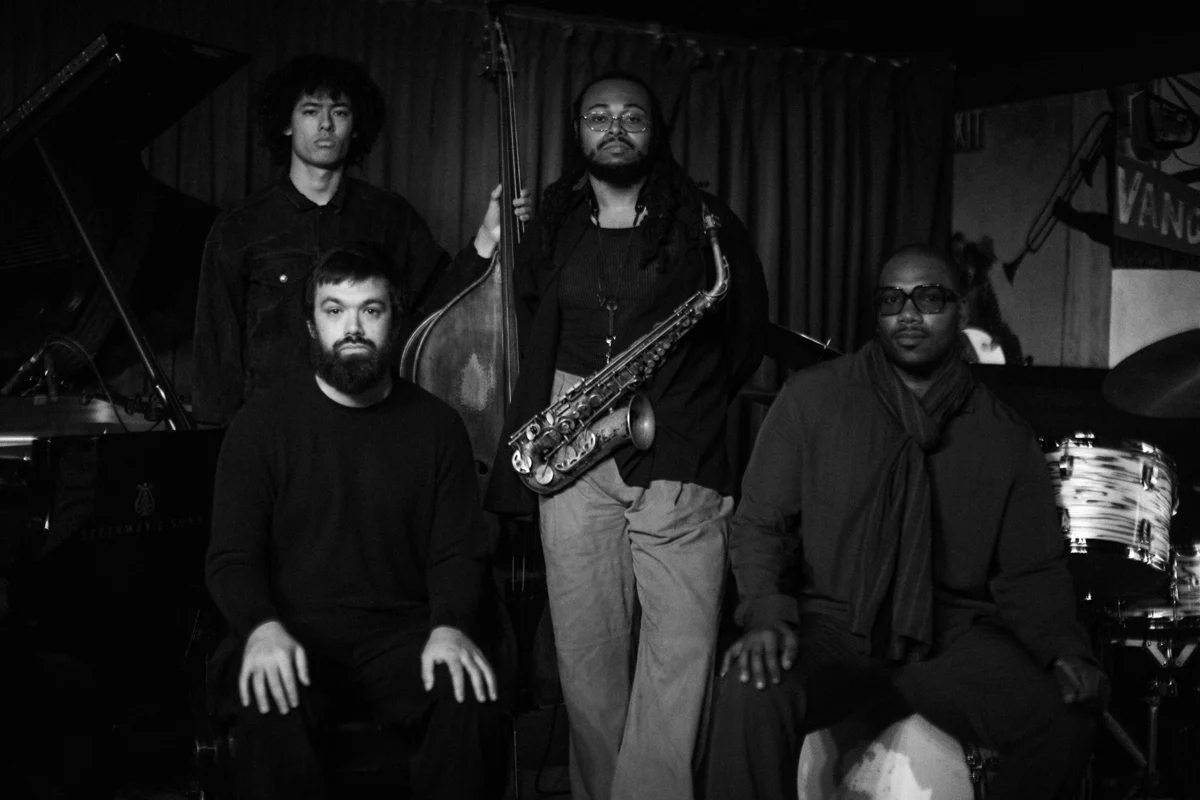
Alto saxophonist Immanuel Wilkins stands poised as a pivotal figure in contemporary jazz, having embarked on a significant live recording project that chronicles his long-standing quartet at the legendary Village Vanguard. This ambitious trilogy, beginning with Live At The Village Vanguard Vol. 1, not only marks a crucial juncture in Wilkins’s burgeoning career but also reinforces the alto saxophone’s enduring legacy within jazz, a lineage characterized by both boundary-pushing innovation and profound popular appeal. Wilkins, a creative thinker and rigorous composer, embodies a fascinating synthesis of these two historical currents, exhibiting a deep understanding of the blues, gospel, and the ecstatic, house-rocking traditions of jazz, while simultaneously exploring uncharted sonic territories.
The alto saxophone has historically served as the instrument of choice for many of jazz’s most forward-looking players, composers, and conceptualists, pushing the genre’s structural and harmonic boundaries. Icons such as Charlie Parker revolutionized improvisation with his bebop language, establishing new standards for technical virtuosity and harmonic sophistication. Ornette Coleman fundamentally reimagined jazz through his embrace of "free jazz," challenging conventional notions of harmony and form. Eric Dolphy extended the instrument’s expressive capabilities with his angular improvisations and multi-instrumental prowess. Later, Anthony Braxton expanded jazz into avant-garde compositions and conceptual art music, while John Zorn integrated noise, hardcore, and diverse musical traditions into his highly experimental work. Greg Osby, a contemporary of Wilkins, continued this tradition of intellectual rigor and genre expansion, exploring complex rhythmic and harmonic frameworks. These musicians consistently stretched jazz to its perceived breaking point, redefining its scope and potential.
Concurrently, the alto saxophone has also been the voice for some of jazz’s most beloved populists, artists who masterfully connected with broader audiences through accessible melodies, infectious rhythms, and undeniable charisma. Louis Jordan, a pioneer of jump blues, laid foundations for rhythm and blues and rock and roll with his swinging, often humorous performances. Johnny Hodges, Duke Ellington’s featured altoist, captivated listeners with his smooth, luxurious tone and lyrical improvisations. Cannonball Adderley became a household name with his soulful, funky hard bop, producing hits that resonated beyond jazz aficionados. Lou Donaldson and Hank Crawford further solidified the alto’s place in soul jazz, crafting blues-drenched, grooving tunes. David Sanborn, in a later era, brought the alto saxophone to mainstream pop and R&B, showcasing its versatility and emotional directness. These artists demonstrated a keen understanding that meeting audiences where they are can elevate a musician to widespread acclaim. Immanuel Wilkins, with his profound musicality and broad appeal, appears uniquely positioned to traverse and ultimately unite these distinct, yet equally vital, aspects of the alto saxophone’s heritage. In the contemporary landscape, his only significant peer for this distinction is Lakecia Benjamin, another alto saxophonist who has garnered critical attention for her innovative contributions to the genre.
Wilkins’s ascent in the jazz world has been meticulously documented since his signing with the prestigious Blue Note Records. His debut album, Omega (2020), was met with widespread critical acclaim, establishing him as a significant new voice with a mature compositional vision. This was followed by The 7th Hand (2022), an ambitious work exploring themes of spirituality and communal improvisation, further solidifying his artistic trajectory. Most recently, Blues Blood (2024) showcased his deep engagement with the foundational elements of jazz, integrating blues and gospel influences into his sophisticated sound. Beyond his leadership roles, Wilkins has been a highly sought-after collaborator, lending his distinctive saxophone voice to records by prominent artists such as vibraphonist Joel Ross, drummer Johnathan Blake, and keyboardist James Francies. He is also a crucial member of the all-star ensemble Out Of/Into, alongside Ross, keyboardist Gerald Clayton, bassist Matt Brewer, and drummer Kendrick Scott, a collective that highlights the collaborative spirit defining much of contemporary jazz.
The Village Vanguard Trilogy: A Deep Dive into Live Performance
Now, Wilkins is embarking on a new and revealing chapter by documenting his long-running quartet—featuring pianist Micah Thomas, bassist Ryoma Takenaga, and drummer Kweku Sumbry—through an unprecedented trilogy of live releases. This project marks a deliberate shift from the meticulously crafted studio environments of his previous works, offering an immersive, unvarnished insight into the band’s dynamic evolution over nearly a decade.
Live At The Village Vanguard Vol. 1, released recently, provides the initial glimpse into this ambitious undertaking. It comprises four expansive tracks recorded during a residency at New York City’s legendary Village Vanguard in May of the previous year. The album features a reinterpretation of "Warriors," a standout piece from his debut Omega, demonstrating how his compositions evolve in a live setting. A radical reimagining of Alice Coltrane’s devotional piece "Charanam," originally from her self-released 1981 cassette Turiya Sings, highlights Wilkins’s deep spiritual and historical connections, showcasing his ability to infuse new life into profound source material. The volume is rounded out by two previously unrecorded pieces, "Composition II" and "Eternal," offering a preview of the quartet’s ongoing creative output.
The subsequent two volumes of the trilogy are slated for release in April and May, respectively. Each of these forthcoming albums will feature predominantly new music, with the exception of a live rendition of "Grace And Mercy," another track from Omega, appearing on Vol. 2. This strategic release schedule ensures a continuous flow of fresh material, demonstrating the quartet’s prolific compositional activity.
The Hallowed Ground of the Village Vanguard
The decision to record at the Village Vanguard carries immense historical weight within the jazz canon. This iconic basement club, known for its intimate atmosphere and impeccable acoustics, has been the site of countless legendary live recordings that have shaped jazz history. John Coltrane’s Live at the Village Vanguard (1961) redefined live jazz recording, capturing the raw energy and daring improvisation of his quartet. More recently, artists like trumpeter Ambrose Akinmusire and pianist Gerald Clayton have continued this tradition, choosing the Vanguard’s stage to document their evolving artistry. Wilkins acknowledged the profound pressure associated with performing and recording in such a revered venue. "We have been playing a lot of new music," Wilkins explained during a phone interview. "Some of it we’ve been playing for maybe just like a year on different gigs, and some of the stuff we’ve been playing since we first started playing as a band, but never recorded. The part that was scary is recording at the Village Vanguard; I think the space itself just demands so much, and I think it’s such hallowed ground and such a revered venue to play at that there’s that pressure… I think that sort of historical precedent and pressure was a whole lot and was super stressful for all of us, but also fun. And look, we’re honored to be in that lineage of people who have released live records at the Vanguard, but also it’s pushed us to make sure that we’re putting out a product that’s actually worthy of that title."
The recording process spanned two intense nights, Thursday and Friday, capturing approximately four hours of music. From this extensive archive, three hours have been carefully curated and preserved across the three volumes. Wilkins confirmed that no single set is presented in its entirety, explaining, "I kind of picked and chose… and tried to make a flow for the album’s sake." However, he also noted that many songs were recorded back-to-back, creating seamless transitions that reflect the live experience, such as "Ring Shout" flowing directly into "Composition IX" on Vol. 2.
Wilkins’s artistic intent for these live recordings was to strike a delicate balance between an immersive live feel and a product that transcends mere documentation. This philosophy profoundly influenced the sonic quality of the records, which, while far from bootleg quality, embrace a distinct rawness. "I wanted it to feel as live as possible, and what I mean by that is both in the recording process — like, there’s a lot of room sound… but then also in the amount [of material] I released. I wanted it to feel immersive, and I want it to feel like you came to a week at the Vanguard. Like, what would it sound like to really live in this universe for a long period of time?" This approach provides listeners with an authentic sonic snapshot of the quartet’s performances, complete with the ambient nuances of the legendary club.
The music itself, spread across 13 tracks over the three volumes, is characterized by an intensity achievable only by a hard-touring unit deeply attuned to each other. Notably, only three tracks are shorter than 10 minutes, with "Composition IX" extending to nearly 24 minutes, underscoring the band’s commitment to expansive, in-depth improvisation. While Wilkins delivers numerous fiery solos, he also generously allocates significant space for his bandmates to explore. There are extended passages where the music effectively functions as a piano trio album, highlighting the profound contributions and individual voices of Micah Thomas, Ryoma Takenaga, and Kweku Sumbry. Wilkins emphasized this collaborative spirit: "For my other records, I feel like I’ve put out really well packaged and contained pieces of work… And this record, I feel like you get to really experience the logic of the band, and what it sounds like for us to be unleashed or just kind of playing in a room. I felt like it was important for us to document that; we don’t really have too much recorded evidence of us, like, reaching for something without any sort of preconceived ideas of what we’re going to do or with any sort of regulations to the performance. I think you’re kind of seeing the most free version of the band."
Despite all compositions being his own (save for "Charanam"), Wilkins maintains that the other players are not merely executants of his ideas. Their seven to eight years of playing together have fostered an undeniable trust and a shared sense of ownership. "I’ve always tried to encourage everyone in the ensemble to make it feel like it’s their own… it doesn’t necessarily feel like I need to ever — I don’t have any ownership over the music… I think that’s really important as an improviser or as a musician, playing with other people — we don’t own anything, it’s really the music kind of [taking] shape as it wants to take shape and especially when you’re being vulnerable with four people over the course of eight years, it’s like there’s trust… it doesn’t become anybody’s show, you know?" This philosophy underscores the democratic and deeply collaborative nature of the Immanuel Wilkins Quartet.
Studio vs. Live: A Dual Artistic Vision
This vibrant, anything-goes approach to the live recordings stands in intriguing contrast to Wilkins’s studio albums, particularly Blues Blood, which are meticulously crafted and designed to exist as self-contained artistic statements rather than mere documentations of performances. He credits early mentors Jason Moran and Kendrick Scott with instilling in him an appreciation for the studio as a creative tool, a perspective not universally adopted by jazz musicians. "I actually got that advice on my first record from Jason Moran and from Kendrick Scott. They both were like, ‘Man, make it sound like you’re in the studio. Make it sound like a record; lean into the studio magic. Don’t be afraid of messing with some stuff.’" This mindset allows Wilkins to view albums as "artifacts," unique creations that do not simply replicate a live experience. "I want to make artifacts," he states. "I want to make stuff that isn’t a thing replicating a thing. I want to make the thing, you know? There is a world in which recording can be a replication of what it means to hear it live, and I think that’s a little less interesting than making the thing itself. We always say [in jazz] that recordings are never like hearing the band live, and I think that leaning into the recording process means that no, that thing is actually a singular thing, and then the live performance is a singular thing, and that’s also why I felt super liberated to make the Village Vanguard recording feel like a voice memo, almost, where there’s so much room sound, there’s so much audience in it… I really was like, man, I actually want this to just feel like the room, because I have so many recordings where I’m so careful about each sonic thing, you know what I mean?" This dual approach—meticulous studio artistry and raw, immersive live documentation—showcases the breadth of Wilkins’s artistic vision and contributes significantly to the evolving discourse on jazz recording practices.
TAKE 10: Notable New Releases in Contemporary Jazz
Beyond Wilkins’s monumental project, the contemporary jazz landscape continues to be enriched by a diverse array of releases from both established masters and rising stars. This survey highlights ten such notable albums that are shaping the current sound of the genre.
10. Pat Metheny – "Don’t Look Down" (Side-Eye III+)
Guitar virtuoso Pat Metheny continues his innovative Side-Eye project with its first studio album, Side-Eye III+. This evolving ensemble, essentially Metheny’s contemporary take on an organ trio, features a new lineup with Chris Fishman on keyboards and Joe Dyson on drums. Metheny’s previous iterations included James Francies and various drummers like Marcus Gilmore and Nate Smith. Side-Eye III+ is far more than a conventional organ trio record; Fishman’s versatile contributions on piano, synth, and organ, combined with wordless, possibly synth-created, backing vocals, lend tracks like "Don’t Look Down" an unusual, almost ethereal breathiness. Metheny’s guitar work remains firmly rooted in his distinctive "jazz guitar" mode, avoiding the more experimental synth-heavy directions of some past projects, which many listeners find a welcome return to form. The album demonstrates Metheny’s ongoing capacity for creative reinvention within his established stylistic framework.
9. Jeremy Pelt – "Fathers And Sons" (Our Community Will Not Be Erased)
Trumpeter Jeremy Pelt presents Our Community Will Not Be Erased, an album rich with social commentary and musical depth. Known for leading bands that bridge generational divides, Pelt here collaborates with a varied lineup: contemporary pianist Orrin Evans, younger keyboardist Lasse Corson, and jazz veterans bassist Buster Williams and drummer Lenny White. The album features entirely new original compositions, with titles like "Manifesto," "For The Culture," "Brothas On The Corner," "Fathers And Daughters," and "Fathers And Sons" (reflecting Pelt’s own family). This clearly indicates Pelt’s view of jazz as a vehicle for important social discourse and upliftment. Musically, it’s a modern offering, eschewing nostalgic re-creation of past eras. Pelt’s trumpet playing is powerful, imbued with the grace and lyricism reminiscent of Woody Shaw, while his gift for strong melodies and compelling arrangements ensures the music is both intellectually stimulating and viscerally engaging.
8. Adam O’Farrill – "Herkimer Diamond" (Elephant)
Trumpeter Adam O’Farrill, a fixture in numerous acclaimed ensembles (Patricia Brennan, Mary Halvorson, Hiromi), steps forward with a new quartet, ELEPHANT, and their self-titled debut album. Unlike his previous album, For These Streets, which featured a roster of guest appearances, Elephant introduces a fresh lineup with keyboardist Yvonne Rogers, bassist Walter Stinson, and drummer Russell Holzman. The album is characterized by its relentless, almost minimalist energy, reminiscent of disco, driven by intricate tick-and-thump drumming. O’Farrill adorns these foundations with smeary, electronically warped horn lines. "Herkimer Diamond" exemplifies this aesthetic, built upon an almost drum ‘n’ bass rhythm. The track features fascinatingly off-kilter yet romantic playing from both O’Farrill and Rogers, marking ELEPHANT as a band to watch for its distinctive and innovative sound.
7. Walter Smith III – "Casual-Lee" (Twio Vol. II)
Tenor saxophonist Walter Smith III, now signed to Blue Note, releases Twio Vol. II, a follow-up to his 2018 Whirlwind release, Twio. This iteration features a new rhythm section of Joe Sanders on bass and Kendrick Scott on drums, alongside special guests Ron Carter on bass and Branford Marsalis on tenor saxophone. Marsalis is featured prominently on the ripping version of the standard "Casual-Lee." Smith is celebrated for his clean, polished modern style, yet his playing reveals a deep connection to the "Texas tenor" tradition, recalling the hard-blowing lyricism of artists like Arnett Cobb. On "Casual-Lee," Smith and Marsalis, an early influence, engage in a friendly yet competitive saxophone dialogue over a dynamic, dancing rhythm, showcasing their technical prowess and improvisational fire.
6. Espen Berg – "What A Wonderful World" (The Kempen Concert)
Norwegian pianist Espen Berg continues his remarkable series of fully improvised solo piano releases with The Kempen Concert, recorded in November 2024. This marks his fourth such album, following The Trondheim Concert (2022), The Nidaros Concert (2023), and The Hamar Concert (2023). Berg appears to be carving out a niche in the solo piano realm, reminiscent of Keith Jarrett’s influential improvised concerts. His music blends classically derived romanticism with occasional rhythmic vigor, yet unlike Jarrett, he avoids vocalizations during performance and engages with audience response. The Kempen Concert spans five movements over 70 minutes, concluding with two encores, including a beautiful rendition of "What A Wonderful World." While perhaps not the most overtly thrilling album of the month, its beauty and contemplative depth offer a rewarding listening experience.
5. Harriet Tubman & Georgia Anne Muldrow – "Flowers" (Electrical Field Of Love)
The experimental trio Harriet Tubman—comprising guitarist Brandon Ross, bassist Melvin Gibbs, and drummer JT Lewis—releases Electrical Field Of Love, a captivating collaboration with jazz-funk priestess Georgia Anne Muldrow. Harriet Tubman’s sound defies easy categorization, best described as dubby psychedelic rock fueled by improvisation, often integrating elements of avant-garde jazz. Their previous collaborations with artists like Wadada Leo Smith and Ron Miles have yielded extraordinary results. On Electrical Field Of Love, the trio provides deep grooves from Gibbs and Lewis, over which Ross delivers some of his most traditionally guitar solo-esque playing. Muldrow’s contributions are more elusive, her voice filtered through effects and her lyrics presented as disjointed phrases, creating a mesmerizing, dreamlike sonic tapestry that pushes the boundaries of genre.
4. Mark Turner – "Supersister" (Patternmaster)
The "Zenlike" tenor saxophonist Mark Turner, a practicing Buddhist known for his contemplative yet incisive playing, presents Patternmaster, his third album with a quartet featuring trumpeter Jason Palmer, bassist Joe Martin, and drummer Jonathan Pinson. The extended collaboration has clearly fostered a deep creative rapport within the ensemble. The quartet adheres to traditional jazz dynamics, with Palmer and Turner handling melodies and soloing in turn, yet the freedom granted to Martin and Pinson elevates the performances into the stratosphere. "Supersister," the album’s longest track at over 12 minutes, exemplifies this dynamic. It commences with a supple, shifting groove from the rhythm section before the horns enter, initiating a relentless and captivating musical journey. Turner’s precise articulation and profound harmonic insight remain central to the group’s compelling sound.
3. Shabaka – "Marwa The Mountain" (Of The Earth)
Shabaka Hutchings, known simply as Shabaka, marks a significant return to the saxophone with his new album, Of The Earth, following a period where he focused primarily on flutes (as heard on Afrikan Culture and Perceive Its Beauty, Acknowledge Its Grace). This album represents a deeply personal and solitary artistic endeavor, reportedly created while traveling, utilizing available instruments and laptop production tools. The recording features programmed rhythms, looping structures, and dreamy synth interludes, offering a stark contrast to his previous group-oriented work. The final track, "Eyes Lowered," even includes Shabaka rapping. However, it is "Marwa The Mountain" that stands out for its re-engagement with the tenor saxophone, where Shabaka blows hard riffs reminiscent of his work with Sons Of Kemet and The Comet Is Coming. This album is anticipated to be polarizing, yet it signifies a bold new direction for an artist constantly redefining his sonic identity.
2. Dave Adewumi – "Is" (The Flame Beneath The Silence)
Dave Adewumi is rapidly emerging as a prominent trumpet player in the contemporary jazz scene. Having already recorded with esteemed artists such as trumpeter Dave Douglas, pianist Jason Moran, and vibraphonist Sasha Berliner, Adewumi now steps forward as a leader with The Flame Beneath The Silence. This debut, recorded live at Ornithology in Brooklyn in 2024, is released via Giant Step Arts, a nonprofit dedicated to supporting modern masters and new horizons in jazz. Adewumi’s style, honed through collaborations and mentorship (notably with Jason Palmer), exhibits exceptional technical skill, extraordinarily precise articulation, and a strong flair for melody, all of which are evident on the track "Is." His command of the instrument and mature artistic voice position him as a significant new talent whose name will undoubtedly become increasingly recognized.
1. Irreversible Entanglements – "Don’t Lose Your Head" (Future Present Past)
Irreversible Entanglements, the formidable quintet featuring trumpeter Aquiles Navarro, saxophonist Keir Neuringer, bassist Luke Stewart, drummer Tcheser Holmes, and poet Camae Ayewa (Moor Mother), releases Future Present Past, their second album on the legendary Impulse! label. Since their self-titled debut in 2017, which opened with the raw, politically charged "Chicago To Texas," the group’s sound has evolved considerably. Their initial work was characterized by terrifyingly confrontational free jazz and poetry addressing systemic oppression. Over subsequent albums (Who Sent You? in 2020, Open The Gates in 2021), their music expanded through electronics, more open compositional strategies, and a growing embrace of studio capabilities, transforming their recordings into comprehensive artistic statements rather than mere documents.
Their 2023 Impulse! debut, Protect Your Light, recorded at Rudy Van Gelder’s iconic studio, marked a significant shift. It was more concise, optimistic, and brighter, with Ayewa’s lyrics focusing on themes of love, freedom, and joy, encapsulated by the mantra "Protect your light / Protect your life." Future Present Past continues this evolution, awash in electronics and dubby effects, with horns and rhythm instruments weaving in and out like a sonic jungle. Guest vocalists Helado Negro and MOTHERBOARD are integral to the album’s texture. The track titles reflect a focus on collective action and ultimate positivity: "Juntos Vencemos" ("Together We Win"), "Don’t Lose Your Head," "Vibrate Higher," "Hold On," "Keep Going," culminating in "We Overcome." "Panamanian Fight Song" serves as a miniature manifesto, incorporating many of these themes into Ayewa’s lyrics. "Don’t Lose Your Head" exemplifies the album’s optimistic yet cautionary tone, with Ayewa and MOTHERBOARD singing over a pulsing bassline, clattering drums, and a mantra-like horn line. This track, while a strong single, truly shines within the context of the entire album, showcasing the group’s continued artistic growth and their profound message of resilience and collective spirit.
Broader Implications and The Future of Jazz
The confluence of these new releases, spearheaded by Immanuel Wilkins’s ambitious Village Vanguard trilogy, underscores the remarkable vitality and dynamism of contemporary jazz. The genre continues to thrive through a delicate balance of tradition and innovation, where artists like Wilkins respectfully engage with historical precedents while forging entirely new paths. The diverse approaches to recording—from Wilkins’s raw, immersive live documentation to his meticulously crafted studio "artifacts," and the varied production styles seen across the "TAKE 10" selections—highlight a broader artistic liberation within jazz. Artists are increasingly viewing recording as a creative act in itself, rather than merely a replication of live performance.
The emergence of powerful new voices such as Wilkins and Dave Adewumi, alongside the continued evolution of established masters like Pat Metheny and Mark Turner, signifies a robust and forward-moving landscape. Jeremy Pelt’s thematic explorations, Adam O’Farrill’s genre-bending quartet, Espen Berg’s contemplative solo work, Harriet Tubman’s experimental fusions, Shabaka’s bold reinventions, and Irreversible Entanglements’ potent socio-political and musical statements collectively demonstrate that jazz remains a fertile ground for profound artistic expression and critical engagement. These artists are not merely performing; they are creating, challenging, and redefining what jazz can be, ensuring its continued relevance and resonance in the global cultural dialogue. The sheer quality and intellectual rigor evident in these releases confirm that the current generation of jazz musicians is indeed "killing it," pushing the art form into exciting and unpredictable futures.
