

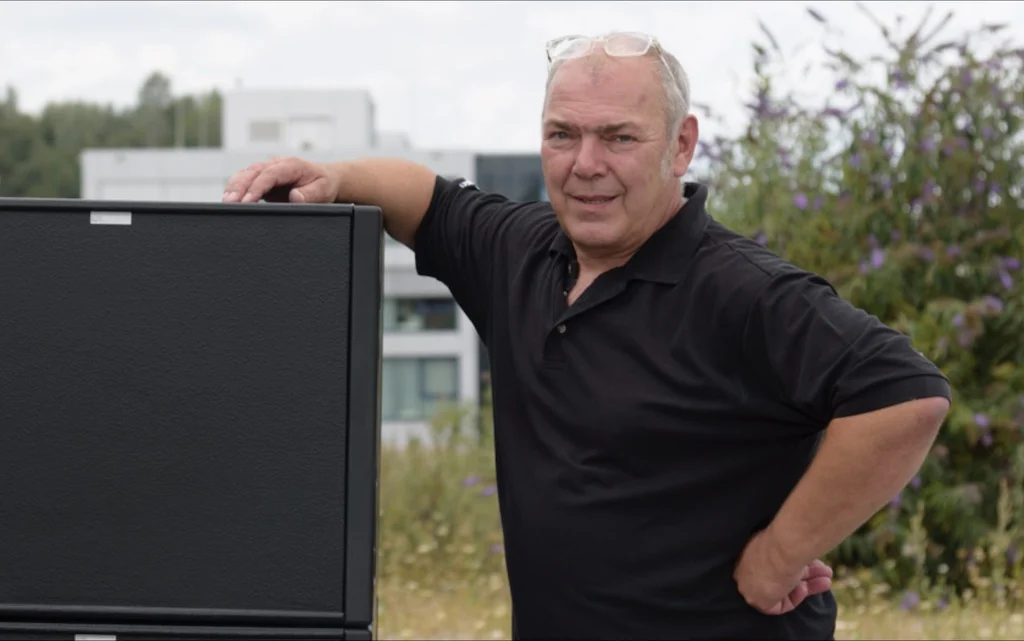
The professional audio community is in mourning following the sudden passing of Reinhard Steger, a veteran engineer and sales executive whose career spanned more than three decades of technological transformation in the live sound industry. Steger, who was widely recognized as the primary representative for the French loudspeaker manufacturer Nexo within the German market, passed away unexpectedly last weekend. The news has sent shockwaves through the industry, particularly as many colleagues and partners were preparing to meet with him at upcoming industry events in Hamburg. Steger’s career was not merely a sequence of professional roles but a narrative that mirrored the evolution of modern sound reinforcement, from the analog broadcast era of the late 1980s to the sophisticated digital networking and line array systems of the present day.
Early Career and the RIAS Berlin Era
Reinhard Steger’s journey in professional audio began in the high-stakes environment of West Berlin during the late 1980s. He served as an audio specialist for RIAS (Radio in the American Sector), a broadcaster that played a pivotal role in the cultural and political landscape of divided Germany. Working at RIAS during this period required a mastery of complex analog signal chains and an ability to maintain high-fidelity standards under the pressures of live broadcasting.
This formative period provided Steger with a rigorous technical foundation. The late 80s were a time of significant transition in Berlin; the city was a hub for experimental sound and high-level broadcasting. Steger often recounted his time at RIAS as a period of intense learning, where the precision required for radio transmission translated into a lifelong commitment to audio quality. His work in the Berlin live sound scene during the 1990s further solidified his reputation as a dependable and knowledgeable engineer, capable of navigating the logistical and acoustic challenges of the city’s various venues during the post-reunification boom.
The Transition to Camco and the Rise of Nexo
In 1998, Steger’s career took a decisive turn when he joined Camco Produktion & Vertrieb. At the time, Camco was a powerhouse in the German audio industry, known for its high-end power amplifiers. The company was in a phase of strategic expansion, diversifying its portfolio by taking on the distribution of international brands. Among these was a relatively young and innovative brand from France: Nexo.
When Steger joined the team, Nexo was still establishing its footprint in the highly competitive German market. At that time, the industry was witnessing a shift in how large-scale sound reinforcement was approached. Nexo’s Alpha series was gaining traction, challenging the status quo with its high-output, modular design. Steger became the "face" of this transition. His role was not merely sales; it was educational. He had to convince skeptical sound engineers and rental companies that the French manufacturer’s proprietary processing and driver technology represented the future of touring sound.
During his 15-year tenure at Camco, Steger oversaw a period of remarkable growth. This era also saw significant corporate shifts; Camco’s electronics division, which produced the amplifiers that powered many of the world’s leading sound systems, was eventually sold and integrated into the French company L-Acoustics. Despite these shifts in the corporate landscape, Steger remained a constant, dedicated to the Nexo brand and its evolution.
Landmark Projects and Technical Contributions
One of the defining characteristics of Reinhard Steger’s professional life was his hands-on approach to complex installations. A notable example occurred in 2003, when he collaborated with Amptown Sound & Communications on a major installation at the Holstenhalle in Neumünster. The venue, a former aircraft hangar, presented a nightmare of acoustic reflections and cavernous spaces.
Steger’s expertise was instrumental in deploying a Nexo system that could provide uniform coverage and speech intelligibility in such a challenging environment. The Holstenhalle project remains a case study in the industry for how specialized loudspeaker processing can overcome architectural limitations. Throughout the early 2000s, Steger was involved in countless similar projects, from theater renovations to outdoor festival deployments, always ensuring that the technical implementation met the highest standards of the Nexo philosophy.
As Nexo moved away from point-source systems toward the revolution of line array technology—marked by the introduction of the GEO series—Steger was at the forefront of training German technicians. The GEO series introduced the Tangent Alpha Wavebranching (TAW) technology, which required a deep understanding of wave physics to deploy correctly. Steger’s ability to translate these complex scientific concepts into practical, on-site advice made him an invaluable asset to the German rental market.
The Yamaha Integration and Continued Legacy
In the mid-2000s, the pro-audio industry underwent a wave of consolidation. Yamaha Corporation, seeking to expand its presence in the high-end touring and installation markets, entered into a strategic partnership with Nexo, eventually acquiring the company. This transition could have been disruptive for many distributors, but for Steger, it represented a new chapter of stability and resource-rich growth.
Following the restructuring, Steger transitioned to working under the Yamaha umbrella while remaining the primary point of contact for Nexo in Germany. For the last 13 years of his life, he navigated the complexities of a global corporate structure while maintaining the personal, boutique-level service that his clients had come to expect. He was instrumental in the launch of the STM (Scale Through Modularity) series, a system designed to be the "universal" solution for everything from small clubs to massive stadiums.
Steger’s longevity in the role—totaling nearly 30 years with the Nexo brand—is a rarity in the modern professional audio industry. It spoke to his loyalty, his deep technical knowledge, and the trust he had built with three generations of sound engineers.
A Reputation Built on Reliability and Humility
Beyond his technical achievements, Reinhard Steger was known for his unique work ethic. In an industry often characterized by large egos and aggressive marketing, Steger was noted for his humility and practical nature. Colleagues at trade publications, such as Production Partner, remember him as a professional who was never afraid to get his hands dirty.

When editorial teams required equipment for independent testing or subwoofer measurements, Steger would often personally load the heavy gear into his vehicle and drive it to the testing facility himself. This "lead by example" attitude earned him immense respect from journalists, engineers, and competitors alike. He understood that the data mattered, and he was confident enough in the products he represented to subject them to the most rigorous objective scrutiny.
Broader Industry Implications and Reactions
The loss of Reinhard Steger comes at a time when the pro-audio industry is grappling with a generational shift. Figures like Steger, who bridged the gap between the analog pioneers and the digital innovators, are increasingly rare. His passing is viewed not just as a personal loss for his family and Yamaha/Nexo, but as the loss of a significant repository of industry knowledge.
While official statements from Yamaha and Nexo emphasize his technical contributions, the informal reactions from the German "Tonmeister" community highlight his role as a mentor. Many young engineers entering the field in the late 90s and 2000s recall Steger as the person who took the time to explain the nuances of system alignment and the importance of phase coherence, often staying late at venues to ensure a system was tuned to perfection.
The timing of his death, just prior to major industry gatherings in Hamburg, has left a palpable sense of shock. These events, which serve as the primary networking hubs for the German audio scene, will likely see many tributes paid to his memory.
Chronology of a Career in Sound
- Late 1980s: Serves as an audio specialist for RIAS Berlin, mastering the art of broadcast audio during the final years of the Cold War.
- 1990s: Establishes himself in the Berlin live sound scene, working on diverse productions during a period of rapid cultural expansion.
- 1998: Joins Camco Produktion & Vertrieb, taking over the German distribution and support for Nexo.
- 2001-2002: Oversees the introduction of the Nexo GEO series in Germany, ushering in the line array era for the brand’s local partners.
- 2003: Leads the technical support for the landmark Holstenhalle Neumünster installation, proving the efficacy of Nexo systems in difficult acoustic environments.
- 2008-2013: Manages the transition of Nexo distribution as the brand becomes fully integrated into the Yamaha Corporation.
- 2013-2026: Continues as the primary expert for Nexo under Yamaha Music Europe, supporting the launch of the STM series and the latest digital processing platforms.
- September 2026: Passes away unexpectedly, leaving behind a legacy of technical excellence and a nearly 30-year association with the Nexo brand.
Conclusion and Final Tribute
Reinhard Steger’s impact on the German professional audio market cannot be overstated. He was a cornerstone of the industry who witnessed and facilitated the technological leaps that allow modern audiences to experience high-fidelity sound in any environment. From the broadcast booths of RIAS to the largest concert halls in Europe, his influence was heard through the systems he designed, sold, and supported.
The professional audio community extends its deepest condolences to his wife and family. As the industry moves forward with new technologies and ever-larger productions, the standard of professionalism, technical curiosity, and personal integrity set by Reinhard Steger will remain a benchmark for those who follow in his footsteps. His career serves as a testament to the idea that in the world of sound, technical brilliance is most effective when paired with a genuine passion for the craft and a steadfast commitment to the people who use it.
