

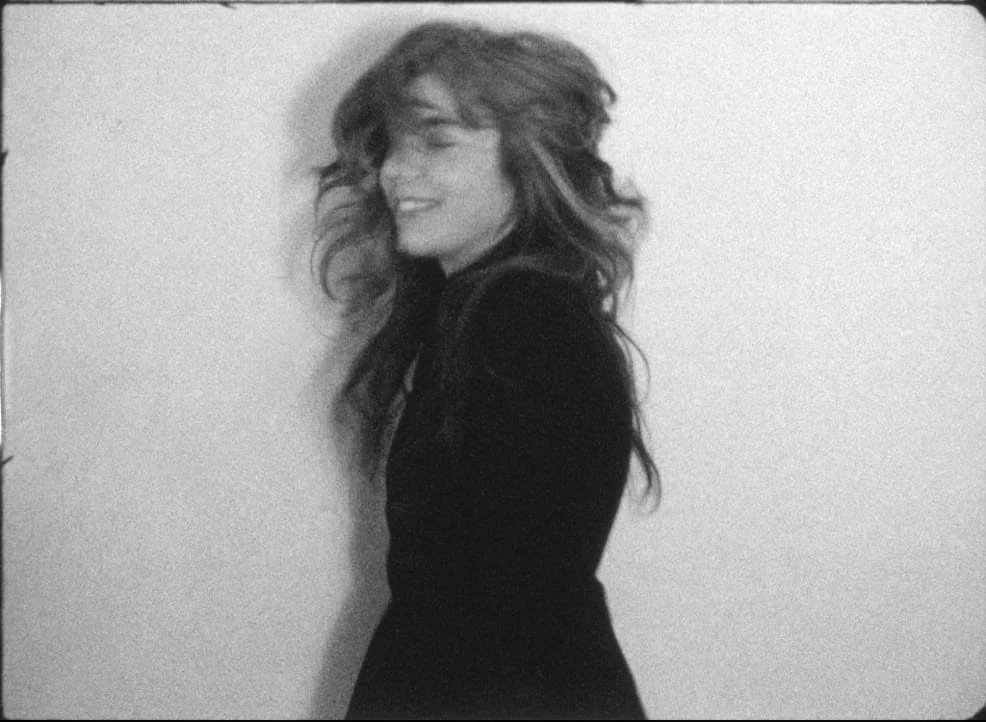
Julia Holter, the acclaimed Los Angeles-based composer, performer, and producer, has released "My Lost One," the latest single from her forthcoming seventh studio album, Materia. The track offers a compelling glimpse into the album’s sonic and thematic landscape, set for release on August 21st via Domino. Characterized by its minimalist yet deeply atmospheric composition, the song features the distinctive saxophone work of Chris Speed and Holter’s signature breathy vocals, which coalesce into what she herself has described as a "witchy" incantation. This release follows the initial announcement of Materia and the unveiling of its lead single, "Fantasy," further building anticipation for what promises to be another intricate and conceptually rich addition to Holter’s distinguished discography.
"My Lost One": A Deep Dive into the Soundscape
"My Lost One" immediately distinguishes itself through its delicate and often sparse arrangement, inviting listeners into a dreamlike auditory space. The track unfolds with an understated elegance, prioritizing texture and mood over conventional melodic structures. Holter’s vocal delivery is central to this effect, often presented as whispers or hushed murmurs that skirt the edges of discernibility, creating an intimate and almost clandestine atmosphere. These vocalizations frequently evolve into what can be perceived as incantations, weaving a spellbinding quality that justifies Holter’s own descriptor of the song as "witchy." This "witchy" element is not one of overt theatricality but rather a subtle undercurrent of ancient magic and esoteric mystery, reminiscent of folk tales and forgotten rituals.
A pivotal element of "My Lost One" is the contribution of acclaimed saxophonist Chris Speed. His saxophone lines are not merely accompaniment but an integral part of the narrative, characterized by their ambiguous and often improvisational quality. Speed, known for his versatility across various jazz and experimental contexts, navigates the track’s sparse arrangement with a nuanced touch, his instrument breathing life into the spaces between Holter’s vocals and the minimalist instrumentation. His contributions oscillate between haunting melodies and abstract textures, mirroring the song’s central tension between longing and the unknown. The interplay between Holter’s ethereal voice and Speed’s evocative saxophone creates a unique sonic dialogue, where instruments seem to converse in hushed tones, contributing to the overall sense of introspection and quiet contemplation. The production of the track further enhances these qualities, allowing each element ample room to resonate and decay, contributing to a sense of vastness within its apparent minimalism. As the song progresses, it gradually builds towards a conclusion that is simultaneously haunting and soothing, leaving a lingering impression of unresolved yearning and ethereal beauty.
The Conceptual Genesis: Folklore, Domesticity, and the Wild
Holter has provided insightful commentary into the conceptual wellspring of "My Lost One," revealing an inspiration rooted in the whimsical yet unsettling world of children’s literature and the blurring lines between the natural and the domestic. She articulates an influence drawn from "children’s books with creepy rhymes and nonsense syllables, trees growing through living rooms, and animals doing things in clothes." This eclectic mix points to a fascination with anthropomorphism, the surreal, and the latent strangeness embedded within seemingly innocent narratives. The imagery evoked—of wildlife moving into one’s home, or a squirrel cooking a meal on a stove—serves as a metaphorical framework for the song’s exploration of "a superimposition of the outdoors and the indoors."
This conceptual blend of the wild and the domestic is a recurring motif in artistic expression, often signifying a return to primal instincts, the disruption of order, or a reconnection with nature in an increasingly urbanized existence. For Holter, this superimposition raises fundamental questions: "What are we conjuring, and what are we truly longing for?" These inquiries suggest a deeper philosophical engagement with the human condition, exploring themes of creation, desire, and the elusive nature of fulfillment. The "lost one" in the title thus transcends a simple narrative of absence; it becomes a metaphor for something intangible yet deeply felt—a lost innocence, a forgotten connection, or an aspect of the self that yearns for expression through unconventional means. The song’s minimalist structure and incantatory style become the perfect vehicle for these abstract ideas, allowing listeners to project their own interpretations onto its enigmatic canvas.
Julia Holter’s Artistic Trajectory: A Chronology of Innovation
Julia Holter’s career has been marked by a consistent commitment to pushing the boundaries of experimental pop and avant-garde music, carving out a distinctive niche that blends academic rigor with profound emotional resonance. A graduate of CalArts, where she studied composition, Holter’s background informs her meticulous approach to songwriting and arrangement. Her early works, such as Tragedy (2011) and Ekstasis (2012), immediately established her as a formidable and idiosyncratic voice. These albums showcased her penchant for intricate instrumentation, lyrical abstraction, and a unique vocal delivery that often felt both ancient and futuristic.
Her critical breakthrough arrived with Loud City Song (2013), an album that, while still experimental, demonstrated a more pronounced narrative structure and a greater accessibility, drawing comparisons to artists like Kate Bush and Laurie Anderson. This was followed by Have You in My Wilderness (2015), an album widely considered her most commercially successful and critically lauded to date. Have You in My Wilderness saw Holter refine her sound, crafting lush, melodic compositions imbued with deep emotional complexity, earning her a wider audience and solidifying her reputation as a leading figure in contemporary art-pop. Themes of love, loss, and the natural world were explored with a newfound clarity, without sacrificing the intellectual depth that defines her work.
The release of Aviary in 2018 marked a significant shift towards a more expansive and maximalist sound. Aviary was a sprawling, ambitious work, often described as an "information overload" album, reflecting the chaos and anxiety of the modern age. Its dense arrangements and fragmented narratives presented a challenging yet ultimately rewarding listen, pushing her artistic boundaries further than ever before. This progression from the relatively contained beauty of Wilderness to the ambitious scope of Aviary demonstrates Holter’s refusal to settle into a comfort zone, consistently evolving her sound and thematic concerns.
Now, with Materia, Holter appears to be navigating a new phase. The initial singles suggest a potential synthesis of her past approaches: the conceptual depth and experimental spirit remain, but perhaps with a renewed focus on clarity and an intimate sonic palette, as hinted by the minimalist approach of "My Lost One." The album’s title itself, Materia—Latin for "matter," "substance," or "material"—implies a grounding, a return to tangibility after the abstract expanse of Aviary. This chronological progression underscores Holter’s journey as an artist continually in flux, exploring new territories while retaining an unmistakable artistic signature.
The Collaborative Dynamics: Chris Speed and the Ensemble
The inclusion of Chris Speed on "My Lost One" highlights Holter’s consistent practice of collaborating with highly respected musicians who can intuitively grasp and enhance her unique vision. Chris Speed is a prominent figure in the contemporary jazz and improvised music scene, known for his work with groups such as The Claudia Quintet, and his extensive collaborations with artists ranging from John Zorn to Dave Douglas. His ability to blend traditional jazz vocabulary with more experimental and avant-garde approaches makes him an ideal partner for Holter, whose music often blurs genre lines. Speed’s contributions to "My Lost One" are not merely ornamental; they are integral to the song’s enigmatic quality, providing melodic and textural counterpoints that elevate the track beyond a simple vocal performance.
Holter’s albums often feature a recurring cast of skilled musicians who contribute to her distinctive sound. While "My Lost One" specifically highlights Speed, her broader ensemble typically includes artists like Corey Fogel (drums/percussion), Devin Hoff (bass), and Andrew Tholl (violin), among others. This consistent collaboration fosters a deep understanding and synergy, allowing for nuanced performances that bring Holter’s complex arrangements to life. Her production approach, often self-produced or co-produced, ensures that her artistic vision remains uncompromised, allowing for meticulous attention to detail in every layer of sound. The choice of collaborators is always deliberate, selected for their capacity to interpret and contribute to her intricate sonic tapestries, making each musical voice a distinct thread in the overall fabric.
Anticipation and Implications: The Landscape for Materia
The release of "My Lost One" and the impending arrival of Materia are met with considerable anticipation from both critics and fans. Julia Holter occupies a unique space in contemporary music, revered for her intellectual depth, compositional prowess, and unwavering artistic integrity. Her work consistently challenges conventional notions of pop music, embedding philosophical inquiries and literary inspirations within intricate musical structures. This new album is poised to further solidify her standing as one of the most vital and inventive artists of her generation.
Materia arrives at a time when the boundaries between genres continue to dissolve, and audiences are increasingly open to artists who defy easy categorization. Holter’s ability to blend elements of classical composition, electronic music, folk, and avant-garde pop places her at the forefront of this evolving musical landscape. The album’s thematic explorations, particularly the superimposition of the natural and domestic, and the questions of conjuring and longing, resonate deeply in a world grappling with environmental concerns, digital saturation, and a pervasive search for meaning.
For Domino Records, a label renowned for its diverse roster of critically acclaimed independent artists, Materia represents a continued investment in artistic vision. Domino has consistently supported Holter’s experimental tendencies, allowing her the creative freedom necessary to produce her unique body of work. The strategic release of singles like "Fantasy" and "My Lost One" prior to the album’s full unveiling is a standard industry practice, designed to offer different facets of the album’s sound, build momentum, and engage various segments of her audience. "Fantasy," as a more immediate and perhaps more accessible track, likely served as an initial entry point, while "My Lost One" delves deeper into the album’s more abstract and atmospheric qualities.
The broader implications of Materia extend beyond Holter’s individual career. Her work serves as an important benchmark for what is possible within experimental pop, demonstrating that intellectual rigor and artistic adventurousness can coexist with profound beauty and emotional resonance. It encourages other artists to explore complex themes and unconventional structures, fostering a richer and more diverse musical ecosystem. As audiences globally continue to seek out music that is both challenging and deeply rewarding, Julia Holter’s Materia is set to offer a compelling new chapter in the ongoing narrative of modern sonic innovation, inviting listeners to delve into its intricate layers and ponder the fundamental questions it poses. The album is not just a collection of songs but a carefully constructed artistic statement, poised to leave a lasting impact on the contemporary music landscape.
