

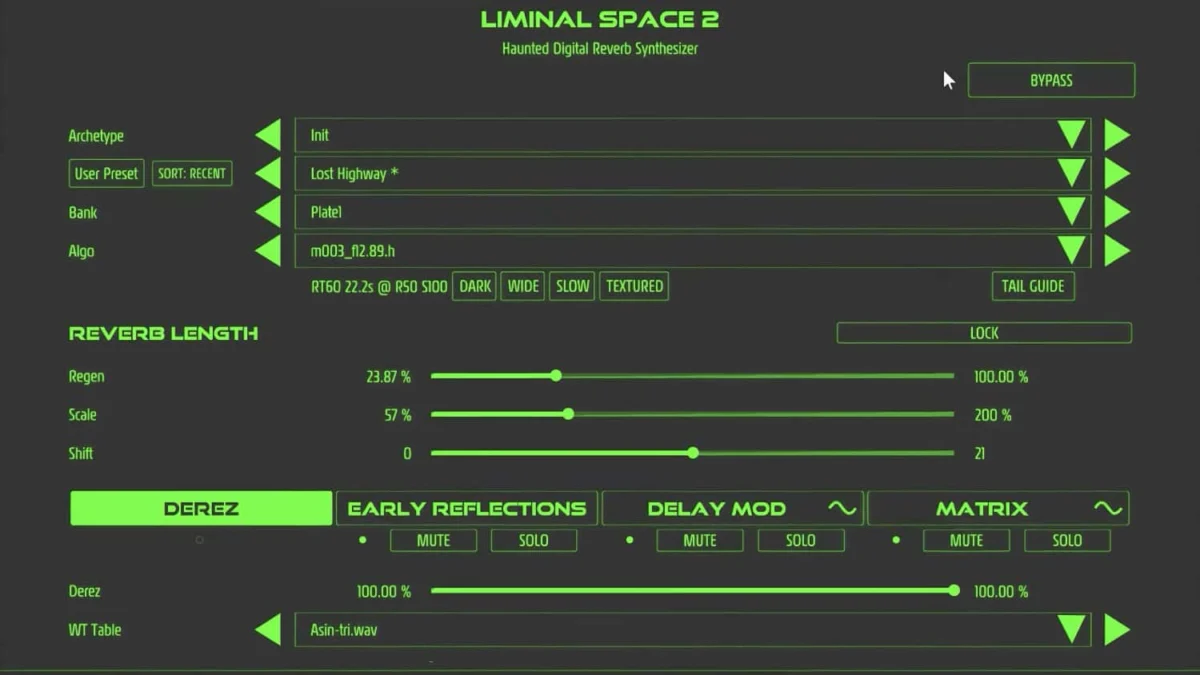
The landscape of digital audio workstations (DAWs) has been significantly expanded with the release of Liminal Space 2, a sophisticated and highly programmable digital reverb plugin developed by Keith Crosley. Available for both Windows and macOS, this software arrives as a successor to the original Liminal Space, aiming to bridge the gap between vintage hardware emulation and futuristic sound design. At its core, Liminal Space 2 is built upon a staggering library of more than 4,000 unique reverb algorithms, providing music producers, sound designers, and mixing engineers with an unprecedented level of control over temporal and spatial characteristics. The plugin specifically targets the intersection of 1980s-style digital processing and modern, "impossible" acoustic environments, offering everything from tight, gated drums to infinite, pitch-warped textures that defy traditional physics.
Technical Architecture and Feature Overview
Liminal Space 2 is engineered to provide a "wildly programmable" experience, a term the developer uses to describe the depth of its internal modulation and algorithm selection. Unlike traditional reverb plugins that offer a handful of modes—such as Hall, Plate, or Room—Liminal Space 2 utilizes a generative approach to its algorithm library. This allows users to cycle through thousands of distinct sonic signatures, each with its own specific reflection patterns and density characteristics.
The plugin’s primary focus on "liminality" refers to the concept of transitional or "uncanny" spaces—environments that feel familiar yet slightly off-kilter. To achieve this, the software incorporates several key digital signal processing (DSP) techniques:
- Gated Reverb and Nonlinear Decay: One of the hallmark sounds of the 1980s, gated reverb, is a central feature. This effect involves cutting off the reverb tail abruptly before it naturally decays, creating a powerful, punchy sound often associated with snare drums. Liminal Space 2 takes this further with nonlinear decay paths, allowing the reverb to evolve in volume and texture in ways that do not follow the standard logarithmic decay of physical spaces.
- Pitch-Warped Soundscapes: By introducing pitch modulation within the feedback loop of the reverb buffer, the plugin can create "shimmer" effects and dissonant, eerie atmospheres. This is particularly useful for cinematic scoring and ambient music production, where the goal is often to create a sense of unease or otherworldly vastness.
- Extensive Algorithm Library: With over 4,000 algorithms, the plugin functions as a digital encyclopedia of spatial textures. These range from "intimate rooms"—simulating the tight, early reflections of small recording booths—to "infinite" settings that allow a sound to sustain indefinitely without losing clarity or becoming a muddy wash of noise.
The Evolution of Digital Reverb: A Historical Context
To understand the significance of Liminal Space 2, it is necessary to examine the history of digital reverb. Before the late 1970s, reverb was achieved through physical means: echo chambers (actual rooms), spring tanks, or large metal plates. The introduction of digital reverb units, such as the EMT 250 and the Lexicon 224, revolutionized the industry. These units used early microprocessors to simulate the complex reflections of a room.
However, these early digital units had limitations in processing power, which led to "artifacts"—sounds that didn’t quite mimic reality but were musically pleasing. The 1980s became defined by these artifacts. The "Gated Reverb" sound, famously discovered by accident at Townhouse Studios during a Phil Collins session, became the decade’s sonic fingerprint. Keith Crosley’s Liminal Space 2 pays homage to this era by providing modern tools to replicate those vintage digital textures while removing the hardware constraints of the past.
The term "Liminal Space" itself has gained cultural traction in recent years, referring to empty or abandoned places that evoke a sense of nostalgia and dread—such as empty malls or hotel hallways. In audio terms, this translates to reverbs that feel "hollow" or "synthetic" in a way that triggers an emotional response. By focusing on this aesthetic, Crosley has tapped into a specific niche of sound design that prioritizes mood and atmosphere over strictly realistic room simulation.
Chronology of Development and Release
The development of Liminal Space 2 follows a trajectory of increasing complexity in boutique audio software. Keith Crosley, operating under the digital storefront Wavetables.lol, has established a reputation for creating specialized tools that cater to experimental musicians.
- Initial Concept: The original Liminal Space plugin was released as an exploration into "liminal" aesthetics, focusing on simple interfaces and haunting tails.
- Version 2 Development: Following feedback from the user community, Crosley began expanding the algorithm base. The goal was to move from a "niche effect" to a "comprehensive spatial workstation."
- Beta Testing and Refinement: Throughout late 2023 and early 2024, the DSP was refined to ensure compatibility across various Apple Silicon (M1/M2/M3) and Intel-based Windows systems.
- Official Launch: The plugin was officially launched in May 2024, accompanied by a comprehensive video demonstration titled "Liminal Space 2: Gated Reverb, Nonlinear Decay & 80s Tricks."
The release strategy for Liminal Space 2 is notable for its accessibility. Priced at $10, the plugin stands in stark contrast to industry-standard reverbs from companies like Altiverb or Lexicon, which can cost hundreds of dollars. This "low-cost, high-utility" model has become a hallmark of independent developers who seek to democratize high-end sound design tools.
Industry Implications and Market Analysis
The release of Liminal Space 2 reflects a broader trend in the music technology industry: the rise of the "Boutique DSP" developer. While major corporations like Native Instruments and Universal Audio continue to dominate the mainstream market, independent developers like Keith Crosley are finding success by focusing on specific aesthetic niches.
Market Accessibility
The $10 price point is a strategic move that addresses the "saturation" of the plugin market. By making the entry barrier nearly non-existent, Crosley ensures a wide adoption rate among bedroom producers and professional engineers alike. In an era where subscription models (SaaS) are becoming common in software, a one-time, low-cost purchase is viewed favorably by the consumer base.
The Return to "Lo-Fi" and Vintage Digital
There is a growing demand for "character" reverbs. For years, the industry goal was "transparency"—making a reverb so realistic that the listener wouldn’t notice it. However, with the rise of genres like Vaporwave, Synthwave, and Lo-Fi Hip Hop, producers are actively seeking reverbs that sound "digital" and "artificial." Liminal Space 2’s library of 4,000 algorithms is specifically curated to provide these character-rich sounds, moving away from the clinical perfection of convolution reverbs.
Cross-Platform Support
The inclusion of both Windows and macOS support (including native Apple Silicon compatibility) is crucial for modern software. The music production world is split between these two ecosystems, and providing a unified experience across both ensures that the plugin can be used in any professional environment, from home studios to major post-production houses in Los Angeles or London.
Statements and Reactions from the Audio Community
While official press releases from independent developers are often concise, the reaction from the user community provides insight into the plugin’s impact. Early adopters have praised the "unpredictability" of the algorithm library. One common sentiment among sound designers is that Liminal Space 2 functions more like an instrument than a utility; the "wildly programmable" nature encourages users to "play" the reverb, automating parameters to create shifting, liquid spaces that evolve over the course of a track.
Reviewers have also noted the efficiency of the code. Despite the massive number of algorithms, the plugin maintains a relatively low CPU footprint, allowing multiple instances to be run across a large mixing project without taxing the system’s resources. This is a critical factor for modern "in-the-box" mixing, where a single session might contain dozens of spatial effects.
Broader Impact and Future Outlook
Liminal Space 2 represents a shift in how spatial effects are perceived in the digital age. It moves the conversation from "how does this room sound?" to "what does this space feel like?" By leveraging the "liminal" aesthetic, Keith Crosley has provided a tool that serves the emotional needs of a composition rather than just its technical requirements.
As the plugin gains traction, it is expected to become a staple in the toolkits of those working in horror film scoring, ambient electronic music, and experimental pop. The success of this release may also prompt other independent developers to explore similar generative algorithm structures, potentially leading to a new era of "massive library" plugins where the sheer variety of sounds becomes a primary selling point.
In conclusion, Liminal Space 2 is more than just a reverb; it is a curated collection of digital environments. Its combination of historical reverence (the 80s gated sound), modern DSP innovation (pitch-warping and nonlinear decay), and an aggressive pricing strategy makes it a significant release in the 2024 audio software calendar. As digital audio continues to evolve, tools like Liminal Space 2 remind the industry that there is still vast, unexplored territory in the simulation of space and time.
