

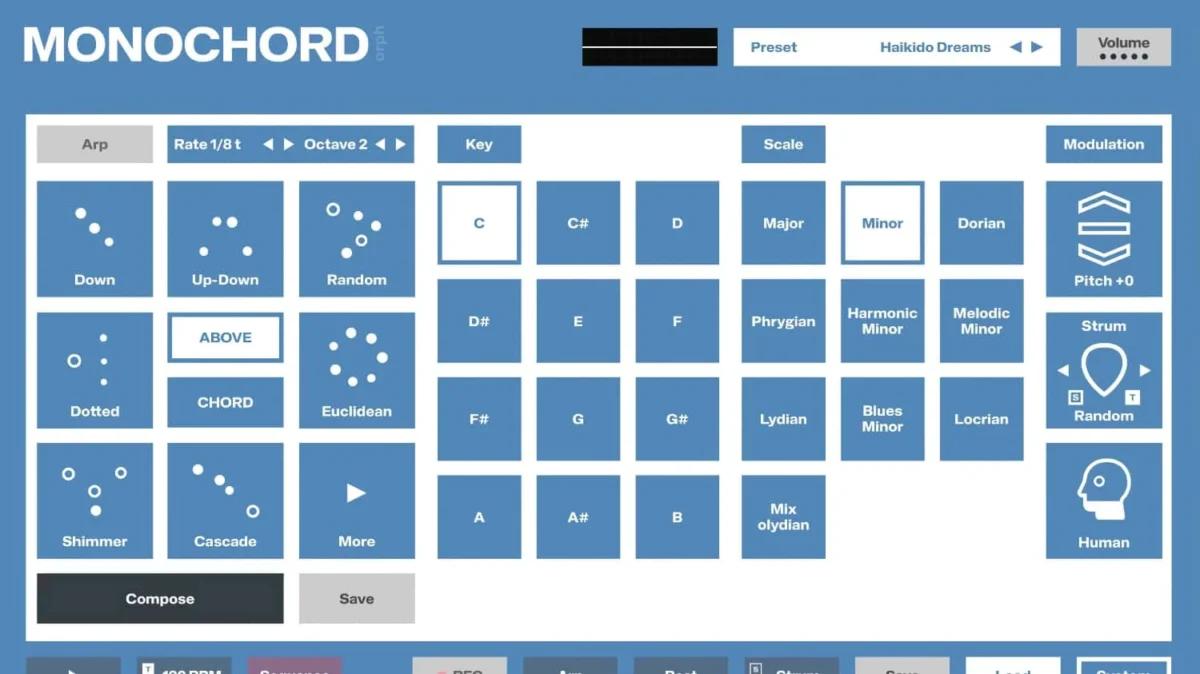
Orph Audio has officially announced the release of Monochord, a multifaceted software instrument designed to streamline the process of chord progression creation and harmonic arrangement for music producers. Available for both macOS and Windows platforms, Monochord represents a significant integration of several music production utilities into a single, cohesive environment. By combining a dedicated chord instrument, a comprehensive multisampler, a harmony workstation, a texture engine, and a versatile MIDI effect, the developers aim to provide a "one-stop-shop" for both novice and professional composers seeking to enhance their melodic and harmonic workflows.
The software enters a competitive market of assistive music technology, where the demand for tools that bridge the gap between complex music theory and intuitive sound design is at an all-time high. Monochord addresses this by offering a 24-key interface where each individual key is capable of triggering a complete, professionally voiced chord. This approach allows users to focus on the emotional and rhythmic aspects of their compositions without necessarily requiring a deep background in traditional piano performance or harmonic theory.
Technical Architecture and Synthesis Capabilities
At the heart of Monochord lies a sophisticated sound generation system that distinguishes it from simpler chord-triggering plugins. The software features six distinct synthesis engines, allowing for a vast range of sonic textures. These engines include Frequency Modulation (FM), subtractive analog modeling, wavetable synthesis, additive synthesis, granular processing, and Pulse Code Modulation (PCM) sampling. This hybrid approach ensures that the instrument can produce everything from clinical, modern digital leads to warm, vintage-inspired pads and realistic acoustic textures.
The internal sound library is equally expansive, containing 425 sampled instruments. These sources are derived from an array of high-end vintage synthesizers, classic samplers, and organic acoustic sources. By providing such a diverse palette, Orph Audio ensures that Monochord is not pigeonholed into a single genre. Whether a producer is working on cinematic scoring, lo-fi hip-hop, or high-energy electronic dance music, the variety of synthesis methods provides the necessary flexibility to find the right "character" for a track.
The granular engine, in particular, offers unique possibilities for the "texture engine" component of the software. Granular synthesis works by breaking audio samples into tiny "grains" and rearranging them, which is ideal for creating evolving soundscapes and atmospheric backgrounds that respond dynamically to the chords being played. This makes Monochord a powerful tool for media composers who need to create shifting emotional undercurrents quickly.
The Harmony Workstation: 600 Chords and 70 Tonal Sets
The defining feature of Monochord is its harmonic intelligence. The software includes a library of more than 600 individual chords, which are organized into 70 curated tonal sets. These sets act as harmonic "maps," guiding the user through scales and progressions that are musically coherent. For producers who struggle with "writer’s block" or those looking to explore unconventional harmonic territories beyond basic major and minor triads, these tonal sets provide a structured starting point.
The 24-key interface is designed for performance as much as it is for composition. By mapping complex voicings—including extensions like 9ths, 11ths, and 13ths, as well as suspended and diminished chords—to single keys, the software allows for a level of performance complexity that would typically require years of keyboard training. This "one-finger" approach is further enhanced by the software’s ability to handle "humanization," which introduces slight variations in velocity and timing to mimic the natural imperfections of a live human performance.
MIDI Integration and DAW Workflow
While Monochord functions as a powerful internal instrument, its utility extends to the broader digital audio workstation (DAW) environment through its robust MIDI output capabilities. The software can function as a MIDI effect, sending the chord data, arpeggios, and strumming patterns it generates to other software instruments or external hardware synthesizers.
This functionality is crucial for professional workflows where a producer might want the harmonic logic of Monochord but prefers the specific sound of a different high-end VST or a physical analog poly-synth. The MIDI engine includes dedicated controls for:
- Arpeggiation: Transforming static chords into rhythmic patterns.
- Strumming: Simulating the sequential plucking of strings, which adds a realistic "guitar-like" or "harp-like" feel to keyboard-based chords.
- Timing and Velocity Humanization: Ensuring that the MIDI data does not feel overly "robotic" or locked strictly to a digital grid.
Monochord supports VST3 and Audio Unit (AU) formats, ensuring compatibility with major DAWs such as Ableton Live, Logic Pro, FL Studio, Cubase, and Studio One. It also operates as a standalone application, allowing for practice or sound design sessions without the need to open a heavy DAW project.
The Evolution of Assistive Composition Tools
The release of Monochord occurs during a broader industry shift toward "intelligent" composition tools. In the last decade, products such as Mixed In Key’s Captain Chords, Scaler 2 by Plugin Boutique, and various AI-driven MIDI generators have changed the landscape of music production. These tools have democratized the ability to create complex music, allowing creators who may not have had access to formal music education to compete at a professional level.
Orph Audio’s contribution to this space focuses on the "all-in-one" philosophy. While some competitors focus strictly on MIDI generation or strictly on synthesis, Monochord attempts to bridge the two. This integration reduces the "friction" in the creative process, as users do not have to jump between different windows or plugins to find a sound that matches their harmonic ideas.
Industry analysts note that the inclusion of a rent-to-own pricing model—pioneered by companies like Splice—is a strategic move to make the software accessible to a younger demographic of producers. By offering the full version for €139 / US$139 or through a monthly payment plan, Orph Audio is positioning Monochord as a premium yet attainable professional tool.
Market Context and Pricing Strategy
The pricing of Monochord at $139 places it in the mid-tier category of the plugin market. It is priced higher than basic utility plugins but lower than massive workstation suites like Native Instruments’ Komplete or Arturia’s V Collection. This positioning suggests that Orph Audio is targeting the "prosumer" market—serious hobbyists and working professionals who value efficiency and high-quality internal sounds.
To lower the barrier to entry, Orph Audio provides a 14-day fully functional demo. This "try before you buy" approach is standard in the modern software industry, allowing users to verify that the software integrates well with their specific hardware configurations and creative styles before committing to a purchase.
Impact on the Music Production Landscape
The introduction of Monochord is likely to influence how independent producers approach the early stages of songwriting. By simplifying the creation of complex textures and harmonies, the software allows for a faster "sketching" phase. In an era where the volume of content creation is at an all-time high—driven by streaming services and social media—the ability to move from an initial idea to a polished harmonic structure in a matter of minutes is a significant competitive advantage.
Furthermore, the "texture engine" aspect of Monochord speaks to the rising popularity of ambient and "cinematic" styles in mainstream music. As pop and hip-hop continue to incorporate more atmospheric and experimental elements, tools that can provide complex, evolving backgrounds (textures) alongside traditional chords become increasingly valuable.
Summary of Specifications and Availability
Monochord is available immediately through the Orph Audio website. The technical specifications and features are summarized as follows:
- Product Name: Monochord
- Developer: Orph Audio
- Platform: macOS (Intel/M-series), Windows 10/11
- Formats: VST3, AU, Standalone
- Sound Source: 425 sampled instruments from vintage and acoustic sources
- Synthesis: 6 Engines (FM, Analog, Wavetable, Additive, Granular, PCM)
- Harmonic Content: 600+ Chords, 70 Tonal Sets
- Interface: 24-key chord trigger system
- MIDI Features: Arpeggiator, Strummer, Humanize, MIDI Export/Routing
- Price: €139 / $139 (Rent-to-own available)
As the music technology industry continues to evolve, Orph Audio’s Monochord represents a significant step toward a more integrated, intuitive, and sonically diverse approach to computer-aided composition. By focusing on the synergy between sound design and music theory, the software provides a robust platform for the next generation of digital musicians.
